
Logo
Dutch Driving Theory Courses

Lesson 3 of the Human Factors, Risk Psychology and Defensive Riding unit

Dutch Motorcycle Theory A: Aggressive Driving Behaviours and De-Escalation

This lesson, part of the Human Factors unit, equips you with vital strategies for dealing with aggressive driving or 'road rage' from other road users. As a Category A motorcyclist in the Netherlands, understanding how to de-escalate potential conflicts is crucial for your safety and successful completion of the CBR theory exam. You'll learn non-confrontational techniques, emphasizing personal safety over ego, ensuring you arrive at your destination safely.
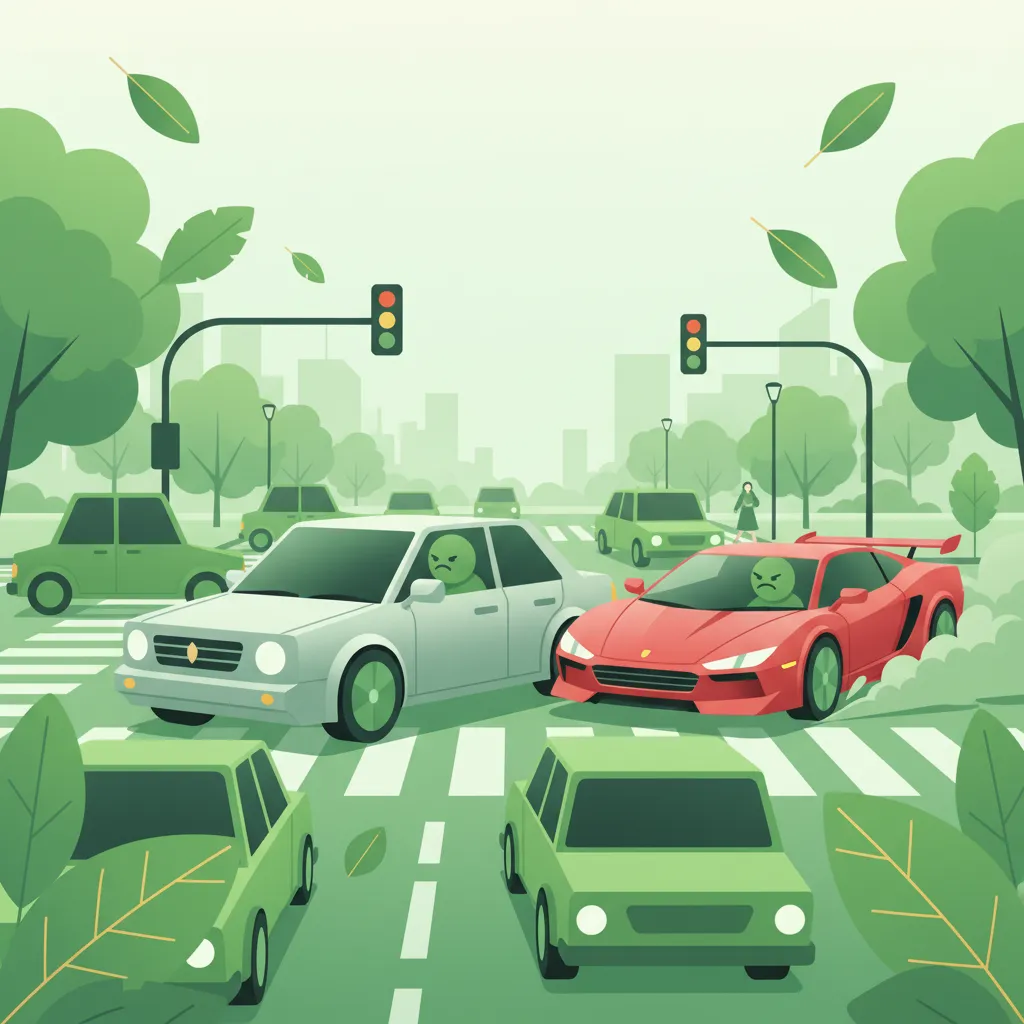
Aggressive DrivingRoad RageDe-escalationMotorcycle SafetyHuman Factors
Dutch Motorcycle Theory A: Aggressive Driving Behaviours and De-Escalation
Dutch Motorcycle Theory A

Understanding and De-Escalating Aggressive Driving for Motorcyclists in the Netherlands

Aggressive driving, commonly known as "road rage," presents a significant and unpredictable risk for all road users, especially motorcyclists. As a vulnerable participant in traffic, a motorcyclist's safety depends heavily on their ability to recognize, understand, and effectively de-escalate aggressive encounters. This lesson, part of your Dutch Motorcycle Theory – Category A Comprehensive Preparation, equips you with critical strategies to protect yourself and maintain legal compliance when facing hostile behaviour on Dutch roads.

The primary goal in any aggressive situation is to prioritize personal safety over ego. Engaging with an aggressor almost always escalates the situation, increasing the risk of collisions, injuries, and legal complications. Mastering de-escalation techniques involves a blend of awareness, spatial management, and psychological control, ensuring you arrive safely at your destination.

Identifying Aggressive Driving Behaviours and Road Rage

To effectively respond to aggression, you must first be able to identify it. Aggressive driving encompasses a range of deliberate actions intended to intimidate, threaten, or obstruct other road users. It goes beyond simple impatience or minor traffic infractions; it signifies hostility and a disregard for others' safety. Road rage is an extreme manifestation of this behaviour, characterized by intense anger that can lead to violent actions.

What Constitutes Aggressive Driving?

Aggressive driving behaviour is any conscious act by a driver that demonstrates hostility, intimidation, or an intent to impede another road user. These actions create a dangerous environment and increase the likelihood of incidents. Recognizing these signals early is crucial for motorcyclists to initiate de-escalation strategies.

Common examples include:

  • Tailgating: Following another vehicle too closely, often combined with flashing headlights.
  • Weaving: Rapidly changing lanes without signaling, often to cut off other vehicles.
  • Excessive Horn Use: Honking prolonged or repeatedly, not as a warning for danger, but to express anger or impatience.
  • Dangerous Overtaking: Passing in unsafe conditions, crossing solid lines, or cutting back in too soon.
  • Gesturing and Verbal Abuse: Using hand gestures, shouting, or profanity directed at other drivers.
  • Blocking: Deliberately preventing another vehicle from changing lanes or exiting.
  • Sudden Acceleration/Braking: Using erratic speed changes to intimidate or retaliate.

These behaviours can be categorized further:

  • Verbal Aggression: Direct communication of hostility, such as shouting or threatening language.
  • Physical Aggression: Expressed through vehicle movements or body language, like aggressive gestures or flashing lights.
  • Spatial Aggression: Involves infringing on another road user's personal space, such as tailgating or cutting in closely.

Understanding Road Rage: The Extreme End of Aggression

Road rage is a more severe form of aggressive driving, where a driver experiences overwhelming anger and hostility, often leading to confrontations or potentially violent acts. While aggressive driving might be a pattern of risky behaviour, road rage is an acute emotional state that can rapidly escalate.

Road rage can manifest as:

  • Passive Road Rage: Persistent, intimidating behaviour without direct verbal or physical confrontation, such as relentless tailgating or continuously blocking a rider's path over a long distance.
  • Active Road Rage: Direct and overt confrontation, which could involve leaving the vehicle, engaging in physical altercations, or deliberate attempts to cause an accident.

For motorcyclists, understanding road rage means recognizing its potential for irrational and dangerous actions. It reinforces the principle that engaging with an aggressor, especially one experiencing road rage, is never a safe or advisable option. The psychological impact on riders can be significant, ranging from increased stress to a fear of riding, making effective de-escalation techniques vital.

Core Principles for De-Escalating Aggressive Encounters

De-escalation is not about "winning" an argument or proving you are "right." It is about prioritizing your safety and avoiding confrontation. For motorcyclists, the most effective mitigation strategy against aggressive driving and road rage is non-engagement combined with strategic spatial management.

PrincipleDefinitionPurpose / RationaleImplications for Motorcyclists
Non-EngagementDeliberately avoiding any verbal, gestural, or physical response to an aggressive driver.Prevents escalation, maintains focus on riding tasks, and reduces cognitive load.Riders must ignore taunts, avoid mirroring aggressive manoeuvres, and keep their eyes and full attention on the road ahead.
Space CreationActively increasing the longitudinal (front/back) and lateral (side-to-side) distance to the aggressor.Reduces the risk of collision, provides more reaction time, and establishes a safety buffer.Adjust speed, safely change lanes where possible, or if necessary and safe, temporarily leave the road (e.g., pull into a rest area).
Pass-AllowingYielding the right-of-way to an aggressive vehicle, even when not legally required.De-prioritizes ego, prioritizes safety, and reduces the aggressor's perceived need to dominate.May involve gently decelerating to allow the aggressor to overtake or pass without impedance.
Risk PrioritisationEvaluating the immediate threat level and choosing the safest response over a "rightful" or "proud" response.Aligns rider decisions with the primary safety objective, protecting against harm.Encourages decision-making based on situational risk rather than emotion or the desire to "stand your ground."
Legal ComplianceEnsuring every de-escalation action respects Dutch traffic law, such as staying within lane markings.Prevents additional legal breaches while de-escalating and avoids contributory negligence.Requires knowledge of RVV 1990 rules, ensuring actions do not create new hazards or break the law (e.g., illegal overtaking).

De-Escalation Techniques and Spatial Buffer Management

Effective de-escalation for motorcyclists hinges on a combination of passive non-confrontational tactics and active spatial management. These techniques are designed to reduce tension and prevent aggressive encounters from leading to collisions or legal incidents.

Practical De-Escalation Techniques for Motorcyclists

When confronted by an aggressive driver, your actions should be calm, predictable, and focused on self-preservation.

  1. Passive De-Escalation:

    • Non-Engagement: The most critical step. Do not make eye contact with the aggressor. Avoid gestures, honking back, or shouting. Maintain a neutral posture and focus your attention entirely on the road and your riding tasks. Engaging fuels the aggressor's anger and distracts you from safe riding.
    • Visual Avoidance: Look ahead, use your mirrors only for necessary traffic checks, but avoid prolonged glances at the aggressive driver.
    • Neutral Posture: Keep your body language calm and non-confrontational. Do not rev your engine or make sudden movements.
  2. Active Spatial De-Escalation:

    • Create Distance: Immediately increase the longitudinal (front-to-back) and lateral (side-to-side) buffer between your motorcycle and the aggressor.
    • Lane Change: If safe to do so, signal clearly and change lanes to create separation. Move to the rightmost available lane, especially on motorways, to allow the aggressor to pass.
    • Slowing Down: Gently reduce your speed to let the aggressive driver get ahead of you. This is a form of "pass-allowing" that often disarms the aggressor by removing the perceived competition.
    • Exiting the Road: In extreme cases, if you feel unsafe, and it is safe to do so, pull over at a gas station, rest area, or side street. Wait for the aggressor to leave before resuming your journey.
  3. Minimal Communication De-Escalation:

    • Turn Signals Only When Needed: Use your turn signals clearly and well in advance for any lane changes or turns. This makes your intentions predictable.
    • Avoid Horn for Dominance: The horn is for warning of immediate danger, not for expressing annoyance or "showing dominance." Using it aggressively can be construed as a hostile act and escalate the situation.
    • Single Headlight Flash: Only use a single, brief high-beam flash if you need to warn another driver of an immediate, critical hazard. Do not use repeated flashes to retaliate.

Spatial Buffer Management for Safety

Maintaining adequate space around your motorcycle is a cornerstone of defensive riding and a critical tool in de-escalating aggressive encounters.

  • Longitudinal Buffer (Front/Back): The 2-second rule is the minimum safe following distance in ideal conditions. This translates to roughly 33 meters at 60 km/h or 44 meters at 80 km/h. When confronted by a tailgater, your primary action should be to increase the distance to the vehicle ahead of you. This gives you more room to brake gradually, allowing the tailgater more space to react and reducing their perceived need to intimidate you. In adverse conditions (rain, darkness, heavy traffic, or with an aggressive driver), increase this buffer to 3 seconds or more.
  • Lateral Buffer (Side-to-Side): Maintain at least 0.5 meters of space to the lane edges, and more if possible. This buffer provides an escape route, reduces the risk of being forced off your line, and helps you avoid debris. If an aggressive driver tries to crowd you laterally, adjust your lane position within your lane to maximize your buffer from them, without crossing lane markings if not necessary for safety.

Tip

Remember: Your goal is to make yourself less of a target and create a safe zone, not to confront or punish the aggressive driver.

Even when facing aggressive behaviour, motorcyclists in the Netherlands must adhere to Dutch traffic legislation (RVV 1990). Your actions, even in self-preservation, must not create new hazards or violate the law. Understanding these obligations protects you from legal repercussions and contributes to overall road safety.

Dutch law emphasizes the collective responsibility of all road users to ensure safety.

  • Article 3, RVV 1990: Prohibition of Endangering Others

    Definition

    Article 3 RVV 1990

    All road users are prohibited from causing danger to other traffic participants or obstructing traffic flow unnecessarily.
    This article is fundamental. It means that while de-escalating, you must not perform manoeuvres that could endanger yourself or others, such as sudden swerving into oncoming traffic or sharp braking without cause.

    • Correct Example: A rider maintains their lane position, gently slows down, and signals to let an aggressor pass safely.
    • Incorrect Example: A rider accelerates rapidly to "show dominance," leading to a loss of control or a collision.
  • Article 7, RVV 1990: Prohibition of Unnecessary Obstruction

    Definition

    Article 7 RVV 1990

    No driver may unnecessarily hinder or obstruct the flow of traffic.
    This rule is relevant when changing lanes or taking other evasive actions. While you may need to adjust your position, it must be done safely and without creating new obstructions for other, non-aggressive traffic.

    • Correct Example: A rider changes lanes smoothly and only when it does not impede other vehicles or create a dangerous situation.
    • Incorrect Example: A rider abruptly cuts across multiple lanes, forcing other drivers to brake or swerve.
  • Article 9, RVV 1990: Duty to Keep a Safe Distance

    Definition

    Article 9 RVV 1990

    Drivers must maintain a sufficient distance to the vehicle ahead to be able to stop in time if that vehicle suddenly brakes.
    This mandates the 2-second rule and applies to the distance you keep from the vehicle in front of you, as well as the responsibility to manage your speed if someone is tailgating you. By increasing your gap to the vehicle ahead, you allow for smoother braking, which in turn reduces the risk of a rear-end collision if an aggressor is behind you.

    • Correct Example: A rider slows down slightly to increase the gap to the vehicle ahead when being aggressively tailgated.
    • Incorrect Example: A rider maintains a dangerously short following distance (e.g., 0.5 seconds) despite aggressive tailgating.
  • Wet verkeersregels, Article 31: Hinderlijk Gedrag (Obstructive or Dangerous Behaviour)

    Definition

    Hinderlijk Gedrag

    Obstructive or dangerous behaviour towards other traffic participants, which can lead to fines or other penalties.
    Aggressive driving behaviours, especially those that consistently endanger or obstruct, fall under this category. This provision allows authorities to penalize drivers who exhibit road rage or dangerous aggression. As a motorcyclist, you can report such behaviour, but you must not engage in it yourself as retaliation.

    • Correct Example: A rider later reports a driver who engaged in repeated dangerous overtaking manoeuvres, providing specific details.
    • Incorrect Example: A rider engages in a "road fight" by flashing lights back at an aggressive driver, thereby contributing to the hinderlijk gedrag.

Motorcycle-Specific Considerations

While no specific article may detail aggressive situations for motorcyclists, the general principles of safe riding (e.g., maintaining stability, avoiding sudden manoeuvres unless for immediate danger) remain paramount. Abrupt swerves or overly aggressive evasive actions by a motorcyclist can easily lead to loss of control, given the inherent instability of a two-wheeled vehicle. Your reactions must be measured and calculated.

Common Violations and Incorrect Responses

Understanding what not to do is as important as knowing the correct de-escalation techniques. Many common reactions to aggressive driving, though emotionally understandable, are dangerous, illegal, or both.

  • Tailgating followed by aggressive overtaking: Incorrect to respond by trying to "block" the aggressor or match their aggression. Always increase your gap to the vehicle ahead, stay in your lane, signal your intent clearly, and allow the aggressor to pass.
  • Using the horn aggressively: The horn is for warning of immediate danger, not for intimidation or expressing annoyance. Excessive or aggressive horn use can be considered harassment.
  • Sudden lane change into oncoming traffic: This is a grave error. While escaping a tailgater, never create a greater hazard. Decelerate, move to the rightmost lane when safe, or pull over at the next safe spot.
  • Engaging in eye contact or gesturing: This escalates the situation emotionally and takes your crucial visual focus away from the road and potential hazards. Keep your eyes forward, scanning the road.
  • Speeding up to "outrun" the aggressor: This increases your speed beyond safe limits, reduces your reaction time, and significantly heightens the risk of a crash. Maintain or reduce your speed and create space.
  • Aggressor blocks your path at an intersection: Do not attempt to force your way through. Slow down, prepare to stop, use your signals, and report the incident later if necessary.
  • Attempting to "teach a lesson" by following the aggressor: This prolongs the conflict and adds the risk of further confrontation, potentially leading to charges of harassment or stalking. Leave the scene and report if appropriate.
  • Repeated high-beam flashing by motorcyclist: Can blind other drivers and violates lighting rules. Use only a single flash if absolutely necessary to indicate danger.
  • Swerving aggressively to avoid a cut-off: While evasive action is sometimes necessary, an aggressive swerve can lead to loss of control. Decelerate, maintain your lane position, and let the aggressor pass when safe.
  • Continuing to ride with compromised safety: If an aggressive incident causes damage to your bike (e.g., forcing you off-road damages brakes), pull over safely, inspect your vehicle, and only resume riding when it's safe and legal.

Conditional Logic and Contextual Variations

The optimal de-escalation strategy can vary depending on the surrounding conditions. Adapting your approach based on weather, road type, vehicle state, and your own psychological condition is essential for safe riding.

  • Weather and Visibility:

    • Rain / Low Visibility (Fog, Heavy Mist): Road grip is reduced, and stopping distances increase significantly. In these conditions, you must increase your longitudinal buffer to a minimum of 3 seconds. Aggressive drivers' behaviour may be amplified by frustration from poor conditions, so your de-escalation manoeuvres must be smoother and slower. Avoid sudden braking or acceleration.
    • Night Riding: Use appropriate dipped beam headlights. Avoid using high beams repeatedly, especially as a retaliatory measure, as this can blind other drivers. If an aggressor flashes high beams, your primary goal is to create space and let them pass, not to engage in a light-flashing battle.
  • Road Type:

    • Urban Streets: Offer more opportunities for lane changes or for pulling off the main road into a side street or parking area. Lower speeds also provide more time to react.
    • Motorways (Autosnelwegen): Overtaking zones are limited. Maintain the rightmost available lane when possible (rechterrijbaan), allowing aggressive drivers to overtake on the left. Avoid sudden braking or weaving in high-speed traffic.
    • Residential Areas: Lower speed limits mean slower de-escalation manoeuvres. The presence of pedestrians and cyclists means you must maintain larger lateral buffers and never compromise their safety while avoiding an aggressor.
  • Vehicle State:

    • Heavy Load / Passenger: If you are carrying a passenger or heavy luggage, your motorcycle's handling and braking performance are altered. Stopping distances will be longer, and sudden manoeuvres are riskier. Increase your buffer accordingly and prioritize stability.
    • Mechanical Issues: If your bike has any known mechanical issues (e.g., brake wear, worn tires), your priority must be to find a safe place to pull over and address the issue, rather than attempting aggressive evasion or prolonging an encounter.
  • Interactions with Vulnerable Road Users:

    • When de-escalating, always be mindful of pedestrians, cyclists, and other vulnerable road users. You must not sacrifice their safety by, for example, swerving onto a bike path or sidewalk to avoid an aggressor. Balance creating your buffer with protecting all parties.
  • Psychological State of the Rider:

    • High Stress / Fatigue: Your tolerance for provocation is reduced when stressed or fatigued. Recognize this heightened vulnerability. If you're feeling these effects, consciously activate a pre-planned de-escalation script: "Do not engage, keep distance, stay calm." Consider pulling over to rest if your emotional state is impacting your riding.

Psychological Triggers and Cognitive Biases in Aggressive Driving

Aggression on the road is often rooted in complex psychological factors, both in the aggressor and potentially within the rider's own reactions. Understanding these triggers and cognitive biases helps motorcyclists maintain composure and avoid exacerbating a situation.

  • Confirmation Bias: This bias can lead a driver (or a rider) to interpret neutral or ambiguous actions as hostile because of pre-existing negative expectations. For example, a quick, necessary lane change by another driver might be perceived as a deliberate "cut-off" if you are already feeling stressed or defensive.
  • Road-Rage Spiral (Reciprocal Escalation): Aggression tends to feed on itself. A perceived threat leads to heightened arousal, which can be interpreted as hostile intent, leading to retaliation. Breaking this feedback loop early through non-engagement and pass-allowing is critical to preventing escalation.
  • Stress and Fatigue: These human factors significantly reduce a person's patience, tolerance for frustration, and ability to make rational decisions. A stressed or fatigued driver is more likely to react aggressively, and a stressed or fatigued rider is more likely to misinterpret actions or react emotionally.
  • Anonymity of the Vehicle: Drivers sometimes feel a sense of anonymity and detachment when inside their vehicles, leading them to behave in ways they wouldn't in face-to-face interactions. This can fuel aggressive behaviours.

By recognizing these psychological underpinnings, you can understand that aggressive behaviour is rarely personal. It's often a symptom of the aggressor's own stress or biases. This understanding can help you depersonalize the situation and maintain a calm, rational approach to de-escalation.

Safety and Reasoning Insights

The strategies discussed are not arbitrary; they are grounded in psychology, physics, and legal principles designed to maximize safety.

  • Psychology of Aggression: Aggression is a reciprocal process. When you respond in kind, you reinforce the aggressor's behaviour. By remaining calm and disengaging, you remove the "reward" of confrontation, often leading the aggressor to lose interest and disengage.
  • Reaction Time and Stopping Distance: At 80 km/h, a vehicle travels approximately 22 meters per second. A 2-second gap provides 44 meters of stopping distance in ideal conditions. Adding 1 second for wet roads (a 3-second gap) increases this to 66 meters, providing crucial additional time for motorcyclists to react to aggressive braking or sudden manoeuvres.
  • Motorcycle Visibility: Motorcycles are inherently less visible than cars. Aggressive drivers, especially those distracted by their own anger, may not fully register your presence. Maintaining a larger lateral buffer (e.g., ≥0.5 meters within your lane) reduces blind spot incidents and provides a critical safety margin.
  • Physiological Stress Response: When confronted with perceived danger, the human body releases adrenaline, leading to "fight or flight" responses. This can cause tunnel vision, reduced peripheral awareness, and impaired judgment. Non-engagement helps keep your cognitive bandwidth focused on the complex task of riding, preventing this physiological response from overriding rational decision-making.
  • Data Insights: Traffic safety reports consistently highlight aggressive driving as a contributing factor in collisions. While precise Dutch motorcycle data specific to aggressive driving is complex, similar studies indicate that a significant percentage of motorcycle-involved crashes can be linked to other drivers' aggressive behaviour. Implementing effective de-escalation techniques can substantially reduce the likelihood of these incidents.

Final Concept Summary Checklist

To ensure mastery of managing aggressive driving situations, review these key concepts:

  • Identify Aggressive Behaviours: Recognize verbal, physical, and spatial aggression, as well as extreme road rage.
  • Understand Legal Obligations: Be familiar with RVV 1990 Articles 3 (no danger), 7 (no obstruction), 9 (safe distance), and the concept of hinderlijk gedrag (Wet verkeersregels Art. 31).
  • Apply Core De-Escalation Principles: Practice non-engagement, space creation, pass-allowing, risk prioritisation, and legal compliance.
  • Maintain Safe Buffers: Adhere to a minimum 2-second rule for following distance, increasing to 3 seconds or more in adverse conditions. Ensure a lateral buffer of at least 0.5 meters.
  • Use Appropriate Communication: Only use your horn for immediate danger; a single high-beam flash is for warning, never for retaliation.
  • Adapt to Context: Adjust your strategy based on weather, road type, vehicle load/passengers, and your own fatigue/stress levels. Be mindful of vulnerable road users.
  • Avoid Common Pitfalls: Never engage in sudden swerves, reciprocal aggression, illegal lane changes, or speeding to escape an aggressor.
  • Leverage Psychological Insight: Recognize your own stress, avoid the road-rage spiral, and apply cooling-down strategies.
  • Document and Report: If feasible and safe, note registration plates and report persistent, dangerous aggressive behaviour to the authorities after the incident.
  • Integrate with Prior Knowledge: This lesson builds upon your understanding of Safe Following Distance and Hazard Perception (Lesson 5), Cognitive Biases Affecting Riders (Lesson 12.1), Stress, Fatigue, and Their Impact on Decision-Making (Lesson 12.2), Advanced Defensive Riding Concepts (Lesson 12.4), and Legal Responsibilities (Lesson 11).
Aggressive Driving Behaviour
Deliberate actions by a driver that demonstrate hostility, intimidation, or an intention to impede another road user.
Road Rage
An extreme manifestation of aggressive driving where the driver experiences intense anger, potentially leading to violent actions.
De-Escalation
A set of actions aimed at reducing tension and preventing aggressive encounters from developing into collisions or legal incidents.
Non-Engagement
Deliberately avoiding any verbal, gestural, or physical response to an aggressive driver to prevent escalation.
Space Creation
Actively increasing the longitudinal and lateral distance to another vehicle to provide a safety buffer and more reaction time.
Pass-Allowing
Voluntarily yielding the right-of-way to an aggressive vehicle, even when not legally required, to avoid conflict.
Risk Prioritisation
Evaluating the immediate threat level and choosing the safest response rather than an emotional or 'rightful' response.
Hinderlijk gedrag
Dutch legal term for obstructive or dangerous behaviour towards traffic participants, which can be punishable.
2-Second Rule
A minimum safe following distance calculated as the time it takes to travel the same distance as the vehicle ahead in two seconds, adjusted for conditions.
Cognitive Bias
A systematic error in thinking that affects the decisions and judgments that people make, such as confirmation bias.
Reciprocal Escalation
A psychological feedback loop where each aggressive act by one party reinforces and increases the hostile intent or anger of the other.
Longitudinal Buffer
The safe distance maintained ahead of and behind a vehicle.
Lateral Buffer
The safe distance maintained to the left and right of a vehicle within its lane or between lanes.
RVV 1990
The Dutch traffic regulations (Reglement Verkeersregels en Verkeerstekens 1990), which govern conduct on public roads.

Learn more with these articles

Check out these practice sets


Search topics related to Aggressive Driving Behaviours and De-Escalation

Explore search topics learners often look for when studying Aggressive Driving Behaviours and De-Escalation. These topics reflect common questions about road rules, driving situations, safety guidance, and lesson level theory preparation for learners in the Netherlands.

How to deal with road rage on a motorcycle NetherlandsDe-escalation techniques driving Dutch theory examAggressive drivers motorcycle tips CBRWhat to do when someone drives aggressively in traffic NLMotorcycle safety aggressive drivers Dutch roadsRoad rage prevention tips Dutch driving theory ACBR exam questions aggressive driving behaviourHow to avoid conflict on a motorcycle in the Netherlands

Related driving theory lessons for Aggressive Driving Behaviours and De-Escalation

Browse additional driving theory lessons that cover connected traffic rules, road signs, and common driving situations related to this topic. Improve your understanding of how different rules interact across everyday traffic scenarios.

Dealing with Aggressive Drivers and Road Rage on Dutch Roads

Learn essential de-escalation techniques and spatial management for motorcyclists facing aggressive driving or road rage in the Netherlands. Prioritize safety and conflict avoidance to navigate hostile traffic situations and comply with Dutch traffic law.
aggressive drivingroad ragede-escalationdefensive ridingmotorcycle safetyDutch traffic law
Defensive Riding Strategies for Two‑Wheelers lesson image

Defensive Riding Strategies for Two‑Wheelers

Defensive riding means riding to prevent collisions, despite the actions of others or the conditions around you. This lesson teaches the core principles of this proactive safety strategy. Key techniques include managing the space cushion around your vehicle, positioning yourself in your lane for maximum visibility, constantly planning an escape route, and communicating your intentions clearly to other road users. This mindset acknowledges your vulnerability and empowers you to take control of your own safety.

Dutch Driving Theory AMHuman Factors & Risk Management
View lesson
Conflict Resolution Strategies lesson image

Conflict Resolution Strategies

This lesson equips riders with cognitive strategies for managing ambiguous or conflicting traffic situations where priority rules may be misinterpreted by other road users. It focuses on the principles of defensive riding, such as making eye contact, using clear signals, and being prepared to yield the right-of-way to avoid a collision. The content teaches how to resolve uncertainty safely by prioritizing hazard avoidance over asserting one's legal right-of-way, a critical skill for motorcyclist survival.

Dutch Motorcycle Theory APriority Rules and Intersection Navigation
View lesson
Advanced Defensive Riding Concepts (verdedigend rijden) lesson image

Advanced Defensive Riding Concepts (verdedigend rijden)

This lesson synthesizes many of the course's concepts into the overarching philosophy of advanced defensive riding ('verdedigend rijden'). It defines this as a proactive mindset where the rider constantly scans for potential hazards, anticipates the worst-case scenario from other road users, and positions themselves to have time and space to react. This approach moves beyond simply following the rules to actively managing the environment to ensure personal safety at all times.

Dutch Motorcycle Theory AHuman Factors, Risk Psychology and Defensive Riding
View lesson
Anticipating Vehicle Behavior (voorspellend rijgedrag) lesson image

Anticipating Vehicle Behavior (voorspellend rijgedrag)

This lesson introduces the Dutch concept of 'voorspellend rijgedrag,' or anticipatory riding, a proactive approach to safety. It teaches motorcyclists how to look beyond the immediate vehicle in front and scan for clues that predict the actions of other road users, such as turn signals, wheel direction, and driver head movement. By anticipating potential conflicts before they happen, riders can position themselves to avoid danger and ensure a smoother, safer journey through complex traffic.
Dutch Motorcycle Theory ASafe Following Distance and Hazard Perception
View lesson
Interaction with Other Road Users lesson image

Interaction with Other Road Users

This lesson provides a detailed framework for how motorcyclists must safely and legally interact with diverse road users, including cars, trucks, cyclists, and pedestrians. It covers the required communication signals, anticipatory behaviors, and specific positioning techniques necessary to coexist in complex traffic environments like urban centers and shared spaces. Emphasis is placed on legal expectations and practical methods that actively reduce collision risk and promote smooth traffic flow.
Dutch Motorcycle Theory AFundamentals of Motorcycle Theory & Dutch Traffic Law
View lesson
Motorcyclists and Other Vehicle Types lesson image

Motorcyclists and Other Vehicle Types

This lesson addresses interactions with other types of road users. You will learn about motorcyclists, who can accelerate and brake quickly and may filter through slow traffic. The curriculum explains how to anticipate their movements and check for them carefully at junctions. It also covers how to safely approach and overtake slow-moving vehicles, such as agricultural tractors, and how to behave around horse riders, which requires slowing down and giving a very wide berth.
Dutch Driving Theory BVulnerable Road Users
View lesson
Highway-Specific Hazards for Motorcyclists lesson image

Highway-Specific Hazards for Motorcyclists

This lesson prepares you for the unique dangers of high-speed highway riding. You will learn to scan for and navigate road hazards like debris, potholes, and slippery steel expansion joints on bridges. The content also addresses the powerful air turbulence created by large trucks that can upset a motorcycle's stability and the mental challenge of maintaining focus on long, monotonous stretches of road.

Dutch Motorcycle Theory (A2)Highway (Autosnelweg) Rules for Motorcycles
View lesson
Blind Spot Management for Motorcyclists lesson image

Blind Spot Management for Motorcyclists

This lesson provides critical instruction on managing blind spots ('dode hoek') to prevent collisions, particularly during lane changes. It covers the correct setup and use of mirrors, but stresses their limitations and the absolute necessity of the 'lifesaver' shoulder check before any lateral movement. Furthermore, it teaches riders how to be aware of the large blind spots around cars and especially trucks, and how to position themselves on the road to remain visible to other drivers at all times.
Dutch Motorcycle Theory ASafe Following Distance and Hazard Perception
View lesson
Being Visible: Defensive Road Positioning lesson image

Being Visible: Defensive Road Positioning

This lesson explains that where you ride in your lane is a critical safety choice. You will learn to avoid lingering in the blind spots ('dode hoek') of cars and trucks, and how to position yourself to be clearly visible in their mirrors. The content teaches you to constantly adjust your lane position to create a space cushion and ensure you always have a planned escape path in case of an emergency.
Dutch Motorcycle Theory (A2)Visibility, Lighting, and Weather-Related Hazards
View lesson
High-Speed Riding on Motorways (snelweg) lesson image

High-Speed Riding on Motorways (snelweg)

This lesson focuses on the unique demands of riding at sustained high speeds on motorways ('snelwegen'). It covers essential topics such as strict lane discipline, safe overtaking procedures, and maintaining a greater following distance to compensate for higher reaction and braking times. The content also addresses the physical and mental challenges, including managing wind blast, increased noise levels, and maintaining heightened situational awareness over long distances to combat fatigue.

Dutch Motorcycle Theory ASpeed Management and Legal Limits
View lesson

Legal Responsibilities Regarding Aggressive Driving in the Netherlands

Understand your legal obligations under Dutch traffic law (RVV 1990) when encountering aggressive drivers. This lesson covers 'hinderlijk gedrag' and ensures your de-escalation actions remain compliant and safe.
Dutch traffic lawRVV 1990legal responsibilitiesaggressive drivinghinderlijk gedragtraffic safety
Rider Obligations and Liability lesson image

Rider Obligations and Liability

This lesson examines the statutory duties imposed on motorcyclists, with a strong emphasis on the 'duty of care' (zorgplicht) and the conditions under which legal liability arises after a traffic incident. It clarifies the relationship between personal responsibility, mandatory insurance coverage, and the legal expectation for proactive risk mitigation to prevent accidents. The content also analyzes scenarios to illustrate how liability is typically determined within Dutch traffic jurisprudence, preparing riders for their legal responsibilities.

Dutch Motorcycle Theory AFundamentals of Motorcycle Theory & Dutch Traffic Law
View lesson
Rider Liability and Duty of Care (zorgplicht) lesson image

Rider Liability and Duty of Care (zorgplicht)

This lesson provides an in-depth exploration of Article 5 of the Dutch Road Traffic Act, which establishes the general 'duty of care' ('zorgplicht'). It explains that every road user has a fundamental obligation to behave in a way that does not cause danger or hindrance to others. The curriculum clarifies how this broad principle is applied in determining legal liability after an accident, especially in incidents involving vulnerable road users, reinforcing the rider's constant accountability.

Dutch Motorcycle Theory ALegal Responsibilities, Police Interaction, and International Riding
View lesson
Ethical Riding Behaviour lesson image

Ethical Riding Behaviour

This lesson addresses the moral and societal dimensions of motorcycling beyond strict legal compliance, encouraging riders to adopt principles of respect, solidarity, and social responsibility. It outlines how ethical considerations should influence day-to-day riding decisions, from showing courtesy to vulnerable road users to minimizing environmental and noise impact. The content provides a framework for reflective and conscientious riding that contributes positively to the broader traffic culture and public perception of motorcyclists.
Dutch Motorcycle Theory AFundamentals of Motorcycle Theory & Dutch Traffic Law
View lesson
Dutch Motorway Law (snelwegwet) and Lane Discipline lesson image

Dutch Motorway Law (snelwegwet) and Lane Discipline

This lesson covers the specific articles of the Dutch Road Traffic Act that apply to motorways, with a primary focus on the strict rule of keeping to the rightmost available lane unless overtaking. It explains the legal and safety reasons for only passing on the left and discusses the correct positioning within a lane for maximum visibility and safety. The content also addresses the nuances of lane usage during heavy congestion, ensuring riders comply with the law and contribute to smooth traffic flow.

Dutch Motorcycle Theory AHighway and Tunnel Riding Strategies
View lesson
Interaction with Other Road Users lesson image

Interaction with Other Road Users

This lesson provides a detailed framework for how motorcyclists must safely and legally interact with diverse road users, including cars, trucks, cyclists, and pedestrians. It covers the required communication signals, anticipatory behaviors, and specific positioning techniques necessary to coexist in complex traffic environments like urban centers and shared spaces. Emphasis is placed on legal expectations and practical methods that actively reduce collision risk and promote smooth traffic flow.
Dutch Motorcycle Theory AFundamentals of Motorcycle Theory & Dutch Traffic Law
View lesson
Pedestrian Crossings and School Zones lesson image

Pedestrian Crossings and School Zones

This lesson focuses on the legal requirements and safe practices for riding near pedestrian crossings ('zebrapaden') and designated school zones. It details the absolute obligation to yield to pedestrians on or about to use a crossing and the need for significantly reduced speeds and heightened vigilance in areas with children. The content underscores the importance of anticipation and being prepared for unpredictable movements from vulnerable road users to prevent serious incidents.

Dutch Motorcycle Theory APriority Rules and Intersection Navigation
View lesson
Conflict Resolution Strategies lesson image

Conflict Resolution Strategies

This lesson equips riders with cognitive strategies for managing ambiguous or conflicting traffic situations where priority rules may be misinterpreted by other road users. It focuses on the principles of defensive riding, such as making eye contact, using clear signals, and being prepared to yield the right-of-way to avoid a collision. The content teaches how to resolve uncertainty safely by prioritizing hazard avoidance over asserting one's legal right-of-way, a critical skill for motorcyclist survival.

Dutch Motorcycle Theory APriority Rules and Intersection Navigation
View lesson
Overview of Dutch Traffic Legislation lesson image

Overview of Dutch Traffic Legislation

This lesson provides a detailed overview of the structure of Dutch traffic legislation, focusing on the Road Traffic Act (Wegenverkeerswet 1994) and its relationship with CBR regulations. It explains the hierarchy from national statutes to local ordinances and how these rules govern rider behavior in various traffic situations. Furthermore, the lesson clarifies the mechanisms for enforcement, the types of sanctions for non-compliance, and the legislative goal of ensuring road safety for all participants.

Dutch Motorcycle Theory AFundamentals of Motorcycle Theory & Dutch Traffic Law
View lesson
Reporting Obligations and Interaction with Police lesson image

Reporting Obligations and Interaction with Police

This lesson details the legal requirements for reporting a traffic accident in the Netherlands, including the circumstances under which you must involve the police. It explains the correct procedure for exchanging personal, vehicle, and insurance information with any other parties involved. The lesson also covers the use of the European Accident Statement form to document the facts of the incident for insurance purposes.
Dutch A1 Motorcycle TheoryAccident Management, Legal Responsibilities & Substance Use
View lesson
Understanding Police Checks (controle) and Rights lesson image

Understanding Police Checks (controle) and Rights

This lesson details the procedures of a typical traffic stop ('verkeerscontrole') from a rider's perspective. It outlines the authority of police officers to check documents, inspect the vehicle, and administer sobriety tests, while also explaining the basic rights of the rider during such an interaction. The goal is to demystify the process and encourage a calm, cooperative, and respectful demeanor, which facilitates a more positive and efficient roadside encounter for both parties.

Dutch Motorcycle Theory ALegal Responsibilities, Police Interaction, and International Riding
View lesson

Frequently asked questions about Aggressive Driving Behaviours and De-Escalation

Find clear answers to common questions learners have about Aggressive Driving Behaviours and De-Escalation. Learn how the lesson is structured, which driving theory objectives it supports, and how it fits into the overall learning path of units and curriculum progression in the Netherlands. These explanations help you understand key concepts, lesson flow, and exam focused study goals.

What are common signs of aggressive driving I should look out for on a motorcycle in the Netherlands?

Common signs include tailgating, sudden braking, weaving dangerously through traffic, horn honking excessively, flashing high beams, and making angry gestures. For a Category A motorcyclist, recognizing these early helps you prepare for de-escalation.

Is it ever okay to confront an aggressive driver in the Dutch traffic system?

No, the general advice is to never engage in a confrontation. Prioritizing your safety is paramount. Engaging can escalate the situation, putting you at greater risk. The Dutch CBR exam emphasizes safe and responsible behaviour.

How does creating space help de-escalate an aggressive driving situation on a Category A motorcycle?

Creating space, either by slowing down to increase following distance or changing lanes, removes you from the immediate vicinity of the aggressive driver. This reduces their ability to harass you and gives you more time and room to react safely.

Can I report aggressive driving in the Netherlands, and how might that affect my CBR exam?

Yes, you can report aggressive driving to the police if you have sufficient details and feel it's necessary. While reporting itself won't directly affect your CBR exam, the exam assesses your understanding of safe and responsible conduct, which includes not engaging in road rage yourself.

What if I'm blocked by an aggressive driver and cannot create space?

If you're blocked, try to remain calm. Look for any available escape routes, even small ones. Avoid eye contact and focus on your riding. If safe, pull over to a safe location once possible and let the aggressor pass. Never put yourself in further danger.

Continue your Dutch driving theory learning journey

Dutch road signsDutch article topicsSearch Dutch road signsDutch driving theory homeDutch road sign categoriesSearch Dutch theory articlesDutch driving theory coursesDutch Driving Theory B courseDutch driving theory articlesDutch driving theory practiceDutch practice set categoriesDutch Driving Theory AM courseDutch Motorcycle Theory A courseDutch A1 Motorcycle Theory courseDutch Motorcycle Theory (A2) courseSearch Dutch driving theory practiceTowing, Trailers, and Loads unit in Dutch Driving Theory BRoadway Access & Navigation unit in Dutch Driving Theory AMVehicle Positioning and Lane Use unit in Dutch Driving Theory BHuman Factors & Risk Management unit in Dutch Driving Theory AMInfrastructure and Special Roads unit in Dutch Driving Theory BLegal Foundations & Vehicle Types unit in Dutch Driving Theory AMLegal Responsibilities & Incident Procedures unit in Dutch Driving Theory AMHighway (Autosnelweg) Rules for Motorcycles unit in Dutch Motorcycle Theory (A2)Advanced Riding Techniques and High-Speed Control unit in Dutch Motorcycle Theory AAccident Management, Legal Responsibilities & Substance Use unit in Dutch A1 Motorcycle TheorySituational Risk Assessment Models lesson in Human Factors, Risk Psychology and Defensive RidingContinuous Learning and Skill Maintenance lesson in Human Factors, Risk Psychology and Defensive RidingAggressive Driving Behaviours and De-Escalation lesson in Human Factors, Risk Psychology and Defensive RidingPsychological Strategies for Hazard Anticipation lesson in Human Factors, Risk Psychology and Defensive RidingCognitive Biases Affecting Riders (risicoperceptie) lesson in Human Factors, Risk Psychology and Defensive RidingStress, Fatigue, and Their Impact on Decision-Making lesson in Human Factors, Risk Psychology and Defensive RidingAdvanced Defensive Riding Concepts (verdedigend rijden) lesson in Human Factors, Risk Psychology and Defensive Riding