
Navigating Dutch roads as a motorcyclist often involves unpredictable situations. This lesson focuses on essential conflict resolution strategies, teaching you how to anticipate and manage potential hazards, especially when priority rules might be misunderstood by others. It builds upon your understanding of basic priority rules to ensure safer riding.

Navigating the complex and often unpredictable environment of Dutch roads requires more than just knowing the rules; it demands a strategic approach to managing uncertainty. For motorcyclists, anticipating potential conflicts and possessing effective resolution strategies are critical skills that dramatically enhance safety and reduce accident risk. This lesson delves into the principles, techniques, and legal considerations for resolving ambiguous or conflicting traffic situations, ensuring you can ride defensively and confidently.
In the Netherlands, traffic rules are designed to promote safety and efficiency. However, human factors, misinterpretations, and unforeseen circumstances can lead to situations where priority is unclear or disputed. For motorcyclists, who are more vulnerable than drivers of cars or trucks, successfully resolving these conflicts is paramount. Many collisions don't result from a deliberate breach of the law, but rather from a failure to safely address a moment of uncertainty. Mastering conflict resolution means actively preventing crashes, fostering cooperative road behaviour, and aligning with the defensive riding philosophy expected for a Category A motorcycle licence.
This chapter builds upon your understanding of Dutch right-of-way (voorrangsregels), various intersection types, and basic signalling techniques. It provides the cognitive framework and practical tools to make safety-first decisions when faced with ambiguity, ensuring you are prepared to yield when necessary, communicate clearly, and protect yourself on the road.
When two or more road users appear to claim the same priority, a motorcyclist must employ a hierarchy of safety-first decisions. This hierarchy prioritises perception and communication, ultimately leading to yielding if necessary. This approach reflects the emphasis in Dutch traffic law on preventing collisions above all else.
The Principle of Precaution (voorrangsbehoud) is a cornerstone of Dutch traffic law. It dictates that if a rider cannot be certain of another road user’s intentions, they must act to avoid a collision, even if they technically hold the right-of-way. This principle acknowledges the inherent limitations of human perception and reaction time, and the physics that govern vehicle movement. Its purpose is to reduce the risk of crashes due to misinterpretation or unexpected actions. For you, this means being prepared to voluntarily reduce speed, adjust your position, or even stop, regardless of your legal priority, to prevent an accident.
Defensive Riding is a proactive mindset that continually anticipates potential hazards and prepares contingency actions. It involves constant scanning of the environment, early identification of potential conflict cues, and the use of protective positioning. This mindset enhances situational awareness and ensures your behaviour aligns with the safety-first expectations of Dutch traffic regulations. By riding defensively, you actively seek to identify and resolve conflicts before they escalate into dangerous situations.
Effective communication is vital to mitigate ambiguity and create a shared understanding of intended manoeuvres. Clear Visual Communication involves using eye contact, headlight flashes, hand signals, and body language to convey your intentions to other road users. This increases the likelihood that others will respond predictably, thereby reducing the potential for conflict.
When yielding is necessary, Progressive Yielding offers a staged, controlled approach. Rather than an abrupt stop, it involves a sequence of actions: first, a reduction in speed; second, an adjustment of lane position; and third, a complete stop only if required. This method allows other road users to retain their momentum when possible, reduces the need for abrupt braking, and minimises disruption to traffic flow while ensuring safety.
While Dutch traffic law establishes a clear Hierarchy of Rights through signs, road markings, and general rules (voorrangsregels), this legal priority is subordinate to the immediate need to avoid a collision when uncertainty exists. This principle is deeply embedded in RVV Article 44. It means that a motorcyclist may temporarily abandon their legal right-of-way if doing so prevents a dangerous situation, balancing strict adherence to the law with practical safety considerations.
In a conflict scenario, emotions can run high, but effective Risk-Based Decision Making requires a rational assessment. This involves evaluating the potential severity and likelihood of a collision before deciding whether to assert your right-of-way or to yield. It encourages riders to make choices based on an objective hazard assessment, prioritising the safest outcome rather than simply reacting to a perceived injustice or urgency.
Ambiguous priority situations are scenarios where traffic signs, road markings, or the actions of other road users provide conflicting or unclear cues about who has the right-of-way. These are common sources of accidents for motorcyclists.
A situation becomes ambiguous when there's a lack of definitive information to determine priority. This can stem from multiple factors:
In these instances, a motorcyclist must quickly decide whether to proceed or yield, always prioritising the safest option according to RVV 1990, Article 44 (the precaution principle). Misunderstandings often arise from the false assumption that legal priority always overrides immediate safety concerns, or the belief that "my right-of-way means I must continue."
Effective communication is your primary tool for de-escalating conflicts and ensuring mutual understanding with other road users. As a motorcyclist, you have several methods at your disposal.
Eye Contact (visueel contact) is the intentional gaze directed at another road user to confirm mutual awareness of each other’s intended actions. This can be direct, where both parties clearly see each other's eyes, or indirect, such as through mirrors. Making eye contact is crucial because it reduces uncertainty by confirming that the other party has perceived you and your presence.
A common mistake is relying solely on peripheral vision or assuming a driver has seen you just because you are in their general field of view. Always actively seek eye contact, especially before making a manoeuvre like turning across traffic or overtaking. A quick glance at a cyclist before overtaking, ensuring they look back, is a simple yet powerful example of this technique.
A Headlight Flash (koplamp flitsen) is a brief, high-intensity flash of your motorcycle’s main headlight or a dedicated high-beam flash, used to signal intent. This could mean "I'm letting you pass" or "Please yield" depending on the context. A single flash typically serves as an acknowledgement or a signal to proceed, while a double flash can act as a warning.
This non-verbal cue is visible from a distance, especially at night or in low-visibility conditions. Dutch traffic law permits brief flashing for communication, but continuous high-beam use is prohibited (RVV, Article 30) as it can cause glare and blind other drivers. Avoid holding the high-beam continuously, flashing too rapidly, or flashing when the other road user is too far away to perceive it effectively.
Hand Signals (handgebaren) are standardised gestures performed by a motorcyclist to indicate turning, stopping, or lane changes. These signals are critical for supplementing or replacing indicator lights when they are not visible, not functioning, or insufficient due to weather or traffic conditions.
Common hand signals include:
Under Dutch road traffic regulations, using hand signals is mandatory when your indicators are not functional (RVV, Article 24). Common mistakes include using ambiguous gestures, failing to signal early enough, or signalling while wearing gloves that obscure the movement. Always ensure your hand signals are clear, decisive, and visible to other road users.
When a conflict situation necessitates giving way, Progressive Yielding allows you to do so safely and smoothly, minimising disruption. This tiered response helps to maintain control and provides clear signals to other road users.
The first action in progressive yielding is to reduce your speed. This should be a smooth, controlled deceleration, not an abrupt stop. By reducing speed, you increase your reaction time, provide more space for decision-making, and signal to other road users that you are aware of the situation and preparing to adjust. This soft yield allows others to proceed if they have the right-of-way or if you are deferring to them.
If speed reduction alone isn't enough, the next step is to adjust your lane position. This might involve moving slightly within your lane to create more space, or even shifting to an adjacent lane if safe and appropriate. For instance, moving slightly to the right at a junction can provide extra space for a car that might be turning across your path, even if you technically have priority. This partial yield communicates your willingness to give way without forcing a full stop.
Only if the conflict remains unresolved after speed and lane adjustments, or if the other road user clearly proceeds, should you come to a complete stop. This is the hard yield, and it should be performed smoothly and safely. For example, if you approach a cross-junction, you might slow down and move slightly to the right. If the other car still doesn't yield and continues to proceed, then you would safely stop. This confirms your decision to yield and prevents a collision. This approach is consistent with RVV Article 44 (precaution) and Article 7 (obligation to give way when required).
Dutch road traffic law provides the legal framework for safe interaction. Understanding these rules is crucial for applying conflict resolution strategies correctly.
Article 44 of the Reglement Verkeersregels en Verkeerstekens (RVV 1990) states that any road user must take all reasonable measures to avoid a collision, even if they have the right-of-way. This principle is mandatory and applies to all traffic situations where priority is uncertain or ambiguous. It serves to prevent collisions caused by misinterpretation. A correct application would be a motorcyclist yielding at an ambiguous T-junction despite technically having priority. An incorrect application would be a motorcyclist aggressively proceeding, causing a crash.
Article 13 of the RVV 1990 outlines that vehicles on the road with priority must give way to vehicles approaching from the side or opposite direction when indicated by signs or markings. This rule applies to intersections with clear priority signs or road markings and is mandatory. Its rationale is to ensure orderly flow and reduce conflict points. For example, a rider stopping at a Stop sign, even though a vehicle on the cross-road also has to yield, is correct behaviour. Proceeding without stopping at a Stop sign, causing a collision, is incorrect.
Article 30 of the RVV 1990 states that flashing the high-beam for brief communication is permitted; continuous high-beam is prohibited. This applies during nighttime or low-visibility conditions when communicating intent. It's a mandatory rule designed to prevent glare while allowing for effective communication. A rider briefly flashing their high-beam to signal a car to yield is correct. Keeping the high-beam on while approaching a cyclist, causing glare, is incorrect.
According to Article 24 of the RVV 1990, if vehicle lighting or indicators are not functional, the driver must use hand signals to indicate intentions. This is mandatory in any situation where lights or indicators are unavailable or not visible, guaranteeing that your intentions are clear to others. A rider using a left-hand turn signal because their left indicator is blocked is correct. Failing to signal while changing lanes, causing confusion, is incorrect.
RVV 1990 – Article 7 (Obligation to Yield to Pedestrians at Crossings): Vehicles must give way to pedestrians who are crossing at a designated crossing (zebrapad) or have indicated their intention to cross. This is mandatory at zebra crossings, pedestrian islands, or where pedestrians have stepped onto the road, protecting vulnerable road users.
Dutch Road Traffic Act – Article 8 (Obligation to Yield to Emergency Vehicles): All road users must give way to approaching emergency vehicles (noodvoertuigen) with flashing lights and siren. This is mandatory when an emergency vehicle is within audible/visible range, allowing emergency services to operate safely and quickly.
Even with good intentions, motorcyclists can make errors in conflict situations. Recognizing these common pitfalls can help you avoid them.
Why it's wrong: This violates Article 44 (precaution principle) and significantly increases collision risk. Correct behaviour: Reduce speed, seek eye contact, and be prepared to yield if there's any uncertainty, even if you technically have priority. Consequence: Potential crash; possible liability in accident investigation.
Why it's wrong: Using continuous high-beam is prohibited by Article 30, causing glare. Failing to use hand signals when indicators are blocked (Article 24) makes your intentions unclear. Correct behaviour: Use a brief high-beam flash (≤ 1 s) or clear hand signals. Ensure hand signals are visible and executed early. Consequence: Risk of accident due to glare or miscommunication; possible fine.
Why it's wrong: Waiting until the last moment to yield, especially to larger vehicles or trams, leaves inadequate time to stop safely and can cause sudden braking. Correct behaviour: Anticipate potential conflicts early. Apply progressive yielding: reduce speed, adjust lane position, and stop smoothly if necessary, well in advance. Consequence: Hard braking, loss of control, possible rear-end collision or being hit by the tram.
Why it's wrong: Assuming a cyclist will yield just because you have priority, or neglecting to give ample space to pedestrians, misreads their expectations and increases their risk. Correct behaviour: Make eye contact, use gentle communication like a brief headlight flash, give a wide berth, and anticipate sudden movements from pedestrians and cyclists. Consequence: Side-collision; increased injury risk for the vulnerable user.
Why it's wrong: Attempting to "force" your right-of-way with aggressive acceleration or hostile gestures contradicts defensive riding and can provoke dangerous responses from other drivers. Correct behaviour: Maintain a steady speed, use calm and clear communication, and always be prepared to yield if a situation escalates. Prioritise safety over "winning" a right-of-way dispute. Consequence: Escalation into road rage; possible multi-vehicle crash or deliberate dangerous driving from another party.
The optimal strategy for resolving conflicts can vary significantly based on environmental and situational factors.
Every action, or inaction, you take in a conflict situation has direct consequences.
Conflict resolution strategies are not standalone skills; they are deeply integrated with other critical aspects of motorcycle riding in the Dutch Category A curriculum.
This lesson builds significantly on your understanding from General Rules of Right-of-Way (voorrangsregels) and Junction Types (T-, Y-, and cross-junctions), providing the practical application for when those rules become unclear. It also feeds directly into Safe Following Distance and Hazard Perception, as early hazard identification is the first step in avoiding conflicts. Furthermore, it deeply connects with Human Factors, Risk Psychology and Defensive Riding, as the psychological underpinnings of yielding behaviour and decision-making under pressure are vital. Finally, the knowledge gained here informs Emergency Braking, Crash Avoidance and Accident Handling by helping you prevent scenarios that necessitate emergency manoeuvres.
Future lessons, such as Advanced Riding Techniques and High-Speed Control and Highway and Tunnel Riding Strategies, will further explore how to apply these conflict resolution principles in more complex and high-speed environments.
Understanding theory is one thing; applying it on the road is another. Here are some real-world examples.
Setting: A dry day with low traffic. As you approach a T-junction, you notice the stop line paint is severely faded, making it unclear if it's a mandatory stop. A car is approaching from the cross-road. Decision Point: Do you proceed, assuming the sign is advisory, or stop? Correct Behaviour: You reduce speed significantly, scanning for traffic. You make brief eye contact with the driver of the car on the cross-road and give a brief headlight flash to confirm you've seen them. Because of the ambiguous signage, you invoke the precaution principle (Art. 44 RVV) and progressively yield, preparing to stop entirely if any doubt about their intention remains, letting the car pass if necessary. Incorrect Behaviour: You assume you have priority due to a vague recollection of the rule or because the sign is unclear, maintain speed, and enter the junction, potentially colliding with the car that had the actual right-of-way. Rationale: The uncertainty about the stop sign immediately triggers the precaution principle; yielding avoids a potential collision and ensures safety.
Setting: A dark, wet rural road, single-track lane, with a cyclist riding ahead on the right side. Decision Point: How do you safely overtake without startling the cyclist or causing danger? Correct Behaviour: You first dim your high-beam to avoid dazzling the cyclist. You then activate your right-hand turn indicator and perform the right-hand overtaking hand signal (left arm bent upwards). You flash your headlights once briefly to alert the cyclist to your presence, reduce your speed appropriately, and pass with a minimum 1.5-metre clearance. Incorrect Behaviour: You use a continuous high-beam while approaching, overtake without any signalling, or pass too closely, causing the cyclist to swerve or feel threatened. Rationale: Proper signalling (hand and light) and moderate flashing maintain visibility without dazzling, while generous clearance respects the safety of vulnerable road users, especially in adverse conditions.
Setting: You approach a tram crossing (tramoversteek) where the red flashing tram signal is active, but the tram itself is not yet visible. A car reaches the crossing from your left simultaneously. Decision Point: Who proceeds, or should anyone? Correct Behaviour: You and the car driver attempt to make eye contact. Despite the tram not being visible, the flashing red signal dictates caution. You progressively yield by reducing speed and moving slightly to the right, allowing the larger car to pass first if it appears to proceed (as per general vehicle hierarchy, it's safer to give way to larger vehicles in ambiguous situations). You prepare to stop fully if the car also hesitates. Incorrect Behaviour: You accelerate, assuming you have the right-of-way over the car because the tram isn't present, leading to a near-miss with the car, and then have to brake sharply for the approaching tram. Rationale: The ambiguity in priority (tram not yet present, but signal flashing, and another vehicle present) calls for precaution. Yielding to the larger vehicle reduces the chance of a collision with it, and both should ultimately yield to the tram.
Setting: An urban road during a traffic jam. An ambulance approaches from behind with its siren wailing and flashing lights active. Decision Point: How should you, as a motorcyclist, create a path for the emergency vehicle? Correct Behaviour: You signal your intention to move to the side, reduce your speed smoothly, and position yourself to the rightmost available lane where possible, while maintaining a clear view of the ambulance. If a lane change isn't immediately possible due to traffic, you stop safely and allow the ambulance to find its way past. The key is to create space without creating new hazards. Incorrect Behaviour: You attempt to speed past the ambulance, cutting across lanes, creating panic among other drivers, or blocking the ambulance's path by staying in its way. Rationale: Giving way to emergency vehicles is legally required (Article 8 of the Road Traffic Act) and is a critical safety habit, allowing emergency services to reach their destination unimpeded.
Lesson content overview
Explore all units and lessons included in this driving theory course.
Explore search topics learners often look for when studying Conflict Resolution Strategies. These topics reflect common questions about road rules, driving situations, safety guidance, and lesson level theory preparation for learners in the Netherlands.
Browse additional driving theory lessons that cover connected traffic rules, road signs, and common driving situations related to this topic. Improve your understanding of how different rules interact across everyday traffic scenarios.
Learn to avoid critical errors when navigating unclear priority situations in Dutch traffic. This lesson details frequent mistakes in defensive riding and conflict resolution, helping you prevent accidents and understand RVV article 44.
This lesson equips riders with strategies for dealing with aggressive driving or 'road rage' from other road users. It teaches techniques for de-escalation, which primarily involve not engaging with the aggressor, creating space, and letting the other vehicle pass. The core principle is to prioritize personal safety over ego, recognizing that winning a confrontation on the road is never as important as arriving safely at your destination.
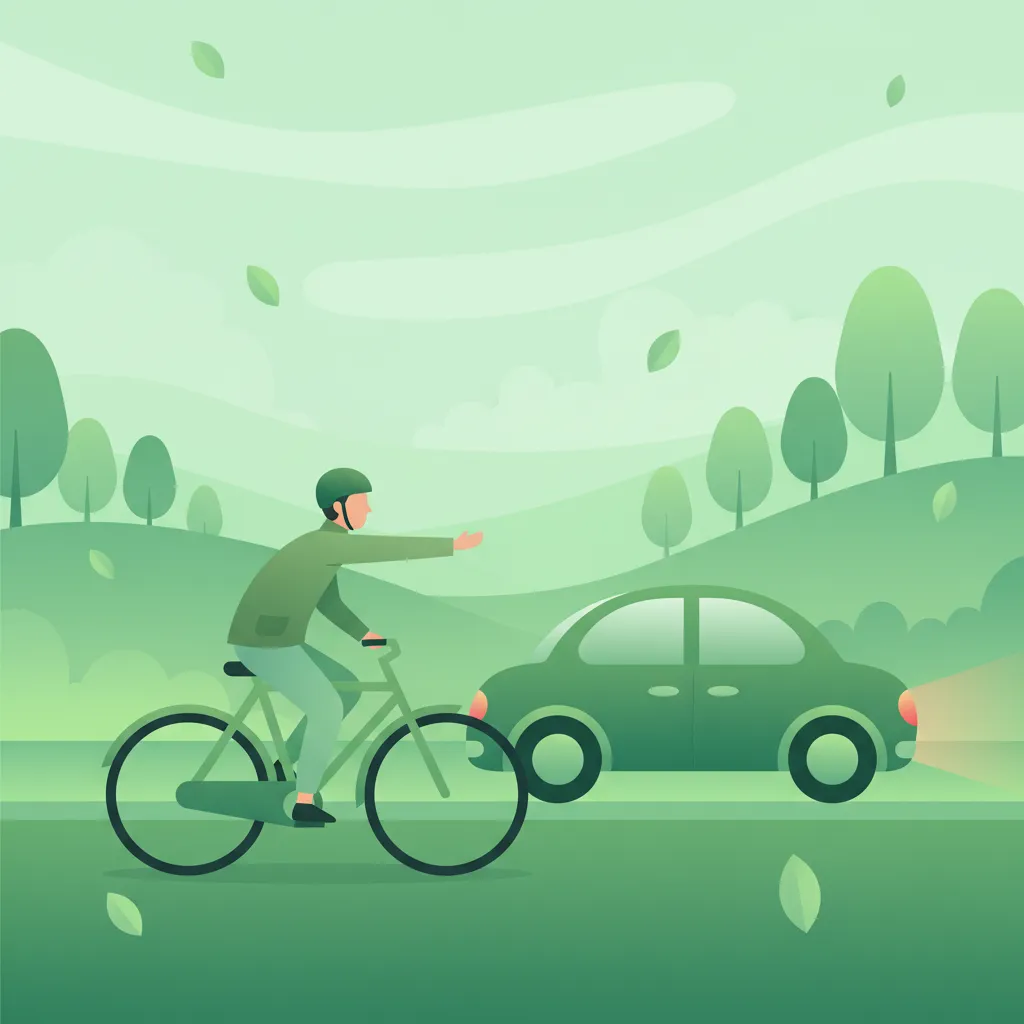
This lesson provides a detailed framework for how motorcyclists must safely and legally interact with diverse road users, including cars, trucks, cyclists, and pedestrians. It covers the required communication signals, anticipatory behaviors, and specific positioning techniques necessary to coexist in complex traffic environments like urban centers and shared spaces. Emphasis is placed on legal expectations and practical methods that actively reduce collision risk and promote smooth traffic flow.

This lesson provides critical instruction on managing blind spots ('dode hoek') to prevent collisions, particularly during lane changes. It covers the correct setup and use of mirrors, but stresses their limitations and the absolute necessity of the 'lifesaver' shoulder check before any lateral movement. Furthermore, it teaches riders how to be aware of the large blind spots around cars and especially trucks, and how to position themselves on the road to remain visible to other drivers at all times.
Defensive riding means riding to prevent collisions, despite the actions of others or the conditions around you. This lesson teaches the core principles of this proactive safety strategy. Key techniques include managing the space cushion around your vehicle, positioning yourself in your lane for maximum visibility, constantly planning an escape route, and communicating your intentions clearly to other road users. This mindset acknowledges your vulnerability and empowers you to take control of your own safety.

This lesson explains the concept of strategic lane positioning, moving beyond simply staying in the center of the lane. It details how to select a position—typically in the left or right wheel track of cars—to be more visible in other drivers' mirrors, avoid the slippery center strip, and maintain a space cushion. The content emphasizes constantly adjusting position based on traffic, road conditions, and potential hazards.
This lesson addresses interactions with other types of road users. You will learn about motorcyclists, who can accelerate and brake quickly and may filter through slow traffic. The curriculum explains how to anticipate their movements and check for them carefully at junctions. It also covers how to safely approach and overtake slow-moving vehicles, such as agricultural tractors, and how to behave around horse riders, which requires slowing down and giving a very wide berth.
This lesson prepares you for the unique dangers of high-speed highway riding. You will learn to scan for and navigate road hazards like debris, potholes, and slippery steel expansion joints on bridges. The content also addresses the powerful air turbulence created by large trucks that can upset a motorcycle's stability and the mental challenge of maintaining focus on long, monotonous stretches of road.
This lesson reinforces the fundamental rule of Dutch highway driving: use the rightmost lane available and use the lanes to the left only for overtaking. You will learn the complete, safe overtaking procedure: check mirrors, signal, perform a shoulder check for the blind spot, smoothly move over, accelerate past the vehicle, and then return to the right lane when safe.
This lesson explains that where you ride in your lane is a critical safety choice. You will learn to avoid lingering in the blind spots ('dode hoek') of cars and trucks, and how to position yourself to be clearly visible in their mirrors. The content teaches you to constantly adjust your lane position to create a space cushion and ensure you always have a planned escape path in case of an emergency.
This lesson revisits the concept of following distance, emphasizing its heightened importance in the high-speed motorway environment. It explains how increased speeds dramatically lengthen both reaction and braking distances, making a minimum two-to-three-second gap absolutely critical for safety. The content also stresses the importance of maintaining a space cushion to the sides, creating potential escape routes in case of sudden incidents in adjacent lanes.
Explore how to assess risks and use effective visual communication like eye contact and signals to resolve ambiguous priority situations on Dutch roads. Essential strategies for motorcyclists.
This lesson provides a detailed framework for how motorcyclists must safely and legally interact with diverse road users, including cars, trucks, cyclists, and pedestrians. It covers the required communication signals, anticipatory behaviors, and specific positioning techniques necessary to coexist in complex traffic environments like urban centers and shared spaces. Emphasis is placed on legal expectations and practical methods that actively reduce collision risk and promote smooth traffic flow.

This lesson introduces the Dutch concept of 'voorspellend rijgedrag,' or anticipatory riding, a proactive approach to safety. It teaches motorcyclists how to look beyond the immediate vehicle in front and scan for clues that predict the actions of other road users, such as turn signals, wheel direction, and driver head movement. By anticipating potential conflicts before they happen, riders can position themselves to avoid danger and ensure a smoother, safer journey through complex traffic.

This lesson provides a structured methodology for assessing the safety and legality of an overtaking maneuver, particularly on two-lane roads. It teaches riders how to accurately judge the speed and distance of oncoming traffic, calculate the time and space needed to complete the pass safely, and check for hidden hazards. This systematic risk assessment process helps eliminate guesswork and ensures that every decision to overtake is a well-informed and safe one.
This lesson provides critical instruction on managing blind spots ('dode hoek') to prevent collisions, particularly during lane changes. It covers the correct setup and use of mirrors, but stresses their limitations and the absolute necessity of the 'lifesaver' shoulder check before any lateral movement. Furthermore, it teaches riders how to be aware of the large blind spots around cars and especially trucks, and how to position themselves on the road to remain visible to other drivers at all times.
This lesson explains that where you ride in your lane is a critical safety choice. You will learn to avoid lingering in the blind spots ('dode hoek') of cars and trucks, and how to position yourself to be clearly visible in their mirrors. The content teaches you to constantly adjust your lane position to create a space cushion and ensure you always have a planned escape path in case of an emergency.
This lesson focuses on the unique and densely packed hazards found in urban traffic environments. It teaches riders to develop a systematic scanning pattern to identify potential risks from multiple sources simultaneously, such as pedestrians stepping off curbs, car doors opening unexpectedly, and buses pulling out. The content also emphasizes the importance of managing speed and always having an 'escape route' planned in case a hazard suddenly materializes in the complex city landscape.

This lesson introduces riders to formal risk assessment models, such as the 'Identify, Predict, Decide, Execute' (IPDE) framework, to structure their thinking in dynamic traffic situations. This provides a systematic mental checklist for constantly scanning the environment, identifying potential threats, predicting their likely outcomes, deciding on a safe course of action, and executing it smoothly. Using such a model helps to ensure that no critical information is missed, even under pressure.
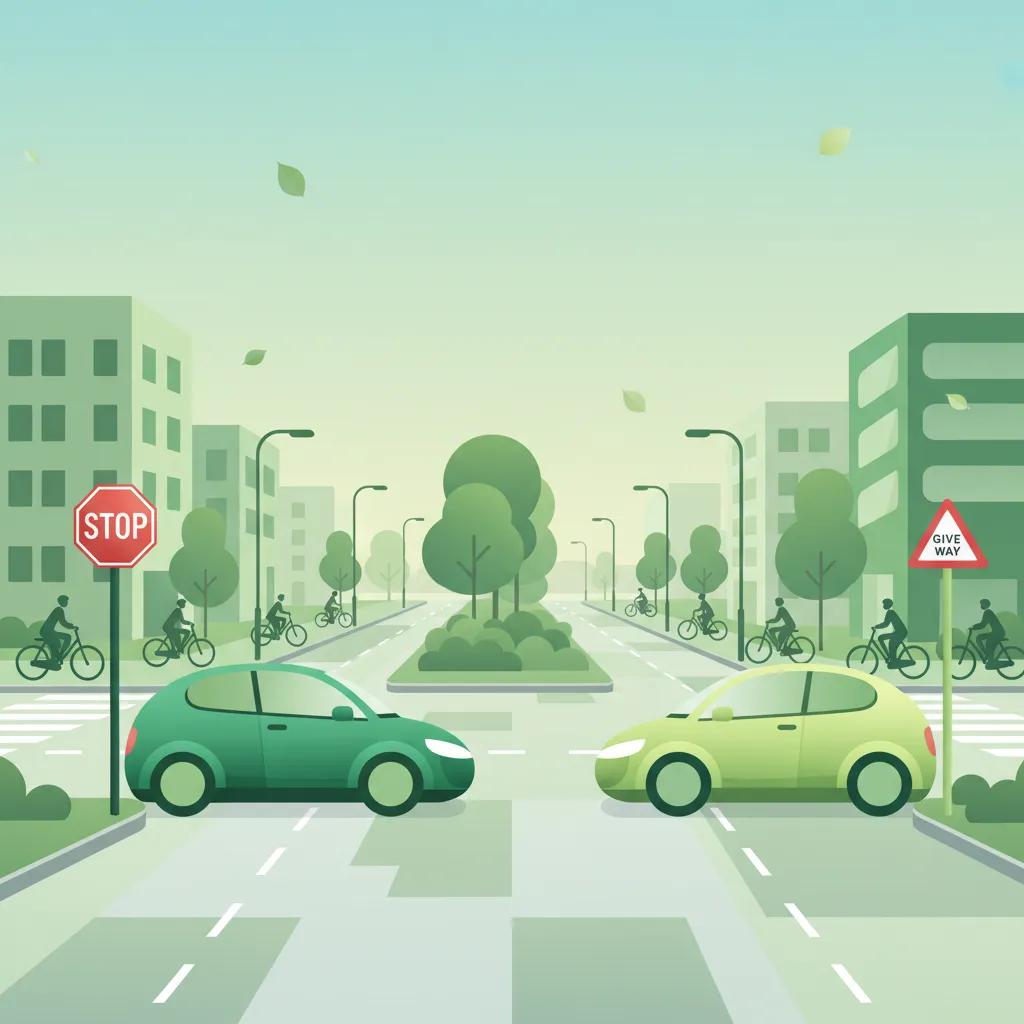
This lesson details the specific actions required at intersections controlled by 'Stop' and 'Give Way' signs. You will learn the legal requirement to come to a complete stop at a stop line (BORD 44) and the obligation to yield to all crossing traffic when encountering give-way markings ('haaientanden'). The content covers safe approach speeds and effective scanning techniques for motorcyclists to accurately assess gaps in traffic before proceeding.
This lesson explains the concept of strategic lane positioning, moving beyond simply staying in the center of the lane. It details how to select a position—typically in the left or right wheel track of cars—to be more visible in other drivers' mirrors, avoid the slippery center strip, and maintain a space cushion. The content emphasizes constantly adjusting position based on traffic, road conditions, and potential hazards.
This lesson delves into the psychological aspects of motorcycling, exploring how factors like attitude, emotion, and fatigue can influence decision-making and risk-taking. It encourages self-awareness, helping riders recognize states like overconfidence or distraction that can lead to poor choices. The ultimate goal is to foster a mature, defensive mindset focused on risk mitigation and making safe, responsible decisions on every ride.
Find clear answers to common questions learners have about Conflict Resolution Strategies. Learn how the lesson is structured, which driving theory objectives it supports, and how it fits into the overall learning path of units and curriculum progression in the Netherlands. These explanations help you understand key concepts, lesson flow, and exam focused study goals.
You should always prioritize yielding when there's any doubt about another road user's intentions or ability to yield. This includes situations where a driver might not see you, is distracted, or appears aggressive. Your safety is paramount, and asserting your legal right-of-way in a dangerous situation can lead to serious injury or worse.
Making eye contact with other drivers, especially at intersections or when merging, is a powerful communication tool. It helps establish mutual awareness and confirms that you have been seen. If you make eye contact and the other driver acknowledges you, it significantly reduces the chance of them pulling out in front of you unexpectedly.
Clear and timely signalling is essential. This includes using your turn indicators well in advance, using appropriate hand signals if necessary (though less common on motorcycles for some actions), and using body language. A slight head nod or looking in the direction you intend to go can also help communicate your intentions, especially to pedestrians or cyclists.
Yes, common scenarios include at intersections where car drivers may not anticipate a motorcycle's speed or lane position, during lane changes, and when encountering trams or cyclists who have specific priority rules. Tunnels and roundabouts also present unique challenges where clear communication and anticipation are vital.
The CBR exam includes questions designed to test your understanding of hazard perception and defensive riding. This lesson directly addresses those areas by teaching you how to identify potential conflicts and choose the safest course of action, even when other road users might not behave as expected.