
This lesson focuses on 'Being Visible: Defensive Road Positioning', a critical topic within the 'Visibility, Lighting, and Weather-Related Hazards' unit for your Dutch A2 motorcycle license theory. Understanding how to position your motorcycle correctly in your lane is key to being seen by other road users and preparing for potential hazards. We will explore how strategic lane placement can prevent you from being in dangerous blind spots and ensure you always have an escape route.

As a motorcyclist, your position on the road is one of the most critical factors influencing your safety and visibility to other traffic participants. Defensive road positioning is a proactive strategy where you continuously adjust your lateral placement within the lane. This ensures you remain within the visual fields of surrounding drivers, avoid their blind spots (or "dode hoek"), and maintain a safe, maneuverable buffer zone at all times.
This lesson is essential for passing your Dutch Category A2 motorcycle theory exam. It will equip you with the knowledge to reduce the risk of collisions, improve your reaction time, and fulfill your legal obligations for safe riding on Dutch roads. By understanding and applying these principles, you can significantly enhance your safety and confidence as a motorcyclist.
The unique characteristics of motorcycles – their smaller size and agility – mean that riders must actively work to be seen. Unlike larger vehicles, motorcycles can easily disappear into a driver's blind spot, leading to dangerous situations. Defensive positioning isn't just about where you are in your lane; it's about anticipating potential hazards and creating a safe environment around yourself.
Your choice of lane position directly impacts how visible you are to other road users, especially those in cars and trucks. A well-chosen position can make the difference between being seen and being overlooked. It also dictates your ability to react to sudden changes in traffic or road conditions, offering you crucial milliseconds to avoid a collision.
Collisions involving motorcycles often occur because the driver of the other vehicle "didn't see" the motorcycle. This highlights a fundamental human factor in driving: drivers have limited visual scanning patterns and inherent blind spots. By consciously placing yourself in areas where you are most likely to be seen, you counteract these human limitations and dramatically reduce the risk of being involved in an accident. Proper positioning allows other drivers to anticipate your movements, providing a safer and more predictable traffic flow for everyone.
Defensive road positioning is built upon several core principles that, when practiced consistently, create a robust safety strategy. Each principle contributes to keeping you visible, creating a buffer for error, and providing options in emergencies.
Riding so that your motorcycle is consistently within the visual field of the driver ahead and behind, utilizing their mirrors and direct line-of-sight. This often means staying near the centre of the lane.
A visible lane position means positioning your motorcycle where you are most likely to be seen by other drivers. This often involves riding within the central portion of your lane, where you are visible in the vehicle's rear-view or side-view mirrors. Avoid hugging the lane edges or lingering directly behind another vehicle, as these actions often place you squarely in a blind spot. Your goal is to be predictable and conspicuous.
A dynamic, adjustable buffer zone laterally and longitudinally around your motorcycle that provides sufficient time for reaction and maneuver.
A space cushion is the invisible protective bubble you create around your motorcycle. This buffer zone, both in front/behind (longitudinal) and to the sides (lateral), gives you vital time and space to react to sudden hazards. Without an adequate space cushion, you have no room for error, forcing you into dangerous emergency maneuvers with little chance of success. The size of this cushion must adapt to your speed, road conditions, and traffic density.
The "dode hoek" is the most dangerous area for motorcyclists. These blind spots exist for all vehicles, but are particularly large for trucks and buses. Actively steering clear of these zones is paramount for your safety. You must understand where these zones are for different vehicle types and constantly adjust your position to avoid them. Never assume a driver has seen you, even if you believe you're visible.
A pre-identified, clear trajectory (usually lateral) that can be used instantly if a hazard emerges, allowing for emergency maneuvers.
Escape path planning is about always having a "way out" of your current situation. This means constantly scanning your surroundings and identifying open spaces to your left or right. If the vehicle ahead brakes suddenly, or another driver unexpectedly changes lanes, an identified escape path allows you to steer clear without colliding. Your lane positioning should always facilitate an open escape route.
Continuous, subtle adjustments in lane position based on traffic flow, road geometry, and real-time visibility feedback from other road users.
Traffic conditions are rarely static. Dynamic repositioning refers to the continuous, subtle adjustments you make to your lane position as the environment changes. This includes moving slightly left or right to improve visibility, widening your space cushion, or preparing for an upcoming turn. It demands constant situational awareness and smooth, controlled steering inputs.
Building on the core principles, let's explore the specific concepts that underpin effective defensive road positioning. Understanding these details will help you apply the principles with greater precision and confidence.
The Blind Spot (Dode Hoek) is an area around a vehicle that cannot be seen by the driver through their mirrors or direct line-of-sight. For a typical passenger car, this zone extends approximately 1.2 meters wide to the side and slightly behind the vehicle. For larger vehicles like trucks or buses, the dode hoek is significantly larger, extending further back, higher, and wider—sometimes up to 2.5 meters.
Riding within a blind spot makes you virtually invisible to the driver. This dramatically increases the risk of a collision if the driver decides to change lanes, turn, or brake suddenly. Dutch traffic law (RVV Article 5.7) implicitly places a responsibility on road users to avoid placing themselves in positions where they are not reasonably visible. This legal obligation underscores the importance of actively avoiding blind spots. A common mistake is assuming that if you can see a driver's mirror, they can see you; this is often incorrect.
The angular coverage provided by a vehicle's side-view and rear-view mirrors, which determines the area a driver can see.
A vehicle's mirrors provide a combined visual field, typically around 150 degrees for a standard car. The side-view mirrors cover approximately 60 degrees on each side, while the rear-view mirror offers about a 30-degree central view. Motorcyclists must position themselves within these angles to be seen. If you are too far left or right within the lane, or too close behind the vehicle, you can easily fall outside this coverage. Remember that drivers may not have their mirrors perfectly adjusted, further reducing their effective visual field.
Maintaining an adequate space cushion is fundamental to safe riding.
When calculating your longitudinal space cushion, remember that the "two-second rule" is a minimum. Always consider increasing it based on factors like weather, road surface, visibility, and your speed.
Your horizontal placement within the lane is critical. Generally, riding within the central 40% of the lane is preferred. This position offers several advantages:
Avoid riding too close to the kerb (right edge) on narrow urban streets. While it might feel like you're getting out of the way of traffic, it limits your lateral escape path to one side and exposes you to kerbside hazards such as drain covers, loose gravel, or opening car doors. Similarly, avoid the extreme inner side of the lane, which can place you in a vehicle's blind spot.
While lane positioning is crucial, it should be combined with other measures to maximize your conspicuity—how noticeable you are to other road users.
The Dutch traffic regulations, known as RVV 1990, contain several articles that directly or indirectly govern defensive road positioning. Adhering to these rules is not only a legal obligation but also a fundamental aspect of safe riding.
Article 5.6 (Safe distance): "The driver must keep a safe distance to other road users, ensuring that the vehicle can be stopped safely."
This article legally mandates the maintenance of a safe longitudinal space cushion. The "safe distance" is not a fixed number of meters but must be adjusted based on speed, road conditions, and vehicle type. For motorcyclists, this reinforces the minimum two-second rule, which should be extended under challenging conditions. Failing to keep a safe distance is a common cause of rear-end collisions.
Article 5.7 (Visibility): "Road users must not position themselves where they are not visible to other road users."
This article is particularly relevant for motorcyclists. It places a legal responsibility on you to actively ensure you are seen by others, specifically prohibiting you from riding in blind spots. This means constant awareness of where other vehicles are relative to your position and making proactive adjustments to stay in their visual field. It directly supports the principle of Visible Lane Position and Blind Spot Avoidance.
Article 12 (Use of lights): "Motorcycles must use dipped beams from sunset to sunrise, and when visibility is reduced."
This regulation covers when and how you must use your motorcycle's lighting. Beyond the legal mandate for specific times or conditions, using your dipped beam during the day significantly improves your conspicuity. It ensures that your motorcycle is more easily detected by other drivers, especially when they are looking into direct sunlight or their mirrors are affected by glare.
Article 5 (Obligation to avoid danger): "Drivers shall drive so as to avoid causing danger to other traffic participants."
This overarching rule implies that all your actions on the road, including your lane positioning, must contribute to overall safety and not endanger others. Maintaining space cushions, planning escape paths, and reacting appropriately to traffic changes all fall under this general duty. It means you must be proactive in preventing hazardous situations, not just reacting to them.
Article 8 (Overtaking): "When overtaking, the overtaking vehicle must not take up more than one lane, and must keep a safe distance from the vehicle overtaken."
This article reminds motorcyclists to execute overtaking maneuvers safely. When passing another vehicle, you must not cut in too sharply or occupy the same lane in a way that places you in their blind spot. Always ensure you have sufficient lateral clearance from the overtaken vehicle and quickly re-establish a visible lane position and space cushion after completing the pass.
Understanding the principles and rules is one thing; applying them effectively requires awareness of common pitfalls and how to adapt to varying conditions.
Many collisions stem from recurring mistakes in positioning:
Your positioning strategy must adapt to the environment:
Understanding the scientific and psychological reasons behind visibility issues reinforces why defensive positioning is so vital.
Human drivers primarily focus their vision straight ahead, with peripheral vision being limited to approximately 120 degrees. Motorcycles, being smaller, can easily slip into these peripheral blind spots or be "masked" by larger objects. The average human perception-reaction time is about 1.5 seconds. This includes the time it takes to perceive a hazard, recognize it, decide on a response, and initiate that response. At 50 km/h, your motorcycle travels approximately 21 meters during this 1.5-second period. An insufficient space cushion leaves no room for this critical reaction time.
Side-view mirrors are typically angled around 30 degrees from the vehicle's longitudinal axis. This specific angling, while providing a wider view, still leaves significant blind spots directly behind and to the sides of the vehicle. These "dode hoek" areas are precisely where motorcyclists are most vulnerable.
Dutch road safety data consistently highlights the danger: studies show that a significant percentage of motorcycle-car collisions (often exceeding 45%) occur because the motorcyclist was in the car's blind spot at the time of impact. This statistic powerfully demonstrates that lighting alone, while helpful, does not guarantee detection; lane position determines whether you fall within another driver's crucial visual field. Both elements are required for effective visibility.
Mastering defensive road positioning is more than just a theory lesson; it's a fundamental skill for every motorcyclist. By consistently applying these principles and adhering to Dutch traffic laws, you actively reduce your risks and contribute to a safer road environment. Remember to:
This proactive approach ensures you are not just riding, but riding safely and responsibly on Dutch roads, well-prepared for your CBR theory exam and beyond.
Lesson content overview
Explore all units and lessons included in this driving theory course.
Explore search topics learners often look for when studying Being Visible: Defensive Road Positioning. These topics reflect common questions about road rules, driving situations, safety guidance, and lesson level theory preparation for learners in the Netherlands.
Browse additional driving theory lessons that cover connected traffic rules, road signs, and common driving situations related to this topic. Improve your understanding of how different rules interact across everyday traffic scenarios.
Explore real-world traffic scenarios demonstrating defensive road positioning for motorcyclists. Learn how to maximize visibility and avoid hazards in complex Dutch traffic situations, enhancing your understanding beyond basic theory.

This lesson explains the concept of strategic lane positioning, moving beyond simply staying in the center of the lane. It details how to select a position—typically in the left or right wheel track of cars—to be more visible in other drivers' mirrors, avoid the slippery center strip, and maintain a space cushion. The content emphasizes constantly adjusting position based on traffic, road conditions, and potential hazards.

This lesson provides critical instruction on managing blind spots ('dode hoek') to prevent collisions, particularly during lane changes. It covers the correct setup and use of mirrors, but stresses their limitations and the absolute necessity of the 'lifesaver' shoulder check before any lateral movement. Furthermore, it teaches riders how to be aware of the large blind spots around cars and especially trucks, and how to position themselves on the road to remain visible to other drivers at all times.
This lesson focuses on the meaning of different road markings and their implications for motorcycle lane discipline. You will learn the legal distinction between solid and broken lines regarding overtaking, how to interpret directional arrows for lane choice, and the rules for using special lanes. The content emphasizes maintaining a safe and strategic position within the lane to maximize visibility and create a safety buffer from other vehicles.
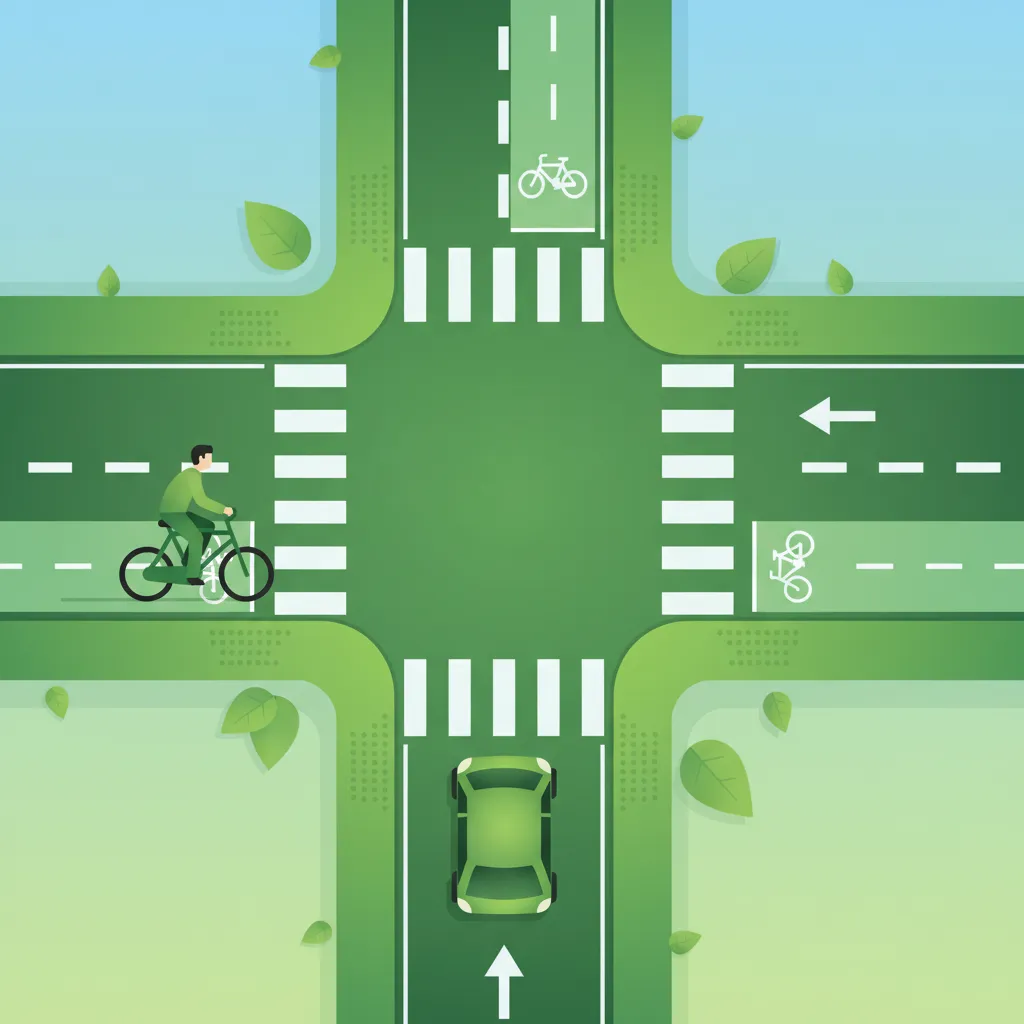
This lesson explores the legal meaning of various road surface markings, including solid and broken lane delimiters, directional arrows, and special-purpose lane indicators. It describes how markings dictate permitted maneuvers, such as overtaking and lane changes, and alert riders to upcoming hazards or changes in road layout. The content also examines the relationship between markings and road design in the Netherlands, emphasizing how a motorcyclist must interpret these visual cues for safe positioning.

This lesson provides a detailed framework for how motorcyclists must safely and legally interact with diverse road users, including cars, trucks, cyclists, and pedestrians. It covers the required communication signals, anticipatory behaviors, and specific positioning techniques necessary to coexist in complex traffic environments like urban centers and shared spaces. Emphasis is placed on legal expectations and practical methods that actively reduce collision risk and promote smooth traffic flow.
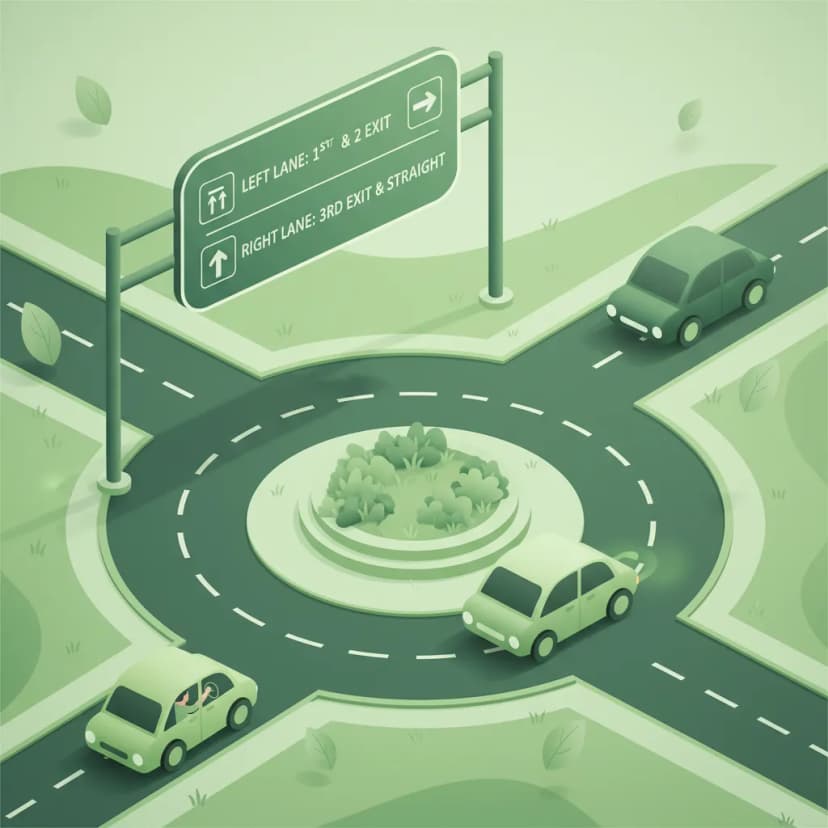
This lesson provides a detailed guide to navigating Dutch roundabouts ('rotondes'), including single-lane, multi-lane, and 'turbo' designs. It clarifies the specific priority rules that apply when entering the roundabout and the critical importance of correct signaling when changing lanes or exiting. Special attention is given to the vulnerable position of motorcyclists and the need to be aware of other vehicles' blind spots and the priority rules concerning cyclists on or near the roundabout.
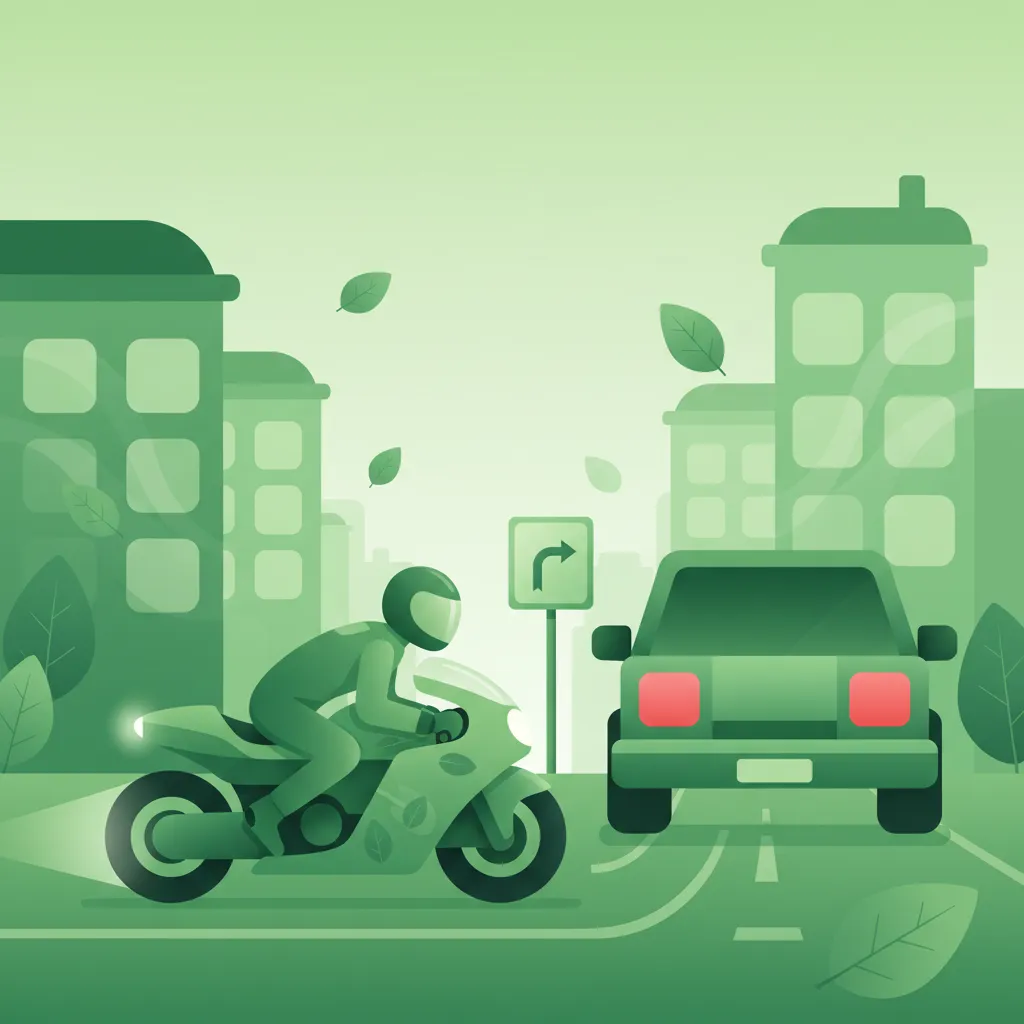
Defensive riding means riding to prevent collisions, despite the actions of others or the conditions around you. This lesson teaches the core principles of this proactive safety strategy. Key techniques include managing the space cushion around your vehicle, positioning yourself in your lane for maximum visibility, constantly planning an escape route, and communicating your intentions clearly to other road users. This mindset acknowledges your vulnerability and empowers you to take control of your own safety.

Understand the meaning of various road markings and how they dictate your position on the road. This lesson covers the rules associated with solid and broken white lines, bicycle lane symbols, suggestion strips, and arrows painted on the road surface. Proper lane discipline, including when overtaking is permitted and how to position yourself correctly within a lane or on a cycle path, is a fundamental skill for safe and predictable riding that is tested by the CBR.

This lesson provides a detailed explanation of the various markings painted on the road surface, which are as legally binding as physical signs. It clarifies the rules associated with solid and broken white lines, including restrictions on crossing them, and the function of arrows, chevrons, and text painted in lanes. A thorough understanding of these markings is fundamental for correct lane discipline, positioning, and safe maneuvering on a motorcycle.
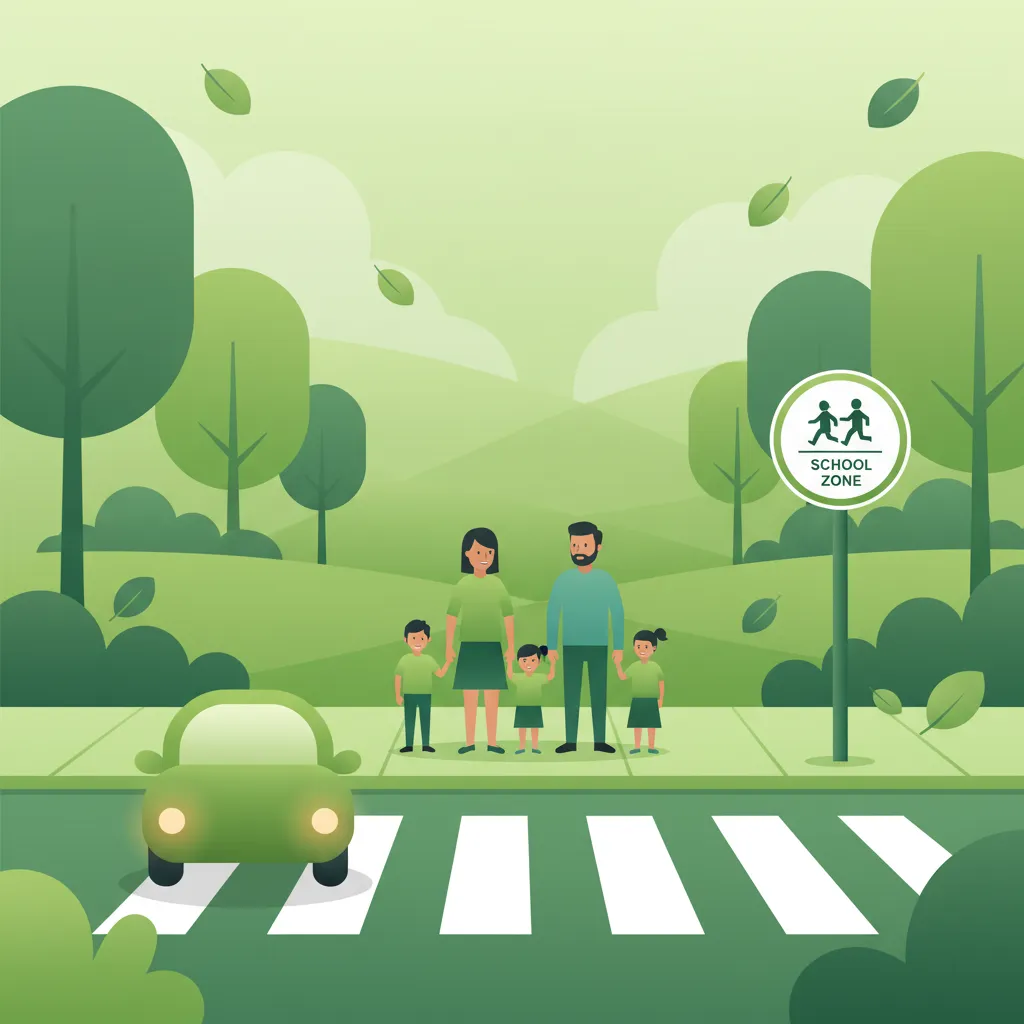
This lesson focuses on the legal requirements and safe practices for riding near pedestrian crossings ('zebrapaden') and designated school zones. It details the absolute obligation to yield to pedestrians on or about to use a crossing and the need for significantly reduced speeds and heightened vigilance in areas with children. The content underscores the importance of anticipation and being prepared for unpredictable movements from vulnerable road users to prevent serious incidents.
Understand and avoid frequent errors in motorcycle lane positioning and visibility on Dutch roads. Learn to prevent collisions by recognizing and correcting common mistakes related to blind spots and defensive riding techniques.
This lesson provides critical instruction on managing blind spots ('dode hoek') to prevent collisions, particularly during lane changes. It covers the correct setup and use of mirrors, but stresses their limitations and the absolute necessity of the 'lifesaver' shoulder check before any lateral movement. Furthermore, it teaches riders how to be aware of the large blind spots around cars and especially trucks, and how to position themselves on the road to remain visible to other drivers at all times.
This lesson explains the concept of strategic lane positioning, moving beyond simply staying in the center of the lane. It details how to select a position—typically in the left or right wheel track of cars—to be more visible in other drivers' mirrors, avoid the slippery center strip, and maintain a space cushion. The content emphasizes constantly adjusting position based on traffic, road conditions, and potential hazards.

This lesson focuses on the dual challenge of visibility: seeing the road ahead and ensuring other drivers see you. It covers the legal requirements and tactical use of headlights ('koplampen'), including when to use high and low beams, and the importance of daytime running lights. Additionally, it explores strategies for enhancing personal conspicuity through high-visibility and reflective clothing, and using lane positioning to stand out in traffic and avoid blind spots.

This lesson covers the critical safety practice of maintaining 360-degree awareness through the effective use of mirrors and blind-spot checks. It details a systematic approach to scanning mirrors and performing a physical head check (shoulder check) before any change in position or direction. Understanding the limitations of mirrors and identifying the motorcycle's blind spots are key learning outcomes for preventing collisions with other vehicles.
This lesson focuses on the meaning of different road markings and their implications for motorcycle lane discipline. You will learn the legal distinction between solid and broken lines regarding overtaking, how to interpret directional arrows for lane choice, and the rules for using special lanes. The content emphasizes maintaining a safe and strategic position within the lane to maximize visibility and create a safety buffer from other vehicles.

Safely merging and changing lanes requires a systematic approach known as 'mirror-signal-blind spot'. This lesson explains the correct procedure for entering a carriageway from an acceleration lane, ensuring you match the speed of the traffic flow and find a safe gap. It also covers the technique for changing lanes, emphasizing the critical importance of checking your blind spot with a shoulder check (dode hoek) before making any lateral movement to prevent collisions.
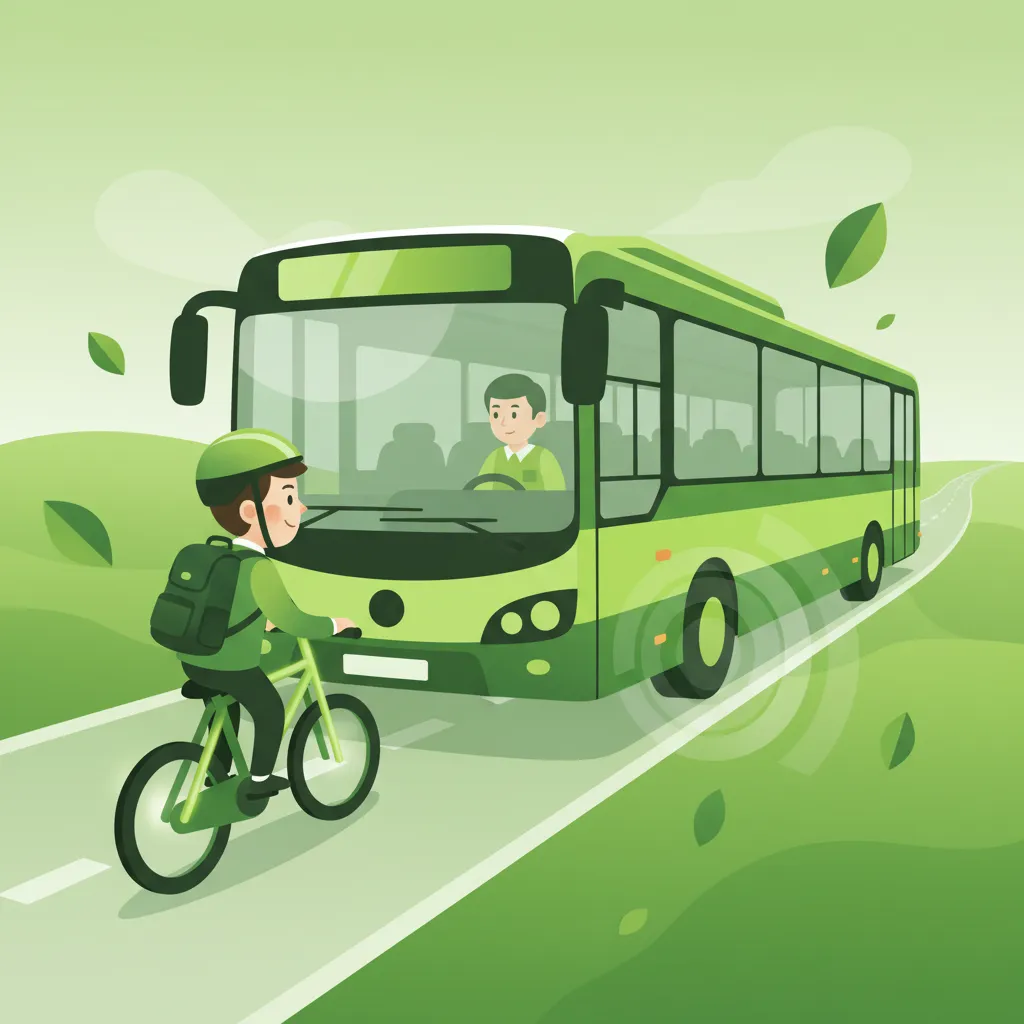
This lesson focuses on the specific hazards and techniques for safely sharing the road with heavy goods vehicles (HGVs) and buses. It provides a detailed explanation of their extensive blind spots ('dode hoek') and teaches riders where to position themselves to remain visible. The curriculum also covers how to manage the significant air turbulence created by these vehicles when overtaking and how to anticipate their wide turning circles at junctions and roundabouts.
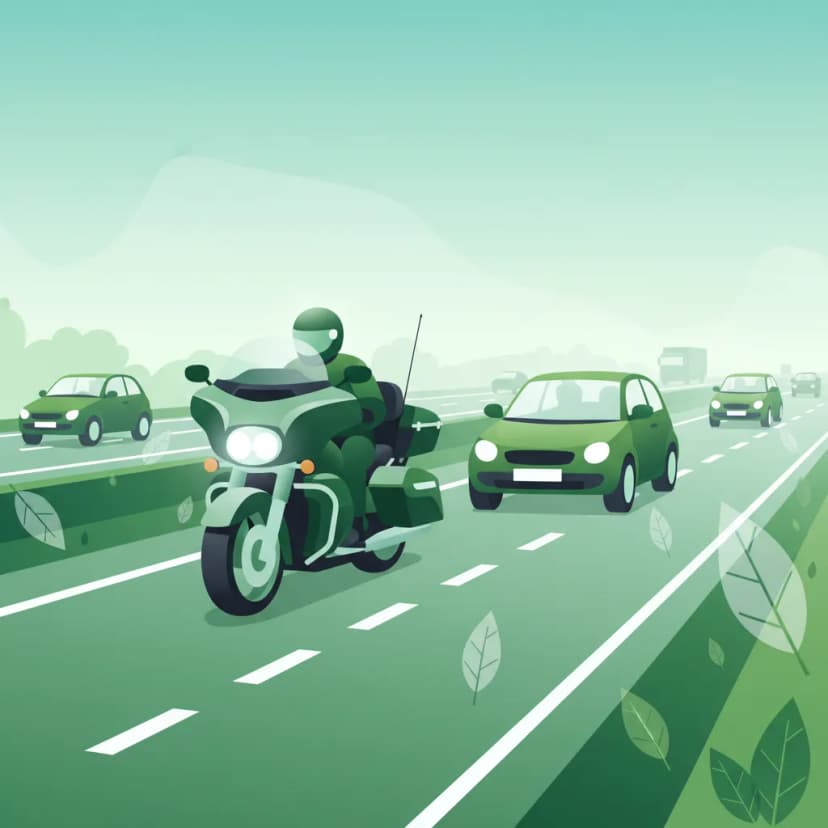
This lesson details the systematic process for safely overtaking on a multi-lane motorway, leveraging the acceleration capabilities of a Category A motorcycle. It covers the 'mirror, signal, maneuver' sequence, with a strong emphasis on the critical shoulder check to clear the blind spot before moving out. The content also discusses how to judge closing speeds, ensure adequate space before returning to the lane, and how to handle situations involving multiple lanes and slower-moving heavy vehicles.
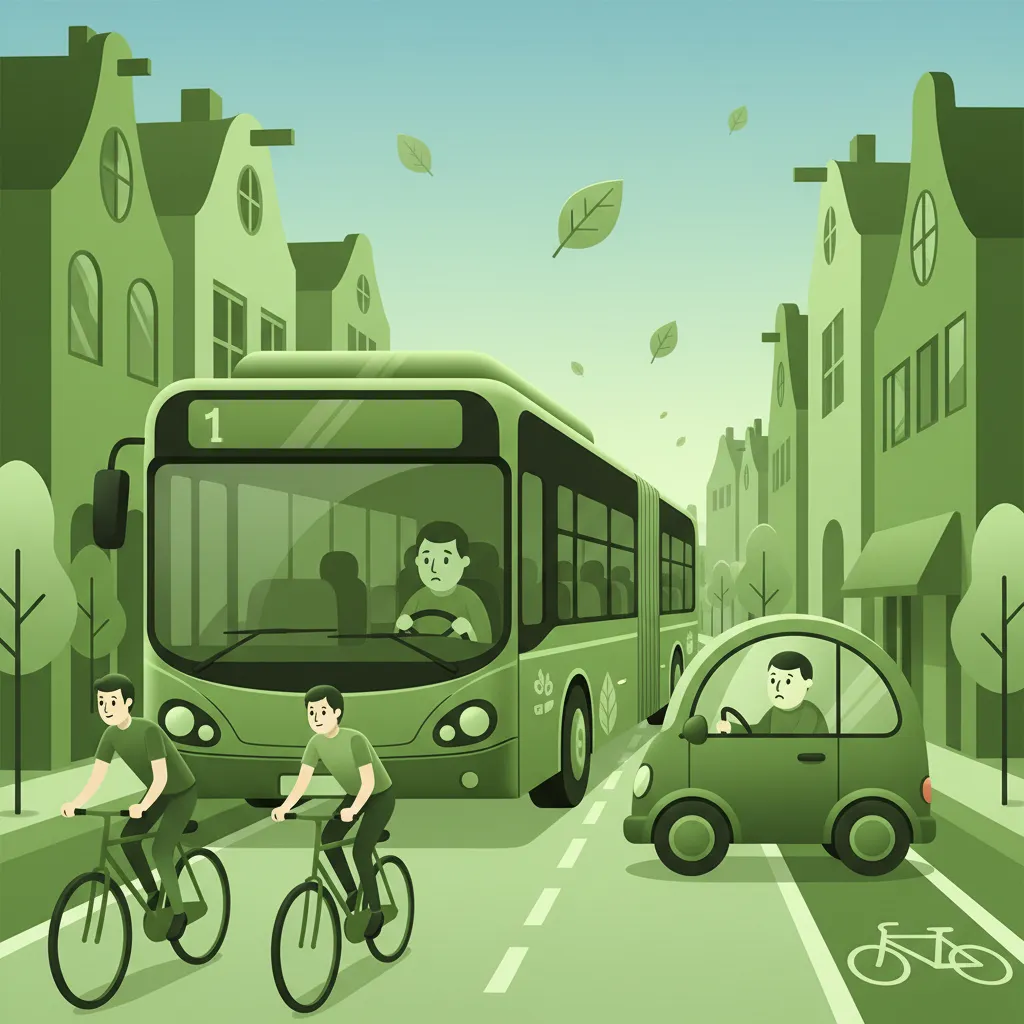
This lesson covers strategies for safely navigating around vehicles at both ends of the size spectrum. It details the large blind spots ('no-zones') around trucks and buses and advises on where to position a motorcycle to remain visible. Equally, it emphasizes the duty of care towards vulnerable road users, teaching riders to anticipate the movements of pedestrians and cyclists and to always provide them with ample space when passing.

This lesson reinforces the fundamental rule of Dutch highway driving: use the rightmost lane available and use the lanes to the left only for overtaking. You will learn the complete, safe overtaking procedure: check mirrors, signal, perform a shoulder check for the blind spot, smoothly move over, accelerate past the vehicle, and then return to the right lane when safe.
Find clear answers to common questions learners have about Being Visible: Defensive Road Positioning. Learn how the lesson is structured, which driving theory objectives it supports, and how it fits into the overall learning path of units and curriculum progression in the Netherlands. These explanations help you understand key concepts, lesson flow, and exam focused study goals.
The 'dode hoek', or blind spot, is the area around a larger vehicle (like a truck or bus) that the driver cannot see directly or in their mirrors. For motorcyclists, being in this area is extremely dangerous as the other driver might not see you if they change lanes, turn, or brake unexpectedly. It's vital to position your motorcycle so you are always visible.
To be visible in a car's mirrors, position your motorcycle not directly behind the car, but slightly to the left or right of the centre of its lane. This ensures your bike falls within the mirror's field of vision. Avoid staying in the middle of the car's lane, as this is often the deepest blind spot.
By positioning yourself strategically – for example, slightly to the side of your lane or towards the part of the lane that gives you the best view ahead – you naturally create space. This space acts as an 'escape path' if a hazard appears suddenly, allowing you to manoeuvre safely without entering another vehicle's path or colliding with an obstacle.
No, riding in the exact middle of the lane is not always safest. While it maximizes your visibility in some situations, it can also place you in a vehicle's blind spot. It's better to 'ride the lane' dynamically, adjusting your position within the lane to maximize visibility, create space, and anticipate potential hazards.
Yes, defensive road positioning is crucial on all types of roads in the Netherlands, from city streets to highways. However, the specific positioning may vary based on traffic speed, density, and road layout. Understanding the principles allows you to adapt your position effectively in any scenario.