
Welcome to the essential unit on Road Signs and Motorcycle-Specific Indicators, tailored for your Dutch A2 motorcycle license theory exam. This unit covers all critical traffic signs, signals, and road markings you'll encounter in the Netherlands, with a special emphasis on how they apply to A2 riders. Learn to navigate regulatory, warning, and informational signs, alongside vital information on motorcycle lighting and indicator usage to ensure you ride safely and legally.
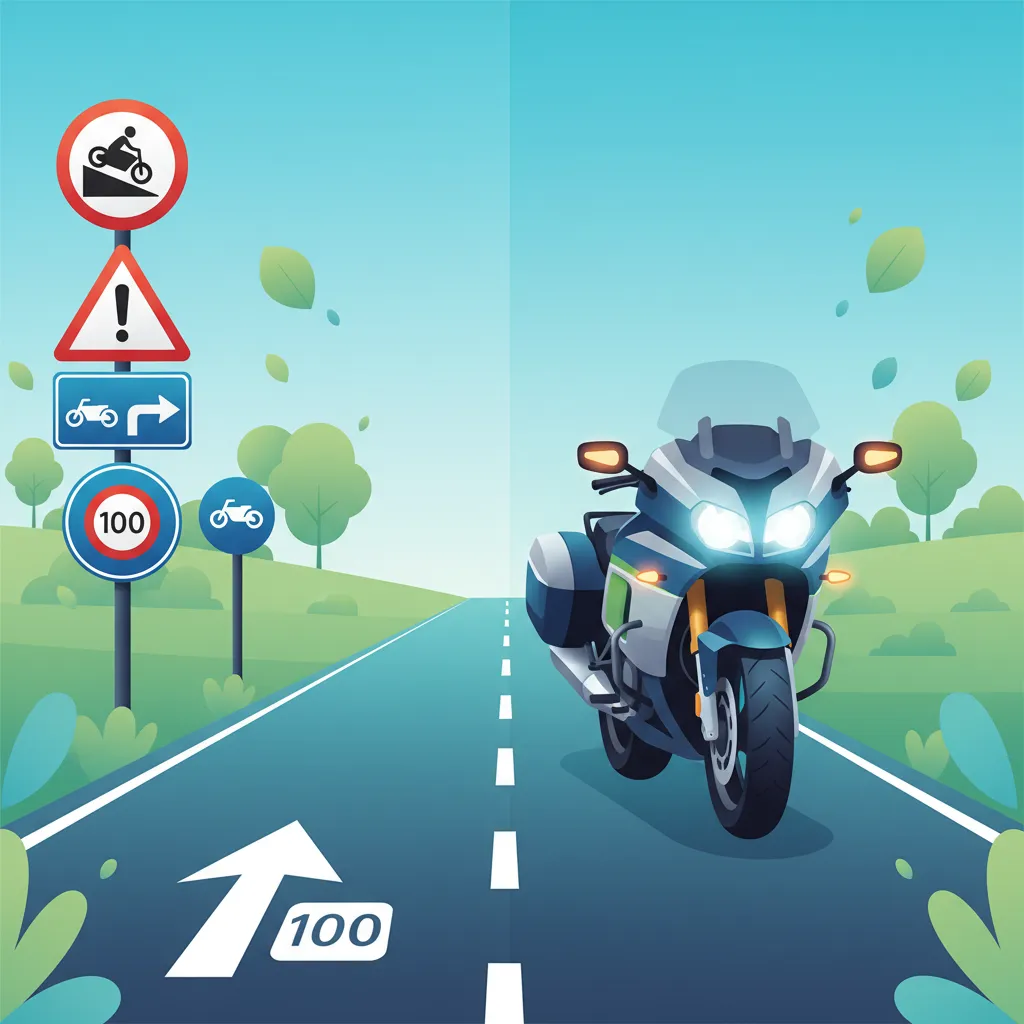
Browse all lessons that make up Road Signs and Motorcycle-Specific Indicators. Each lesson focuses on specific topics, learning objectives, and core concepts, helping you build essential knowledge and follow a clear, structured progression toward your study goals in the Netherlands.
This lesson focuses on Dutch regulatory signs that enforce mandatory rules and restrictions, particularly those impacting A2 motorcyclists. You will learn to recognize and obey prohibition signs, such as those indicating a motorcycle ban (BORD 40), speed limits, and overtaking restrictions (BORD 21). The content explains the legal consequences of non-compliance and how to apply these rules in practical riding scenarios to ensure full adherence to Dutch traffic law.
This lesson details the interpretation of Dutch warning signs, which alert riders to potential dangers and changing road conditions. You will study signs indicating sharp curves, road narrowing (BORD 30), and temporary hazards like road works (BORD 36), learning to adjust speed and road position proactively. The content emphasizes how the A2 motorcycle's characteristics require earlier hazard recognition and response compared to other vehicles for maintaining control.
This lesson explains how to interpret directional and informational signs to navigate the Dutch road network effectively. You will learn to read route signs on highways, understand lane guidance arrows for complex intersections, and identify panels indicating services like fuel stations or rest areas. The content focuses on how motorcyclists can use this information for safe and efficient route planning, including adapting to real-time information from electronic signs.
This lesson covers the mandatory lighting and signaling equipment for A2 motorcycles under Dutch law, ensuring you remain visible and communicate your intentions correctly. You will learn the rules for using headlights, taillights, turn signals, and brake lights in various conditions, including daytime and adverse weather. The content also addresses the importance of maintaining this equipment and using hand signals as a valid secondary method of communication in traffic.
This lesson focuses on the meaning of different road markings and their implications for motorcycle lane discipline. You will learn the legal distinction between solid and broken lines regarding overtaking, how to interpret directional arrows for lane choice, and the rules for using special lanes. The content emphasizes maintaining a safe and strategic position within the lane to maximize visibility and create a safety buffer from other vehicles.
Explore high-intent keywords and long-tail search topics learners use when researching Road Signs and Motorcycle-Specific Indicators. These terms reflect how people search for reliable study materials, structured explanations, and unit-level theory preparation support in the Netherlands.
Find clear answers to the most common questions learners ask about Road Signs and Motorcycle-Specific Indicators. Understand how the unit is organized, what learning goals it supports, and how it contributes to your study progression with structured explanations and practical guidance tailored for learners in the Netherlands.
Most traffic signs apply to all road users, including motorcycles. However, this unit highlights signs or situations where specific rules or interpretations are crucial for A2 motorcycle riders. For instance, certain restrictions or lane usages might differ or require special attention for motorcycles.
Common mistakes include not using indicators early enough, forgetting to cancel them after a turn, or using them inconsistently. Clear and timely signalling is vital for motorcyclists to communicate intentions to faster-moving or slower-moving traffic, preventing dangerous situations.
In the Netherlands, all motorcycles must have functioning headlights (dipped and main beam), taillights, brake lights, and turn signals (indicators). This unit covers the specific requirements and best practices for using these lights, especially for increasing visibility in various conditions.
Road markings provide essential guidance for lane discipline, positioning, and anticipating hazards. For motorcyclists, understanding markings like the edge line, lane dividers, and warning symbols helps in maintaining a safe riding path, especially when filtering or in heavy traffic.
Yes, while many signs are general, some may imply restrictions or considerations for motorcycles, such as weight limits on bridges or specific lane access rules. We'll cover how to interpret these signs in the context of operating an A2 motorcycle.
While not always a specific sign, understanding the rules and road markings that permit or prohibit lane filtering is crucial. This unit touches upon how road layout and signs can indicate areas where filtering might be permitted or dangerous, aiding in safe navigation during congestion.
All included lessons
Lessons in Road Signs and Motorcycle-Specific Indicators
See who benefits most from studying Road Signs and Motorcycle-Specific Indicators. This overview explains how the unit supports different learning needs, what level of knowledge is helpful before starting, and how it fits into the overall study path in the Netherlands.
This unit is specifically designed for aspiring A2 motorcycle license holders in the Netherlands preparing for their CBR theory exam. It's particularly beneficial for riders who need a focused understanding of how general Dutch traffic signs and signals apply specifically to motorcycle operation, ensuring they meet all legal and safety standards.

See how Dutch Motorcycle Theory (A2) is structured, with key topics, learning objectives, and a step-by-step path for theory preparation in the Netherlands.
Explore all units and lessons included in this driving theory course.