
Navigating Dutch roads involves sharing space with large vehicles like trucks and buses. This lesson, part of your Category A motorcycle theory preparation, focuses on the unique challenges and safety techniques required when riding alongside these imposing vehicles. Understanding their limitations and your own positioning is key to avoiding dangerous situations and passing your CBR theory exam.
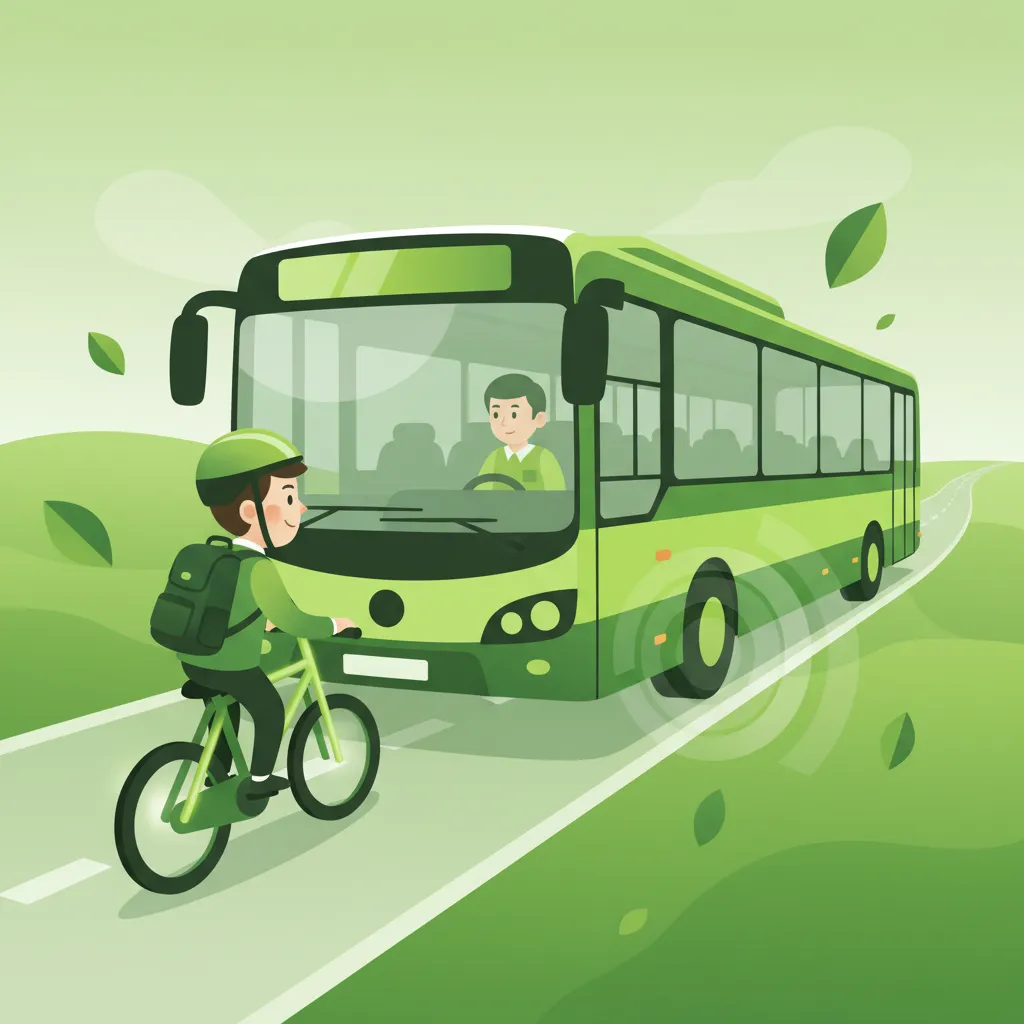
Motorcycling offers an exhilarating sense of freedom, but it also demands a heightened awareness of surroundings and an understanding of how different types of vehicles behave. Sharing the road with heavy goods vehicles (HGVs) and buses presents a unique set of challenges that motorcyclists must master to ensure their safety and the safety of others. This lesson, part of your Dutch Motorcycle Theory – Category A comprehensive preparation, delves into the specific hazards and essential techniques for safely navigating around these large vehicles in the Netherlands.
Heavy vehicles are significantly different from cars in terms of size, weight, maneuverability, and aerodynamic effects. These differences lead to phenomena such as extensive blind spots, strong air turbulence, and much longer braking distances, all of which demand careful attention from motorcyclists. Understanding these dynamics and implementing predictive riding strategies will drastically reduce your collision risk and help you fulfill your legal obligations under Dutch traffic law.
Interacting with heavy vehicles requires motorcyclists to constantly manage visibility, anticipate their movements, and understand the physical forces at play. Ignoring these factors is a common cause of accidents involving HGVs and buses.
The term "dode hoek" is Dutch for "dead angle" or blind spot, and it refers to areas around a heavy vehicle that are not visible to the driver, even with properly adjusted mirrors. These zones are considerably larger than those of passenger cars, making motorcyclists particularly vulnerable if they position themselves incorrectly.
Definition and Types of Blind Spots:
The dode hoek extends up to approximately 3 metres directly behind the vehicle and about 2 metres to the sides, widening towards the front of the vehicle.
Practical Implications: If you are in a heavy vehicle's blind spot, the driver cannot see you. This dramatically increases the risk of a collision during maneuvers such as lane changes, turns, or even when the heavy vehicle is merely changing speed. Motorcyclists often assume that if they can see the driver's mirrors, the driver can see them. This is a dangerous misconception; visibility in a mirror can be fleeting or obstructed.
Rules and Regulations: Dutch traffic law (RVV 1990 art. 5) places a general visibility obligation on all road users, including heavy vehicle drivers, to ensure they are aware of their surroundings. Heavy vehicles are also required to have reflective markings (Blind Spot Markings) on their sides to improve peripheral detection, especially in low light.
Heavy vehicles displace a substantial amount of air as they move, creating significant Aerodynamic Draft or air turbulence. This disturbed airflow can exert considerable lateral and longitudinal forces on a much lighter motorcycle, potentially leading to instability or loss of control.
Definition and Categories:
Aerodynamic Draft is the movement of air generated by a large, fast-moving vehicle, which can create areas of low pressure and swirling vortices.
Practical Implications: Encountering sudden air turbulence can destabilize your motorcycle, leading to a momentary loss of balance, speed wobble, or an unintended swerve. This is particularly dangerous at higher speeds or during overtaking maneuvers. Even a slow-moving heavy vehicle can generate noticeable turbulence, especially in windy conditions.
Mitigation Strategies: To counter these effects, motorcyclists must maintain ample Lateral Clearance when passing and reduce their Relative Speed to the heavy vehicle. This reduces the force of the air disturbance and provides more time to react.
Due to their length and wheelbase, HGVs and buses require a significantly larger Turning Envelope (the physical space occupied during a turn) compared to passenger cars. This means they often need to swing out into adjacent lanes, or even over pavement, to complete a turn.
Definition and Types of Turns:
The Turning Envelope is the total area a vehicle needs to execute a turn, encompassing the path of its front and rear wheels, and any articulation.
Practical Implications: If a motorcyclist positions themselves too close to a turning heavy vehicle, particularly on the inside of a turn, they risk being struck by the vehicle's side or rear. This is a common cause of "squeeze play" accidents at junctions and roundabouts where drivers may not see a motorcyclist trapped between the turning vehicle and the curb. Always assume the heavy vehicle will use more road space than appears necessary.
Associated Rules: Dutch road signs may indicate "No overtaking for HGVs" in tight curves, further emphasizing the danger of these zones. Heavy vehicles are also legally required to signal turns early, providing time for other road users to anticipate their wide trajectory.
The sheer mass of HGVs and buses means they have considerably longer Extended Braking Distances compared to motorcycles or cars. Even with advanced braking systems like ABS, the laws of physics dictate that more force and distance are required to bring a heavier object to a stop.
Definition and Calculation:
Stopping Distance = Reaction Distance + Braking Distance. For heavy vehicles, both components can be substantial. Braking Distance is greatly affected by vehicle mass, speed, and road surface conditions.
Reaction Time before they even begin to apply the brakes (typically 1.0-1.5 seconds for an attentive driver).Practical Implications: Motorcyclists must maintain a significantly larger Longitudinal Gap when following a heavy vehicle than they would for a car. Underestimating this difference can lead to a rear-end collision if the heavy vehicle has to brake suddenly. The standard two-second rule is often insufficient behind a heavy vehicle; three seconds or more is generally recommended.
The handling characteristics of a heavy vehicle are not static; they change significantly based on its Load-Dependent Dynamics. The total weight of the cargo and how it's distributed can influence braking efficiency, acceleration, maneuverability, and even the turning radius.
Definition: Load-Dependent Dynamics refers to how a heavy vehicle's performance and handling change based on its total weight and the distribution of that weight.
Aerodynamic Draft.Practical Implications: Motorcyclists should try to observe a heavy vehicle's load if possible (e.g., noting if a trailer is full or empty) and adjust their riding accordingly. Always treat heavily loaded vehicles with extra caution, allowing for larger gaps and more Lateral Clearance. Never assume an unloaded bus or truck will behave like a passenger car.
Proactive and defensive riding is crucial when sharing the road with heavy vehicles. These strategies focus on ensuring you are seen, anticipating movements, and maintaining appropriate safe zones.
Your Lane Positioning is your primary tool for managing visibility and creating safe buffer zones around heavy vehicles.
dode hoek. Position yourself where you can clearly see the driver's face in their side mirror, or ideally, well ahead of their front bumper in an adjacent lane.Overtaking a heavy vehicle requires careful planning and execution due to Aerodynamic Draft, Extended Blind Spots, and potential Load-Dependent Dynamics.
Lateral Clearance from the side of the heavy vehicle. In adverse conditions (wet roads, strong winds), increase this to 2 metres or more. This minimizes the effect of Aerodynamic Draft.dode hoek areas.Longitudinal Gap.These intersections are particularly hazardous due to the Large Turning Radius of HGVs and buses.
Roundabouts, always anticipate that a heavy vehicle will require extra space to turn. They may need to swing out wide, potentially using parts of adjacent lanes or the shoulder.cut in.Given the Extended Braking Distances of heavy vehicles, Safe Following Distance is paramount.
Longitudinal Gap when following HGVs or buses in normal conditions.Tail-gapping a heavy vehicle puts you directly in its Rear-Central Blind Spot and significantly reduces your reaction time if it brakes suddenly.Specific articles within the Dutch Road Traffic Act (RVV 1990) govern the behavior of heavy vehicles and the responsibilities of other road users interacting with them.
This rule (RVV 1990 art. 5 sub-article 9) is designed to give other road users, including motorcyclists, ample warning of an impending maneuver.
Turning Envelope or dode hoek.The RVV 1990 (art. 7) includes Overtaking Restriction Zones where overtaking is prohibited, particularly for heavy vehicles. These zones are often marked by specific road signs.
dode hoek is particularly dangerous.Blind Spot Markings (e.g., reflective "X" panels) to help other road users, especially motorcyclists, detect them.The hazards associated with heavy vehicles are amplified in certain environmental and road conditions. Motorcyclists must adjust their strategies accordingly.
Extended Braking Distances for all vehicles, especially HGVs. Increase your Longitudinal Gap to 3-4 seconds, and your Lateral Clearance to 2 metres. Aerodynamic Draft can also feel stronger due to reduced tire grip.Aerodynamic Draft generated by heavy vehicles. Be prepared for sudden lateral pushes and maintain extra Lateral Clearance. Reduce your speed if necessary to maintain stability.Rear-Central Blind Spot is most dangerous. Use your reflective gear and headlights to enhance your visibility.Blind Spot Markings and reflective tape on heavy vehicles to help you identify their presence and size, especially in your peripheral vision.Snelwegen): Higher speeds mean Aerodynamic Draft effects are more pronounced. Maintain generous Longitudinal Gaps and Lateral Clearance. Be aware of any "no overtaking for HGV" signs and stricter lane discipline.Extended Braking Distances become critical in stop-and-go traffic. Heavy vehicles make wider turns at intersections and Roundabouts. Maintain a minimum 2-second gap, but be prepared for sudden deceleration or lane changes.Being aware of typical errors can help you actively prevent them.
Aerodynamic Draft.Longitudinal Gap, extending to 4+ seconds in adverse weather.Turning Envelope.Successfully and safely sharing the road with heavy goods vehicles and buses is a cornerstone of responsible motorcycling in the Netherlands. It requires more than just knowing the rules; it demands a deep understanding of physics, human perception limits, and proactive Defensive Riding techniques.
By internalizing the principles discussed in this lesson—meticulously avoiding dode hoek blind spots, respecting Extended Braking Distances, managing Aerodynamic Draft, and anticipating Large Turning Radii—you empower yourself to make informed, split-second decisions that ensure your safety. Always be visible, be predictable, and maintain generous safety margins. Your awareness and adherence to these guidelines are vital for a safe riding experience on Dutch roads.
Lesson content overview
Explore all units and lessons included in this driving theory course.
Explore search topics learners often look for when studying Interaction with Heavy Vehicles and Buses. These topics reflect common questions about road rules, driving situations, safety guidance, and lesson level theory preparation for learners in the Netherlands.
Browse additional driving theory lessons that cover connected traffic rules, road signs, and common driving situations related to this topic. Improve your understanding of how different rules interact across everyday traffic scenarios.
Understand the specific dangers and safety strategies for interacting with trucks and buses on Dutch roads. Learn about blind spots, turbulence, and safe positioning to ensure visibility and reduce collision risk.
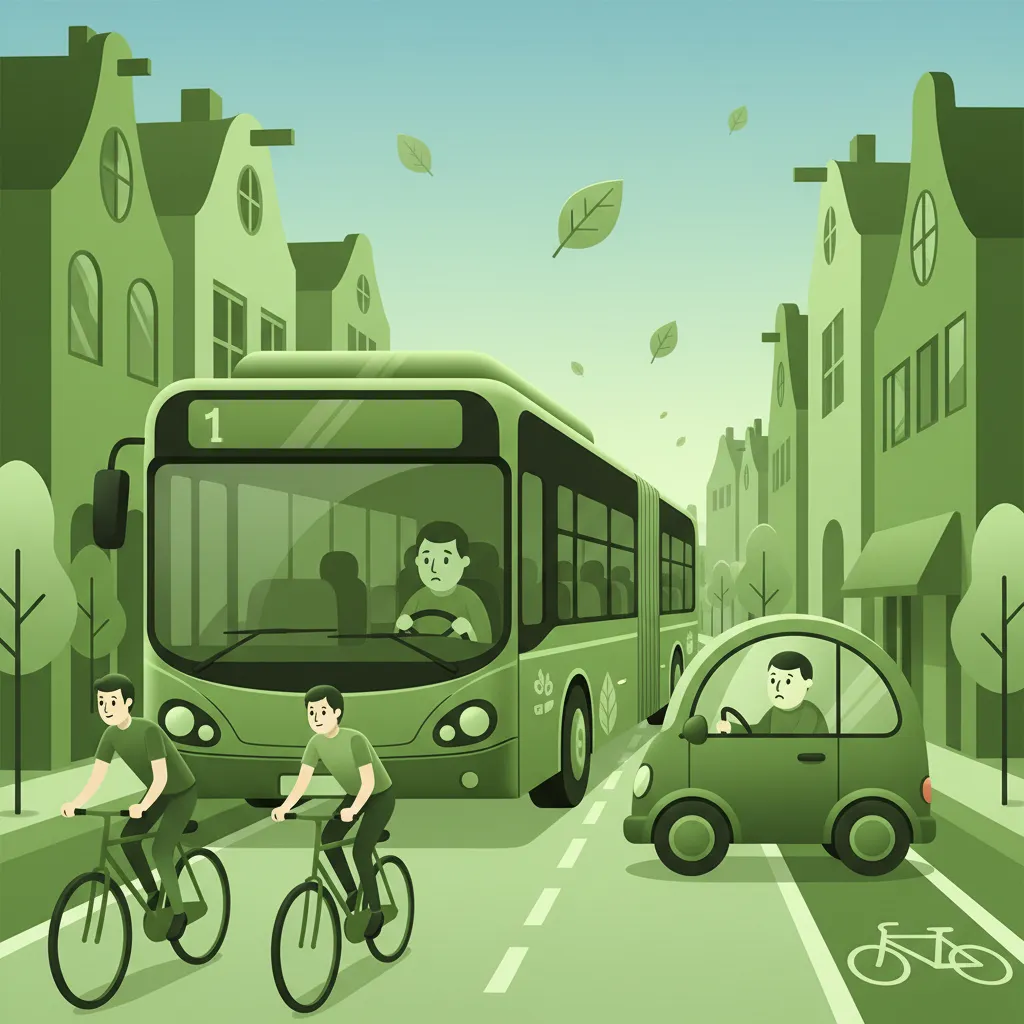
This lesson covers strategies for safely navigating around vehicles at both ends of the size spectrum. It details the large blind spots ('no-zones') around trucks and buses and advises on where to position a motorcycle to remain visible. Equally, it emphasizes the duty of care towards vulnerable road users, teaching riders to anticipate the movements of pedestrians and cyclists and to always provide them with ample space when passing.
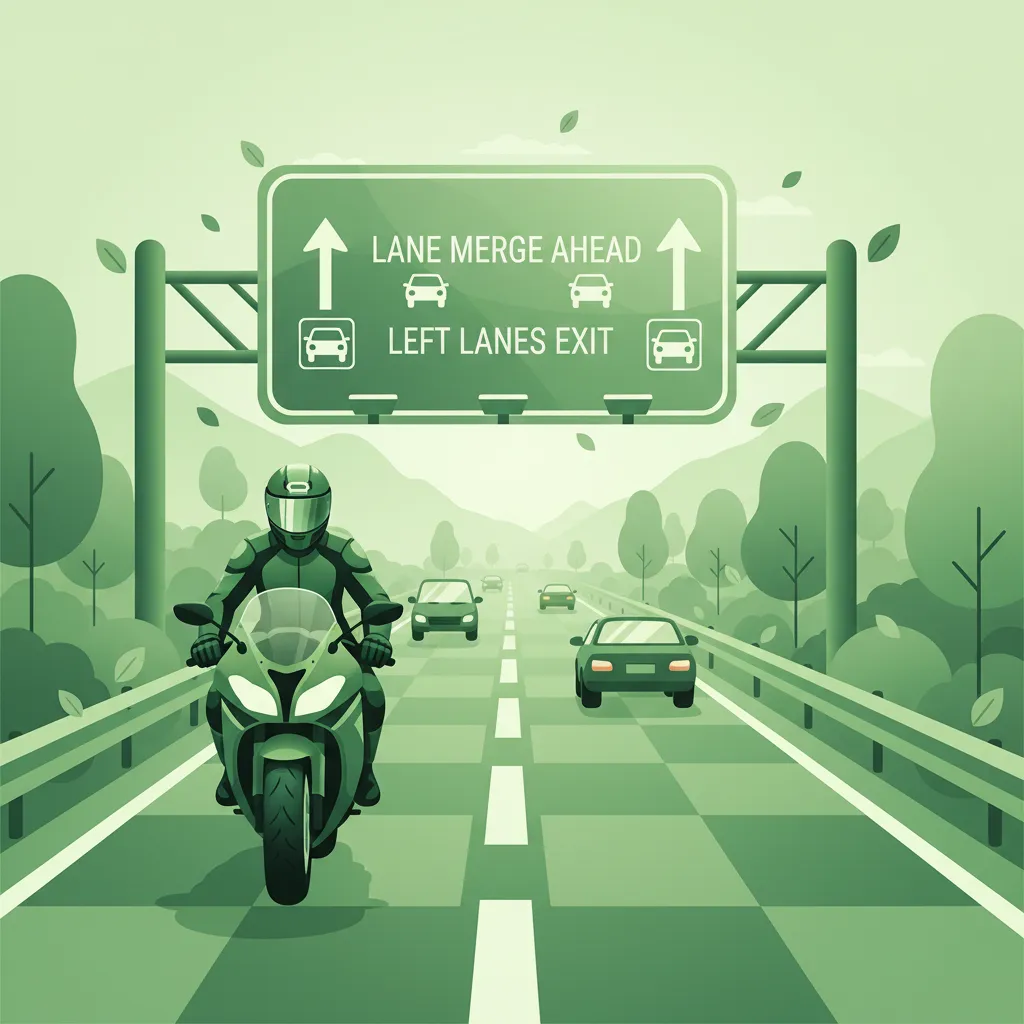
This lesson prepares you for the unique dangers of high-speed highway riding. You will learn to scan for and navigate road hazards like debris, potholes, and slippery steel expansion joints on bridges. The content also addresses the powerful air turbulence created by large trucks that can upset a motorcycle's stability and the mental challenge of maintaining focus on long, monotonous stretches of road.
This lesson addresses interactions with other types of road users. You will learn about motorcyclists, who can accelerate and brake quickly and may filter through slow traffic. The curriculum explains how to anticipate their movements and check for them carefully at junctions. It also covers how to safely approach and overtake slow-moving vehicles, such as agricultural tractors, and how to behave around horse riders, which requires slowing down and giving a very wide berth.

Riding in Dutch cities often means interacting with trams, which present unique risks for two-wheeled vehicles. This lesson details the absolute priority that trams have in most situations and explains how to interpret specific tram traffic signals. It provides crucial safety techniques for crossing tram tracks at a safe angle to prevent your wheels from getting stuck and emphasizes maintaining a safe distance from moving trams, which is a vital aspect of urban hazard perception.
This lesson focuses on the unique and densely packed hazards found in urban traffic environments. It teaches riders to develop a systematic scanning pattern to identify potential risks from multiple sources simultaneously, such as pedestrians stepping off curbs, car doors opening unexpectedly, and buses pulling out. The content also emphasizes the importance of managing speed and always having an 'escape route' planned in case a hazard suddenly materializes in the complex city landscape.
This lesson focuses on the legal and moral responsibility to be extra vigilant around certain groups of vulnerable road users. You will learn that children can be impulsive and have poor traffic awareness, requiring drivers to be prepared to stop suddenly, especially near schools and playgrounds. The content also discusses the need for patience with elderly or disabled road users, who may move more slowly. You will learn to recognize signs of disability, like a white cane or a guide dog, and give these individuals extra space and time.
This lesson focuses on the legal requirements and safe practices for riding near pedestrian crossings ('zebrapaden') and designated school zones. It details the absolute obligation to yield to pedestrians on or about to use a crossing and the need for significantly reduced speeds and heightened vigilance in areas with children. The content underscores the importance of anticipation and being prepared for unpredictable movements from vulnerable road users to prevent serious incidents.
This lesson focuses on the use of specialized lights for specific situations. You will learn the strict conditions under which fog lights may be used: the rear fog light is only permitted when visibility from fog or snow is less than 50 meters, and not in rain. The lesson also explains the correct use of hazard warning lights, which are intended to warn other drivers of a stationary obstruction (like a breakdown or the tail end of a sudden traffic jam) or while being towed.
Distractions are a leading cause of traffic accidents. This lesson focuses on the extreme danger of using a mobile phone or any other electronic device while riding. It explains the Dutch law, which strictly prohibits holding a mobile electronic device while driving. More importantly, it covers the concept of 'inattention blindness,' where even hands-free conversations can distract your brain to the point that you fail to see hazards right in front of you. The only safe ride is a focused ride.
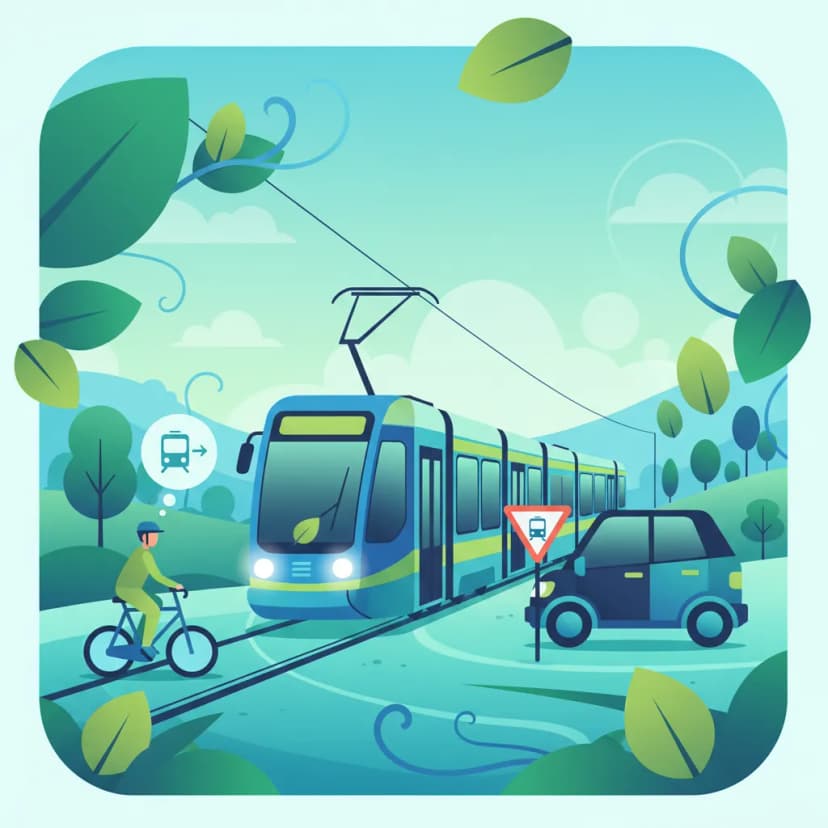
This lesson addresses the unique priority rules concerning trams in urban environments, clarifying that trams generally have priority unless signs or signals indicate otherwise. It explains the specific hazards motorcyclists face, such as slippery tracks (especially in wet conditions) and the long stopping distance of trams. Riders will learn how to safely cross tram lines, navigate shared lanes, and correctly interpret tram-specific traffic signals to avoid dangerous conflicts.
Learn how to anticipate the wide turning radius and unpredictable movements of trucks and buses at junctions and roundabouts. Focus on maintaining safe distances and avoiding dangerous squeeze play situations.
This lesson covers the procedures and safety considerations for driving in reverse and turning around. You will learn that reversing should only be done over short distances and when it does not endanger or obstruct other road users. The curriculum details techniques for turning in the road and identifies situations and locations where U-turns are prohibited. The importance of all-around observation, checking blind spots, and yielding to all other traffic is a central theme.
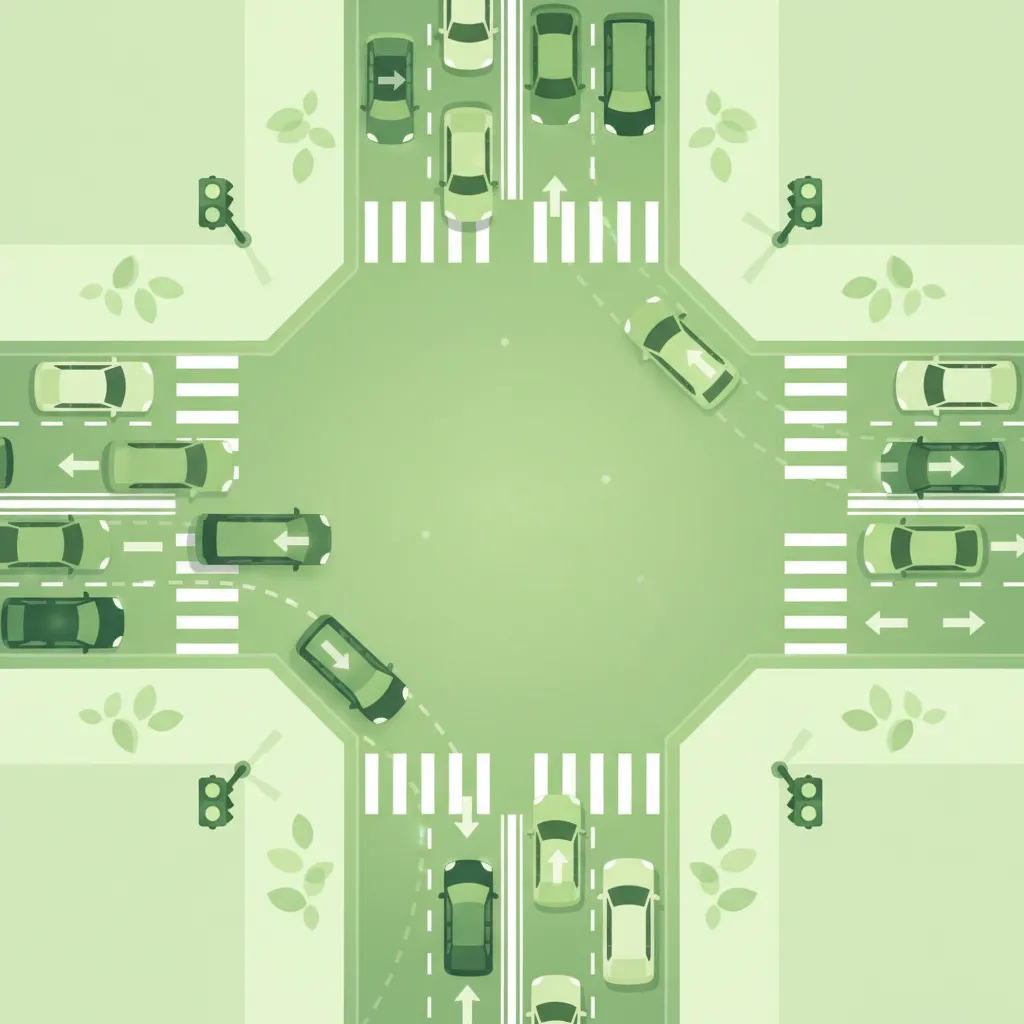
This lesson teaches the important skill of pre-sorting, which involves moving into the correct lane or position on the road well in advance of a turn. You will learn the standard procedure for turning right (keeping to the right) and turning left (moving towards the center of the road). The curriculum explains how to interpret road markings and signs with arrows that designate lanes for specific directions. Correct pre-sorting provides clear signals to other road users and is crucial for safety and traffic efficiency at junctions.
This lesson covers strategies for safely navigating around vehicles at both ends of the size spectrum. It details the large blind spots ('no-zones') around trucks and buses and advises on where to position a motorcycle to remain visible. Equally, it emphasizes the duty of care towards vulnerable road users, teaching riders to anticipate the movements of pedestrians and cyclists and to always provide them with ample space when passing.
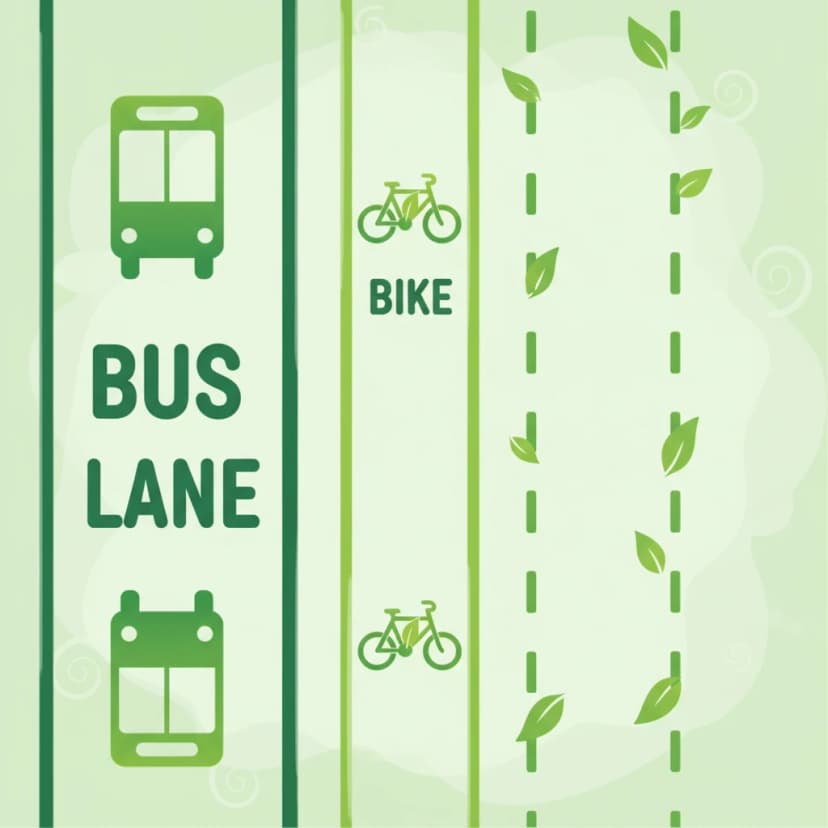
This lesson covers a variety of lanes and markings with specific rules. You will learn to recognize and respect bus lanes, which are reserved for public transport, and rush-hour lanes (spitsstrook), which are only open during busy periods as indicated by electronic signs. The curriculum also explains the meaning of different line types (solid, broken, double lines) that dictate whether lane changes or overtaking are permitted. Understanding these special lanes and markings is key to navigating Dutch infrastructure correctly.
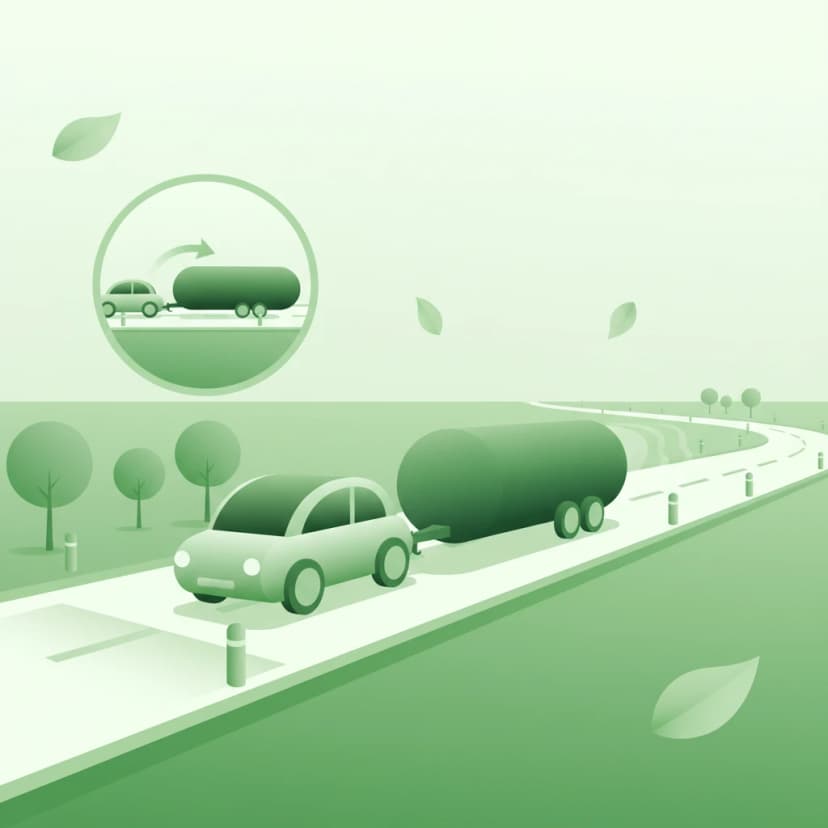
This lesson provides essential techniques for driving safely while towing. You will learn how the added weight increases your braking distance and how the extra length requires you to take wider turns. The curriculum addresses the challenging maneuver of reversing with a trailer and provides tips on how to control it. It also explains the phenomenon of 'snaking' or trailer sway, its causes (like crosswinds or improper loading), and how to correct it by gently reducing speed.
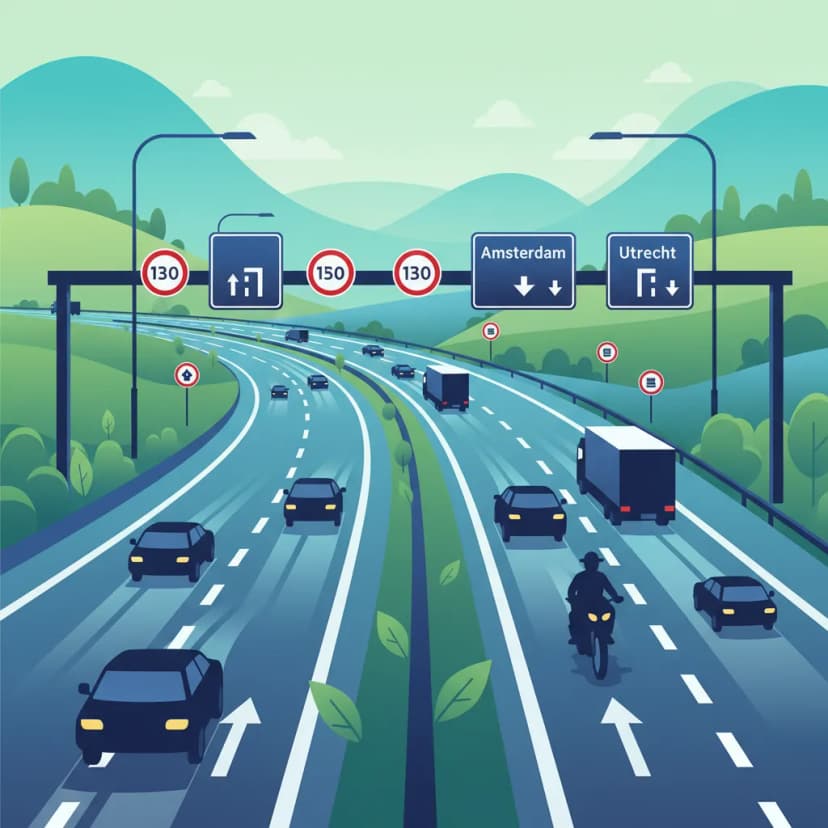
This lesson details the specific regulations for driving on Dutch motorways, identifiable by the G1 sign. You will learn the correct procedure for joining the flow of traffic using the acceleration lane and for leaving via the deceleration lane. The curriculum reinforces the 'keep right unless overtaking' rule for lane discipline. It also explains that stopping is strictly forbidden, and the hard shoulder (vluchtstrook) may only be used for genuine emergencies.
This lesson introduces the Dutch concept of 'voorspellend rijgedrag,' or anticipatory riding, a proactive approach to safety. It teaches motorcyclists how to look beyond the immediate vehicle in front and scan for clues that predict the actions of other road users, such as turn signals, wheel direction, and driver head movement. By anticipating potential conflicts before they happen, riders can position themselves to avoid danger and ensure a smoother, safer journey through complex traffic.
This lesson provides a detailed guide on the rules and safety precautions for overtaking. You will learn that overtaking must almost always be done on the left and requires careful judgment of speed and distance. The content covers situations where overtaking is forbidden, such as before pedestrian crossings, at intersections, or where there are solid white lines. Key steps like checking mirrors, signaling intention, checking blind spots, and returning to the lane safely are explained thoroughly.
Safely merging and changing lanes requires a systematic approach known as 'mirror-signal-blind spot'. This lesson explains the correct procedure for entering a carriageway from an acceleration lane, ensuring you match the speed of the traffic flow and find a safe gap. It also covers the technique for changing lanes, emphasizing the critical importance of checking your blind spot with a shoulder check (dode hoek) before making any lateral movement to prevent collisions.
This lesson addresses interactions with other types of road users. You will learn about motorcyclists, who can accelerate and brake quickly and may filter through slow traffic. The curriculum explains how to anticipate their movements and check for them carefully at junctions. It also covers how to safely approach and overtake slow-moving vehicles, such as agricultural tractors, and how to behave around horse riders, which requires slowing down and giving a very wide berth.
Find clear answers to common questions learners have about Interaction with Heavy Vehicles and Buses. Learn how the lesson is structured, which driving theory objectives it supports, and how it fits into the overall learning path of units and curriculum progression in the Netherlands. These explanations help you understand key concepts, lesson flow, and exam focused study goals.
The most significant danger is the truck's or bus's extensive blind spot, known as the 'dode hoek'. If you are in this area, the driver cannot see you, making it extremely dangerous to be there, especially during lane changes or turns. Maintaining visibility and avoiding these zones is paramount for your safety.
Always assume you are in a blind spot and position yourself accordingly. When behind a truck or bus, stay far enough back so you can see their mirrors. When overtaking, ensure you move quickly through the blind spot area and complete the manoeuvre without lingering. When alongside, try to be either clearly ahead of their front wheels or well behind their rear wheels.
Large vehicles create significant air displacement, known as wind turbulence or 'windstoten'. This can affect your motorcycle's stability, especially when overtaking or riding alongside them. Be prepared for sudden gusts of wind that can push your bike sideways. Anticipate this and be ready to correct your steering.
Heavy vehicles, especially articulated lorries and long buses, have a much larger turning radius and often swing wide on turns, particularly to the right. This means the space they occupy during a turn is far greater than you might expect. Always give them ample space and anticipate their path, ensuring you don't get caught on the inside or outside of their turn.
If a truck or bus indicates a right turn, do not try to filter past them on the inside. They will likely swing wide into your path. Stay well back and wait for them to complete their turn. If you are behind them, be aware they might brake suddenly.
The CBR exam includes questions designed to test your understanding of interactions with vulnerable road users and large vehicles. You'll be asked about blind spots, safe positioning, anticipating their movements, and reacting correctly at junctions. Mastering this lesson ensures you can answer these critical questions accurately.