
This lesson guides you through the complexities of safely overtaking other vehicles on Dutch motorways using a powerful Category A motorcycle. You'll learn the systematic 'mirror, signal, maneuver' sequence, emphasizing critical blind spot checks. Understanding these advanced techniques is vital for your CBR theory exam and for confident, safe riding on high-speed roads.
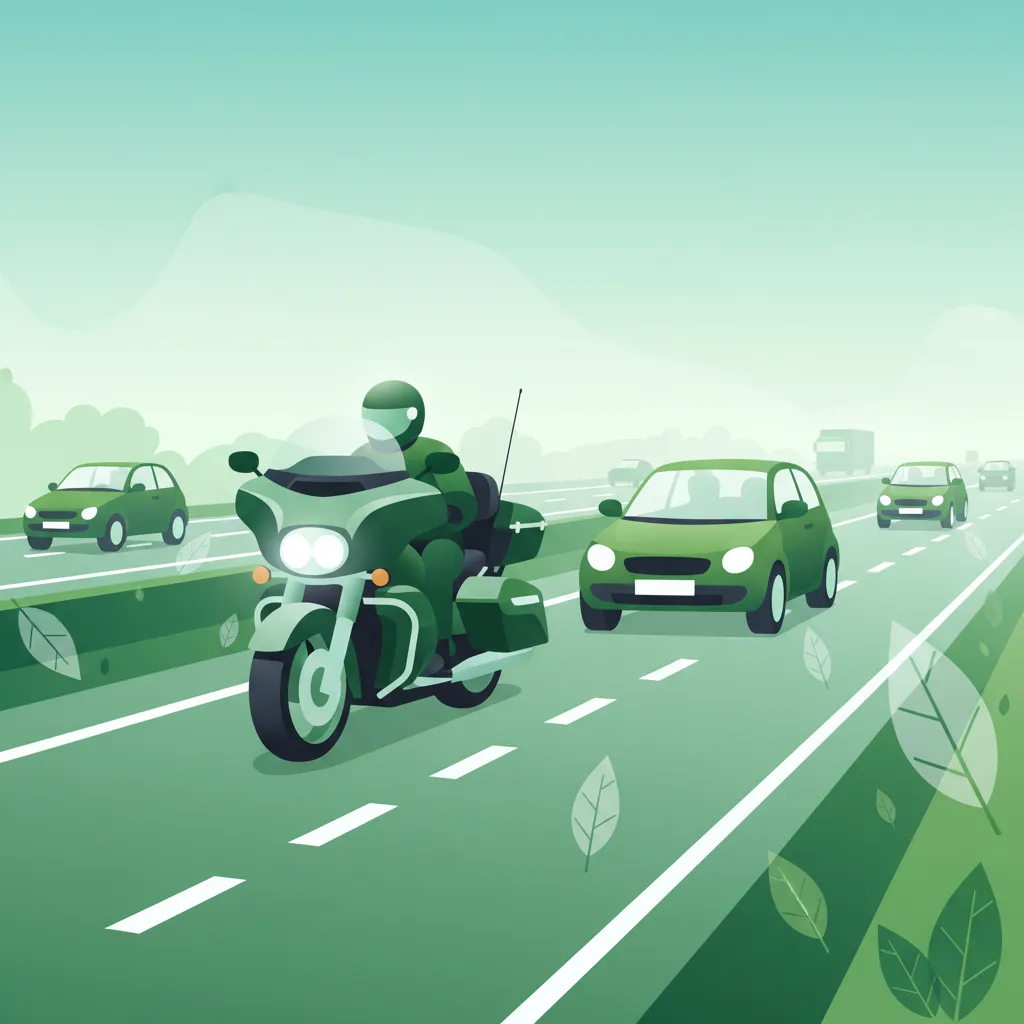
Overtaking is a fundamental maneuver in traffic, but on multi-lane motorways (snelwegen) and particularly with the unique capabilities of a Category A motorcycle, it demands precision, awareness, and adherence to specific rules. This lesson provides a comprehensive guide to mastering safe overtaking techniques, integrating legal requirements under the Dutch Rijkswegverkeerswet 1990 (RVV 1990) and the Reglement verkeersregels en verkeerstekens 1990 (RVV 1990), with the physics and human factors involved.
Mastering safe overtaking reduces collision risk, improves traffic flow, and ensures legal compliance. For participants in the Dutch Motorcycle Theory – Category A Comprehensive Preparation, understanding these advanced riding techniques is crucial for both the exam and real-world safety.
Motorcycles, especially those in Category A, possess an excellent power-to-weight ratio, allowing for rapid acceleration. This advantage can facilitate quick and efficient overtaking, but it also necessitates heightened awareness of speed differentials and the potential for misjudgment. Overtaking at high speeds is a significant contributor to motorcycle accidents on Dutch motorways, making a systematic approach vital.
The overarching goal is to minimize the time spent exposed in vulnerable positions, such as blind spots, and to ensure smooth re-entry into the original lane. This requires a disciplined sequence of observations, communication, and execution.
Dutch traffic law governs all aspects of motorway driving, including overtaking. Key legislation includes the RVV 1990, which sets out rules for lane usage, signaling, speed limits, and general conduct. Adherence to these laws is not merely about avoiding fines; it's about maintaining predictable traffic flow and ensuring the safety of all road users. Ignoring legal obligations during high-speed maneuvers significantly increases the risk of serious accidents.
Safe overtaking is built upon several interconnected principles. Each step is crucial and neglecting any one can lead to dangerous situations.
The Mirror-Signal-Maneuver (MSM) is a foundational sequence for any lateral movement on the road. For overtaking, it ensures that your intentions are communicated and your path is clear before you commit to the lane change.
Common Misunderstanding: Many riders assume mirrors alone provide adequate blind-spot coverage. This is incorrect, especially on a motorcycle where peripheral vision can be limited at speed. Neglecting the shoulder check is a major cause of side-impact collisions.
A motorcycle's mirrors, regardless of how well adjusted, cannot cover every angle around the vehicle. This unobserved area is known as the blind spot. The shoulder check is your only reliable method to visually confirm that this area is clear of other vehicles.
An area around a vehicle that cannot be seen using the mirrors, typically behind and to the side. For motorcycles, this area is particularly critical due to the smaller vehicle profile.
A brief, deliberate physical head and shoulder turn to visually inspect the blind spot immediately before a lateral movement, confirming the absence of other vehicles.
At motorway speeds, a quick glance is often insufficient. Your shoulder check should be a short, focused turn of your head (approximately 1-2 seconds) to sweep the area. When traffic density is high, or when large vehicles are present, an even more extended check may be necessary. RVV 1990 article 4.1 (c) explicitly mandates the inspection of blind spots before lane changes.
Gap assessment is the evaluation of the spatial and temporal distance (time-space gap) between your motorcycle and surrounding traffic, particularly in the lane you intend to enter. This determines if there is a safe window to accelerate, overtake, and return without creating a hazard.
The process of evaluating whether there is sufficient temporal (time in seconds) and spatial (distance in meters) clearance to safely complete an overtaking maneuver without endangering other road users.
For motorcycles, a minimum time gap of at least three seconds is generally recommended when overtaking. This provides a crucial safety buffer for reaction times and allows adequate space to accelerate and decelerate smoothly. Using static lengths (e.g., "two car lengths") is unreliable at high speeds; a time-based gap is more accurate and safer.
To estimate a 3-second gap, pick a fixed point ahead (e.g., a bridge, road sign). When the vehicle in front passes it, start counting "one thousand one, one thousand two, one thousand three." If you reach that point before you finish counting, the gap is too small.
Speed differential management involves calculating and executing the necessary speed increase to overtake safely within the assessed gap while respecting legal speed limits. Your Category A motorcycle's acceleration capabilities are an asset here, but they must be used judiciously.
The difference in speed between your motorcycle and the vehicle you intend to overtake. A sufficient speed differential is needed to complete the overtaking maneuver efficiently.
Your current cruising speed is the base speed. Your target overtake speed will be your base speed plus the required acceleration. However, this must never exceed the legal speed limit for motorcycles on Dutch motorways, which is generally 130 km/h. RVV 1990 article 15 sets these limits.
Insufficient acceleration can prolong your exposure in the overtaking lane, increasing risk, while excessive acceleration can lead to illegal speeds and potential loss of control. The goal is a smooth, decisive acceleration that quickly closes the gap, allowing you to pass and return to your lane efficiently.
Lane discipline is paramount on Dutch motorways. The general principle is right-lane preference (rechts houden), meaning you must keep to the rightmost available lane unless you are overtaking slower traffic or preparing to exit. RVV 1990 article 3 enforces this rule.
The legal requirement on Dutch motorways (snelwegen) to drive in the rightmost available lane, only using left lanes for overtaking or specific maneuvers like preparing for an exit.
Once an overtaking maneuver is complete and you have established a safe lead (typically a minimum 1.5-second safety buffer ahead of the overtaken vehicle), you must signal your intention and return promptly to the rightmost lane. Lane hogging – remaining in the left lane unnecessarily – disrupts traffic flow, encourages other drivers to overtake on the right (which is generally illegal), and increases the risk of rear-end collisions. RVV 1990 article 11 governs lane usage.
Certain situations demand extra caution and specific strategies during an overtaking maneuver.
Overtaking Heavy Goods Vehicles (HGVs) or buses requires significant adjustments to your standard procedure. These large vehicles have substantially larger blind spots than passenger cars, often extending up to 40 meters behind them. They also accelerate much slower and have considerably longer stopping distances.
Blind Spot Amplification: Be aware that HGV blind spots are not only larger but also different in shape. Avoid riding directly alongside an HGV, particularly for extended periods. The driver may not see you.
When overtaking an HGV:
RVV 1990 article 8.3 specifically addresses overtaking large vehicles, stipulating that it's only allowed when a sufficient distance is maintained and road geometry permits.
On motorways with three or more lanes, you might encounter situations where you need to overtake across multiple lanes. This requires a refined strategy to maintain safety.
An overtaking maneuver that involves changing across more than one lane to pass slower traffic, requiring sequential checks for each lane entered.
If the immediate left lane is occupied by a slower vehicle, and you need to pass an even slower vehicle further to the right, you may need to move two lanes to the left. The key here is sequential verification:
This strategy optimises overtaking efficiency while preserving safety by ensuring each lane change is deliberate and verified.
Understanding and adhering to the specific articles of the RVV 1990 is non-negotiable for safe and legal riding in the Netherlands.
| Regulation | Rule Statement | Applicability | Legal Status | Rationale | Correct Example ``` O Motorways in the Netherlands are fast-paced environments where correct overtaking is crucial for safety and traffic flow. For Category A motorcyclists, understanding the nuances of high-speed overtaking is paramount. This lesson delves into the systematic process for safely navigating multi-lane motorways, leveraging the specific capabilities of a large motorcycle, and adhering to Dutch traffic laws.
Overtaking is not merely about getting ahead; it is about doing so with utmost safety, predictability, and efficiency. On high-speed motorways, the risks associated with improper overtaking are significantly magnified. For Category A riders, whose motorcycles offer superior acceleration, there's a unique responsibility to manage this power judiciously.
Accident statistics reveal that overtaking incidents contribute to a notable percentage of motorcycle accidents on Dutch motorways. Mastery of the correct techniques, as outlined by the Rijkswegverkeerswet 1990 (RVV 1990) and the Reglement verkeersregels en verkeerstekens 1990 (RVV 1990), not only reduces collision risk but also improves overall traffic flow and ensures legal compliance. This knowledge forms a vital part of your Dutch Motorcycle Theory – Category A Comprehensive Preparation.
The Mirror-Signal-Maneuver (MSM) is the cornerstone of safe lane changes, especially when overtaking on a motorway. It's a disciplined, systematic approach to ensure you are aware of your surroundings and communicate your intentions clearly to other road users.
The Peril of Neglecting the Shoulder Check: Assuming your mirrors provide full coverage is a dangerous misconception. At high speeds, peripheral vision is reduced, making the shoulder check absolutely critical. Failing to perform this step is a leading cause of side-impact collisions and a direct violation of RVV 1990 article 4.1 (c).
A blind spot is an area around your motorcycle that is not visible through your mirrors. Due to a motorcycle's smaller profile and the angles of mirrors, these blind spots can be deceptively large, especially for vehicles approaching rapidly from behind and to the side.
The shoulder check directly addresses this safety vulnerability. It's a quick, decisive head turn (approximately 1-2 seconds at motorway speeds) over the appropriate shoulder to sweep the area not covered by your mirrors. This action brings any hidden vehicles into your direct line of sight, allowing you to proceed with confidence or, if necessary, abort the maneuver. RVV 1990 article 4.1 (c) legally requires this inspection.
Successful overtaking hinges on two critical calculations: assessing the available space and managing your speed effectively.
Gap assessment is the process of evaluating whether there is enough space and time to complete an overtaking maneuver safely. This involves judging both the spatial (distance in meters) and temporal (time in seconds) clearance between your motorcycle and surrounding traffic, particularly in the target lane.
For motorcycles, a minimum safe gap of at least three seconds is generally recommended when planning an overtake. This crucial time buffer accounts for your reaction time, the motorcycle's acceleration, and the time needed to safely re-enter your lane without forcing other drivers to brake or swerve.
To practice gap assessment, choose a fixed object (like a bridge or a road sign) and count the seconds between when the vehicle ahead passes it and when you do. Aim for three seconds or more.
Relying on static distance estimates (e.g., "two car lengths") is unreliable at high speeds. A time-based assessment accounts for speed differentials and provides a more accurate safety margin.
Speed differential management refers to calculating the necessary speed increase to overtake efficiently within your assessed safe gap, all while staying within legal limits. Your Category A motorcycle's robust engine allows for rapid acceleration, a distinct advantage for quick overtakes.
Your base speed is your current cruising speed. Your target overtake speed will be your base speed plus the required acceleration to pass. However, it is crucial that this does not exceed the legal maximum speed of 130 km/h on Dutch motorways for motorcycles (RVV 1990 article 15).
Insufficient acceleration can leave you alongside the overtaken vehicle for too long, increasing your exposure to risk. Conversely, over-accelerating beyond the speed limit carries legal penalties and increases the kinetic energy, making any potential accident more severe. Aim for a decisive, controlled acceleration that allows you to complete the maneuver swiftly and return to your lane.
On Dutch motorways (snelwegen), strict lane discipline is enforced to maintain fluid traffic flow and prevent dangerous situations.
The fundamental rule on Dutch motorways is right-lane preference (rechts houden), as stipulated by RVV 1990 article 3. This means you must always drive in the rightmost available lane and use the left lane(s) exclusively for overtaking slower traffic or preparing for an exit.
Once you have successfully overtaken a vehicle and established a safe lead (ensure at least a 1.5-second buffer between your motorcycle and the overtaken vehicle), you must signal your intention and return promptly to the rightmost lane. Lane hogging – staying in the left lane unnecessarily – is illegal (RVV 1990 article 11), disrupts traffic flow, and can lead to frustration and unsafe maneuvers by other drivers, such as illegal overtaking on the right.
On motorways with three or more lanes, you might need to execute a multi-lane overtake, moving across more than one lane to pass slower traffic. This complex maneuver requires meticulous execution and sequential verification.
If the immediate left lane is occupied by a slower vehicle, and you need to overtake an even slower vehicle further to the right, you might need to move two lanes to the left. The critical element is performing the full MSM sequence for each lane change:
This systematic approach minimizes risk by ensuring you are aware of traffic in every lane you enter.
Overtaking Heavy Goods Vehicles (HGVs) or buses demands heightened caution due to their size and operational characteristics.
When overtaking an HGV, increase your minimum gap assessment to at least 4 seconds. Use a prolonged shoulder check and accelerate decisively to minimize the time spent alongside the vehicle. Always pass on the left; overtaking an HGV on the right is extremely dangerous and generally illegal. RVV 1990 article 8.3 specifically highlights safe distances when passing large vehicles.
External conditions significantly impact the safety of an overtaking maneuver. Always be prepared to adjust your strategy.
Being aware of frequent errors can help you preemptively avoid dangerous situations.
| Violation / Mistake | Why It’s Wrong | Correct Behaviour | Potential Consequence |
|---|---|---|---|
| Skipping Shoulder Check | A vehicle in your blind spot will remain unseen. | Always perform a shoulder check after signaling, before any lateral movement. | Collision, severe injury, legal penalties. |
| Insufficient Gap (≤ 2s) | Leaves no room for error, increases reaction time pressure. | Wait for a minimum 3-second gap for motorcycles; increase in adverse conditions. | Near-miss, collision, legal penalty. |
| Overtaking on the Right | Violates right-lane preference, confuses traffic flow, illegal. | Always overtake on the left; return to the right lane promptly. | Fine, loss of license points, increased crash risk. |
| Exceeding 130 km/h | Breaches legal speed limits for Category A motorcycles. | Maintain speed at or below 130 km/h, adjusting for road conditions. | Fine, points, possible license suspension. |
| Passing HGV in Close Gap | HGV blind spots are massive; turbulence can destabilize. | Allow larger lateral and longitudinal gaps (e.g., 4s+) and pass decisively. | Severe collision, critical injury. |
| Lane Hogging After Overtake | Disrupts traffic flow, invites illegal overtaking, causes congestion. | Return promptly to the rightmost lane once a safe lead is established (e.g., 1.5s buffer). | Fine, points, increased risk of rear-end collision. |
| Signal Not Maintained ( < 3s) | Other road users may not perceive your intention in time. | Activate and maintain your turn indicator for at least 3 seconds before moving. | Confusion, sudden evasive action by others, potential crash. |
| Overtaking Near Exit Ramps | Creates unpredictable lane changes, high collision risk. | Complete your overtake well before the exit ramp, or wait until after passing the ramp. | Collision, missing your exit, traffic disruption. |
| Multi-Lane Overtake without Sequential Checks | High risk of hitting a vehicle in an unseen intermediate lane. | Perform individual mirror, signal, and shoulder checks for each lane change. | Side-impact collision across lanes. |
The rules and recommendations for safe overtaking are rooted in fundamental principles of physics, human psychology, and statistical safety analysis.
By understanding these underlying principles, riders can move beyond simply memorizing rules and truly grasp the rationale behind safe overtaking practices.
To summarize, safe and efficient overtaking on Dutch motorways with a Category A motorcycle involves a disciplined and systematic approach:
These principles, combined with prior knowledge from lessons on Dutch Motorway Law (8.1), Maintaining Safe Gaps (8.3), Advanced Riding Techniques (6), and Speed Management (4), will equip you for safe and responsible riding on the snelwegen.
Lesson content overview
Explore all units and lessons included in this driving theory course.
Explore search topics learners often look for when studying Overtaking on Motorways with Large Motorcycles. These topics reflect common questions about road rules, driving situations, safety guidance, and lesson level theory preparation for learners in the Netherlands.
Browse additional driving theory lessons that cover connected traffic rules, road signs, and common driving situations related to this topic. Improve your understanding of how different rules interact across everyday traffic scenarios.
Understand the specific rules and safety considerations for overtaking large vehicles like trucks and buses on Dutch motorways. Learn about managing blind spots, wind turbulence, and necessary gap assessment for safe passing.
This lesson focuses on the specific hazards and techniques for safely sharing the road with heavy goods vehicles (HGVs) and buses. It provides a detailed explanation of their extensive blind spots ('dode hoek') and teaches riders where to position themselves to remain visible. The curriculum also covers how to manage the significant air turbulence created by these vehicles when overtaking and how to anticipate their wide turning circles at junctions and roundabouts.

This lesson provides a detailed guide on the rules and safety precautions for overtaking. You will learn that overtaking must almost always be done on the left and requires careful judgment of speed and distance. The content covers situations where overtaking is forbidden, such as before pedestrian crossings, at intersections, or where there are solid white lines. Key steps like checking mirrors, signaling intention, checking blind spots, and returning to the lane safely are explained thoroughly.

This lesson reinforces the fundamental rule of Dutch highway driving: use the rightmost lane available and use the lanes to the left only for overtaking. You will learn the complete, safe overtaking procedure: check mirrors, signal, perform a shoulder check for the blind spot, smoothly move over, accelerate past the vehicle, and then return to the right lane when safe.
This lesson focuses on the unique demands of riding at sustained high speeds on motorways ('snelwegen'). It covers essential topics such as strict lane discipline, safe overtaking procedures, and maintaining a greater following distance to compensate for higher reaction and braking times. The content also addresses the physical and mental challenges, including managing wind blast, increased noise levels, and maintaining heightened situational awareness over long distances to combat fatigue.
This lesson covers strategies for safely navigating around vehicles at both ends of the size spectrum. It details the large blind spots ('no-zones') around trucks and buses and advises on where to position a motorcycle to remain visible. Equally, it emphasizes the duty of care towards vulnerable road users, teaching riders to anticipate the movements of pedestrians and cyclists and to always provide them with ample space when passing.
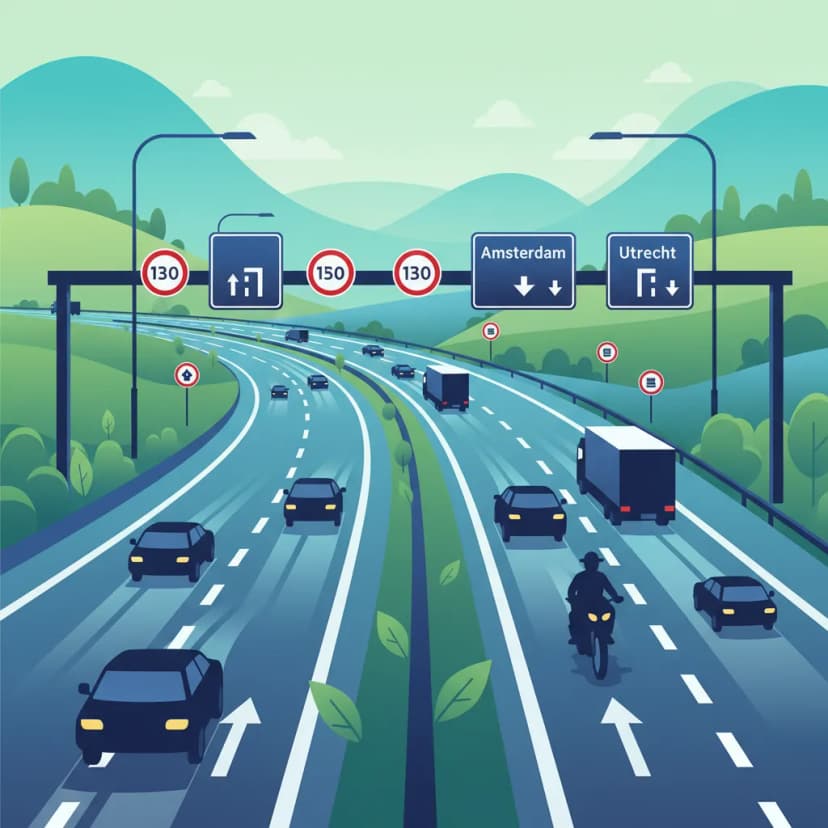
This lesson details the specific regulations for driving on Dutch motorways, identifiable by the G1 sign. You will learn the correct procedure for joining the flow of traffic using the acceleration lane and for leaving via the deceleration lane. The curriculum reinforces the 'keep right unless overtaking' rule for lane discipline. It also explains that stopping is strictly forbidden, and the hard shoulder (vluchtstrook) may only be used for genuine emergencies.

Overtaking is a high-risk maneuver that must be executed correctly. This lesson provides a step-by-step guide: assess if it is safe and legal, check mirrors and blind spots, signal your intention, accelerate smoothly past the other vehicle, and return to your lane leaving adequate space. You will also learn to identify situations where overtaking is prohibited, such as before a pedestrian crossing or when approaching a blind corner.

This lesson provides essential techniques for driving safely while towing. You will learn how the added weight increases your braking distance and how the extra length requires you to take wider turns. The curriculum addresses the challenging maneuver of reversing with a trailer and provides tips on how to control it. It also explains the phenomenon of 'snaking' or trailer sway, its causes (like crosswinds or improper loading), and how to correct it by gently reducing speed.

This lesson provides critical instruction on managing blind spots ('dode hoek') to prevent collisions, particularly during lane changes. It covers the correct setup and use of mirrors, but stresses their limitations and the absolute necessity of the 'lifesaver' shoulder check before any lateral movement. Furthermore, it teaches riders how to be aware of the large blind spots around cars and especially trucks, and how to position themselves on the road to remain visible to other drivers at all times.

This lesson covers the procedures and safety considerations for driving in reverse and turning around. You will learn that reversing should only be done over short distances and when it does not endanger or obstruct other road users. The curriculum details techniques for turning in the road and identifies situations and locations where U-turns are prohibited. The importance of all-around observation, checking blind spots, and yielding to all other traffic is a central theme.
Identify typical errors made during motorway overtaking maneuvers, such as neglecting blind spot checks or misjudging gaps. This lesson focuses on understanding and preventing these mistakes according to Dutch driving theory.
This lesson provides a detailed guide on the rules and safety precautions for overtaking. You will learn that overtaking must almost always be done on the left and requires careful judgment of speed and distance. The content covers situations where overtaking is forbidden, such as before pedestrian crossings, at intersections, or where there are solid white lines. Key steps like checking mirrors, signaling intention, checking blind spots, and returning to the lane safely are explained thoroughly.
Overtaking is a high-risk maneuver that must be executed correctly. This lesson provides a step-by-step guide: assess if it is safe and legal, check mirrors and blind spots, signal your intention, accelerate smoothly past the other vehicle, and return to your lane leaving adequate space. You will also learn to identify situations where overtaking is prohibited, such as before a pedestrian crossing or when approaching a blind corner.
This lesson reinforces the fundamental rule of Dutch highway driving: use the rightmost lane available and use the lanes to the left only for overtaking. You will learn the complete, safe overtaking procedure: check mirrors, signal, perform a shoulder check for the blind spot, smoothly move over, accelerate past the vehicle, and then return to the right lane when safe.

This lesson provides a step-by-step guide to executing a safe and legal overtaking maneuver. It covers the entire process: assessing the situation for a sufficient gap in oncoming traffic, performing necessary mirror and shoulder checks, signaling intent, and accelerating decisively. The lesson also highlights situations where overtaking is prohibited by law, such as before pedestrian crossings or where there are solid white lines.

This lesson provides a structured methodology for assessing the safety and legality of an overtaking maneuver, particularly on two-lane roads. It teaches riders how to accurately judge the speed and distance of oncoming traffic, calculate the time and space needed to complete the pass safely, and check for hidden hazards. This systematic risk assessment process helps eliminate guesswork and ensures that every decision to overtake is a well-informed and safe one.
This lesson details the specific regulations for driving on Dutch motorways, identifiable by the G1 sign. You will learn the correct procedure for joining the flow of traffic using the acceleration lane and for leaving via the deceleration lane. The curriculum reinforces the 'keep right unless overtaking' rule for lane discipline. It also explains that stopping is strictly forbidden, and the hard shoulder (vluchtstrook) may only be used for genuine emergencies.

This lesson revisits the concept of following distance, emphasizing its heightened importance in the high-speed motorway environment. It explains how increased speeds dramatically lengthen both reaction and braking distances, making a minimum two-to-three-second gap absolutely critical for safety. The content also stresses the importance of maintaining a space cushion to the sides, creating potential escape routes in case of sudden incidents in adjacent lanes.
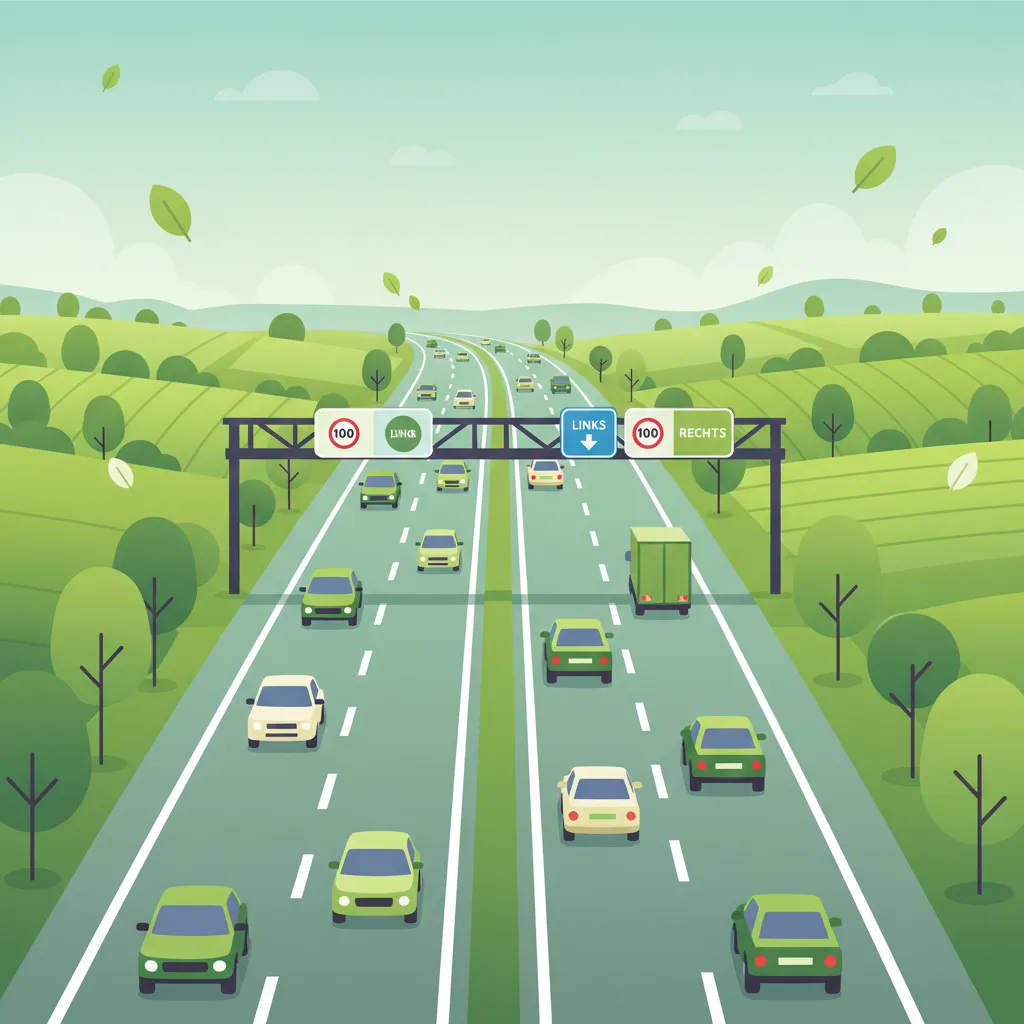
This lesson covers the specific articles of the Dutch Road Traffic Act that apply to motorways, with a primary focus on the strict rule of keeping to the rightmost available lane unless overtaking. It explains the legal and safety reasons for only passing on the left and discusses the correct positioning within a lane for maximum visibility and safety. The content also addresses the nuances of lane usage during heavy congestion, ensuring riders comply with the law and contribute to smooth traffic flow.

Safely merging and changing lanes requires a systematic approach known as 'mirror-signal-blind spot'. This lesson explains the correct procedure for entering a carriageway from an acceleration lane, ensuring you match the speed of the traffic flow and find a safe gap. It also covers the technique for changing lanes, emphasizing the critical importance of checking your blind spot with a shoulder check (dode hoek) before making any lateral movement to prevent collisions.
This lesson focuses on the unique demands of riding at sustained high speeds on motorways ('snelwegen'). It covers essential topics such as strict lane discipline, safe overtaking procedures, and maintaining a greater following distance to compensate for higher reaction and braking times. The content also addresses the physical and mental challenges, including managing wind blast, increased noise levels, and maintaining heightened situational awareness over long distances to combat fatigue.
Find clear answers to common questions learners have about Overtaking on Motorways with Large Motorcycles. Learn how the lesson is structured, which driving theory objectives it supports, and how it fits into the overall learning path of units and curriculum progression in the Netherlands. These explanations help you understand key concepts, lesson flow, and exam focused study goals.
The most critical step is the 'shoulder check' (schoudercheck). After checking your mirrors and signaling, you must quickly turn your head to directly check your blind spot for any vehicles, especially other motorcycles, that might be hidden from your mirrors before committing to the lane change. Failing to do so is a common cause of accidents and exam errors.
When returning to your lane, ensure you can see the overtaken vehicle's headlights in your rearview mirror before signaling and moving back. This provides a safe buffer zone. For larger vehicles, this distance needs to be even greater to ensure you don't cut them off, which is a key safety principle in Dutch traffic.
Yes, you should always allow extra space when overtaking heavy vehicles due to their larger blind spots and potential for air turbulence. Be prepared for longer overtaking times and maintain a clear safety margin before returning to your lane. In some specific zones, trucks might have overtaking bans, which also apply to motorcycles if they are part of the same regulation.
If the vehicle you are overtaking accelerates, you should reconsider the maneuver. If you can't complete the overtake quickly and safely without exceeding the speed limit or putting yourself at risk, it's safer to abort the overtake, slow down, and drop back into your original lane, waiting for a safer opportunity. This demonstrates defensive riding.