
This lesson focuses on mastering blind spots, a critical skill for Category A motorcycle riders in the Netherlands. Understanding and managing 'dode hoek' is essential for safe lane changes and avoiding collisions. We'll cover how to use your mirrors effectively and the non-negotiable 'lifesaver' shoulder check, preparing you for real-world scenarios and specific CBR theory exam questions.

Navigating the roads safely as a motorcyclist demands constant vigilance and a proactive approach to potential hazards. One of the most critical aspects of defensive riding, particularly for those preparing for the Dutch CBR Category A motorcycle theory exam, is understanding and effectively managing blind spots. These invisible areas around vehicles are a leading cause of side-collision accidents involving motorcycles, making proper blind spot management not just a recommendation, but a fundamental safety imperative.
This comprehensive lesson will equip you with the knowledge and techniques to identify, anticipate, and mitigate blind spots (often referred to as "dode hoeken" in Dutch traffic context) in all riding situations. We will delve into the correct setup and use of mirrors, emphasize their inherent limitations, and stress the absolute necessity of the "lifesaver" shoulder check before any lateral movement. Furthermore, you will learn how to be acutely aware of the large blind spots around cars and especially trucks, and how to strategically position yourself on the road to remain visible to other drivers at all times.
A blind spot, or "dode hoek" in Dutch, is an area around a vehicle that cannot be seen by the driver through their mirrors or by direct line of sight. These zones are inherent to vehicle design and create significant risks, especially for motorcyclists who are smaller and can easily be overlooked. For a motorcyclist, understanding and managing these areas is paramount for collision prevention.
An area around a vehicle that cannot be seen by the driver through mirrors or direct line of sight, varying significantly in size and shape depending on the vehicle type.
Motorcyclists can become completely invisible to other drivers while riding alongside or within these blind spots. This invisibility dramatically increases the risk of a collision if the other driver initiates a lane change or turn without noticing the motorcycle. The safety logic is clear: if a rider is invisible to a neighboring driver, that driver cannot react, regardless of the rider's own precautions.
The physical basis for blind spots lies in vehicle geometry, where bodywork such as A-pillars (front windshield supports), B-pillars (side window supports), the rear window frame, and the roof block the line of sight. Larger vehicles naturally generate larger and more complex blind zones, especially on the right side of cars and the left side of trucks due to their extended length and specific mirror placements.
Your motorcycle's mirrors are invaluable tools for situational awareness, providing a crucial view of what is behind and to your sides. However, it is vital to understand that mirrors provide a limited field of view and cannot cover all blind zones. Over-reliance on mirrors, particularly with fast-moving traffic, can lead to dangerous assumptions.
To optimize your view, adjust your rear-view and side-view mirrors to maximize their field of view. The goal is to minimize overlap between the central rear-view mirror and the side-view mirrors, while still providing a clear view of the lanes beside and behind you.
Adjust the central rear-view mirror (if applicable) to see directly behind your motorcycle, with minimal view of your own shoulders.
Adjust the left side-view mirror so that you can just barely see the very edge of your left shoulder or arm. The majority of the mirror should show the lane beside and behind you.
Adjust the right side-view mirror similarly, so you can just barely see the edge of your right shoulder or arm, maximizing the view of the lane beside and behind you.
Even with optimal adjustment, mirrors leave physiological blind zones. For most cars, this means a 2-3 meter lateral blind zone on each side, extending from the rear wheel to the rear doors. This area is precisely where a motorcycle can disappear from a driver's view.
Never assume mirrors provide a complete picture. A properly adjusted mirror setup reduces, but does not eliminate, blind spots.
Dutch traffic law (RVV 1990) obligates all road users to act in a way that does not endanger others. This includes checking mirrors before a lane change. As a motorcyclist, you must understand that mirrors are a supplement, not a replacement, for direct visual checks. Assuming a "wide" mirror setting eliminates the need for shoulder checks is a common and dangerous misunderstanding.
The "lifesaver" shoulder check, or "schoudercheck" in Dutch, is the single most critical technique for blind spot management. It is a brief, deliberate glance over your shoulder immediately before any lateral maneuver. This direct visual confirmation is indispensable, even if your mirrors indicate clear space.
A brief, deliberate glance over the rider’s shoulder (inside or outside) immediately before any lateral maneuver, providing direct visual confirmation that no vehicle is occupying the blind spot.
The shoulder check must be performed every time you intend to move laterally:
There are two main types of shoulder checks:
Signal Early: Activate your turn signal well in advance to alert other road users of your intention.
Mirror Check: Quickly check your rear-view and side-view mirrors to assess the traffic situation.
Head Turn & Glance: Smoothly and quickly turn your head to glance over the relevant shoulder (inside or outside, depending on the maneuver). This should be a quick, definitive glance, not a prolonged stare, to minimize the time your eyes are off the road ahead.
Confirm Clear: Visually confirm that the blind spot is clear of any other vehicles, cyclists, or pedestrians.
Execute Maneuver: Only after confirming the blind spot is clear, proceed with your lane change or turn.
Cancel Signal: Once the maneuver is complete, cancel your turn signal.
A common misunderstanding is thinking that a quick glance is sufficient at high speed or neglecting the check when traffic appears sparse. Remember, even a single vehicle can be hidden, and a collision can be catastrophic. The Dutch RVV 1990, article 6.2, states that lane changes are only permissible when the driver has a clear view of the adjacent lane. As a motorcyclist, you must emulate this safety standard with your shoulder check.
Beyond active checks, your lane position plays a crucial role in blind spot management. Strategic road positioning involves choosing a lane and lateral offset that maximizes your visibility to other road users while simultaneously minimizing your exposure to their blind spots.
Choosing a lane and lateral offset that maximizes exposure to other drivers’ sightlines while minimizing the rider’s presence within their blind spots.
In right-hand traffic (like in the Netherlands), riding slightly left of the center within your lane (often referred to as 'left-of-centre riding') generally improves your visibility to drivers both ahead and behind you. This position often keeps you within the driver's normal line of sight, preventing you from disappearing into their blind spot.
Conversely, riding too far right (or 'edge riding') may place you directly in a driver's blind spot, particularly for vehicles intending to turn right. While the RVV 1990 article 4.2 states that motorcyclists must ride within lane boundaries unless overtaking or avoiding obstacles, riding excessively on the verge is prohibited and counterproductive for visibility. Assuming the center of the lane is always safest, or ignoring that a small offset can dramatically improve visibility, are common errors.
Not all blind spots are created equal. The characteristic shape and size of blind zones vary significantly between different vehicle categories. Understanding these "vehicle-specific blind spot profiles" allows you to anticipate where hidden hazards are likely to appear and adjust your riding accordingly.
These are the most dangerous vehicles regarding blind spots due to their immense size and numerous obstructed areas.
The RVV 1990, article 6.5, mandates that when overtaking vehicles longer than 5 meters (like trucks or buses), the overtaking vehicle must keep a safe lateral distance and ensure visibility. Riders must adjust following distance and lane position based on the specific vehicle they are near, always anticipating the expanded blind zones of larger vehicles.
Executing safe overtaking and lane change maneuvers requires a systematic approach, where blind spot checks are integrated into every phase. Rushing or skipping any step significantly increases the risk of a collision.
1. Preparation Phase (MSPSL): * Mirrors: Check your rear-view and side-view mirrors to assess traffic behind and to the side. * Signal: Activate your turn signal well in advance to indicate your intentions. * Position: Adjust your lane position strategically to improve visibility and prepare for the maneuver. For overtaking, move slightly to the left within your lane to get a better view ahead. * Speed: Assess your speed relative to the vehicle you intend to pass or the traffic in the target lane. Ensure you have sufficient power to complete the maneuver swiftly and safely. * Look (Lifesaver): Perform your crucial shoulder check.
2. Verification Phase (Lifesaver Shoulder Check): * Immediately before moving laterally, perform a decisive "lifesaver" shoulder check over the relevant shoulder (the one towards the lane you are entering) to confirm that the blind spot is completely clear. Do not proceed if there is any doubt.
3. Execution Phase: * Steer: Smoothly and gradually steer into the adjacent lane, maintaining control. Avoid sudden, jerky movements. * Accelerate: Accelerate smoothly and decisively to complete the maneuver efficiently. Maintain a safe distance from the vehicle you are passing. * Maintain Distance: If overtaking, maintain a safe lateral distance from the overtaken vehicle, especially larger ones.
4. Completion Phase: * Signal Off: Once you have safely completed the maneuver and are established in the new lane (or have passed the vehicle), cancel your turn signal. * Re-check: Glance in your mirrors again to confirm your new position relative to other traffic.
The RVV 1990, article 6.1, states that before overtaking, the driver must have a clear view of the road ahead and of the vehicle being overtaken. This legal requirement underpins the necessity of a thorough preparation and verification phase. Accelerating before confirming blind spot clearance is a common error that can lead to severe consequences.
External conditions can significantly impact visibility and effectively expand blind spots for both you and other drivers. Adapting your blind spot management strategy to these environmental influences is crucial for safety.
Heavy rain reduces mirror clarity and creates a "spray blind spot" due to water thrown up by vehicles ahead. This spray can severely obscure your motorcycle from the view of other drivers.
Fog, mist, or very low visibility conditions drastically reduce the effective range of mirrors and peripheral vision.
Sun glare can momentarily blind drivers, making it difficult to see you in their mirrors or peripheral vision. Glare can also make your own mirrors less effective.
At night, reduced light inherently limits peripheral vision for all drivers. Distances and speeds are harder to judge, and lights can be confusing.
Blind spot management extends beyond interactions with other motor vehicles to include vulnerable road users (VRUs) such as pedestrians and cyclists. These users often occupy positions where they may be invisible to car drivers, and motorcyclists must anticipate and compensate for this.
At intersections, parked cars, bushes, or buildings can create temporary blind spots, obscuring approaching cross-traffic or VRUs.
Cyclists are particularly vulnerable. They are often smaller than motorcycles and can easily be hidden in a car's blind spot.
The Dutch Traffic Regulations and Traffic Signs (Reglement Verkeersregels en Verkeerstekens 1990, or RVV 1990) underpin the legal requirements for blind spot awareness and safe conduct on the road. While specific "blind spot" legislation doesn't exist, several articles implicitly mandate the visibility-first principle.
These regulations collectively establish a legal framework that prioritizes "visibility first" for all road users, implicitly requiring meticulous blind spot management from motorcyclists.
Even experienced riders can sometimes fall into habits that compromise blind spot safety. Recognizing and correcting these common errors is vital.
Effective blind spot management is rooted in a deeper understanding of human perception, reaction times, and the physics of riding.
Mastering blind spot management is non-negotiable for safe motorcycling, especially within the dynamic environment of Dutch traffic. It requires a combination of conscious techniques, strategic positioning, and an acute awareness of your surroundings.
By consistently applying these principles, you will significantly reduce your risk of collision, enhance your situational awareness, and become a more competent and safer motorcyclist, well-prepared for the Dutch Category A theory exam and beyond.
Lesson content overview
Explore all units and lessons included in this driving theory course.
Explore search topics learners often look for when studying Blind Spot Management for Motorcyclists. These topics reflect common questions about road rules, driving situations, safety guidance, and lesson level theory preparation for learners in the Netherlands.
Browse additional driving theory lessons that cover connected traffic rules, road signs, and common driving situations related to this topic. Improve your understanding of how different rules interact across everyday traffic scenarios.
Learn about the significant blind spots of trucks and buses in the Netherlands. Discover strategies for safe positioning and interaction to avoid collisions, a crucial aspect of motorcycle safety theory.
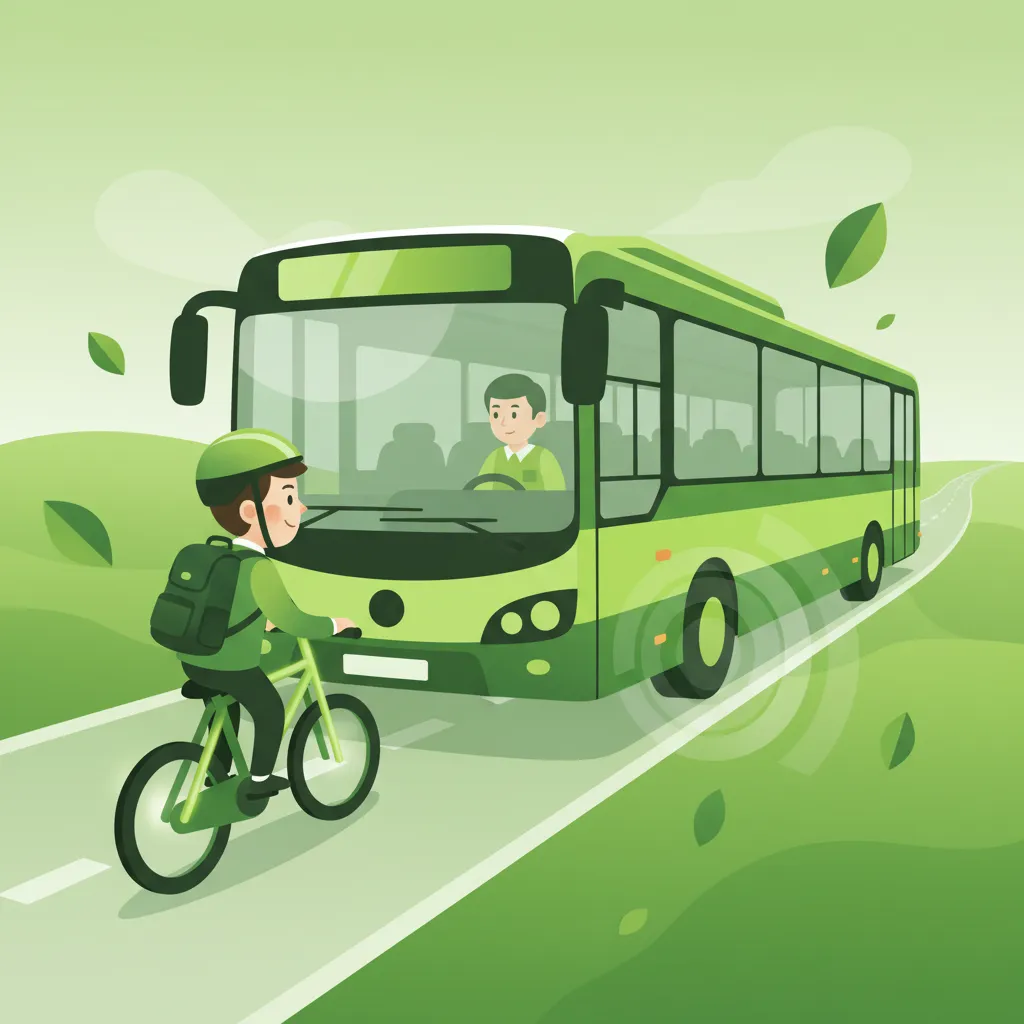
This lesson focuses on the specific hazards and techniques for safely sharing the road with heavy goods vehicles (HGVs) and buses. It provides a detailed explanation of their extensive blind spots ('dode hoek') and teaches riders where to position themselves to remain visible. The curriculum also covers how to manage the significant air turbulence created by these vehicles when overtaking and how to anticipate their wide turning circles at junctions and roundabouts.
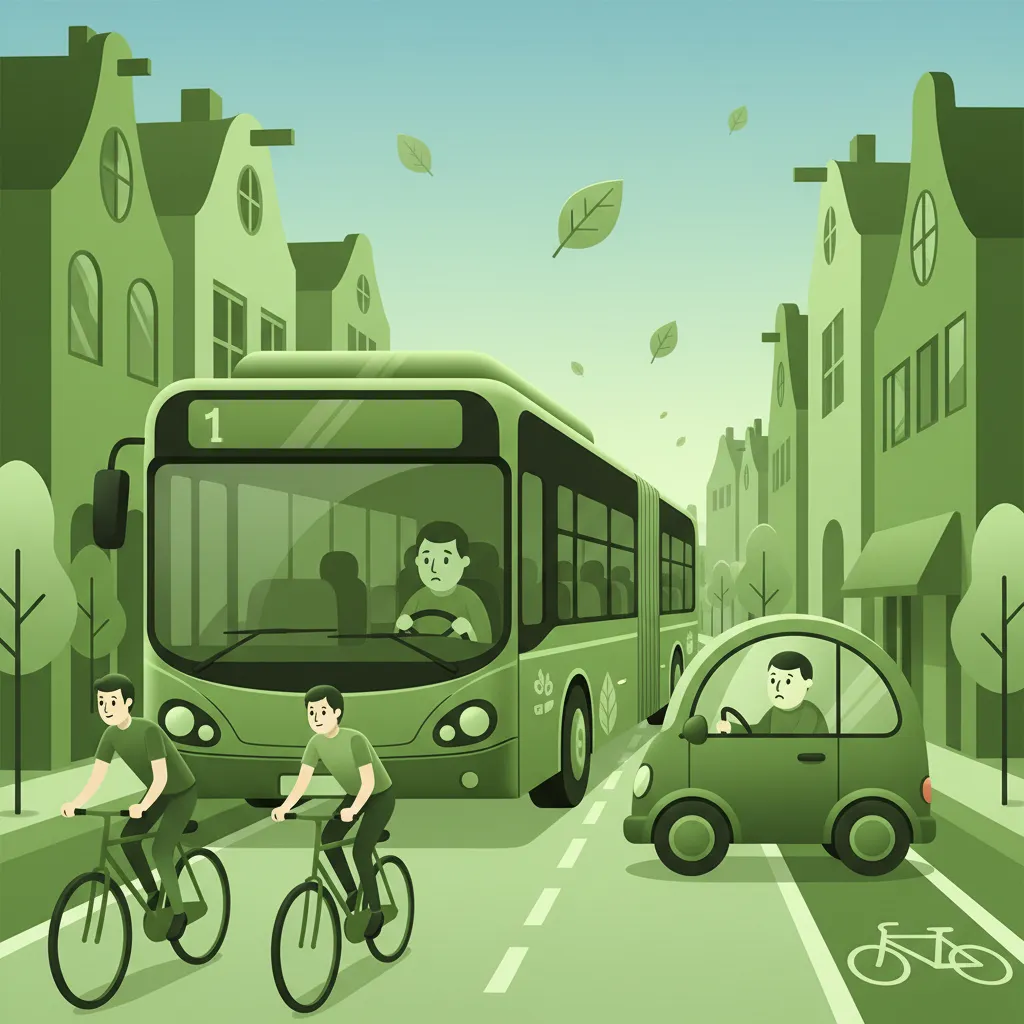
This lesson covers strategies for safely navigating around vehicles at both ends of the size spectrum. It details the large blind spots ('no-zones') around trucks and buses and advises on where to position a motorcycle to remain visible. Equally, it emphasizes the duty of care towards vulnerable road users, teaching riders to anticipate the movements of pedestrians and cyclists and to always provide them with ample space when passing.

This lesson explains that where you ride in your lane is a critical safety choice. You will learn to avoid lingering in the blind spots ('dode hoek') of cars and trucks, and how to position yourself to be clearly visible in their mirrors. The content teaches you to constantly adjust your lane position to create a space cushion and ensure you always have a planned escape path in case of an emergency.
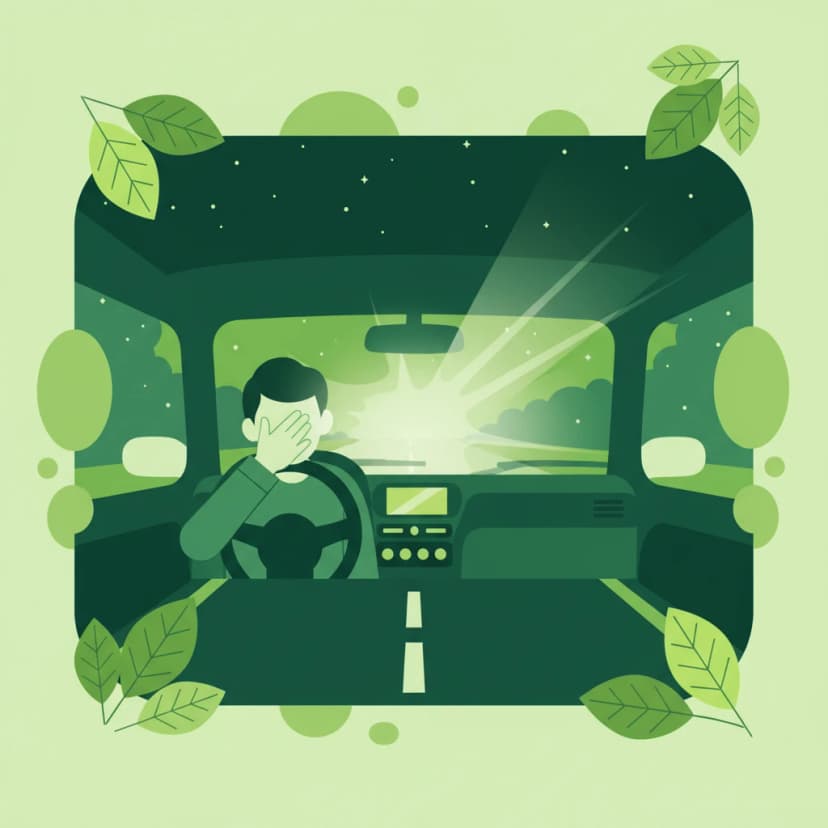
This lesson focuses on the importance of maintaining clear visibility in all directions. You will learn about the legal requirement to have clean windows, mirrors, and lights, and the proper use of demisters and wipers. The content provides strategies for managing sun glare using sun visors and sunglasses. It also addresses the issue of being dazzled by the headlights of other vehicles at night and how to react safely by slowing down and looking towards the right edge of the road.

This lesson covers the procedures and safety considerations for driving in reverse and turning around. You will learn that reversing should only be done over short distances and when it does not endanger or obstruct other road users. The curriculum details techniques for turning in the road and identifies situations and locations where U-turns are prohibited. The importance of all-around observation, checking blind spots, and yielding to all other traffic is a central theme.
This lesson covers the full range of lights and signals required on a vehicle for visibility and communication. You will learn about the mandatory requirements for headlights, taillights, brake lights, indicators, and reflectors. The curriculum emphasizes the driver's legal responsibility to ensure all lights are clean and functional before every journey. The correct use and function of the horn as an audible warning device in case of imminent danger are also explained.

This lesson details the functions of the various lights on a car and the legal requirements for their use. You will learn the difference between dipped beams (dimlicht), which are the standard headlights for night driving and poor visibility, and main beams (grootlicht), which can only be used when they won't dazzle other road users. The content also covers the use of sidelights (stadslicht) for parking and the automatic function of Daytime Running Lights (DRLs). Correct usage is vital for visibility and avoiding blinding other drivers.

Safely merging and changing lanes requires a systematic approach known as 'mirror-signal-blind spot'. This lesson explains the correct procedure for entering a carriageway from an acceleration lane, ensuring you match the speed of the traffic flow and find a safe gap. It also covers the technique for changing lanes, emphasizing the critical importance of checking your blind spot with a shoulder check (dode hoek) before making any lateral movement to prevent collisions.

This lesson is critical for driving in the Netherlands, a country with more bicycles than people. You will learn about the different types of cycle paths and how priority rules apply, especially at junctions. The content stresses the importance of checking the blind spot for cyclists before turning right ('dode hoek'). It also covers the rules for different types of mopeds (snorfiets and bromfiets) and the importance of giving all two-wheeled road users ample space when overtaking.

This lesson focuses on the use of specialized lights for specific situations. You will learn the strict conditions under which fog lights may be used: the rear fog light is only permitted when visibility from fog or snow is less than 50 meters, and not in rain. The lesson also explains the correct use of hazard warning lights, which are intended to warn other drivers of a stationary obstruction (like a breakdown or the tail end of a sudden traffic jam) or while being towed.
Identify and learn to avoid frequent errors in blind spot management, such as over-reliance on mirrors or improper shoulder checks. Understand how these mistakes increase risk and prepare for Dutch traffic rules.
This lesson explains that where you ride in your lane is a critical safety choice. You will learn to avoid lingering in the blind spots ('dode hoek') of cars and trucks, and how to position yourself to be clearly visible in their mirrors. The content teaches you to constantly adjust your lane position to create a space cushion and ensure you always have a planned escape path in case of an emergency.

This lesson covers the critical safety practice of maintaining 360-degree awareness through the effective use of mirrors and blind-spot checks. It details a systematic approach to scanning mirrors and performing a physical head check (shoulder check) before any change in position or direction. Understanding the limitations of mirrors and identifying the motorcycle's blind spots are key learning outcomes for preventing collisions with other vehicles.

This lesson explains the concept of strategic lane positioning, moving beyond simply staying in the center of the lane. It details how to select a position—typically in the left or right wheel track of cars—to be more visible in other drivers' mirrors, avoid the slippery center strip, and maintain a space cushion. The content emphasizes constantly adjusting position based on traffic, road conditions, and potential hazards.
This lesson focuses on the specific hazards and techniques for safely sharing the road with heavy goods vehicles (HGVs) and buses. It provides a detailed explanation of their extensive blind spots ('dode hoek') and teaches riders where to position themselves to remain visible. The curriculum also covers how to manage the significant air turbulence created by these vehicles when overtaking and how to anticipate their wide turning circles at junctions and roundabouts.
This lesson covers strategies for safely navigating around vehicles at both ends of the size spectrum. It details the large blind spots ('no-zones') around trucks and buses and advises on where to position a motorcycle to remain visible. Equally, it emphasizes the duty of care towards vulnerable road users, teaching riders to anticipate the movements of pedestrians and cyclists and to always provide them with ample space when passing.
Safely merging and changing lanes requires a systematic approach known as 'mirror-signal-blind spot'. This lesson explains the correct procedure for entering a carriageway from an acceleration lane, ensuring you match the speed of the traffic flow and find a safe gap. It also covers the technique for changing lanes, emphasizing the critical importance of checking your blind spot with a shoulder check (dode hoek) before making any lateral movement to prevent collisions.

This lesson introduces the Dutch concept of 'voorspellend rijgedrag,' or anticipatory riding, a proactive approach to safety. It teaches motorcyclists how to look beyond the immediate vehicle in front and scan for clues that predict the actions of other road users, such as turn signals, wheel direction, and driver head movement. By anticipating potential conflicts before they happen, riders can position themselves to avoid danger and ensure a smoother, safer journey through complex traffic.

This lesson focuses on the dual challenge of visibility: seeing the road ahead and ensuring other drivers see you. It covers the legal requirements and tactical use of headlights ('koplampen'), including when to use high and low beams, and the importance of daytime running lights. Additionally, it explores strategies for enhancing personal conspicuity through high-visibility and reflective clothing, and using lane positioning to stand out in traffic and avoid blind spots.
This lesson details the systematic process for safely overtaking on a multi-lane motorway, leveraging the acceleration capabilities of a Category A motorcycle. It covers the 'mirror, signal, maneuver' sequence, with a strong emphasis on the critical shoulder check to clear the blind spot before moving out. The content also discusses how to judge closing speeds, ensure adequate space before returning to the lane, and how to handle situations involving multiple lanes and slower-moving heavy vehicles.

This lesson provides a step-by-step guide to executing a safe and legal overtaking maneuver. It covers the entire process: assessing the situation for a sufficient gap in oncoming traffic, performing necessary mirror and shoulder checks, signaling intent, and accelerating decisively. The lesson also highlights situations where overtaking is prohibited by law, such as before pedestrian crossings or where there are solid white lines.
Find clear answers to common questions learners have about Blind Spot Management for Motorcyclists. Learn how the lesson is structured, which driving theory objectives it supports, and how it fits into the overall learning path of units and curriculum progression in the Netherlands. These explanations help you understand key concepts, lesson flow, and exam focused study goals.
A blind spot, or 'dode hoek' in Dutch, is an area around your motorcycle where you cannot see other traffic using only your mirrors. This is primarily due to the physical limitations of mirror placement and your own body's position. For motorcycles, the blind spot is particularly critical during lane changes and at junctions.
While mirrors are essential, they don't provide a complete view. Your head and body can obscure parts of the mirror's view, and mirrors themselves have inherent limitations in field of vision. Therefore, the 'lifesaver' shoulder check (a quick turn of the head to look over your shoulder) is absolutely necessary before any manoeuvre involving a change in position.
Larger motorcycles have a greater physical presence and can also have slightly different mirror placements. More importantly, you need to be acutely aware of the much larger blind spots created by cars and especially trucks, which can easily not see a motorcycle. Your riding position needs to ensure you are visible to these larger vehicles.
Your position within a lane is crucial. Aim to ride where you can see the driver's eyes in their side mirrors. Avoid lingering in the centre of a lane when beside a car, and position yourself to be visible in their main field of vision, especially when approaching junctions or preparing to pass.
When a car overtakes you, be aware that they might misjudge your speed or not see you clearly. Maintain a steady course and be prepared for them to pull back into your lane. If they have a large blind spot, they might not see you until they are very close, requiring you to react preemptively.
Yes, the CBR Category A theory exam frequently includes questions related to blind spots, mirror usage, the shoulder check, and safe lane changes. Understanding these concepts is vital for passing the exam and riding safely in the Netherlands.