
Welcome to this crucial lesson on interacting with cyclists and mopeds, vital for safe driving in the Netherlands, a country renowned for its cycling culture. Understanding the specific rules and potential hazards involving these vulnerable road users is key to passing your theory exam and navigating Dutch streets confidently.
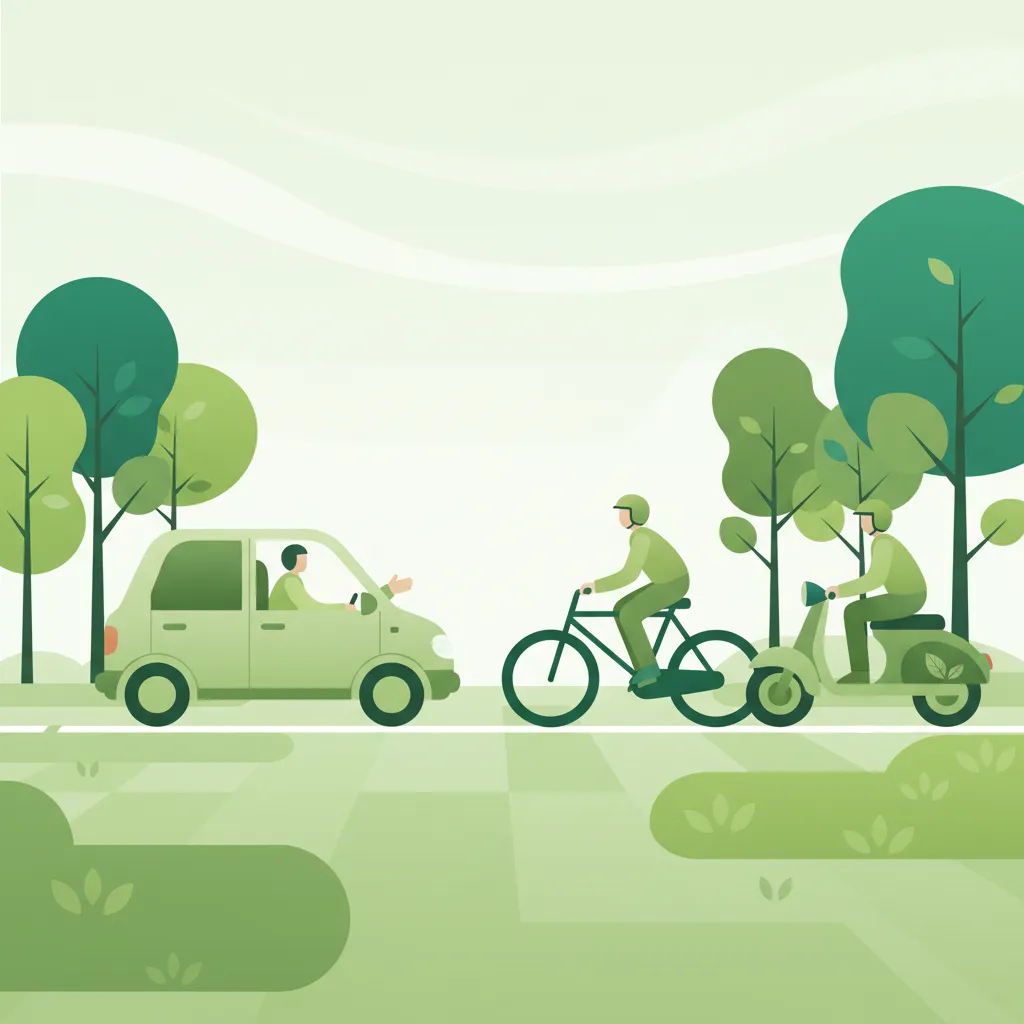
The Netherlands is renowned for its extensive cycling culture, with bicycles often outnumbering people in many areas. As a driver, mastering interactions with cyclists and mopeds is not merely a legal requirement but a fundamental aspect of safe and responsible driving in this country. This lesson delves into the specific rules, priorities, and best practices essential for navigating Dutch roads alongside these vulnerable road users, ensuring safety and compliance with traffic laws.
Cyclists and mopeds, while common, possess unique characteristics that make them particularly vulnerable in traffic. Their smaller size, lower speed compared to cars (in some cases), and reduced visibility demand heightened awareness and predictable actions from motor vehicle drivers. Understanding these dynamics is crucial for preventing collisions and fostering a safe road environment for everyone.
Cycling is deeply integrated into Dutch daily life, with a comprehensive network of dedicated cycle paths and lanes. This infrastructure, while excellent for cyclists, means drivers must constantly anticipate and react to two-wheelers. The emphasis on cycling translates into specific legal protections and priority rules for cyclists and mopeds, which drivers must fully comprehend and respect. Ignoring these rules poses a significant risk of accidents and serious legal consequences.
Safe interaction with cyclists and mopeds is built upon several core principles:
rechts van toeval (right-hand rule) applies, explicit priority signs and specific rules often grant cyclists and mopeds priority at intersections.snorfiets and bromfiets) is vital for correct behaviour on the road.These principles build upon foundational knowledge from earlier units, particularly Road Sign Identification, Priority Rules, Turning and Maneuvers, and the broader Vulnerable Road Users category.
The Dutch road network features several types of facilities for cyclists and mopeds, each with specific rules for motor vehicle drivers. Correctly identifying these paths and understanding their implications is a key aspect of safe driving.
Cycle paths are designated areas, separated from motor traffic, primarily for cyclists and sometimes mopeds. Their design and marking dictate how other road users, including drivers, should interact with them.
A Fietsweg is a distinct lane or area physically separated from the main carriageway. These paths are explicitly designated for bicycles, and often for certain mopeds. Overtaking a cyclist within a dedicated cycle path is strictly prohibited for motor vehicles. You must remain in your designated lane and treat the cycle path as a separate road.
A Pennenweg, often translated as "penny lane," is a narrow, single-car-width cycle lane, usually marked by a single broken or solid white line. While it's part of the road, it's primarily intended for cyclists. When encountering a Pennenweg, drivers must exercise extreme caution. Overtaking a cyclist on a Pennenweg is only permitted if you can move entirely into an adjacent lane without endangering the cyclist or other traffic, maintaining ample clearance.
A Samenweg is a lane where cyclists and motor vehicles share the same physical space. These are common in residential areas or roads where dedicated infrastructure is not feasible. Often, they are indicated by a green cycle symbol painted on the road surface or simply by the absence of a separate cycle path. On Samenweg roads, drivers must always be highly vigilant, reduce speed, and be prepared to yield, especially at intersections. The presence of a Samenweg implies a shared responsibility for safety, with drivers often needing to adapt more to the cyclists' presence.
Specific road signs and markings indicate the presence and type of cycle path. Recognizing these instantly is essential for compliance and safety.
These signs clearly define where cyclists and certain mopeds are expected to ride. Ignoring these designations or misinterpreting the lane separation cues can lead to dangerous situations and legal penalties. For instance, Rule 9-1 mandates that cyclists use cycle paths when available, which implicitly means other vehicles must respect these boundaries.
Right-of-way rules are paramount for preventing collisions, especially at intersections where cyclists and mopeds are particularly vulnerable. While the fundamental rechts van toeval (right-hand rule) applies in many contexts, specific rules and signage often alter priority when two-wheelers are involved.
At junctions without specific priority signs, the rechts van toeval rule dictates that traffic coming from the right has priority. However, this is frequently overridden by signs or road markings.
When these signs are present, they take precedence. Drivers must always yield to priority traffic, which can include cyclists and mopeds if they are on a priority road or have a specific cycle path that grants them priority.
A crucial aspect of Dutch traffic law, stated in Rule 8-7, is that at a junction, drivers must yield to traffic with priority AND to cyclists on cycle paths. This means even if you are on a priority road, if a dedicated cycle path intersects your path and a cyclist is on it, you often have to yield to the cyclist unless specific signs dictate otherwise. This rule significantly enhances cyclist safety in urban environments.
Certain traffic signs specifically address priority for and against cyclists:
Conversely, signs like G11 (Mandatory Cycle Path) often imply priority for cyclists using that path at intersections. Rule 9-4 states that if no cycle path exists, cyclists generally have priority over cars at intersections, unless signs explicitly dictate otherwise. This underscores the default protection afforded to cyclists.
The Netherlands distinguishes between two main types of mopeds, each with different regulations regarding speed, licensing, and road usage. Drivers must be able to recognize these classifications to interact correctly and safely.
A snorfiets is a light moped with a maximum speed of 25 km/h. They are typically identified by a light blue number plate.
Snorfietsen do not require a specific moped driving license (though a standard driving license or a separate moped certificate is often held). They are generally treated similarly to cyclists on cycle paths and in shared traffic. This means they often have priority when on a cycle path, but on shared lanes with cars, Rule 6-9 suggests they behave like cyclists, which might mean yielding to motor vehicles if specific signs are not present.snorfiets, anticipate lower speeds and be prepared for them to use cycle paths. Treat them with the same caution and priority considerations as cyclists.A bromfiets is a heavier, faster moped with a maximum speed of 45 km/h (on the road outside built-up areas, it can sometimes be up to 70 km/h on certain roads if designated). They are identifiable by a yellow number plate.
Bromfietsen require a category B driving license (for cars) or a specific moped certificate (AM license). Crucially, Rule 6-9(b) states that bromfietsen are generally treated as cars in terms of priority. This means they adhere to speed limits and yield rules akin to regular motor vehicles.bromfiets, especially one with a yellow plate, treat it as a motor vehicle. They will follow traffic lights and priority signs like a car. Misunderstanding this can lead to dangerous assumptions about their speed or right-of-way. Rule 6-10 limits their speed to 45 km/h in most built-up areas and 70 km/h on other public roads where permitted.The primary visual cue for distinguishing between snorfiets and bromfiets is the colour of their number plate:
Snorfiets (max 25 km/h).Bromfiets (max 45 km/h or higher).This distinction is critical because it directly impacts their legal standing and how you, as a driver, should interact with them regarding speed, lane choice, and priority. Failing to recognize the moped type can lead to incorrect speed assumptions or wrongful priority judgments.
Overtaking cyclists and mopeds requires particular care and adherence to specific distance requirements to ensure their safety and prevent sudden, dangerous manoeuvres.
One of the most important rules for interacting with two-wheeled road users in the Netherlands is Rule 9-11, which mandates a minimum overtaking clearance of 1.5 metres from all cyclists and mopeds when passing. This distance provides a crucial safety margin, allowing for sudden swerves, gusts of wind, or unexpected obstacles that a cyclist might encounter.
Fietsweg) is strictly prohibited. You must not enter this space to pass a cyclist.Pennenweg is present, you should only overtake if you can move entirely into an adjacent motor vehicle lane, ensuring you maintain the 1.5-metre clearance from the cyclist. Do not squeeze past within the Pennenweg itself.Samenweg roads, you must treat the cyclist as another vehicle in your lane. To overtake safely, you will likely need to move into the adjacent lane (if available and safe) or cross the central line (if it's safe and permissible) to achieve the 1.5-metre clearance. If neither is possible, you must slow down and follow the cyclist until it is safe to pass.Cyclists and mopeds can be less stable than cars and may react unpredictably to road conditions, potholes, or gusts of wind. Always anticipate sudden changes in direction or speed.
The dode hoek, or blind spot, is an area around your vehicle that cannot be seen directly through mirrors. For drivers of cars, vans, and especially larger vehicles, the dode hoek poses a significant danger to cyclists and mopeds, particularly when turning right.
The dode hoek is typically to the side and slightly behind your vehicle. It's an area where a cyclist or moped can disappear from view even if they were visible in your mirrors just moments before. This is especially critical for longer vehicles or vehicles with high cabins (like trucks), but it exists for all cars.
Rule 9-5 explicitly states that prior to turning, drivers must ensure no cyclist or moped is entering or present in the blind spot. This is particularly vital for right turns.
Neglecting the dode hoek check is a common cause of severe accidents involving right-turning vehicles and straight-going cyclists or mopeds. Always assume there might be someone there until you have visually confirmed otherwise.
At intersections, the danger of dode hoek collisions is amplified. Cyclists might approach from behind or alongside you, intending to go straight while you turn. To prevent collisions:
dode hoek check.Driving conditions such as weather, light, and road type significantly impact the visibility and behaviour of cyclists and mopeds, requiring drivers to adjust their approach.
At night, even with street lighting, cyclists and mopeds can be less visible, especially those without adequate lighting or reflective clothing.
Children and elderly individuals on bicycles are particularly vulnerable and may exhibit less predictable behaviour.
Failing to properly interact with cyclists and mopeds is a frequent cause of accidents and driving test failures in the Netherlands. Here are common errors and how to avoid them:
Omitting the Blind-Spot Check (Dode Hoek Check):
Overtaking Too Closely:
Misinterpreting Moped Types:
bromfiets (yellow plate, 45 km/h) as a snorfiets (blue plate, 25 km/h) or vice-versa, leading to incorrect priority judgments or speed assumptions.Ignoring Cyclist Priority at Junctions:
Rule 8-7: drivers must yield to cyclists on cycle paths at junctions, unless signs explicitly state otherwise. Always scan for two-wheelers when approaching an intersection.Overtaking on a Cycle Path:
Fietsweg) to overtake a cyclist or moped.Staying in the Right Lane When Turning Right with a Cyclist to Your Left:
Understanding these key terms is fundamental for driving in the Netherlands.
Lesson content overview
Explore all units and lessons included in this driving theory course.
Explore search topics learners often look for when studying Interacting with Cyclists and Mopeds. These topics reflect common questions about road rules, driving situations, safety guidance, and lesson level theory preparation for learners in the Netherlands.
Browse additional driving theory lessons that cover connected traffic rules, road signs, and common driving situations related to this topic. Improve your understanding of how different rules interact across everyday traffic scenarios.
Explore complex scenarios involving cyclists and mopeds on Dutch roads. Understand specific priority rules, advanced road markings, and how to navigate shared spaces safely to enhance your driving theory knowledge and reduce risks.
This lesson explains the critical rules of priority involving pedestrians and cyclists to ensure the safety of vulnerable road users. You will learn the absolute requirement to stop for pedestrians on or waiting to use a 'zebrapad' (zebra crossing). The content also covers situations where you must yield to cyclists crossing your path, such as when turning across a dedicated bicycle lane (fietspad).
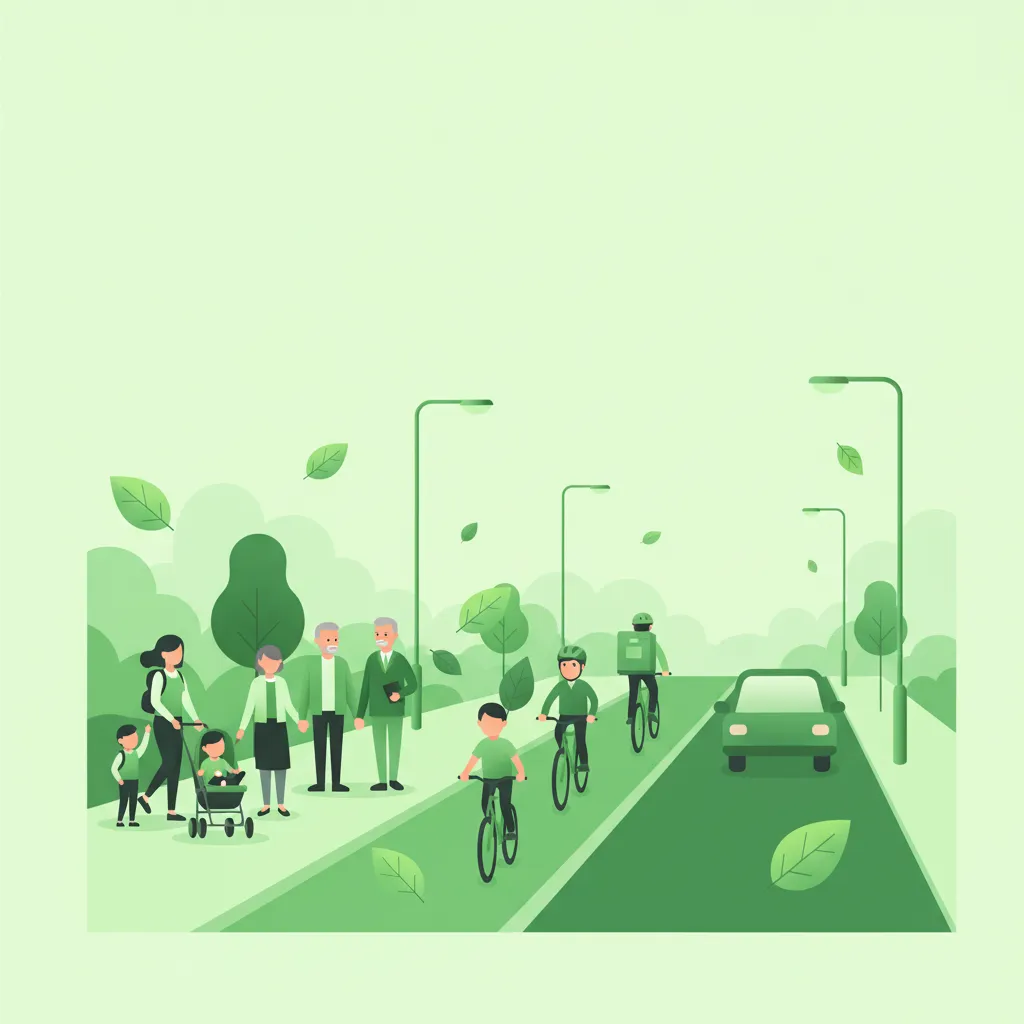
As a motorized road user, you have a special responsibility towards more vulnerable participants. This lesson focuses on the rules giving priority to pedestrians at marked zebra crossings and the importance of anticipating the movements of cyclists, children, and the elderly. You will learn about maintaining a safe lateral distance when overtaking cyclists and how to navigate shared spaces with heightened awareness, a key component of social and safe driving behavior.
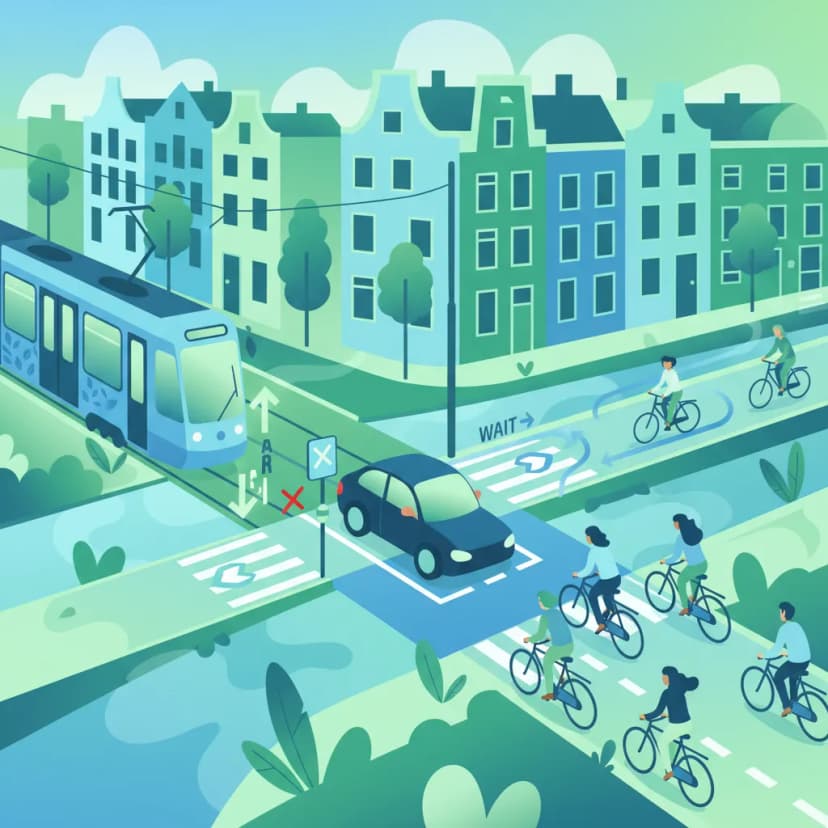
This lesson breaks down the rules of priority at intersections. You will learn to identify an 'equal' intersection where the default rule of giving way to traffic from the right applies. It also explains how priority is regulated by signs (such as the B6 Stop sign and B7 priority road sign) and road markings ('shark's teeth'). Understanding these hierarchies is crucial for making safe and correct decisions when crossing or turning at any junction.
Understand the meaning of various road markings and how they dictate your position on the road. This lesson covers the rules associated with solid and broken white lines, bicycle lane symbols, suggestion strips, and arrows painted on the road surface. Proper lane discipline, including when overtaking is permitted and how to position yourself correctly within a lane or on a cycle path, is a fundamental skill for safe and predictable riding that is tested by the CBR.
Roundabouts are a common feature of Dutch roads, and they have specific priority rules. This lesson teaches the standard rule of yielding to traffic already circulating on the roundabout before you enter. It also covers correct lane positioning, the importance of signaling your intention to exit, and the specific rules that often apply to cyclists who may have priority when crossing the exits. These skills ensure smooth and safe passage through both large and mini-roundabouts.
This lesson addresses special situations where standard priority rules are superseded. You will learn the absolute priority of emergency vehicles using sirens and flashing lights, and the correct procedure for giving them way safely. The content also explains the specific priority rules for trams, which often have right-of-way over other traffic, as well as for military columns and official funeral processions. Furthermore, the lesson reinforces the rules for yielding to pedestrians at designated zebra crossings.

Road surface markings are a crucial part of the traffic regulation system. This lesson covers the meaning of various lines, including solid versus broken center lines, edge lines, and stop lines. You will also learn to interpret symbols like 'shark's teeth' (yield markings), bicycle pictograms, and directional arrows, all of which provide essential information about priority, lane usage, and upcoming turns, directly impacting your riding decisions.
This lesson addresses interactions with other types of road users. You will learn about motorcyclists, who can accelerate and brake quickly and may filter through slow traffic. The curriculum explains how to anticipate their movements and check for them carefully at junctions. It also covers how to safely approach and overtake slow-moving vehicles, such as agricultural tractors, and how to behave around horse riders, which requires slowing down and giving a very wide berth.
This lesson equips you with the knowledge to safely navigate special traffic situations. It covers the rules for riding through tunnels, including mandatory lighting, and the absolute priority of trains at level crossings, indicated by warning lights and barriers. You will also learn to recognize and react to the temporary signage and altered lane configurations typically found in road work zones, ensuring you can adapt your riding to maintain safety in these potentially hazardous environments.
This lesson focuses on the legal requirements and safe practices for riding near pedestrian crossings ('zebrapaden') and designated school zones. It details the absolute obligation to yield to pedestrians on or about to use a crossing and the need for significantly reduced speeds and heightened vigilance in areas with children. The content underscores the importance of anticipation and being prepared for unpredictable movements from vulnerable road users to prevent serious incidents.
Learn about typical errors drivers make when sharing roads with cyclists and mopeds in the Netherlands. This lesson uses real-world scenarios to highlight critical safety aspects like blind spots and overtaking distances for your theory.

This lesson clarifies the regulations determining where each type of Category AM vehicle is allowed to travel. It explains the rules for using mandatory cycle paths (fietspad) and combined moped/cycle paths (bromfietspad), identified by specific road signs. You will also learn the conditions under which a bromfiets must use the main carriageway. Understanding these positioning rules is essential for legal compliance and for ensuring safety in mixed traffic environments with cyclists and cars.

Overtaking is a high-risk maneuver that must be executed correctly. This lesson provides a step-by-step guide: assess if it is safe and legal, check mirrors and blind spots, signal your intention, accelerate smoothly past the other vehicle, and return to your lane leaving adequate space. You will also learn to identify situations where overtaking is prohibited, such as before a pedestrian crossing or when approaching a blind corner.
Defensive riding means riding to prevent collisions, despite the actions of others or the conditions around you. This lesson teaches the core principles of this proactive safety strategy. Key techniques include managing the space cushion around your vehicle, positioning yourself in your lane for maximum visibility, constantly planning an escape route, and communicating your intentions clearly to other road users. This mindset acknowledges your vulnerability and empowers you to take control of your own safety.
Understand the meaning of various road markings and how they dictate your position on the road. This lesson covers the rules associated with solid and broken white lines, bicycle lane symbols, suggestion strips, and arrows painted on the road surface. Proper lane discipline, including when overtaking is permitted and how to position yourself correctly within a lane or on a cycle path, is a fundamental skill for safe and predictable riding that is tested by the CBR.
Safely merging and changing lanes requires a systematic approach known as 'mirror-signal-blind spot'. This lesson explains the correct procedure for entering a carriageway from an acceleration lane, ensuring you match the speed of the traffic flow and find a safe gap. It also covers the technique for changing lanes, emphasizing the critical importance of checking your blind spot with a shoulder check (dode hoek) before making any lateral movement to prevent collisions.

Riding on two wheels requires special care on surfaces with reduced grip. This lesson teaches you how to handle challenging conditions like rain, ice, wet leaves, or tram tracks. Key principles include reducing speed significantly, making all control inputs (braking, accelerating, steering) much more smoothly and gradually, and increasing your following distance to allow for much longer stopping distances. Recognizing potentially slippery areas is a critical part of proactive hazard perception.

In the event of an accident, a calm and methodical approach is essential. This lesson details the necessary actions, from stopping safely and assessing the situation to exchanging driver and insurance details with the other party. It explains how to fill out the European Accident Statement form ('schadeformulier'), which is a vital document for insurance claims. You will also learn when it is mandatory to call the police and the importance of gathering evidence like photos and witness contact information.
This lesson focuses on the legal requirements and safe practices for riding near pedestrian crossings ('zebrapaden') and designated school zones. It details the absolute obligation to yield to pedestrians on or about to use a crossing and the need for significantly reduced speeds and heightened vigilance in areas with children. The content underscores the importance of anticipation and being prepared for unpredictable movements from vulnerable road users to prevent serious incidents.
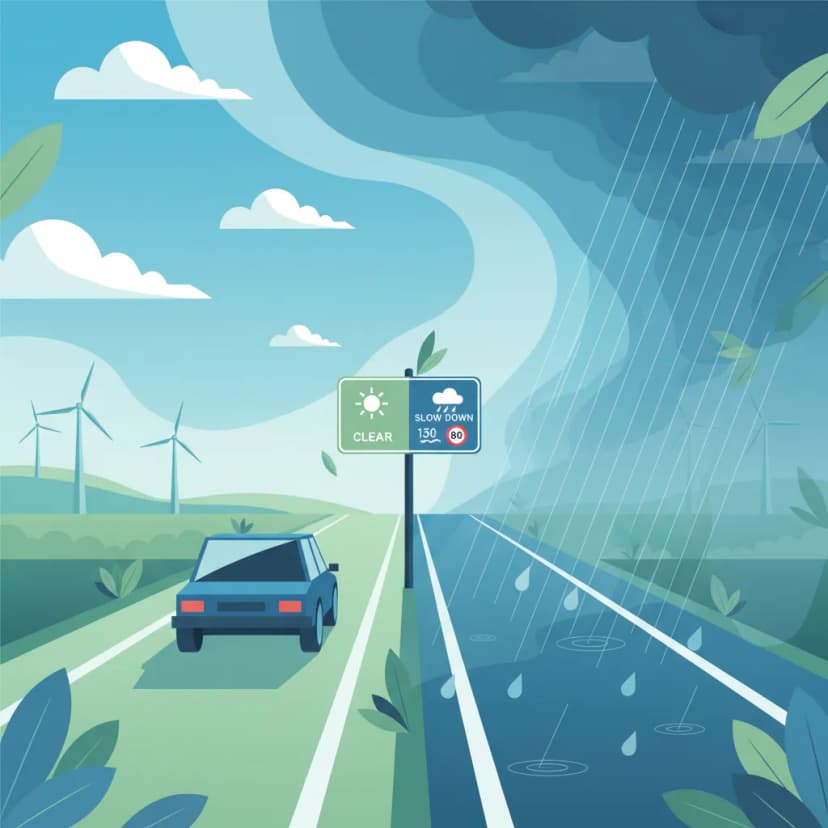
The posted speed limit is a maximum, not a target. This lesson teaches the crucial skill of adapting your speed to prevailing conditions. You will learn how to assess factors like traffic density, poor weather (rain, fog), limited visibility (at night), and slippery road surfaces. Adjusting your speed downwards in these situations provides you with more time to react to hazards and significantly reduces the risk of losing control or being involved in a collision.
Effective communication with other road users is vital for safety. This lesson details the legal requirements and proper use of your vehicle's signaling equipment, including headlights, brake lights, and turn signals (indicators). It also explains the specific situations in which using the horn is permitted to avert danger. Finally, it covers the mandatory placement and type of reflectors that ensure your vehicle remains visible to others, especially in low-light conditions.
Find clear answers to common questions learners have about Interacting with Cyclists and Mopeds. Learn how the lesson is structured, which driving theory objectives it supports, and how it fits into the overall learning path of units and curriculum progression in the Netherlands. These explanations help you understand key concepts, lesson flow, and exam focused study goals.
The 'dode hoek' or blind spot is the area next to and behind your vehicle that you cannot see directly or in your mirrors. When turning right, a cyclist may be in this blind spot. Always look over your right shoulder (direct vision) just before and during the turn to check for cyclists and other vulnerable road users before proceeding.
A 'snorfiets' is a moped that generally operates in separate bicycle paths and has a blue license plate; it's quieter and slower. A 'bromfiets' has a yellow license plate and usually rides on the main carriageway alongside other motor traffic. Both require specific attention and space from car drivers.
Generally, cyclists on designated cycle paths have priority within that path. However, when a cycle path crosses a road (e.g., at an intersection), the general priority rules (like priority to the right, or specific signs) often apply. Always be prepared to yield if signs or traffic flow indicate you should.
In the Netherlands, you must give cyclists at least 1.5 metres of space when overtaking. If this is not possible, you must wait until it is safe to do so, even if it means delaying your overtaking manoeuvre. Riding too close is dangerous and may result in a fine.
Yes, 'bromfietsen' (yellow plate) usually ride on the right side of the main carriageway, similar to cars, and must follow the same road rules regarding priority and speed limits unless otherwise indicated. 'Snorfietsen' (blue plate) are generally expected to use cycle paths where available.