
Welcome to the lesson on priority rules for pedestrians and cyclists. This topic is critical for your A2 motorcycle license theory exam and safe riding in the Netherlands. We'll cover the absolute requirements to stop for pedestrians and when to yield to cyclists, ensuring you understand these vulnerable road users' rights.
As a motorcyclist, understanding your place in the traffic hierarchy is not just a matter of passing your theory exam; it is a fundamental aspect of road safety. This lesson focuses on the critical rules of priority concerning two of the most vulnerable road users you will encounter: pedestrians at marked crossings and cyclists in their designated lanes. Mastering these rules is non-negotiable for anyone seeking their Dutch Category A2 motorcycle license, as errors in these situations often lead to serious accidents and severe legal penalties.
This chapter will provide a detailed breakdown of your legal obligations at pedestrian crossings, known as a zebrapad, and when your path intersects with a bicycle lane, or fietspad. We will explore the legal reasoning, practical application, and the mindset required to anticipate and react safely in these common scenarios.
In Dutch traffic law, the hierarchy of protection is clear, and pedestrians at a designated crossing hold the highest priority. The rule is absolute and simple: you must give way to pedestrians who are on a zebra crossing or are clearly waiting to cross.
A zebrapad is identified by the distinctive broad white stripes painted on the road surface. When you approach one, your primary duty is to scan for pedestrians. This duty extends beyond just those already walking on the stripes. If a person is standing at the curb and demonstrates a clear intention to cross, you are legally required to stop and let them pass.
The law is unambiguous. You must be able to stop your motorcycle safely and completely before the crossing. This means anticipating the need to brake well in advance, not at the last second.
Never overtake another vehicle that has stopped or is slowing down for a zebra crossing. You cannot see why they are stopping, and a pedestrian may be walking out from in front of their vehicle directly into your path. This is one of the most dangerous actions a driver can take at a crossing.
The rationale behind this absolute priority is based on physics and vulnerability. A pedestrian has no protection in a collision with a motorcycle. Furthermore, a motorcyclist's perception and braking distance can be misleading. By making the rule absolute, the law removes any ambiguity or need for on-the-spot judgment calls, creating a predictable and safer environment for everyone.
The Netherlands is world-famous for its cycling infrastructure, and as a motorcyclist, you will constantly interact with bicycle lanes (fietspaden). These lanes are marked to provide a safe, dedicated space for cyclists. When your intended path as a motorcyclist crosses a fietspad, specific priority rules apply to prevent conflict and collisions.
The core principle is: when you turn and cross a bicycle lane, you must give way to cyclists (and moped riders, if applicable) travelling on that lane. This applies whether the lane is physically separated from the road or simply marked with paint.
Making a Right Turn: This is a frequent and high-risk scenario. As you prepare to turn right, a cyclist may be approaching from behind you in the fietspad to your right. They intend to go straight ahead. Because your turn crosses their path, you must yield. You must check your mirrors, and crucially, perform a direct shoulder check (dode hoek check) to see any cyclist in your blind spot before you initiate the turn.
Making a Left Turn: When turning left, you may need to cross a fietspad on the road you are entering. Cyclists could be approaching from both your left and right on this lane. You must wait until the fietspad is clear in both directions before completing your turn.
Approach and Signal: Indicate your intention to turn well in advance. Position your motorcycle correctly in your lane.
Scan and Check: Check your mirrors for approaching cyclists. As you slow down, perform a direct shoulder check into your blind spot to look for cyclists who may be alongside you.
Yield: If cyclists are present or approaching, stop before your path would cross the fietspad. Allow them to pass safely. Do not rush or try to cut in front of them.
Execute Turn: Once the fietspad is clear, proceed with your turn, continuing to scan for any unexpected hazards.
Cyclists, especially those on electric bikes, can travel much faster than you might expect (up to 25 km/h or more). Always judge the gap based on their actual speed, not an assumption. It is always safer to wait for an extra moment than to risk a collision.
The rules of priority are constant, but the way you apply them must change with the conditions. As a motorcyclist, you are more exposed to the elements, and your vehicle's performance is more sensitive to the road surface.
Rain, fog, and darkness significantly reduce your ability to see pedestrians and cyclists, and their ability to see you. More importantly, wet or icy roads dramatically increase your motorcycle's stopping distance.
zebrapad much earlier and begin to slow down sooner and more gradually to avoid skidding.The density of pedestrian crossings and bicycle lanes varies by road type. Your level of alertness must adapt accordingly.
zebrapaden and fietspaden. Expect the unexpected. Children can run out from between parked cars, and pedestrians may be distracted. Your speed should be low enough to allow for a sudden stop at any moment.zebrapad that appears clear from a distance can have a pedestrian step onto it by the time you arrive. Always be prepared to brake.zebrapad if you are turning. Similarly, a green light for you does not override your duty to yield to cyclists on a fietspad your turn will cross, unless a separate bicycle traffic light holds them at a red light.A term for road users who have little or no external protection in the event of a collision. This group primarily includes pedestrians, cyclists, moped riders, and persons with a disability. Traffic laws in the Netherlands are specifically designed to provide them with extra protection.
By internalizing these rules and, more importantly, the safety principles behind them, you demonstrate the responsibility and foresight required of a safe motorcyclist. Your ability to anticipate the actions of vulnerable road users and yield priority without hesitation is a hallmark of a skilled and mature rider.
Lesson content overview
Explore all units and lessons included in this driving theory course.
Explore search topics learners often look for when studying Priority at Pedestrian Crossings and Bicycle Lanes. These topics reflect common questions about road rules, driving situations, safety guidance, and lesson level theory preparation for learners in the Netherlands.
Browse additional driving theory lessons that cover connected traffic rules, road signs, and common driving situations related to this topic. Improve your understanding of how different rules interact across everyday traffic scenarios.
Explore complex priority scenarios beyond basic rules involving pedestrians and cyclists. This lesson deepens understanding of yielding obligations in varied traffic situations, crucial for safe driving in the Netherlands.
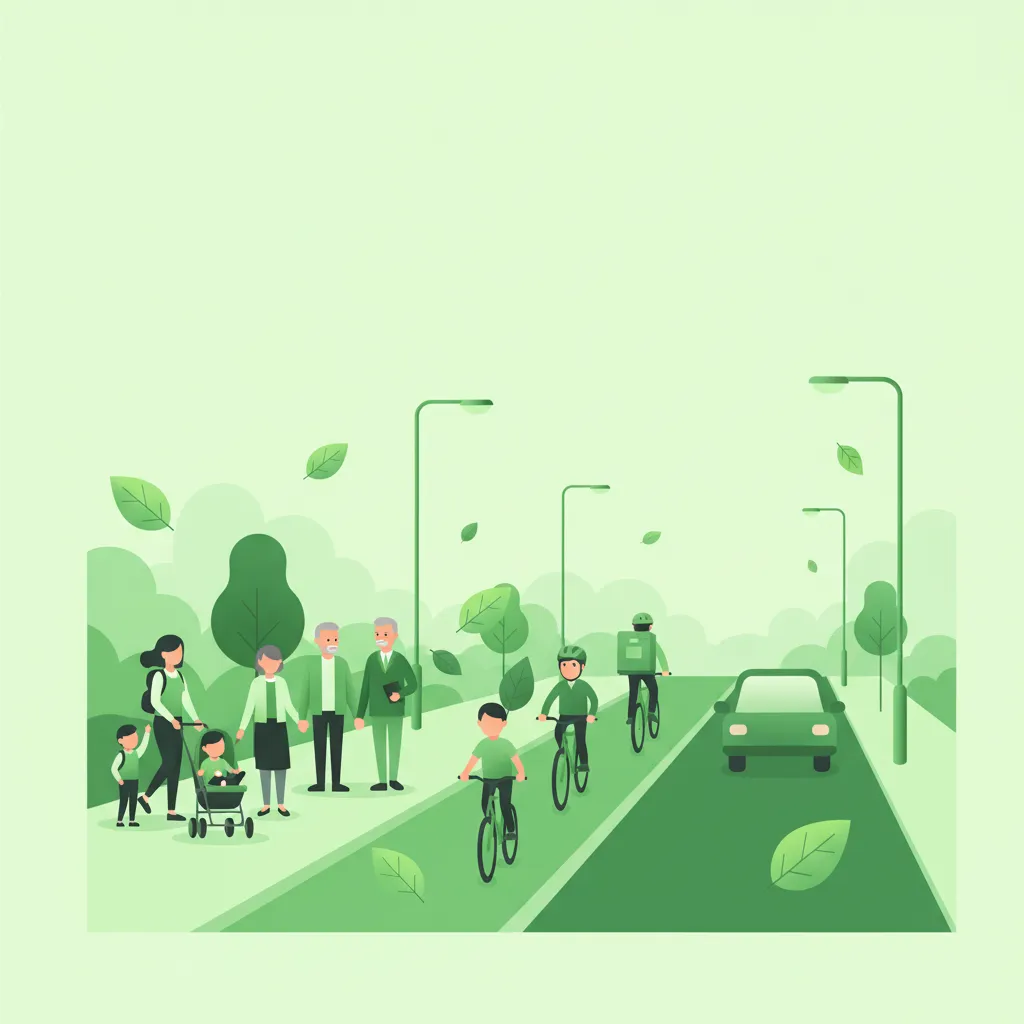
As a motorized road user, you have a special responsibility towards more vulnerable participants. This lesson focuses on the rules giving priority to pedestrians at marked zebra crossings and the importance of anticipating the movements of cyclists, children, and the elderly. You will learn about maintaining a safe lateral distance when overtaking cyclists and how to navigate shared spaces with heightened awareness, a key component of social and safe driving behavior.
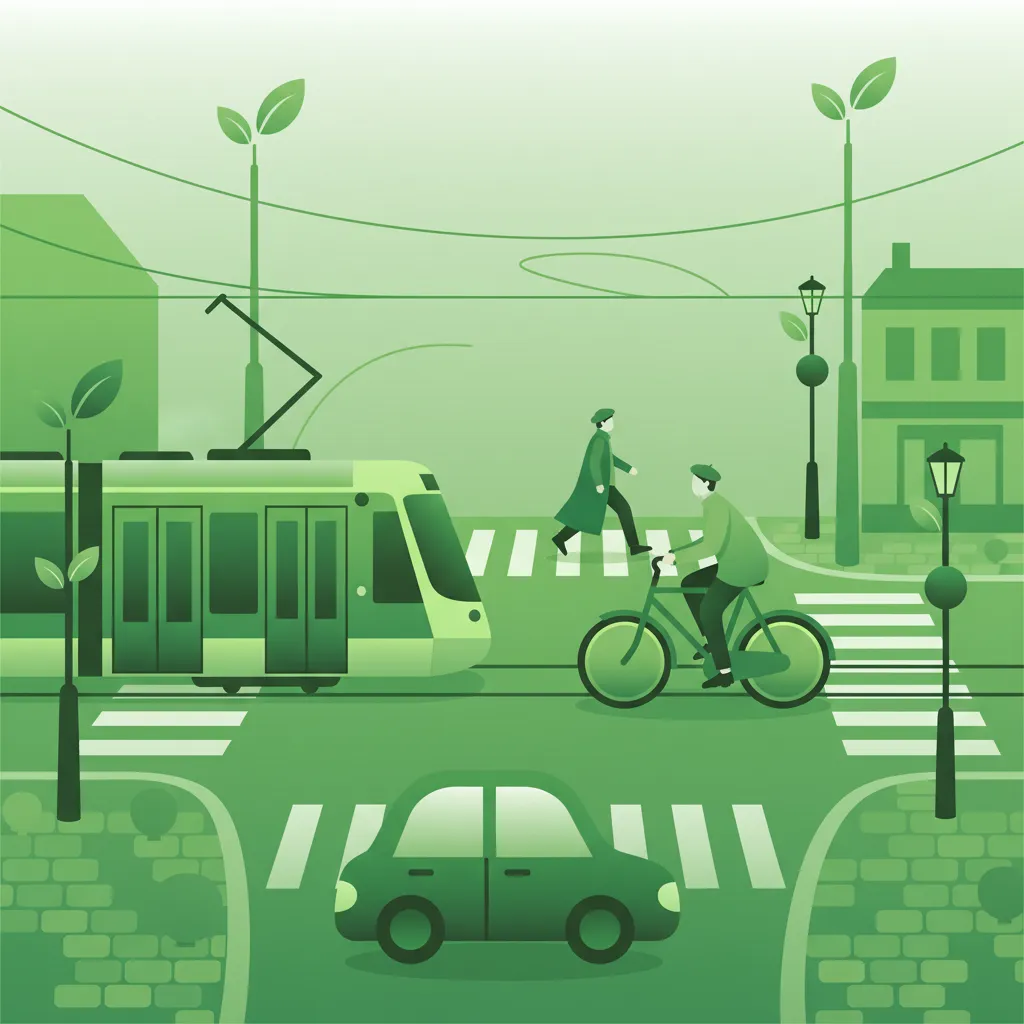
This lesson addresses special situations where standard priority rules are superseded. You will learn the absolute priority of emergency vehicles using sirens and flashing lights, and the correct procedure for giving them way safely. The content also explains the specific priority rules for trams, which often have right-of-way over other traffic, as well as for military columns and official funeral processions. Furthermore, the lesson reinforces the rules for yielding to pedestrians at designated zebra crossings.
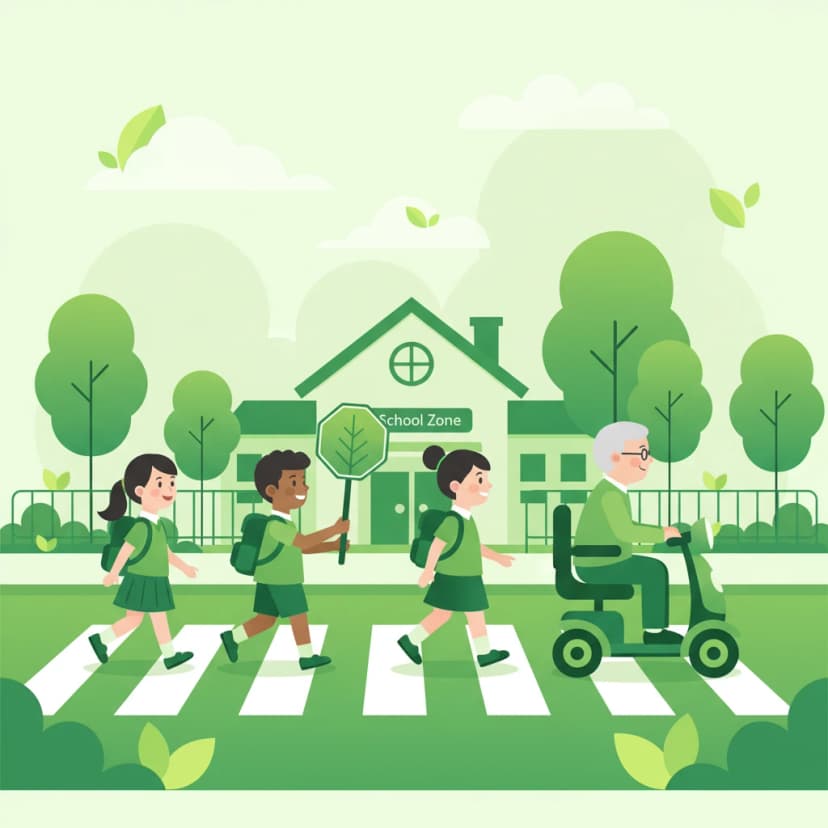
This lesson focuses on the legal and moral responsibility to be extra vigilant around certain groups of vulnerable road users. You will learn that children can be impulsive and have poor traffic awareness, requiring drivers to be prepared to stop suddenly, especially near schools and playgrounds. The content also discusses the need for patience with elderly or disabled road users, who may move more slowly. You will learn to recognize signs of disability, like a white cane or a guide dog, and give these individuals extra space and time.
This lesson introduces the foundational principles of right-of-way in the Netherlands, starting with the road user hierarchy and the default rule of giving priority to traffic from the right at equal intersections. You will learn to identify a priority road, marked by sign BORD 30, and understand how this designation overrides the default rule. The content establishes the legal framework for making priority decisions in the absence of specific signs or signals.
This lesson establishes the foundational rule of priority in Dutch traffic law: yielding to traffic from the right at intersections of equal roads unless otherwise indicated. It explains how to identify an unmarked or 'equal' junction and the correct procedure for approaching, assessing, and proceeding safely. The content also introduces the primary signs and markings, such as 'shark's teeth,' that override this default rule, forming the basis for all other priority scenarios.

This lesson focuses on the rules governing interactions with pedestrians. You will learn the absolute requirement to stop for pedestrians who are on or clearly intending to cross at a designated zebra crossing. The curriculum also covers how to share the road in a 'woonerf' (home zone) where pedestrians have priority. It emphasizes being particularly cautious around children, the elderly, and disabled pedestrians, who may require more time or behave unpredictably.
This lesson breaks down the rules of priority at intersections. You will learn to identify an 'equal' intersection where the default rule of giving way to traffic from the right applies. It also explains how priority is regulated by signs (such as the B6 Stop sign and B7 priority road sign) and road markings ('shark's teeth'). Understanding these hierarchies is crucial for making safe and correct decisions when crossing or turning at any junction.
This lesson addresses the challenge of navigating equal-priority intersections, where no signs or markings dictate the right-of-way. You will master the fundamental Dutch traffic rule of giving priority to all drivers approaching from your right ('rechts voor'). The content focuses on developing advanced observational skills and clear communication to safely manage these situations, which are common in residential and urban areas.
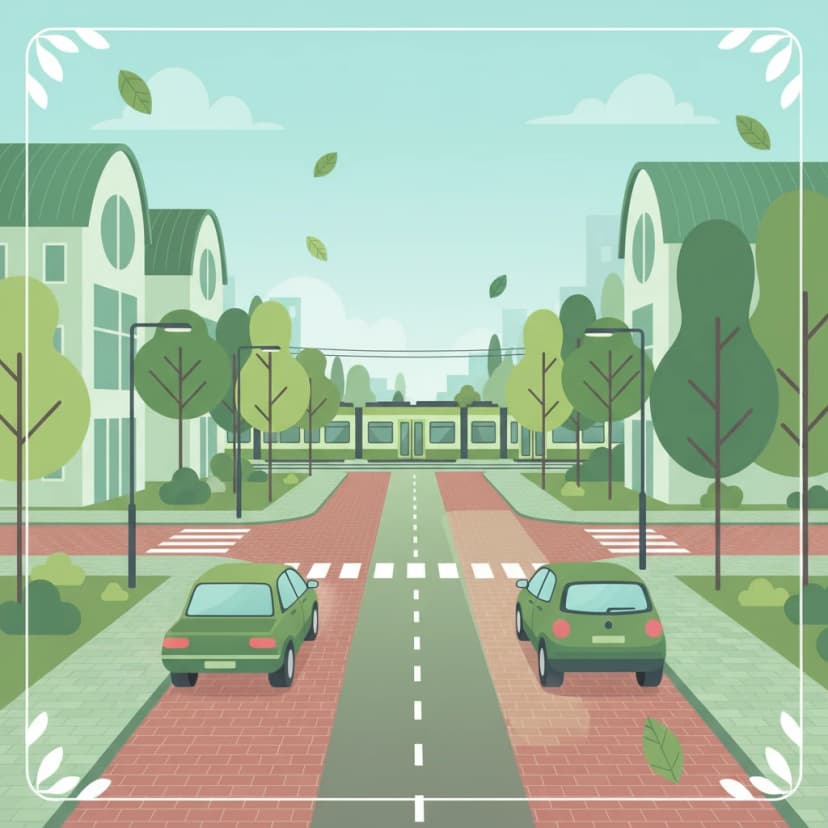
This lesson explains the foundational 'priority to the right' rule, which applies at intersections of equal roads where no other signs or markings dictate priority. You will learn to identify such junctions and understand your obligation to yield to traffic approaching from your right side. The lesson also clarifies important exceptions, such as when exiting a driveway, entering a paved road from an unpaved one, or when encountering a tram. Mastering this rule is crucial for navigating residential areas and city streets where signage is often minimal.
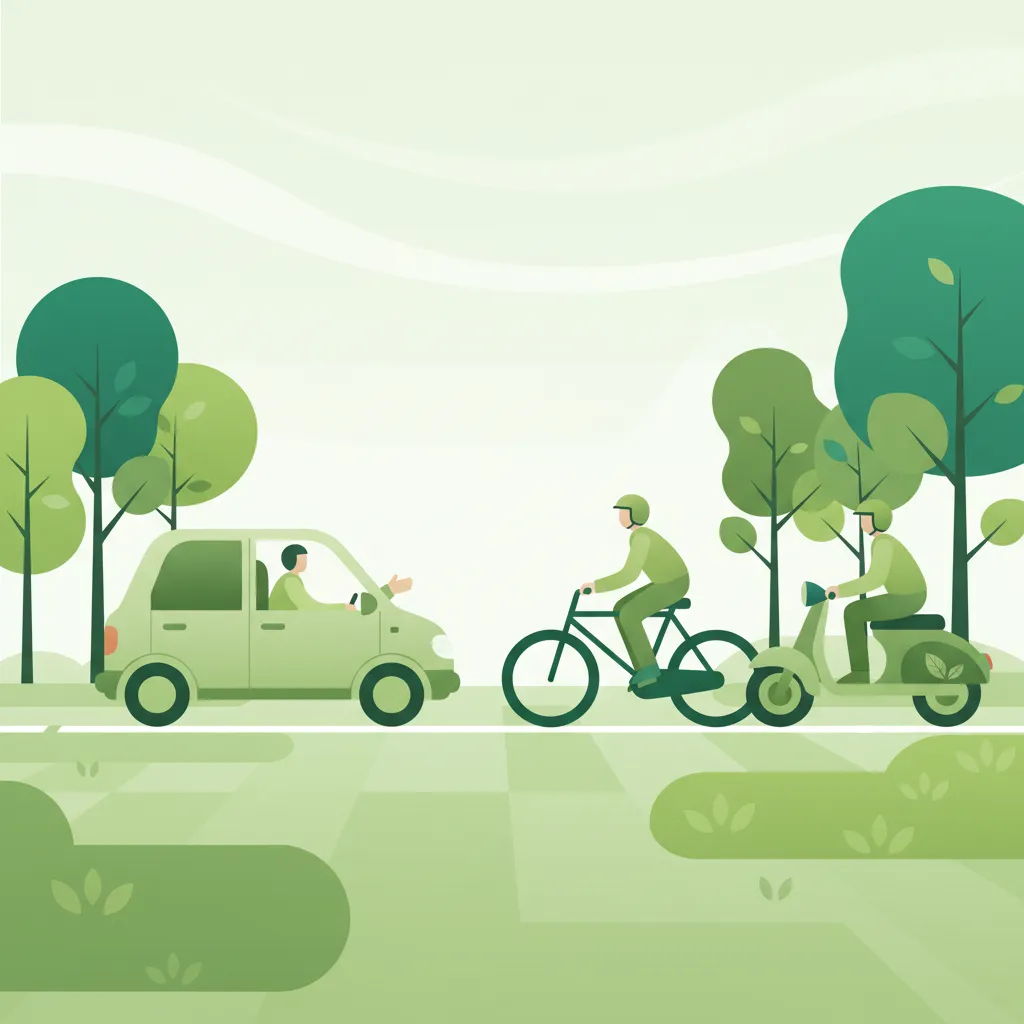
This lesson is critical for driving in the Netherlands, a country with more bicycles than people. You will learn about the different types of cycle paths and how priority rules apply, especially at junctions. The content stresses the importance of checking the blind spot for cyclists before turning right ('dode hoek'). It also covers the rules for different types of mopeds (snorfiets and bromfiets) and the importance of giving all two-wheeled road users ample space when overtaking.
Understand specific Dutch traffic regulations for zebra crossings (zebrapaden) and bicycle paths (fietspaden). Learn your responsibilities as a driver when encountering these zones and vulnerable road users.

This lesson clarifies the regulations determining where each type of Category AM vehicle is allowed to travel. It explains the rules for using mandatory cycle paths (fietspad) and combined moped/cycle paths (bromfietspad), identified by specific road signs. You will also learn the conditions under which a bromfiets must use the main carriageway. Understanding these positioning rules is essential for legal compliance and for ensuring safety in mixed traffic environments with cyclists and cars.
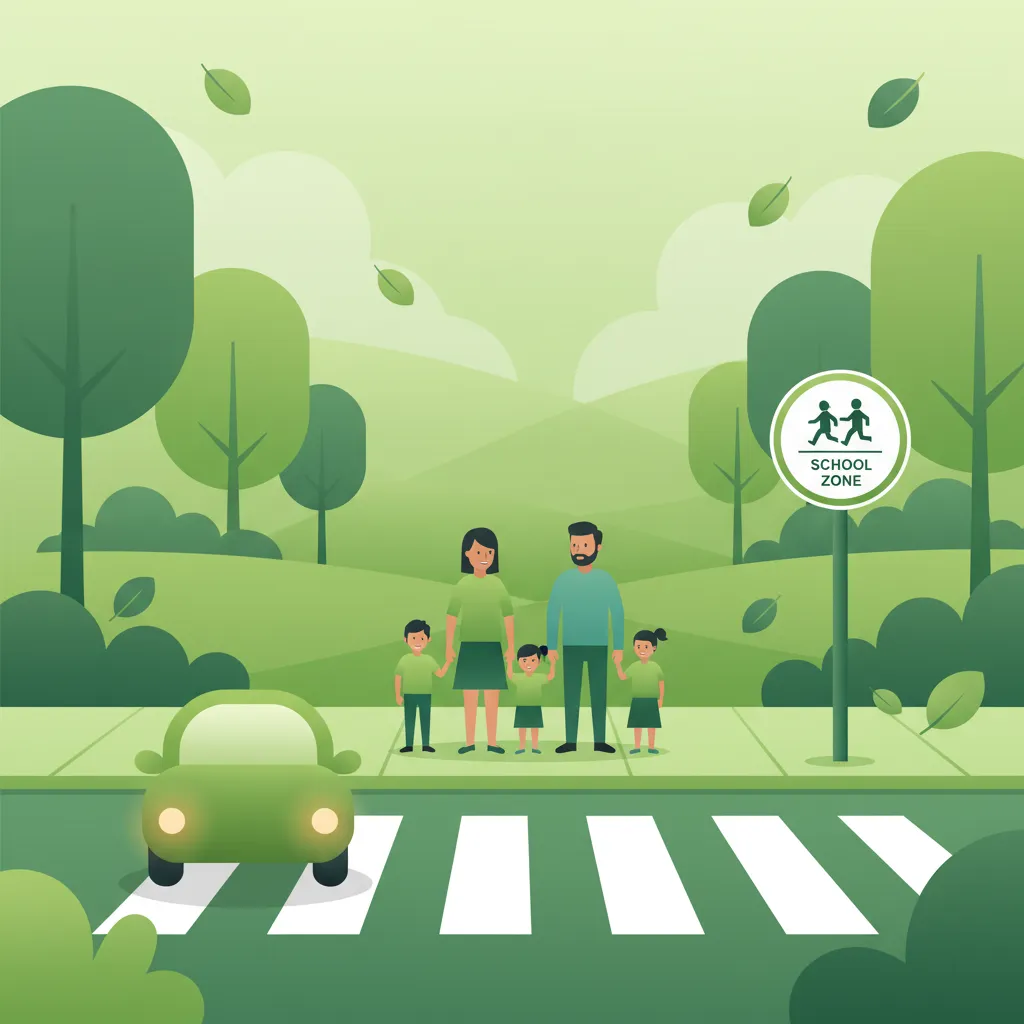
This lesson focuses on the legal requirements and safe practices for riding near pedestrian crossings ('zebrapaden') and designated school zones. It details the absolute obligation to yield to pedestrians on or about to use a crossing and the need for significantly reduced speeds and heightened vigilance in areas with children. The content underscores the importance of anticipation and being prepared for unpredictable movements from vulnerable road users to prevent serious incidents.
This lesson is critical for driving in the Netherlands, a country with more bicycles than people. You will learn about the different types of cycle paths and how priority rules apply, especially at junctions. The content stresses the importance of checking the blind spot for cyclists before turning right ('dode hoek'). It also covers the rules for different types of mopeds (snorfiets and bromfiets) and the importance of giving all two-wheeled road users ample space when overtaking.
This lesson focuses on the rules governing interactions with pedestrians. You will learn the absolute requirement to stop for pedestrians who are on or clearly intending to cross at a designated zebra crossing. The curriculum also covers how to share the road in a 'woonerf' (home zone) where pedestrians have priority. It emphasizes being particularly cautious around children, the elderly, and disabled pedestrians, who may require more time or behave unpredictably.
This lesson breaks down the rules of priority at intersections. You will learn to identify an 'equal' intersection where the default rule of giving way to traffic from the right applies. It also explains how priority is regulated by signs (such as the B6 Stop sign and B7 priority road sign) and road markings ('shark's teeth'). Understanding these hierarchies is crucial for making safe and correct decisions when crossing or turning at any junction.
As a motorized road user, you have a special responsibility towards more vulnerable participants. This lesson focuses on the rules giving priority to pedestrians at marked zebra crossings and the importance of anticipating the movements of cyclists, children, and the elderly. You will learn about maintaining a safe lateral distance when overtaking cyclists and how to navigate shared spaces with heightened awareness, a key component of social and safe driving behavior.
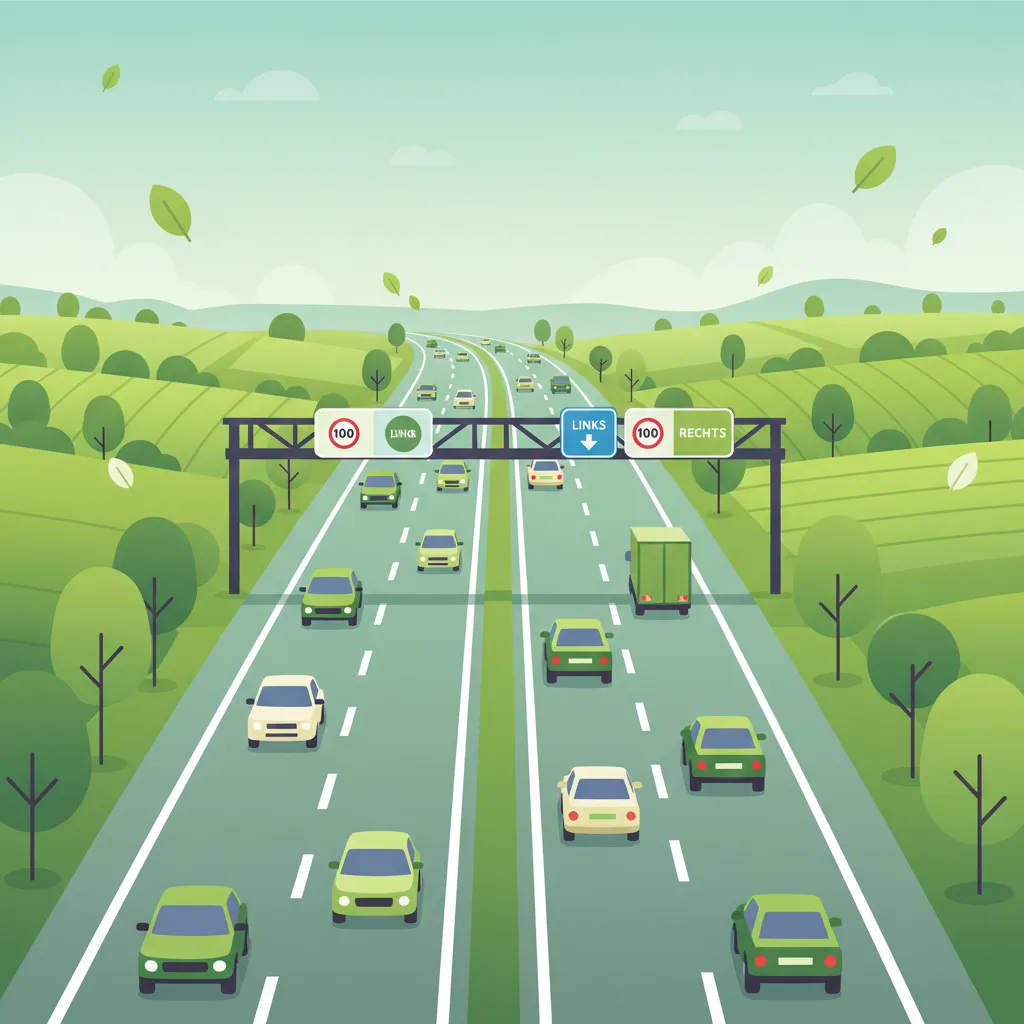
This lesson covers the specific articles of the Dutch Road Traffic Act that apply to motorways, with a primary focus on the strict rule of keeping to the rightmost available lane unless overtaking. It explains the legal and safety reasons for only passing on the left and discusses the correct positioning within a lane for maximum visibility and safety. The content also addresses the nuances of lane usage during heavy congestion, ensuring riders comply with the law and contribute to smooth traffic flow.
Understand the meaning of various road markings and how they dictate your position on the road. This lesson covers the rules associated with solid and broken white lines, bicycle lane symbols, suggestion strips, and arrows painted on the road surface. Proper lane discipline, including when overtaking is permitted and how to position yourself correctly within a lane or on a cycle path, is a fundamental skill for safe and predictable riding that is tested by the CBR.
This lesson covers prohibition signs, which are used to forbid specific maneuvers or restrict access for certain vehicles. You will study the characteristics of these signs, typically circular with a red border, such as the C2 'No Entry for any vehicle' or the F1 'No Parking' sign. The content details the legal consequences of ignoring these prohibitions and explains how they contribute to traffic flow and safety in congested or sensitive areas. Recognizing these signs is fundamental to avoiding fines and dangerous situations on the road.
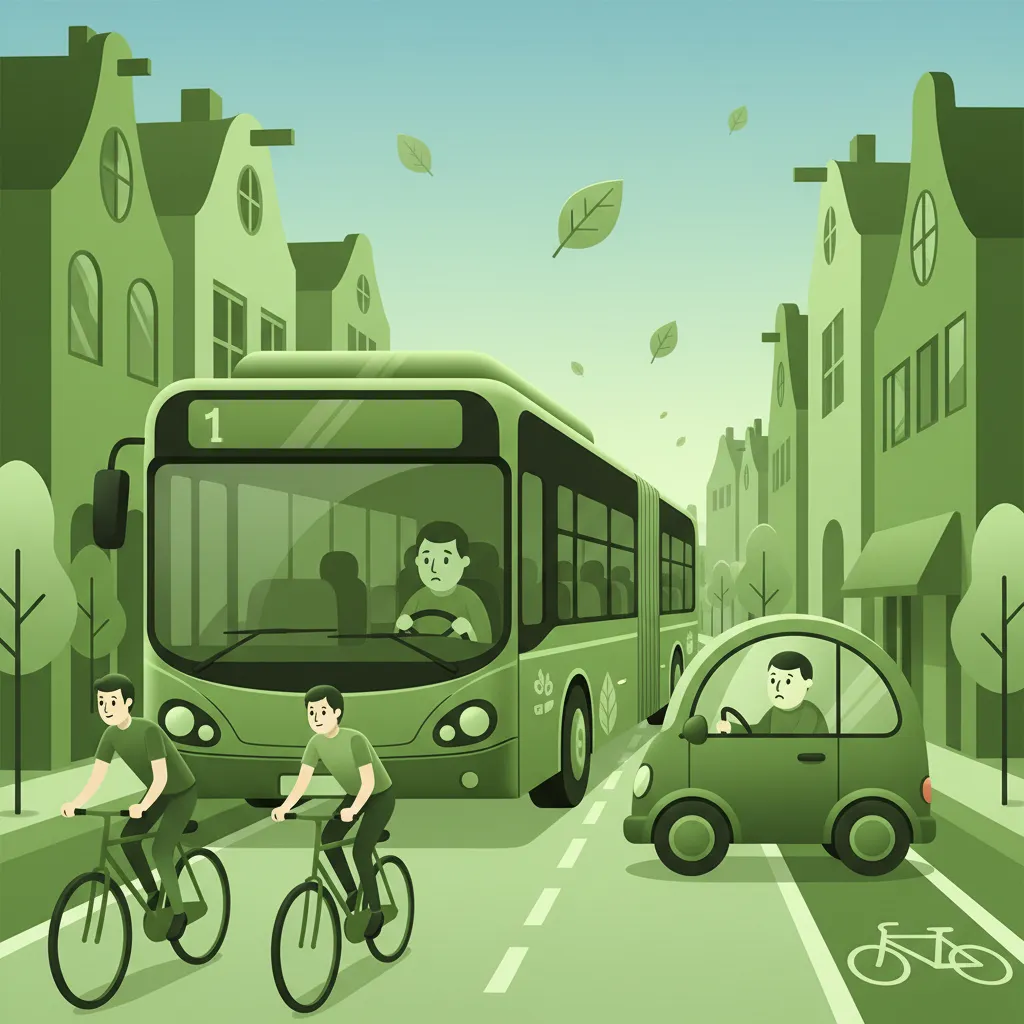
This lesson covers strategies for safely navigating around vehicles at both ends of the size spectrum. It details the large blind spots ('no-zones') around trucks and buses and advises on where to position a motorcycle to remain visible. Equally, it emphasizes the duty of care towards vulnerable road users, teaching riders to anticipate the movements of pedestrians and cyclists and to always provide them with ample space when passing.
Find clear answers to common questions learners have about Priority at Pedestrian Crossings and Bicycle Lanes. Learn how the lesson is structured, which driving theory objectives it supports, and how it fits into the overall learning path of units and curriculum progression in the Netherlands. These explanations help you understand key concepts, lesson flow, and exam focused study goals.
Yes, in the Netherlands, you must always stop for pedestrians on or waiting to enter a 'zebrapad' (zebra crossing). This rule is absolute, regardless of whether they are already on the crossing or clearly indicating their intention to cross. Your priority is their safety.
Cyclists generally have priority when they are continuing straight on their dedicated bicycle path ('fietspad') and you are turning across that path. This applies whether you are turning right or left. Always scan for cyclists and be prepared to yield.
A 'zebrapad' is marked with white stripes and is the most common type of pedestrian crossing in the Netherlands. The rule is strict: you must stop for pedestrians on or waiting to enter it. Other crossings might have different rules or signals, but the 'zebrapad' priority is non-negotiable for motorcyclists.
If a pedestrian is standing at the edge of a 'zebrapad' and shows any sign of intending to cross, you must stop. It is better to err on the side of caution. The rule is about preventing accidents, so assume they will enter the crossing if given the opportunity.
Yes, when you are turning and need to cross a 'fietspad', you must yield to cyclists who are proceeding straight. This is a critical point often tested in the theory exam. Always check for approaching cyclists before committing to the turn.
While the rule is to stop, approaching any crossing at a safe and controlled speed is crucial. It gives you more time to react if a pedestrian suddenly steps onto the 'zebrapad' and allows you to stop smoothly if required. Defensive riding is key.