
Welcome to the first lesson in our 'Rights of Way and Priority Situations' unit! This lesson lays the groundwork for understanding who goes first on Dutch roads. We'll cover the fundamental road user hierarchy and the default rule for priority, crucial knowledge for your A2 motorcycle license exam.
Navigating the roads of the Netherlands safely and efficiently requires a thorough understanding of its unique priority rules and road hierarchy. For anyone pursuing their Dutch Motorcycle License (Category A2), these principles are not just theoretical concepts but critical tools for making split-second decisions that prevent accidents and ensure compliance with the RVV 1990 (Reglement Verkeersregels en Verkeerstekens), the Dutch traffic regulations. This lesson provides a foundational look at how right-of-way is determined, from the default rules at unmarked intersections to the overriding power of specific traffic signs.
Right-of-way, or voorrang in Dutch, is the legal right of a road user to proceed before other road users in a particular situation, especially at intersections or when paths merge. The Dutch system is layered, meaning that various factors determine who has priority, including specific traffic signs, road markings, traffic lights, and a general hierarchy of road users. Understanding this system is paramount for predictable traffic flow and reducing conflict points on the road.
For motorcycle riders, a precise grasp of priority rules is especially crucial. Motorcycles, while agile, are more vulnerable in collisions. Correctly assessing priority situations allows riders to anticipate potential hazards, maintain safe speeds, and position themselves defensively. Errors in judging right-of-way are a leading cause of collisions, making this topic a cornerstone of safe riding practice in the Netherlands.
One of the most fundamental concepts in Dutch traffic law is the priority road. This designation identifies a road where traffic has the right-of-way over all intersecting roads, unless specifically overridden by other signs or signals.
A priority road is clearly marked by a specific traffic sign, known as BORD 30. This sign is a white rectangular board with a blue background, featuring a thick white arrow pointing straight ahead, flanked by two smaller, thinner arrows pointing left and right. These smaller arrows indicate that traffic on the main road continues with priority over traffic entering or crossing from the side streets.
The presence of BORD 30 simplifies decision-making for drivers on the priority road, allowing them to proceed through intersections without needing to yield to traffic from side roads. However, drivers on the intersecting roads must then yield to traffic on the priority road.
When you are riding on a road marked with BORD 30, you generally do not need to slow down significantly or stop for traffic approaching from intersecting side roads. This creates a smooth, dominant traffic flow, which enhances safety by reducing the number of conflict points where drivers might have to make snap judgments. The priority road designation remains valid until you encounter a sign that explicitly cancels it or dictates a different priority rule, such as a give-way sign or a stop sign.
It is important to remember that while BORD 30 grants you priority over intersecting roads, it does not absolve you of the general duty of care. You must still be aware of your surroundings, anticipate potential hazards, and be prepared to react if another road user fails to yield.
Not all intersections are regulated by priority signs or traffic lights. In the absence of such explicit indicators, a default rule comes into play: the right-of-way from the right ( voorrang van rechts ). This is a critical principle for ensuring orderly traffic flow at unmarked intersections.
An equal intersection is defined as any intersection where there are no traffic signs (priority road, give-way, or stop signs) and no traffic signals (lights) dictating priority. These are common in urban residential areas, smaller side streets, or rural roads. At such intersections, every driver must assume that traffic approaching from their right has priority.
This rule means that if you are approaching an equal intersection and another vehicle is coming from your right, you must yield to that vehicle. Conversely, if you are approaching from the right of another vehicle, you have priority. This applies to all motor vehicles, including motorcycles, cars, and even bicycles if they are operating as vehicles on the road, not on a separate priority cycle path.
The legal basis for the right-of-way from the right rule is enshrined in RVV 1990, Article 6, Paragraph 9, which explicitly states: "Traffic approaching from the right has priority at equal intersections." This rule is mandatory and provides a clear, unambiguous default to resolve potential deadlocks at unmarked junctions. Failure to comply can lead to collisions, fines, and legal liability.
Always assume an intersection is 'equal' and apply the right-hand rule unless specific signs or signals clearly indicate otherwise. When in doubt, it is always safer to yield.
Common misunderstandings include assuming that a larger vehicle automatically has priority, or that traffic on a seemingly "main" road without BORD 30 has priority. These assumptions are incorrect and dangerous; vehicle size or perceived importance of a road does not influence priority unless explicitly stated by signs.
While priority roads and the right-hand rule establish foundational right-of-way, certain traffic signs are designed to override these default rules, imposing stricter obligations on drivers. These are the give-way sign and the stop sign.
The give-way sign, officially BORD 27, is an inverted white triangle with a red border. This sign explicitly instructs drivers that they must yield to all traffic on the intersecting road. This means you must slow down, prepare to stop, and only proceed when the intersecting road is clear of traffic, or when it is safe to do so without hindering other road users.
The give-way sign can appear on any road, including one that might otherwise be a priority road. When BORD 27 is present, it overrides any existing priority road designation for that specific intersection. For example, if you are on a priority road but encounter a BORD 27 immediately before an intersection, you must yield to traffic on the cross-road. This situation emphasizes the Sign Override Principle, where a more restrictive sign takes precedence over a less restrictive one.
The stop sign, officially BORD 21, is an octagonal white sign with a red border. It is the most stringent priority sign, commanding drivers to come to a complete stop before the stop line (a thick white line painted across the road). You must remain stopped until you have thoroughly checked both directions and can proceed safely without obstructing any traffic on the intersecting road.
Similar to the give-way sign, a stop sign also overrides any other priority rule, including being on a priority road. RVV 1990, Article 6, Paragraph 13, explicitly details this obligation. Failing to make a complete stop, often referred to as a "rolling stop" or "slow roll," is a serious violation and carries significant penalties due to the high risk of collision it presents. Stop signs are typically placed at intersections with poor visibility, high traffic volume, or particularly dangerous cross-traffic.
The interaction between different priority indicators is governed by the Sign Override Principle. This states that when multiple signs or signals are present, the most restrictive or explicit instruction takes precedence. The hierarchy is generally as follows:
Understanding this hierarchy is critical for motorcycle riders, as it dictates the correct course of action when faced with seemingly conflicting information. Always prioritize the most explicit and restrictive command.
Beyond static signs, Dutch traffic law also establishes a dynamic road-user hierarchy, which defines who must yield when different types of road users interact. This hierarchy aims to protect more vulnerable road users and ensure the efficient movement of essential services.
The general order of priority, from highest to lowest, is as follows:
At the absolute top of the hierarchy are emergency vehicles (ambulances, fire engines, police, etc.) that are actively using their flashing blue lights and sirens. All other road users, regardless of any other priority rule or sign, must yield to these vehicles. This means safely moving to the side of the road, stopping if necessary, and ensuring their unhindered passage. This rule is absolute and applies nationwide (RVV 1990, Article 6, Paragraph 6).
Next in line are all vehicles (including cars, motorcycles, and cyclists) that are travelling on a road designated as a priority road by BORD 30. They have priority over traffic from intersecting roads that are not priority roads. It's crucial to note that if a dedicated priority cycle lane (often part of a Fietsstraat or a clearly marked priority route for cyclists) intersects your path, cyclists on that lane may also inherit priority.
Within the broader category of motor vehicles, cars and motorcycles generally follow the established priority rules from signs or the right-hand rule. They typically have priority over pedestrians who are not on a marked crossing, and over cyclists who are not on a priority lane.
Pedestrians generally have priority when they are using a marked pedestrian crossing (zebra crossing). Even if you are on a priority road, you must stop and allow pedestrians to cross safely if they are already on the crossing or clearly intending to cross. Outside of marked crossings, pedestrians must yield to vehicles, but drivers still have a duty of care to avoid collisions.
The hierarchy is not always absolute. For instance, while emergency vehicles always have ultimate priority, a pedestrian on a marked crossing still has priority over a motor vehicle, even if that vehicle is on a priority road. Always combine the static rules (signs) with the dynamic hierarchy.
Understanding this layered hierarchy allows motorcycle riders to anticipate the actions of other road users and adjust their behaviour accordingly, particularly when interacting with vulnerable road users (VRUs) such as cyclists and pedestrians.
The effectiveness of priority signs hinges on their visibility. Dutch traffic regulations specify requirements for the placement and maintenance of traffic signs to ensure drivers have sufficient time to perceive, process, and react to the information they convey.
According to RVV 1990, Article 9, Paragraph 2 and Paragraph 5, traffic signs, particularly those related to priority like BORD 30, BORD 27, and BORD 21, must be placed with specific visibility parameters:
Additionally, signs must be maintained to be clearly visible and unobstructed by foliage, buildings, or other elements. This is known as the clear-sight requirement. These distances are designed to provide drivers with adequate perception-reaction time, allowing them to adjust their speed, select the correct gear, and prepare for any necessary yielding or stopping manoeuvre.
If a priority sign is partially or fully obscured (e.g., hidden by overgrown branches, damaged, or caked in mud), it compromises its legal validity. In such cases, a motorcycle rider cannot be expected to obey a sign they cannot clearly see. The legal implication is that if you cannot clearly read a priority sign, you should revert to the default rule for an equal intersection: assume the right-hand rule applies.
This doesn't mean you can ignore signs at will; it emphasizes the importance of constant scanning and observation. If visibility is poor due to weather (e.g., heavy rain, fog) or external factors, exercise extreme caution. Treat the intersection as if it were an equal intersection, and be prepared to yield to traffic from the right. While this might cause a slight delay, it significantly enhances safety by preventing assumptions about priority when information is unclear.
Misunderstanding or misapplying priority rules is a significant cause of traffic incidents. Motorcycle riders must be vigilant to avoid these common pitfalls.
While the rules are clear, real-world driving conditions can add layers of complexity. Motorcycle riders must be adaptable and understand how various factors can influence priority decisions.
The comprehensive system of priority rules in the Netherlands is not arbitrary; it is meticulously designed and legally enforced through the RVV 1990. Each rule serves a specific purpose, contributing to overall road safety and efficiency.
Violations of these articles carry mandatory fines and, in some cases, can result in points on your license or even legal proceedings, especially if an accident occurs. The legal framework underscores the seriousness with which these rules are treated.
The Dutch priority system is rooted in several key rationales:
Mastering priority rules is a continuous process that combines theoretical knowledge with practical experience. This lesson has laid the groundwork for understanding the fundamental principles. To deepen your understanding and prepare for your Dutch Motorcycle License (Category A2) exam, explore related topics and test your knowledge.
Lesson content overview
Explore all units and lessons included in this driving theory course.
Explore search topics learners often look for when studying General Priority Rules and Road Hierarchy. These topics reflect common questions about road rules, driving situations, safety guidance, and lesson level theory preparation for learners in the Netherlands.
Browse additional driving theory lessons that cover connected traffic rules, road signs, and common driving situations related to this topic. Improve your understanding of how different rules interact across everyday traffic scenarios.
Explore advanced priority rules and exceptions in the Netherlands. Understand situations like Fietsstraat, priority cycle lanes, and the hierarchy of road users beyond basic intersection rules. Crucial for A2 motorcycle theory.
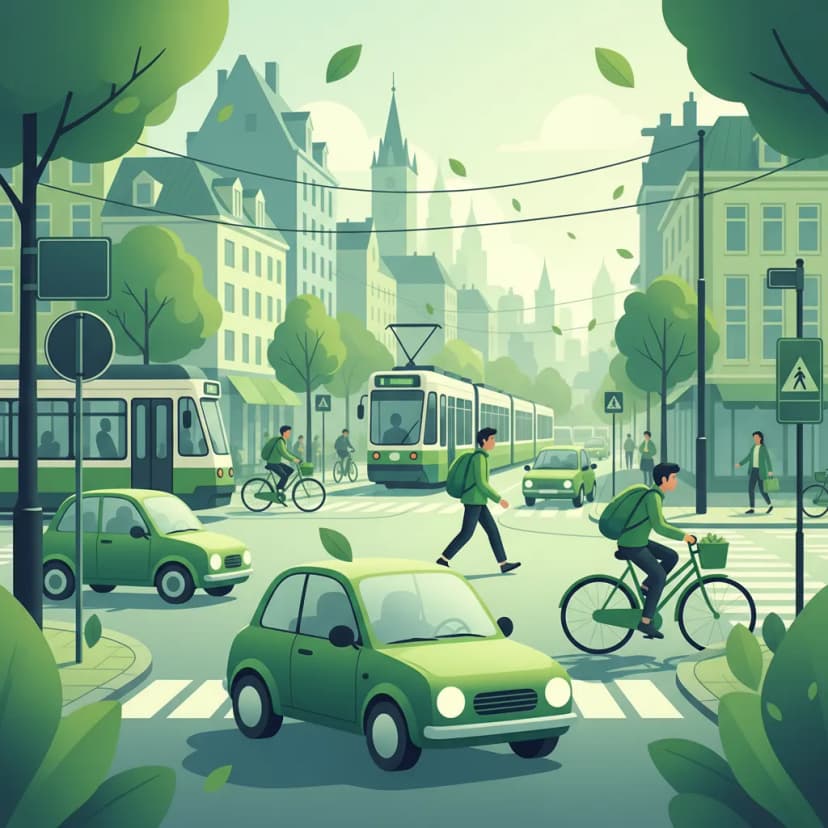
This lesson establishes the foundational rule of priority in Dutch traffic law: yielding to traffic from the right at intersections of equal roads unless otherwise indicated. It explains how to identify an unmarked or 'equal' junction and the correct procedure for approaching, assessing, and proceeding safely. The content also introduces the primary signs and markings, such as 'shark's teeth,' that override this default rule, forming the basis for all other priority scenarios.
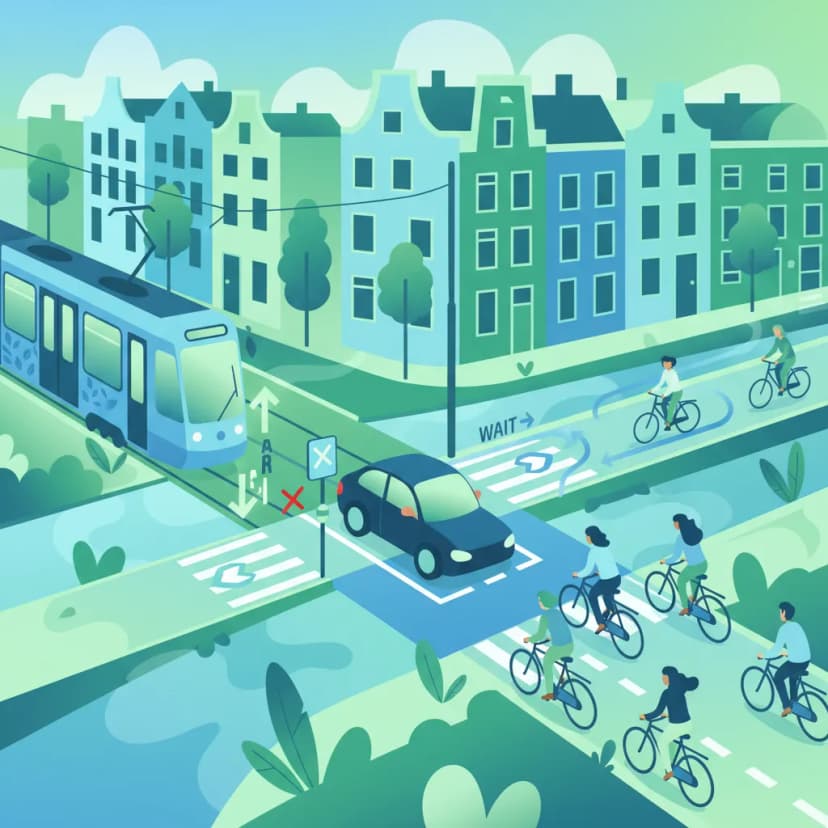
This lesson breaks down the rules of priority at intersections. You will learn to identify an 'equal' intersection where the default rule of giving way to traffic from the right applies. It also explains how priority is regulated by signs (such as the B6 Stop sign and B7 priority road sign) and road markings ('shark's teeth'). Understanding these hierarchies is crucial for making safe and correct decisions when crossing or turning at any junction.
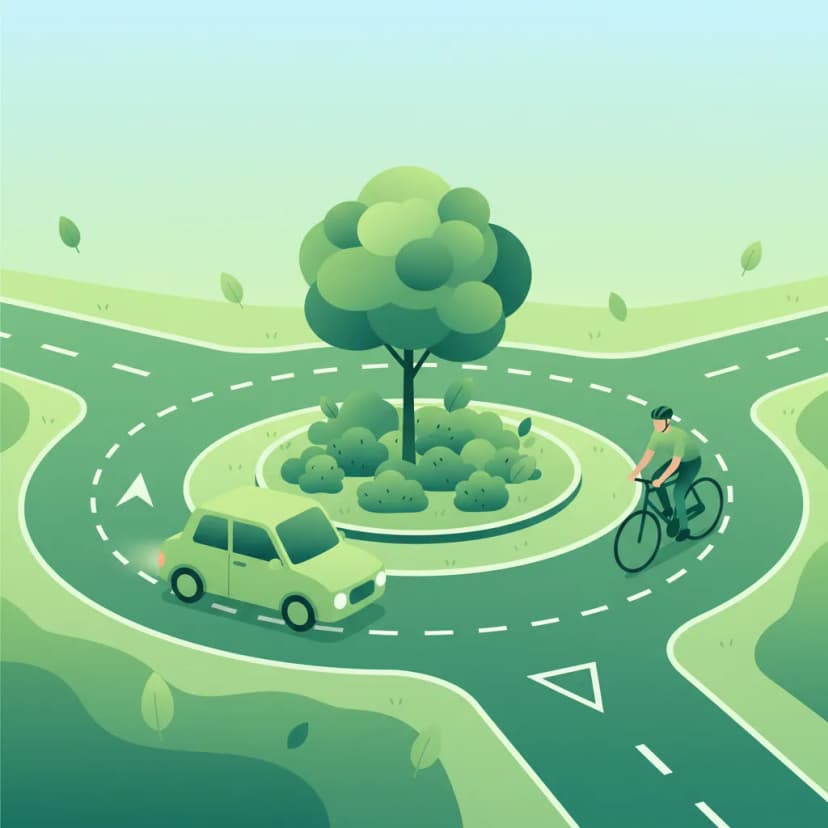
This lesson delves into the hierarchy of priority rules on Dutch roads, clarifying who has the right-of-way in various intersection scenarios. It explains the meaning of signs like 'voorrangsweg' and road markings such as shark's teeth ('haaientanden'). Special attention is given to the correct procedure for entering, navigating, and exiting roundabouts on a motorcycle, including proper signaling and lane choice to ensure safe and efficient passage.
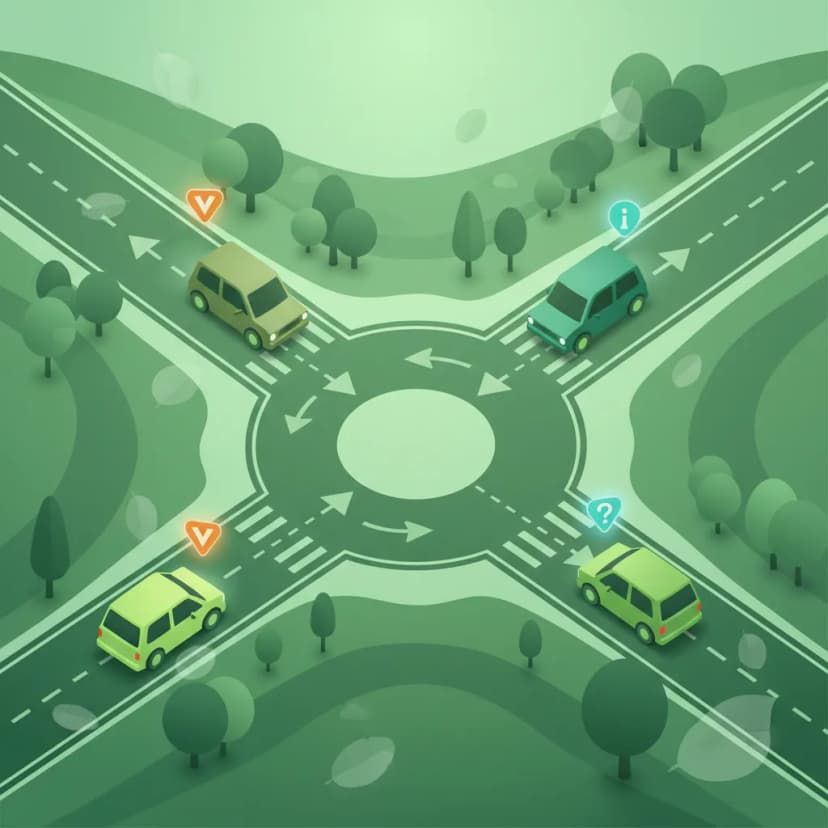
This lesson addresses the challenge of navigating equal-priority intersections, where no signs or markings dictate the right-of-way. You will master the fundamental Dutch traffic rule of giving priority to all drivers approaching from your right ('rechts voor'). The content focuses on developing advanced observational skills and clear communication to safely manage these situations, which are common in residential and urban areas.
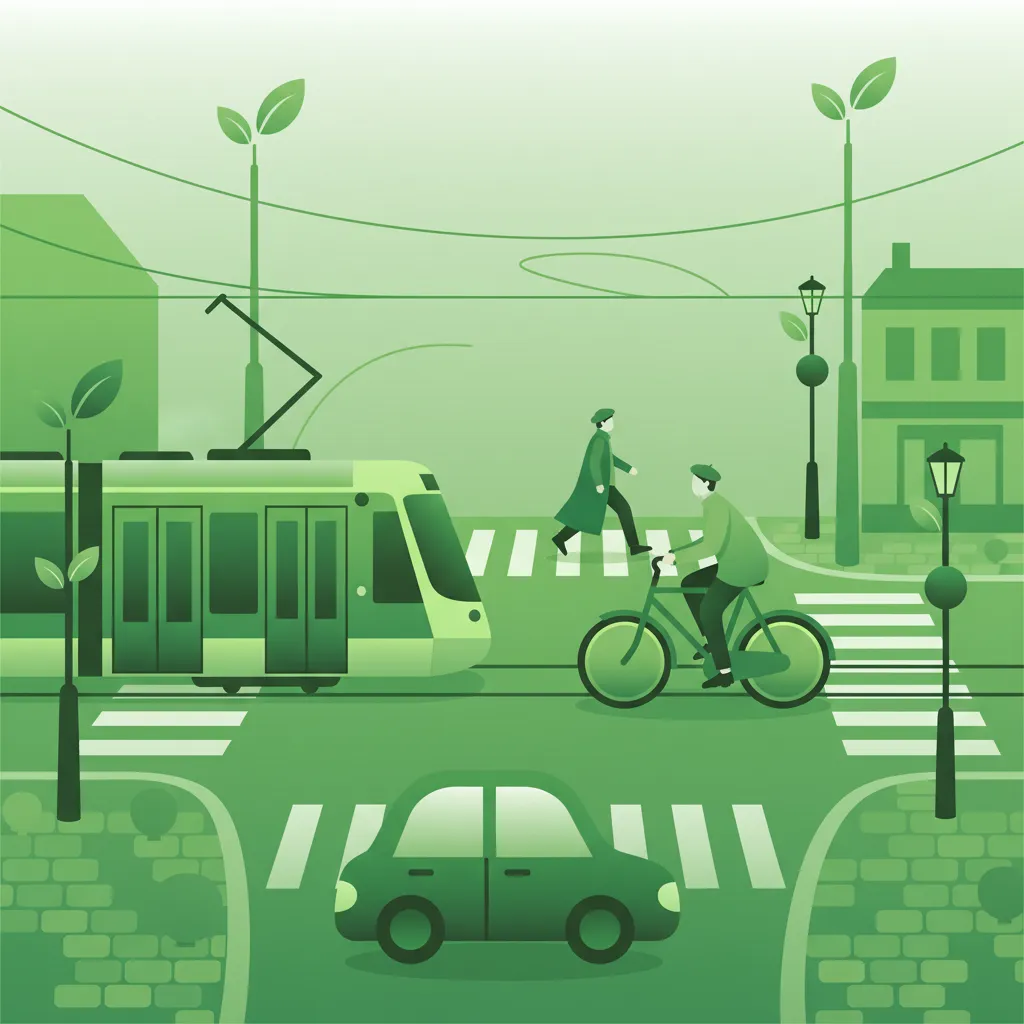
This lesson addresses special situations where standard priority rules are superseded. You will learn the absolute priority of emergency vehicles using sirens and flashing lights, and the correct procedure for giving them way safely. The content also explains the specific priority rules for trams, which often have right-of-way over other traffic, as well as for military columns and official funeral processions. Furthermore, the lesson reinforces the rules for yielding to pedestrians at designated zebra crossings.
This lesson explains the critical rules of priority involving pedestrians and cyclists to ensure the safety of vulnerable road users. You will learn the absolute requirement to stop for pedestrians on or waiting to use a 'zebrapad' (zebra crossing). The content also covers situations where you must yield to cyclists crossing your path, such as when turning across a dedicated bicycle lane (fietspad).
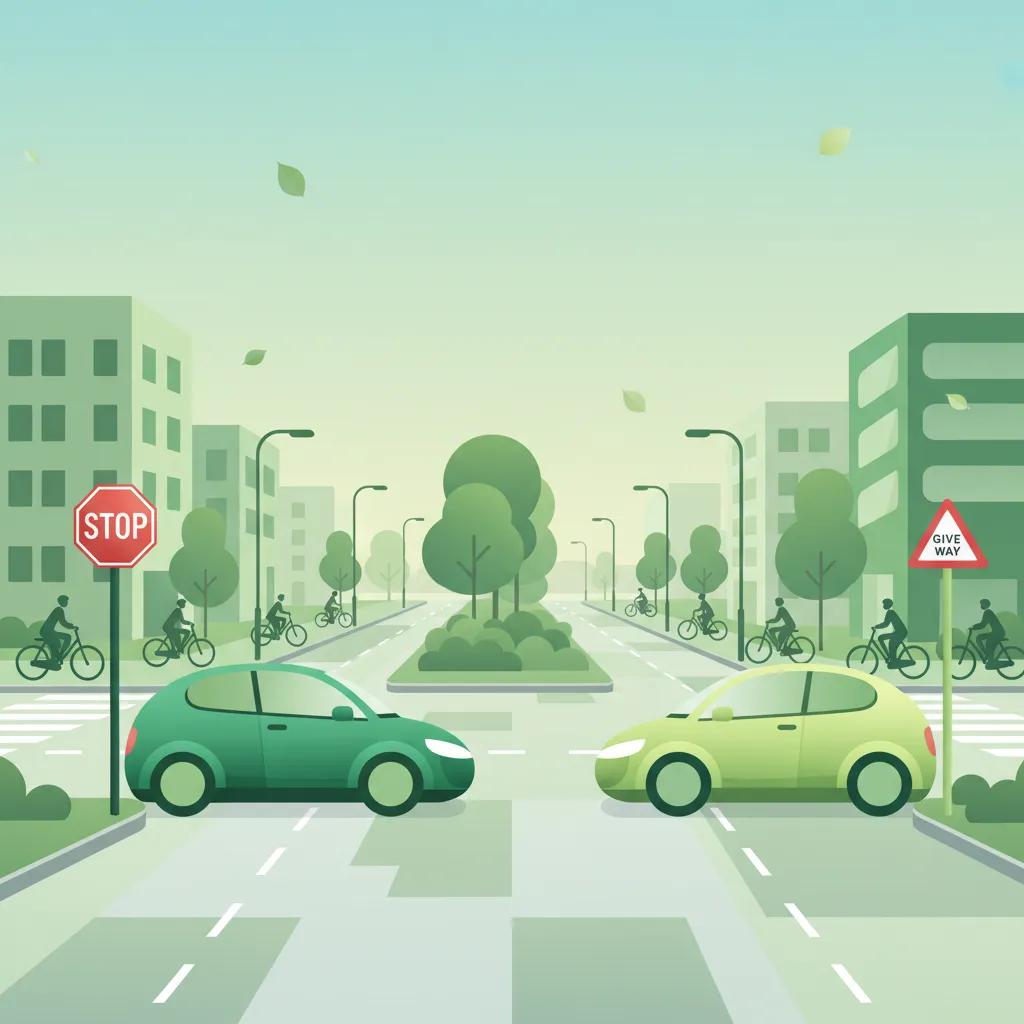
This lesson details the specific actions required at intersections controlled by 'Stop' and 'Give Way' signs. You will learn the legal requirement to come to a complete stop at a stop line (BORD 44) and the obligation to yield to all crossing traffic when encountering give-way markings ('haaientanden'). The content covers safe approach speeds and effective scanning techniques for motorcyclists to accurately assess gaps in traffic before proceeding.
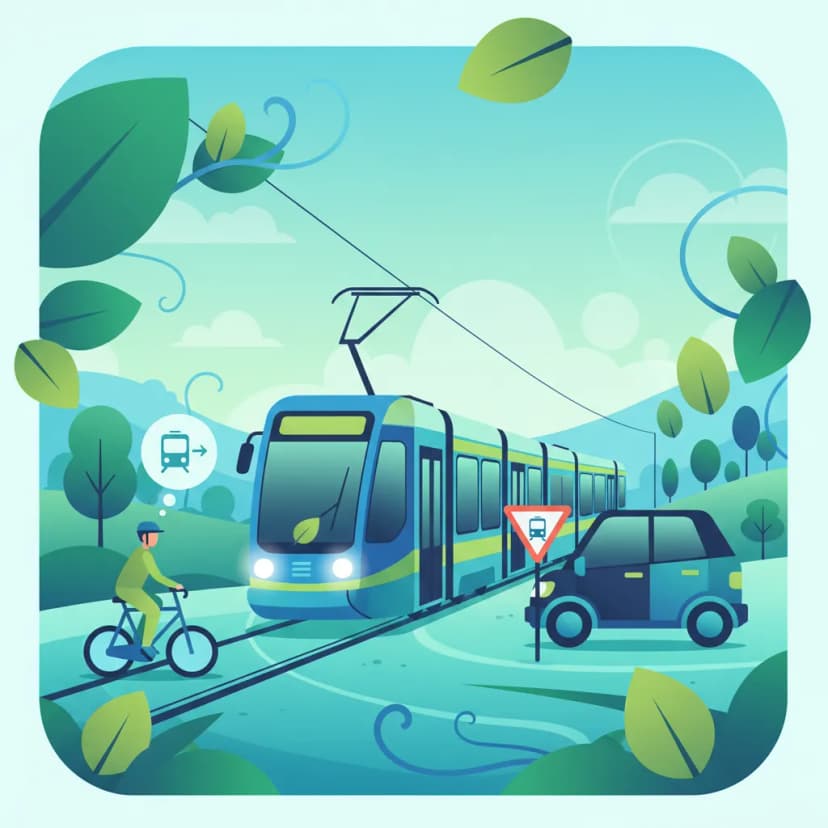
This lesson addresses the unique priority rules concerning trams in urban environments, clarifying that trams generally have priority unless signs or signals indicate otherwise. It explains the specific hazards motorcyclists face, such as slippery tracks (especially in wet conditions) and the long stopping distance of trams. Riders will learn how to safely cross tram lines, navigate shared lanes, and correctly interpret tram-specific traffic signals to avoid dangerous conflicts.
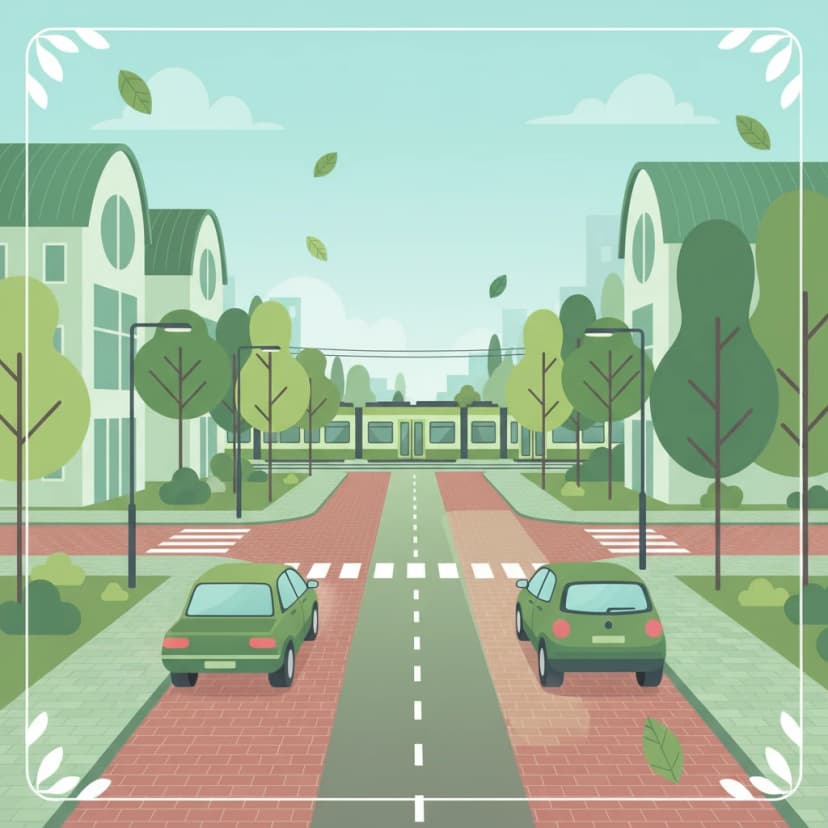
This lesson explains the foundational 'priority to the right' rule, which applies at intersections of equal roads where no other signs or markings dictate priority. You will learn to identify such junctions and understand your obligation to yield to traffic approaching from your right side. The lesson also clarifies important exceptions, such as when exiting a driveway, entering a paved road from an unpaved one, or when encountering a tram. Mastering this rule is crucial for navigating residential areas and city streets where signage is often minimal.
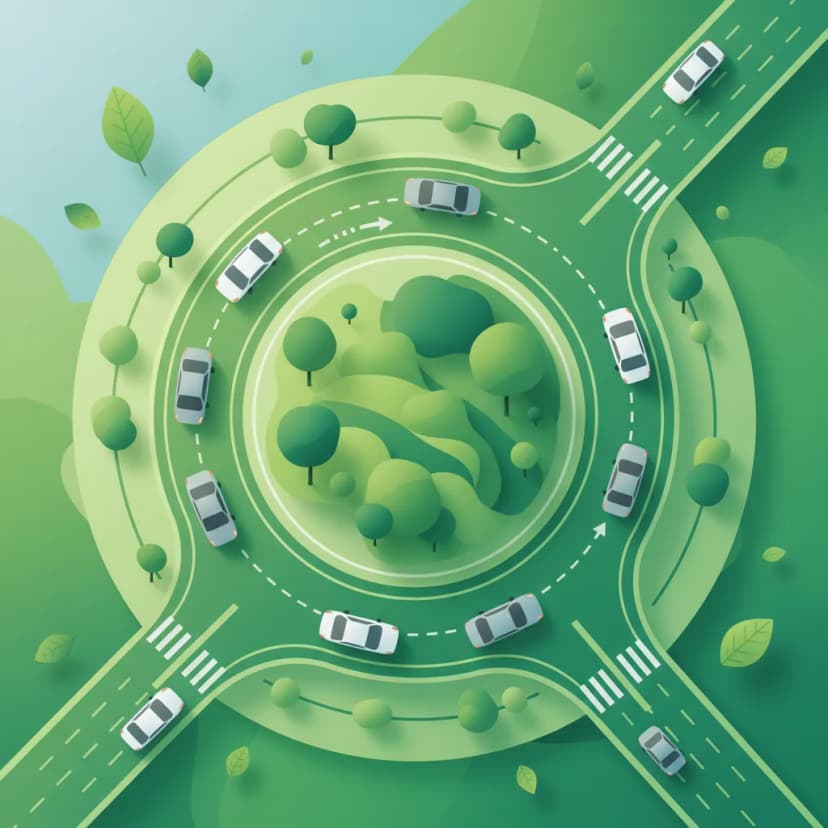
This lesson focuses on the rules and techniques for safely navigating Dutch roundabouts, a common feature of the road network. You will learn that traffic circulating on the roundabout typically has priority and that you must yield before entering. The content covers correct lane selection for your intended exit, proper use of turn signals, and maintaining awareness of cyclists who may have priority on adjacent paths.
Identify and avoid frequent errors in understanding Dutch priority rules. Learn how misinterpretations of road hierarchy and signs lead to accidents, and how to ensure safe navigation as an A2 motorcycle rider.
This lesson details the specific actions required at intersections controlled by 'Stop' and 'Give Way' signs. You will learn the legal requirement to come to a complete stop at a stop line (BORD 44) and the obligation to yield to all crossing traffic when encountering give-way markings ('haaientanden'). The content covers safe approach speeds and effective scanning techniques for motorcyclists to accurately assess gaps in traffic before proceeding.
This lesson establishes the foundational rule of priority in Dutch traffic law: yielding to traffic from the right at intersections of equal roads unless otherwise indicated. It explains how to identify an unmarked or 'equal' junction and the correct procedure for approaching, assessing, and proceeding safely. The content also introduces the primary signs and markings, such as 'shark's teeth,' that override this default rule, forming the basis for all other priority scenarios.
This lesson addresses the challenge of navigating equal-priority intersections, where no signs or markings dictate the right-of-way. You will master the fundamental Dutch traffic rule of giving priority to all drivers approaching from your right ('rechts voor'). The content focuses on developing advanced observational skills and clear communication to safely manage these situations, which are common in residential and urban areas.
This lesson breaks down the rules of priority at intersections. You will learn to identify an 'equal' intersection where the default rule of giving way to traffic from the right applies. It also explains how priority is regulated by signs (such as the B6 Stop sign and B7 priority road sign) and road markings ('shark's teeth'). Understanding these hierarchies is crucial for making safe and correct decisions when crossing or turning at any junction.
This lesson focuses on the rules and techniques for safely navigating Dutch roundabouts, a common feature of the road network. You will learn that traffic circulating on the roundabout typically has priority and that you must yield before entering. The content covers correct lane selection for your intended exit, proper use of turn signals, and maintaining awareness of cyclists who may have priority on adjacent paths.
This lesson explains the critical rules of priority involving pedestrians and cyclists to ensure the safety of vulnerable road users. You will learn the absolute requirement to stop for pedestrians on or waiting to use a 'zebrapad' (zebra crossing). The content also covers situations where you must yield to cyclists crossing your path, such as when turning across a dedicated bicycle lane (fietspad).
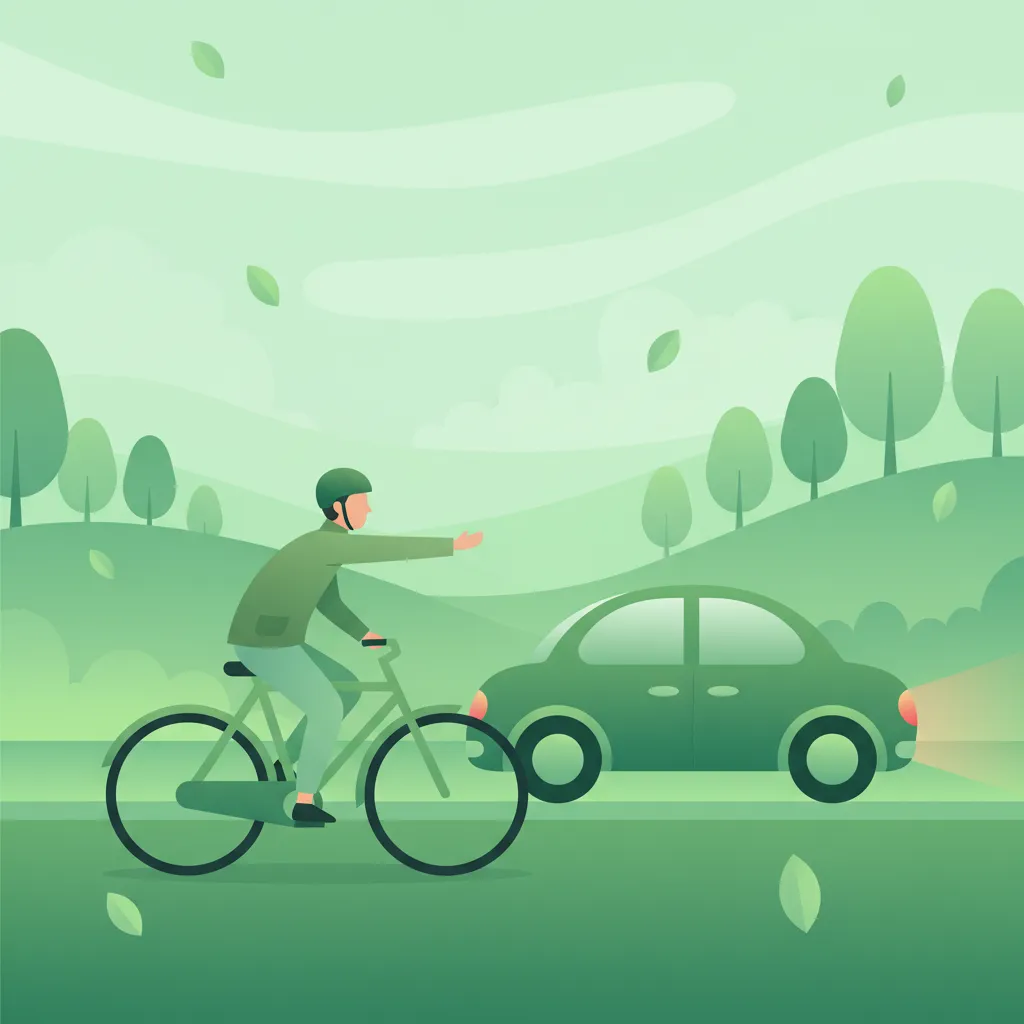
This lesson provides a detailed framework for how motorcyclists must safely and legally interact with diverse road users, including cars, trucks, cyclists, and pedestrians. It covers the required communication signals, anticipatory behaviors, and specific positioning techniques necessary to coexist in complex traffic environments like urban centers and shared spaces. Emphasis is placed on legal expectations and practical methods that actively reduce collision risk and promote smooth traffic flow.
This lesson delves into the hierarchy of priority rules on Dutch roads, clarifying who has the right-of-way in various intersection scenarios. It explains the meaning of signs like 'voorrangsweg' and road markings such as shark's teeth ('haaientanden'). Special attention is given to the correct procedure for entering, navigating, and exiting roundabouts on a motorcycle, including proper signaling and lane choice to ensure safe and efficient passage.

This lesson equips riders with cognitive strategies for managing ambiguous or conflicting traffic situations where priority rules may be misinterpreted by other road users. It focuses on the principles of defensive riding, such as making eye contact, using clear signals, and being prepared to yield the right-of-way to avoid a collision. The content teaches how to resolve uncertainty safely by prioritizing hazard avoidance over asserting one's legal right-of-way, a critical skill for motorcyclist survival.
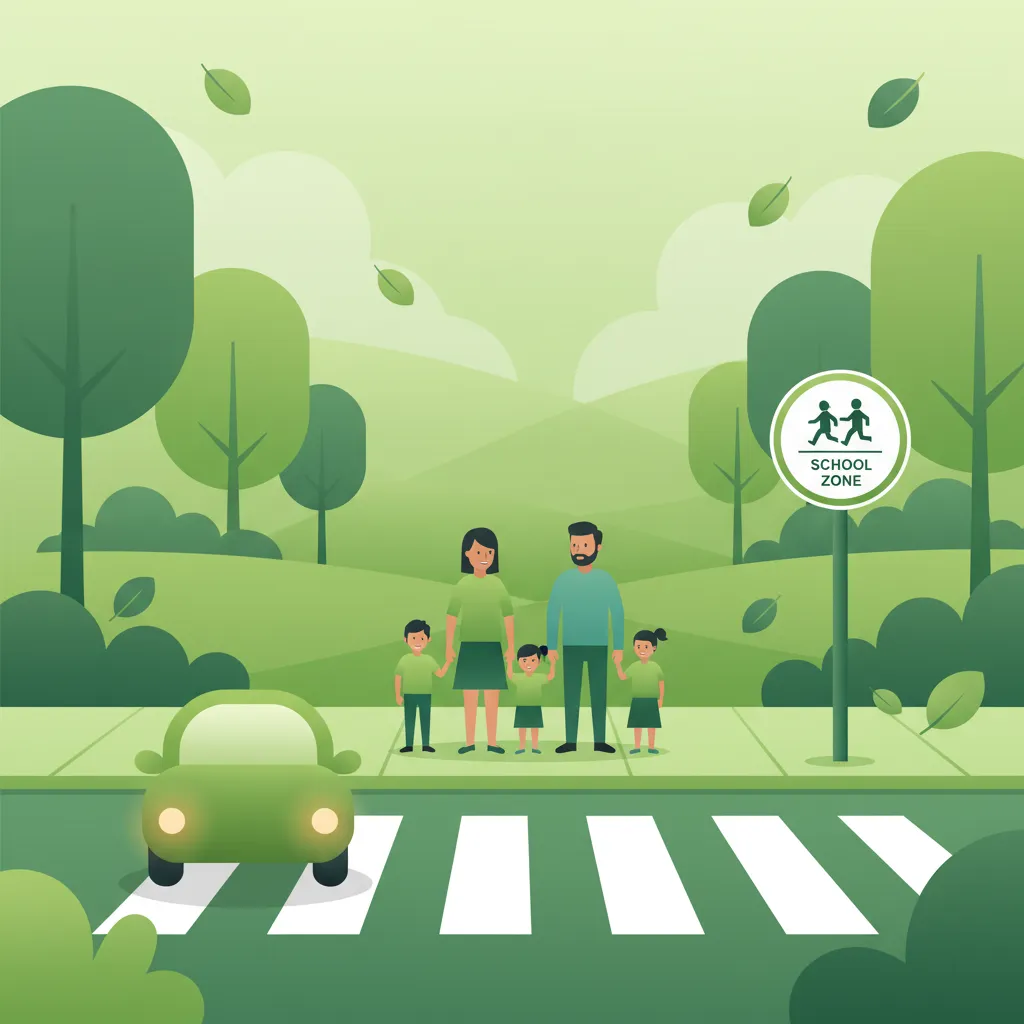
This lesson focuses on the legal requirements and safe practices for riding near pedestrian crossings ('zebrapaden') and designated school zones. It details the absolute obligation to yield to pedestrians on or about to use a crossing and the need for significantly reduced speeds and heightened vigilance in areas with children. The content underscores the importance of anticipation and being prepared for unpredictable movements from vulnerable road users to prevent serious incidents.
Find clear answers to common questions learners have about General Priority Rules and Road Hierarchy. Learn how the lesson is structured, which driving theory objectives it supports, and how it fits into the overall learning path of units and curriculum progression in the Netherlands. These explanations help you understand key concepts, lesson flow, and exam focused study goals.
At an intersection where no specific signs or road markings indicate otherwise, traffic coming from your right generally has priority. This is often referred to as the 'right-hand rule'. It's crucial to be aware of vehicles, cyclists, and even pedestrians approaching from your right and be prepared to yield.
Sign BORD 30, a white triangle with a red border pointing downwards, indicates that you are on a priority road. This means that traffic entering the road from side roads (which will typically have a stop or give-way sign) must yield to you. You have the right of way.
The road user hierarchy prioritises certain users in specific situations to enhance safety, especially for vulnerable road users. While the primary rules for priority are based on signs and the right-hand rule, the hierarchy means that, for example, a cyclist on a dedicated path may have priority over general traffic, or pedestrians at a crossing. This lesson introduces the concept, and further lessons will detail specific interactions.
Generally, yes, you have priority over traffic coming from side streets on roads marked with BORD 30. However, you must still always remain alert and ready to react to unexpected situations. Drivers on side roads should have signs indicating they must give way, but never assume they will.
If you have a stop sign (BORD 1), you must always stop completely and only proceed when it is safe to do so. This means you must yield to all other traffic, including vehicles coming from the right that might not have a specific priority sign. Your stop sign obligation overrides the general 'right-hand rule' in this scenario.