
Navigating roundabouts, or 'rotondes', is a crucial skill for Dutch motorcyclists. This lesson breaks down the priority rules, signalling requirements, and safety considerations specific to various roundabout types, including single-lane, multi-lane, and 'turbo' designs. Understanding these nuances is vital for your Category A CBR theory exam and for safe riding in the Netherlands.
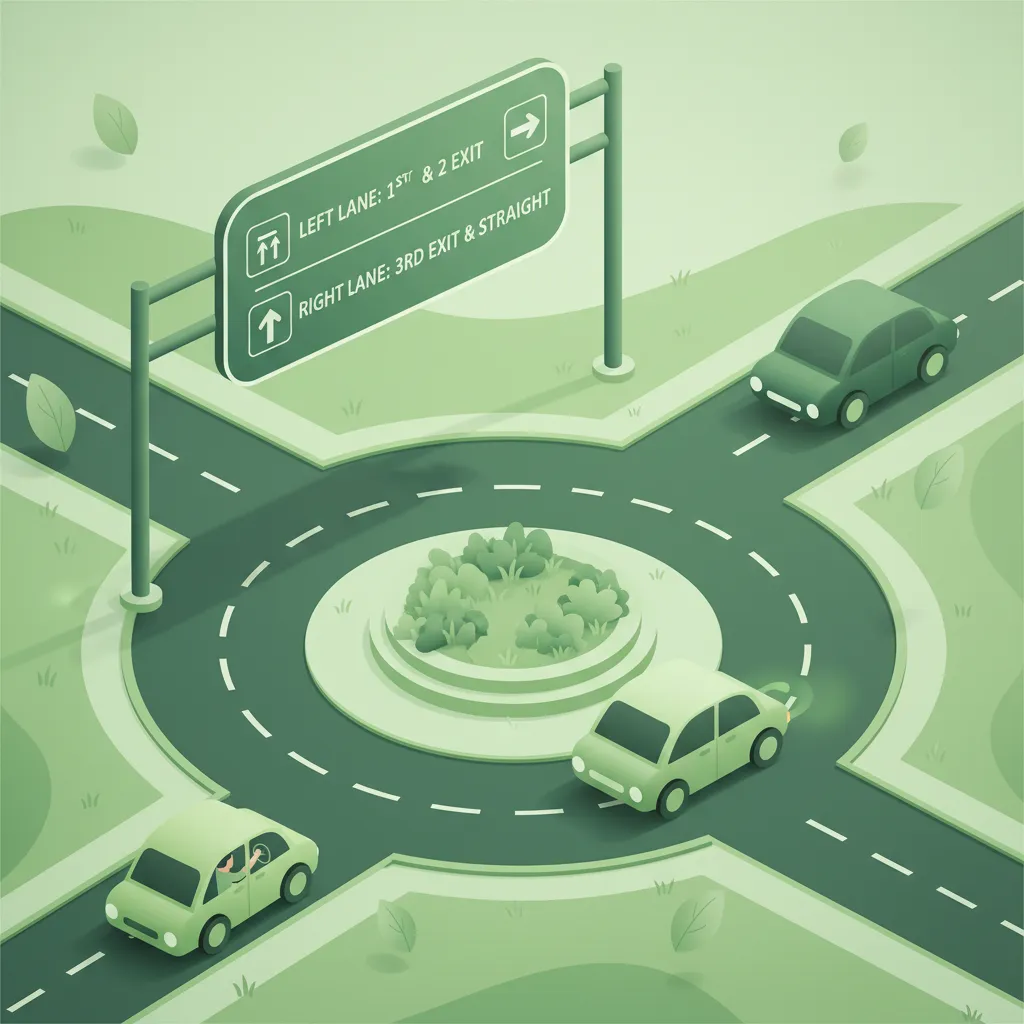
Roundabouts, known as rotondes in the Netherlands, are integral to the Dutch road network. For motorcycle riders preparing for the Dutch CBR Category A theory exam, a comprehensive understanding of how to navigate these circular intersections is paramount. This lesson provides detailed guidance on the specific rules, lane discipline, signaling requirements, and safety considerations unique to Dutch roundabouts, including single-lane, multi-lane, and the distinctive 'turbo' designs.
Mastery of roundabout navigation is critical for safe riding, compliance with the Dutch traffic code (RVV 1990), and success on the Category A theory exam. This knowledge builds upon foundational Dutch traffic legislation, road sign interpretation, and general right-of-way concepts.
Roundabouts are engineered to manage traffic flow efficiently and safely. By their very design, they aim to reduce the conflict points inherent in traditional cross-intersections, thereby significantly lowering the likelihood and severity of collisions.
A roundabout is a circular or elliptical intersection where traffic flows continuously in one direction around a central island. Vehicles enter and exit at designated points around its perimeter. This design minimizes the need for hard stops and starts, promoting a smoother, more consistent flow of traffic. In the Netherlands, roundabouts are a default solution for many urban intersections, especially where space constraints make traffic lights impractical or less efficient.
The core safety principle of a roundabout lies in its continuous, yielding traffic flow. Instead of requiring drivers to stop and then accelerate through a complex intersection, roundabouts mandate that entering traffic yields to vehicles already circulating. This approach converts potential right-angle and head-on collisions into less severe glancing blows, if conflicts occur. The continuous curvature also inherently forces lower speeds, giving all road users more time to perceive potential hazards and react safely, a crucial benefit for motorcyclists.
Successful and safe navigation of roundabouts relies on adhering to several core principles. For motorcyclists, these principles are amplified by the unique dynamics of two-wheeled vehicles and their vulnerability in traffic.
The fundamental rule at any Dutch roundabout is to yield to all traffic already on the circulating carriageway. This means that as you approach the entry point, you must assess the flow of traffic from your left and only enter when there is a safe and sufficient gap. This principle prevents collisions by giving priority to the established flow of movement, ensuring the roundabout operates smoothly and safely.
Each lane within a roundabout, particularly in multi-lane or turbo designs, has a prescribed path and exit. Generally, lane changes inside a roundabout are prohibited unless explicitly indicated by road markings. For motorcyclists, adhering strictly to your chosen lane from entry to exit is vital. This discipline significantly reduces the risk of side-swipe collisions, especially given that motorcycles might have different turning radii or blind spots compared to larger vehicles.
A critical aspect of roundabout navigation is signaling your intended exit. Motorcyclists must give a left-hand signal (or use the appropriate turn signal) before exiting the roundabout. This action alerts surrounding traffic, including cyclists and pedestrians, of your planned departure, allowing them to adjust their speed or position accordingly. Failing to signal, or signaling too late, can create confusion and lead to rear-end or side-impact crashes.
Motorcyclists must reduce their speed to a safe 'circulating speed' when entering and riding within a roundabout. The standard limit is 30 km/h unless explicitly posted otherwise. This lower speed is essential for maintaining vehicle stability on the curvature, providing sufficient reaction time to changing traffic conditions, and reducing the severity of any potential incident. Excess speed increases lateral forces, which can compromise motorcycle control, particularly on wet or uneven surfaces.
Motorcyclists must be acutely aware of other vulnerable road users, such as cyclists and pedestrians, who frequently use roundabouts. Cyclists often share the inner lanes or use dedicated cycle tracks around the central island. Their smaller profile makes them harder to detect. This necessitates frequent head-and-shoulder checks and diligent use of mirrors before entry, during circulation, and especially before exiting, to identify anyone in your blind spots.
Always assume that other road users may not see you. Ride defensively and make yourself visible.
Turbo roundabouts employ a unique design where spiral lane markings guide riders from their entry point directly to their intended exit without the need for lane changes. This innovative layout simplifies decision-making and significantly reduces conflict points. For motorcyclists, the key is to precisely follow these markings; crossing solid white lines or attempting to "shortcut" between lanes is prohibited and dangerous.
The Netherlands features various roundabout designs, each with specific navigation considerations. Motorcyclists must be able to identify and appropriately respond to each type.
As the name suggests, a single-lane roundabout has only one circulating lane for all vehicle types. These are common in residential areas or smaller urban settings.
A roundabout with only one continuous lane for all circulating traffic.
On a single-lane roundabout, all entering traffic merges into this single lane, meaning lane changes are impossible within the roundabout itself. The primary rule here is that vehicles entering must yield to circulating traffic. Motorcyclists should approach at a controlled speed, scan for gaps, and never assume they can quickly "cut in" before a safe opening appears.
Multi-lane roundabouts feature two or more concentric circulating lanes, each designed to lead to specific exit points. These are typically found in busier urban centers or at intersections with higher traffic volumes.
A roundabout with two or more circulating lanes, requiring lane selection based on intended exit.
Navigating a multi-lane roundabout requires careful lane selection before entry. Generally, the inner lane is used for exits further around the roundabout (e.g., third or fourth exit), while the outer lane is for nearer exits (e.g., first or second exit). It is crucial to select the correct lane on approach, as lane switching inside a multi-lane roundabout is typically prohibited unless clearly marked by dashed lines. Switching lanes unexpectedly can lead to serious side-swipe collisions, especially with other motorcycles or smaller vehicles in your blind spot.
Turbo roundabouts represent an advanced design aimed at enhancing safety and simplifying navigation by eliminating lane-changing conflicts. They are characterized by their spiral lane markings that proactively guide vehicles from a specific entry lane to a specific exit lane.
A roundabout featuring spiral lane markings that guide vehicles directly from an entry lane to an intended exit lane without requiring lane changes within the roundabout.
The design typically features continuous white arrows curving inward, with each entry lane directly feeding into a designated exit lane. This means that once you've chosen your entry lane, you simply follow its spiral path to your exit, greatly simplifying decision-making. The central island of a turbo roundabout may also incorporate a raised or painted "cyclist track." For motorcyclists, the rule is simple: follow the markings precisely. Crossing the solid white lines that separate the lanes within a turbo roundabout is strictly prohibited.
Attempting to "shortcut" by crossing solid white lines in a turbo roundabout is highly dangerous and can lead to severe collisions with vehicles following the correct spiral path.
Dutch traffic law, primarily the Reglement Verkeersregels en Verkeerstekens 1990 (RVV 1990), provides the legal framework for roundabout navigation. Adherence to these regulations is non-negotiable for safe and lawful riding.
The most fundamental rule for roundabouts in the Netherlands is dictated by the road sign B1, which signifies a roundabout.
RVV 1990 Article 9.5 states that drivers must give way to all traffic already on the roundabout when approaching a B1 sign. This means you must slow down, check for circulating traffic from your left, and only enter when there is a safe gap. It is a common misconception to assume priority from the right, as is often the case at unmarked intersections. At a roundabout, circulating traffic always has priority unless explicitly stated otherwise by additional signage (e.g., a B2 sign, which is rare at modern roundabouts but reinforces the yield rule where present).
Proper signaling is crucial for clear communication with other road users. RVV 1990 Article 9.8 mandates that motorcyclists (and other drivers) must signal their intention to exit a roundabout.
Always signal left before you reach your intended exit. This gives surrounding traffic ample warning of your maneuver. Signaling too late (e.g., as you are already turning out of the roundabout) defeats its purpose.
This signal warns other vehicles behind you, beside you (especially cyclists on an outer lane or cycle track), and those waiting to enter, that you are leaving the circulating flow. Effective signaling prevents sudden braking or unexpected maneuvers by others, reducing the risk of rear-end or side-impact collisions.
RVV 1990 Article 9.7 generally prohibits overtaking or changing lanes within a roundabout, unless specific road markings explicitly allow it. This rule is particularly important for motorcyclists, as it helps prevent dangerous side-swipe incidents.
On multi-lane roundabouts, this means you must select the correct lane for your intended exit before entering. Once inside, you should maintain your lane. On turbo roundabouts, the spiral markings dictate your path precisely, making lane changes impossible and unnecessary. Adhering to this rule ensures predictable traffic flow and reduces conflict points, which is a significant safety benefit for two-wheelers.
RVV 1990 Article 9.9 establishes that the maximum speed inside a roundabout is typically 30 km/h, unless alternative speed limits are clearly indicated by signage. This default speed limit is set to ensure safety.
A lower speed:
Motorcyclists should always adapt their speed further downwards in adverse conditions such as rain, fog, ice, or heavy traffic, prioritizing control and safety over maintaining the maximum permitted speed.
Dutch roundabouts frequently integrate facilities for cyclists, and motorcyclists must be acutely aware of their presence. RVV 1990 Article 9.11 specifies that cyclists using a dedicated cycle track around the central island have the same priority as any vehicle already circulating within the roundabout.
Key points for motorcyclist positioning:
Understanding the specific signage and road markings is crucial for navigating Dutch roundabouts effectively.
This blue circular sign with three white arrows is the primary indicator of a roundabout.
While less common at standard roundabouts, the B2 sign explicitly mandates yielding to traffic already on the roundabout.
This sign, sometimes seen, specifically points out a turbo roundabout, signaling the unique spiral lane discipline.
Road markings also provide vital information:
Beyond the basic rules, motorcyclists must be prepared for more complex scenarios and interactions at roundabouts.
Motorcycles, while agile, are still susceptible to blind spots, especially the area directly to the right and slightly behind the rider. The central island of a roundabout can further obscure sightlines, particularly for smaller vehicles or pedestrians.
Critical observation points for motorcyclists:
Make eye contact with other road users whenever possible to confirm they have seen you.
When an emergency vehicle (e.g., ambulance, fire truck, police) approaches with flashing lights and siren, all road users, including those inside a roundabout, must give way. RVV 1990 Article 9.13 makes this a mandatory legal requirement.
If you are already circulating, try to exit the roundabout early at the next available exit (if safe to do so) or pull over safely to the right within your lane, clearing a path for the emergency vehicle. Never continue circulating or stop in a way that obstructs their passage. Your priority is to facilitate their swift passage.
Some roundabouts, particularly in larger cities, may have tram tracks crossing the central island or near the entry/exit points. Trams typically have priority on their tracks, regardless of general roundabout rules. If tram tracks are present, motorcyclists must yield to any approaching tram.
Pedestrian crossings may also intersect the roundabout's perimeter or even the central island itself. If pedestrians are using a marked crossing, motorcyclists must stop before the crossing and yield to them, allowing them to cross safely.
Navigating roundabouts becomes more challenging in adverse conditions:
Being aware of common errors can help motorcyclists proactively avoid dangerous situations and legal penalties.
Never stop unnecessarily on the circulating lane of a roundabout. This causes blockages and increases the risk of rear-end accidents. If you miss your exit, go around again.
Understanding the rules theoretically is one thing; applying them in real-world situations is another. Here are some common scenarios motorcyclists might encounter.
Setting: You are approaching a small, single-lane roundabout in a residential area with a 30 km/h limit. Visibility is clear. You intend to take the second exit. Correct Behavior: You slow down well in advance, downshifting to a gear that allows smooth acceleration. As you approach the entry, you check to your left for circulating traffic. You spot a car already in the roundabout and wait for it to pass, ensuring a gap of at least 4 seconds. You enter the roundabout, maintaining about 25 km/h, keep a steady line, and then activate your left turn signal approximately 3 seconds before reaching your second exit. You exit smoothly. Incorrect Behavior: You approach at a higher speed, assume the car will exit before you, and cut into the roundabout, forcing the circulating car to brake sharply. You forget to signal until you are already halfway out of the roundabout.
Setting: You are entering a multi-lane roundabout in a city center. You need to take the third exit (a "straight-through" exit, often from the inner lane). There's a dedicated cycle track around the island, and a cyclist is already circulating on it. Correct Behavior: You carefully observe the road markings on approach and choose the inner lane, as indicated for your exit. As you enter, you yield to any traffic already in the roundabout, including the cyclist on the dedicated track. Once inside, you maintain your lane, keeping a safe lateral distance from the cyclist if they are riding parallel to your path. You perform a final shoulder check, signal left before your exit, and then safely leave the roundabout. Incorrect Behavior: You enter in the outer lane, realizing too late that you need the inner lane for your exit. You attempt a risky lane change inside the roundabout, nearly colliding with the cyclist. Alternatively, you fail to see the cyclist and cut them off when trying to exit.
Setting: You are approaching a turbo roundabout in a suburban area. It's raining lightly, and the pavement is wet. You intend to take the first exit. Correct Behavior: You identify the turbo roundabout signage and markings. On approach, you select the correct entry lane for your first exit, guided by the spiral arrows. Recognizing the wet conditions, you reduce your speed to approximately 20 km/h, ensuring maximum traction and control. You maintain your position precisely within the designated spiral lane, avoiding crossing any solid white lines. You signal left well before your exit and leave the roundabout with smooth throttle and braking inputs. Incorrect Behavior: You ignore the spiral markings and attempt to cut across the solid white line to take a shortcut. Due to the wet surface and higher speed, you lose traction and briefly slide, narrowly avoiding the central island.
Setting: You are midway through a large roundabout, having just passed the first exit, when you hear the siren of an emergency vehicle approaching rapidly from your left. Correct Behavior: Your immediate priority is to give way. You quickly assess the nearest safe exit. You signal early, safely exit the roundabout to the right, and then pull over to the side of the road, clearing the path for the emergency vehicle to pass unhindered. Incorrect Behavior: You continue circulating, unsure of what to do, effectively blocking the emergency vehicle's path and causing them to slow down or maneuver around you. This is illegal and could lead to a fine.
Mastering roundabout navigation is a hallmark of a proficient and safe motorcycle rider in the Netherlands. It requires a combination of knowledge, vigilance, and precise execution. Remember these key takeaways:
By consistently applying these principles, you will not only navigate roundabouts safely and efficiently but also demonstrate the high level of situational awareness expected of a Category A motorcycle rider in the Netherlands.
Lesson content overview
Explore all units and lessons included in this driving theory course.
Explore search topics learners often look for when studying Roundabouts and Traffic Circles. These topics reflect common questions about road rules, driving situations, safety guidance, and lesson level theory preparation for learners in the Netherlands.
Browse additional driving theory lessons that cover connected traffic rules, road signs, and common driving situations related to this topic. Improve your understanding of how different rules interact across everyday traffic scenarios.
Understand the complexities of multi-lane and turbo roundabouts in the Netherlands. This lesson details specific lane selection, priority rules, and potential hazards for motorcyclists, going beyond basic roundabout theory.
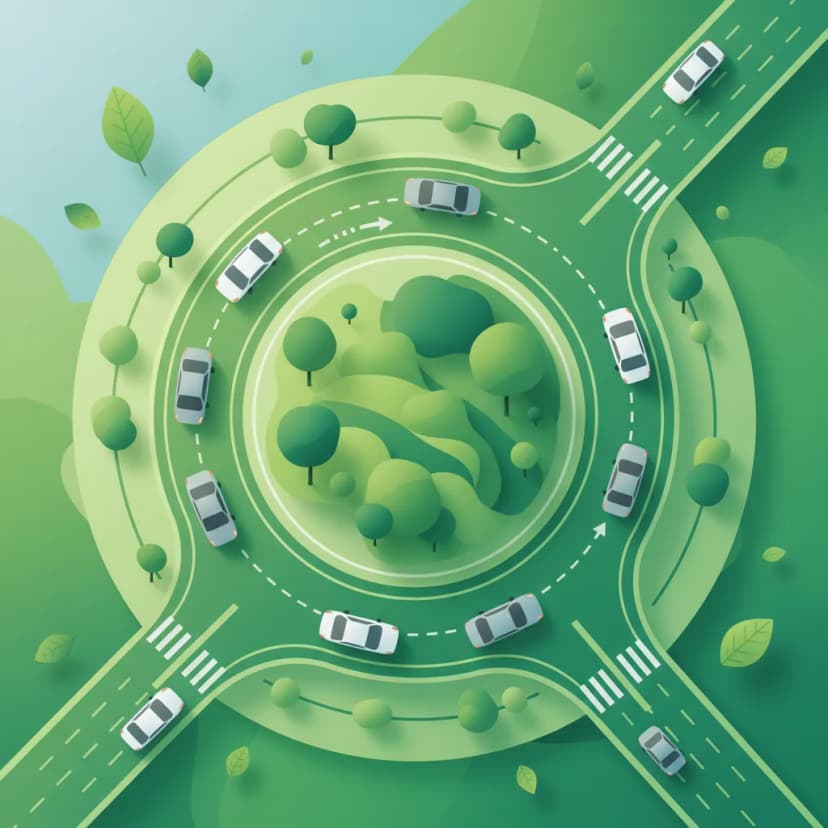
This lesson focuses on the rules and techniques for safely navigating Dutch roundabouts, a common feature of the road network. You will learn that traffic circulating on the roundabout typically has priority and that you must yield before entering. The content covers correct lane selection for your intended exit, proper use of turn signals, and maintaining awareness of cyclists who may have priority on adjacent paths.
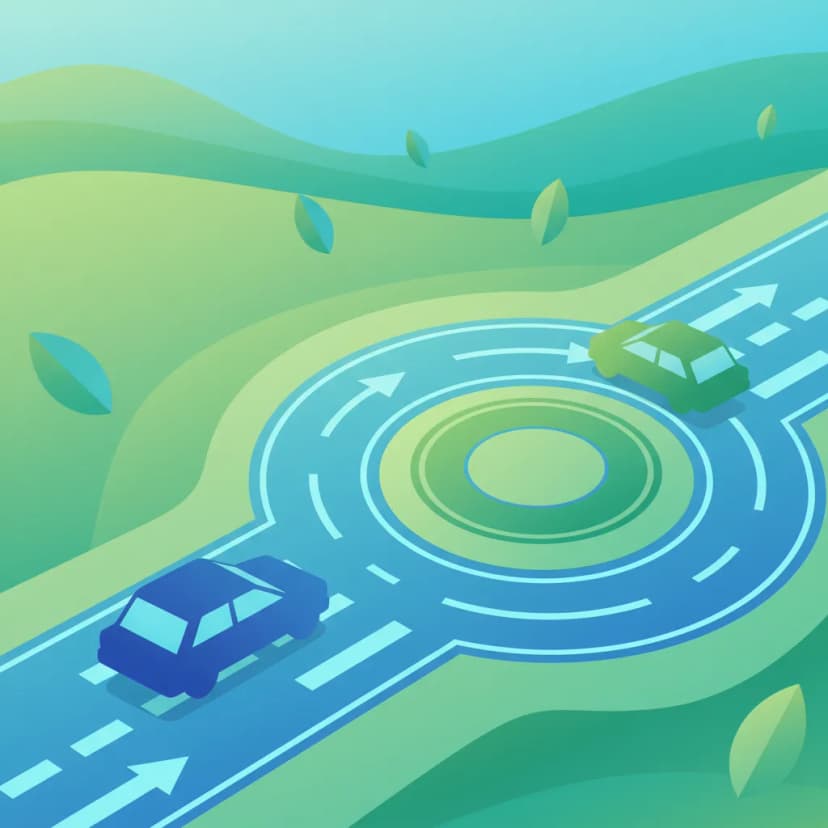
Roundabouts are a common feature of Dutch roads, and they have specific priority rules. This lesson teaches the standard rule of yielding to traffic already circulating on the roundabout before you enter. It also covers correct lane positioning, the importance of signaling your intention to exit, and the specific rules that often apply to cyclists who may have priority when crossing the exits. These skills ensure smooth and safe passage through both large and mini-roundabouts.
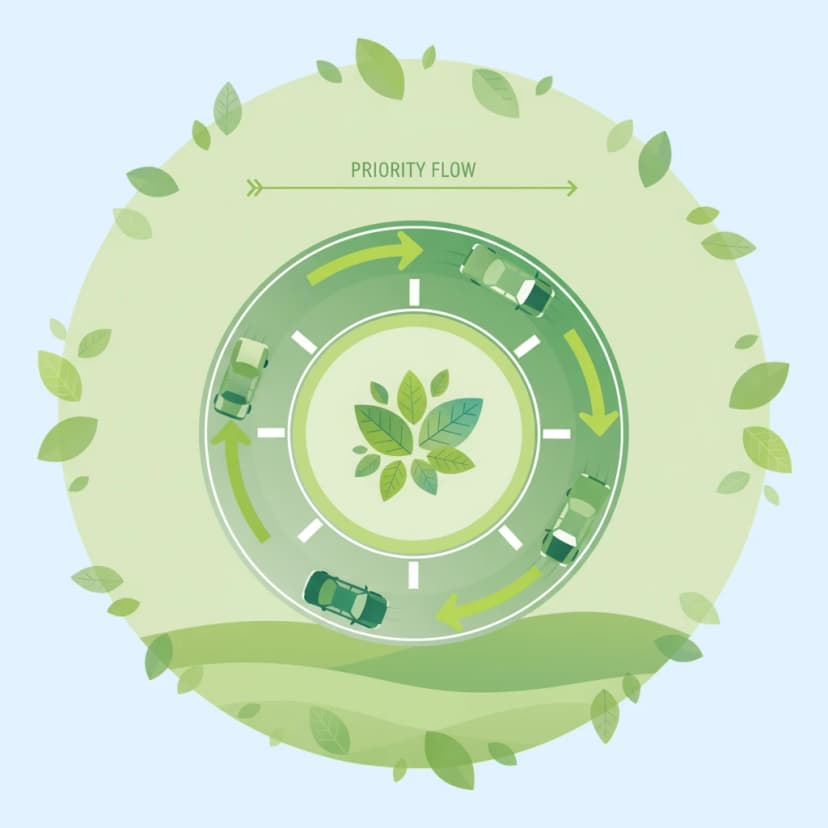
This lesson provides a detailed guide to navigating roundabouts (rotondes) in the Netherlands. You will learn the primary rule: drivers approaching a roundabout must yield to traffic already circulating on it, which is typically indicated by yield signs (B5) and shark teeth. The curriculum also covers the correct use of turn signals when entering and exiting, rules for multi-lane roundabouts, and special considerations for the priority of cyclists who may have a dedicated path around the roundabout. Correct roundabout etiquette is key to maintaining traffic flow and safety.
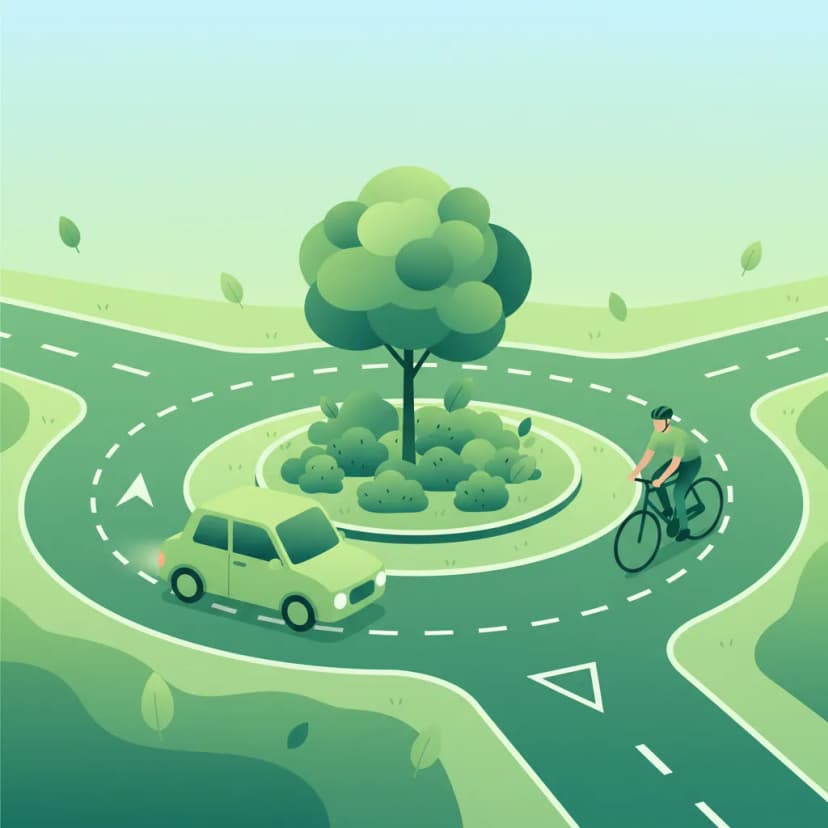
This lesson delves into the hierarchy of priority rules on Dutch roads, clarifying who has the right-of-way in various intersection scenarios. It explains the meaning of signs like 'voorrangsweg' and road markings such as shark's teeth ('haaientanden'). Special attention is given to the correct procedure for entering, navigating, and exiting roundabouts on a motorcycle, including proper signaling and lane choice to ensure safe and efficient passage.

This lesson reinforces the fundamental rule of Dutch highway driving: use the rightmost lane available and use the lanes to the left only for overtaking. You will learn the complete, safe overtaking procedure: check mirrors, signal, perform a shoulder check for the blind spot, smoothly move over, accelerate past the vehicle, and then return to the right lane when safe.
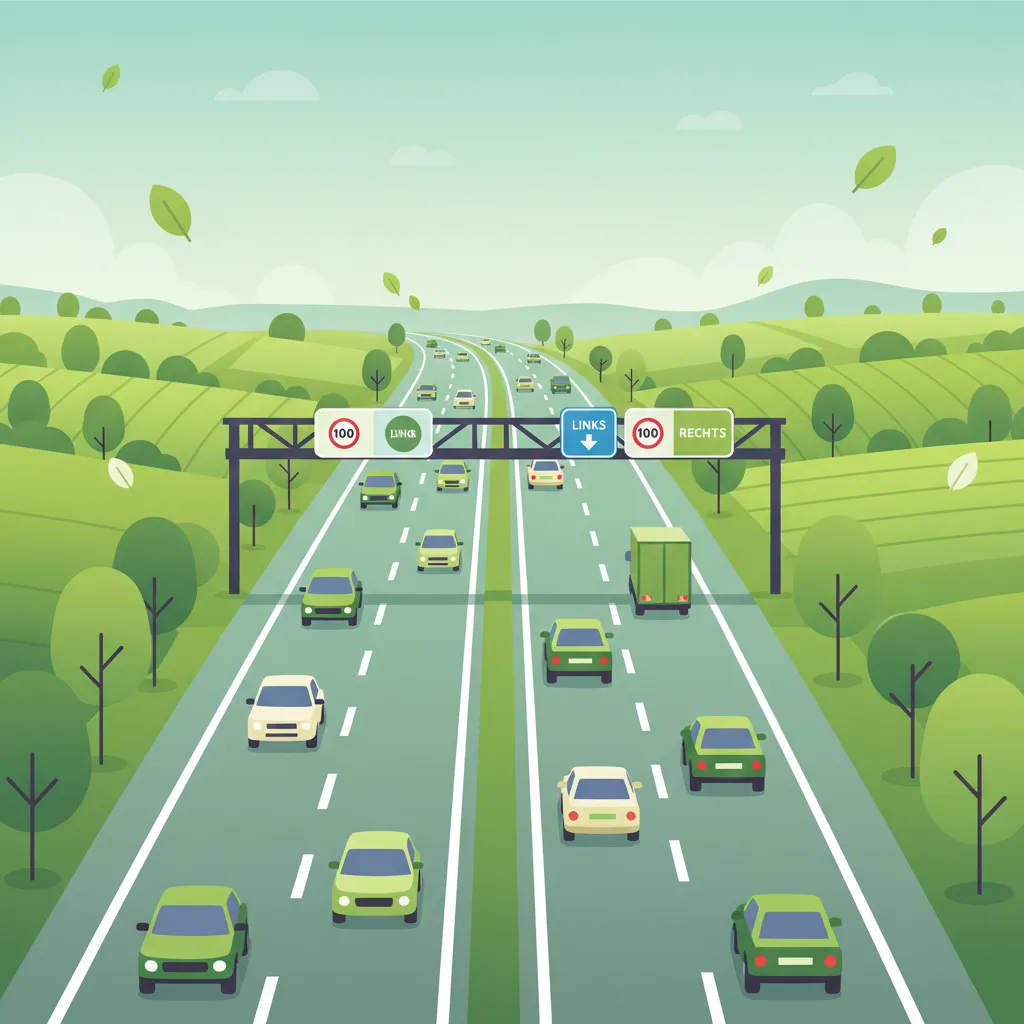
This lesson covers the specific articles of the Dutch Road Traffic Act that apply to motorways, with a primary focus on the strict rule of keeping to the rightmost available lane unless overtaking. It explains the legal and safety reasons for only passing on the left and discusses the correct positioning within a lane for maximum visibility and safety. The content also addresses the nuances of lane usage during heavy congestion, ensuring riders comply with the law and contribute to smooth traffic flow.
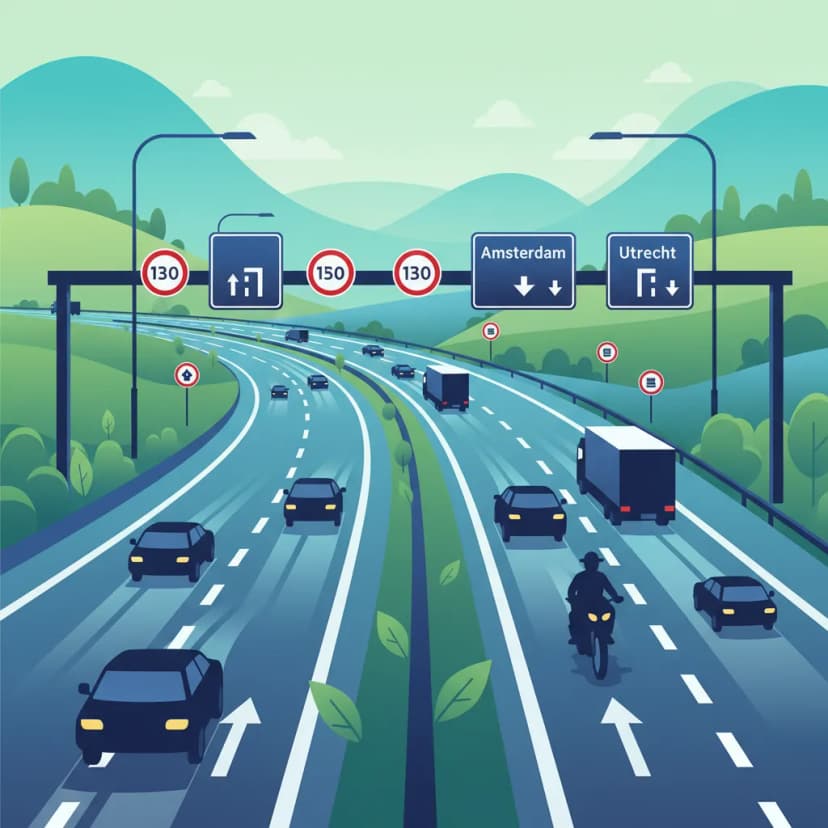
This lesson details the specific regulations for driving on Dutch motorways, identifiable by the G1 sign. You will learn the correct procedure for joining the flow of traffic using the acceleration lane and for leaving via the deceleration lane. The curriculum reinforces the 'keep right unless overtaking' rule for lane discipline. It also explains that stopping is strictly forbidden, and the hard shoulder (vluchtstrook) may only be used for genuine emergencies.
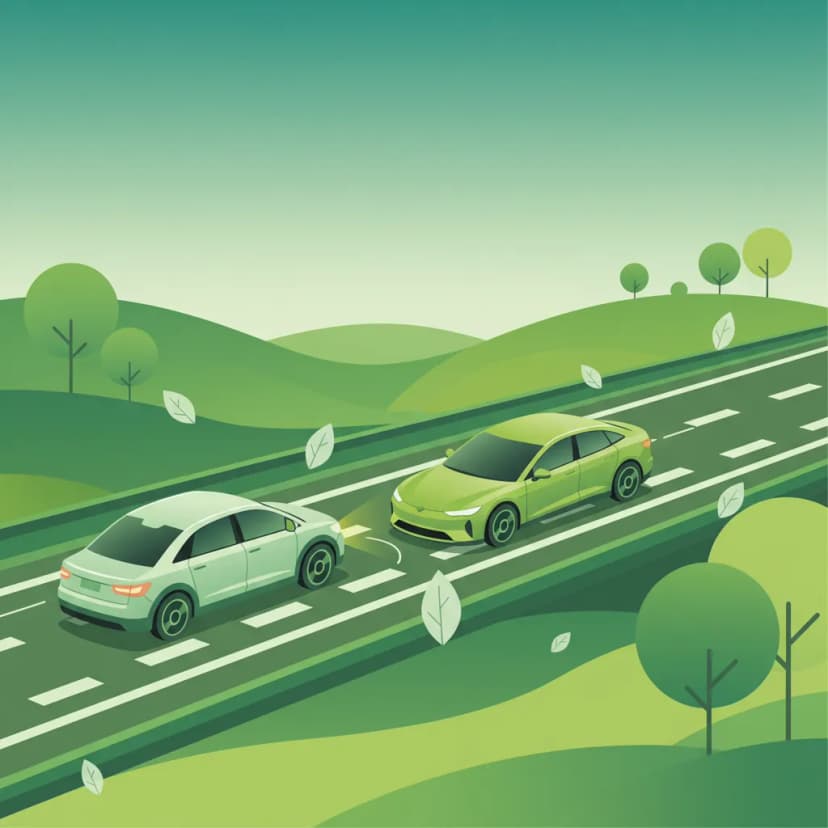
Safely merging and changing lanes requires a systematic approach known as 'mirror-signal-blind spot'. This lesson explains the correct procedure for entering a carriageway from an acceleration lane, ensuring you match the speed of the traffic flow and find a safe gap. It also covers the technique for changing lanes, emphasizing the critical importance of checking your blind spot with a shoulder check (dode hoek) before making any lateral movement to prevent collisions.

This lesson covers the universal Dutch road rules with a specific focus on their application to light motorcycles. It details the various speed limits for different road types, from urban areas to motorways, and explains the correct procedures for overtaking and lane positioning. The legal aspects of lane filtering in congestion are also examined, alongside mandatory equipment use like daytime running lights, to ensure riders can integrate safely and legally into traffic flow.
This lesson details the systematic process for safely overtaking on a multi-lane motorway, leveraging the acceleration capabilities of a Category A motorcycle. It covers the 'mirror, signal, maneuver' sequence, with a strong emphasis on the critical shoulder check to clear the blind spot before moving out. The content also discusses how to judge closing speeds, ensure adequate space before returning to the lane, and how to handle situations involving multiple lanes and slower-moving heavy vehicles.
Focuses on the critical awareness motorcyclists need regarding cyclists, trams, and pedestrians at Dutch roundabouts. Learn how to anticipate their movements and ensure safe interaction, building on basic roundabout priority rules.
This lesson focuses on the rules and techniques for safely navigating Dutch roundabouts, a common feature of the road network. You will learn that traffic circulating on the roundabout typically has priority and that you must yield before entering. The content covers correct lane selection for your intended exit, proper use of turn signals, and maintaining awareness of cyclists who may have priority on adjacent paths.
Roundabouts are a common feature of Dutch roads, and they have specific priority rules. This lesson teaches the standard rule of yielding to traffic already circulating on the roundabout before you enter. It also covers correct lane positioning, the importance of signaling your intention to exit, and the specific rules that often apply to cyclists who may have priority when crossing the exits. These skills ensure smooth and safe passage through both large and mini-roundabouts.

This lesson provides critical instruction on managing blind spots ('dode hoek') to prevent collisions, particularly during lane changes. It covers the correct setup and use of mirrors, but stresses their limitations and the absolute necessity of the 'lifesaver' shoulder check before any lateral movement. Furthermore, it teaches riders how to be aware of the large blind spots around cars and especially trucks, and how to position themselves on the road to remain visible to other drivers at all times.
This lesson provides a detailed guide to navigating roundabouts (rotondes) in the Netherlands. You will learn the primary rule: drivers approaching a roundabout must yield to traffic already circulating on it, which is typically indicated by yield signs (B5) and shark teeth. The curriculum also covers the correct use of turn signals when entering and exiting, rules for multi-lane roundabouts, and special considerations for the priority of cyclists who may have a dedicated path around the roundabout. Correct roundabout etiquette is key to maintaining traffic flow and safety.

This lesson is critical for driving in the Netherlands, a country with more bicycles than people. You will learn about the different types of cycle paths and how priority rules apply, especially at junctions. The content stresses the importance of checking the blind spot for cyclists before turning right ('dode hoek'). It also covers the rules for different types of mopeds (snorfiets and bromfiets) and the importance of giving all two-wheeled road users ample space when overtaking.

This lesson explains that where you ride in your lane is a critical safety choice. You will learn to avoid lingering in the blind spots ('dode hoek') of cars and trucks, and how to position yourself to be clearly visible in their mirrors. The content teaches you to constantly adjust your lane position to create a space cushion and ensure you always have a planned escape path in case of an emergency.
This lesson covers strategies for safely navigating around vehicles at both ends of the size spectrum. It details the large blind spots ('no-zones') around trucks and buses and advises on where to position a motorcycle to remain visible. Equally, it emphasizes the duty of care towards vulnerable road users, teaching riders to anticipate the movements of pedestrians and cyclists and to always provide them with ample space when passing.

This lesson provides a detailed framework for how motorcyclists must safely and legally interact with diverse road users, including cars, trucks, cyclists, and pedestrians. It covers the required communication signals, anticipatory behaviors, and specific positioning techniques necessary to coexist in complex traffic environments like urban centers and shared spaces. Emphasis is placed on legal expectations and practical methods that actively reduce collision risk and promote smooth traffic flow.
This lesson focuses on the specific hazards and techniques for safely sharing the road with heavy goods vehicles (HGVs) and buses. It provides a detailed explanation of their extensive blind spots ('dode hoek') and teaches riders where to position themselves to remain visible. The curriculum also covers how to manage the significant air turbulence created by these vehicles when overtaking and how to anticipate their wide turning circles at junctions and roundabouts.
This lesson addresses interactions with other types of road users. You will learn about motorcyclists, who can accelerate and brake quickly and may filter through slow traffic. The curriculum explains how to anticipate their movements and check for them carefully at junctions. It also covers how to safely approach and overtake slow-moving vehicles, such as agricultural tractors, and how to behave around horse riders, which requires slowing down and giving a very wide berth.
Find clear answers to common questions learners have about Roundabouts and Traffic Circles. Learn how the lesson is structured, which driving theory objectives it supports, and how it fits into the overall learning path of units and curriculum progression in the Netherlands. These explanations help you understand key concepts, lesson flow, and exam focused study goals.
In the Netherlands, the general rule is that traffic already on the roundabout has priority over traffic entering it. You must yield to vehicles already circulating. However, always pay close attention to specific signs and road markings, as they can alter this general rule.
When entering a multi-lane roundabout, signal your intention to enter. If you need to change lanes while on the roundabout, check your mirrors and blind spot, then signal clearly before changing lanes. Always signal your exit well in advance.
Motorcyclists are vulnerable due to their smaller size. Key risks include being overlooked by larger vehicles, especially in their blind spots, misinterpreting priority rules, and dealing with unexpected actions from other road users. Correct lane positioning and consistent signalling are crucial.
Cyclists often have dedicated lanes or paths around or on roundabouts. You must always yield to cyclists if they are on or entering a crossing that you need to cross to enter or exit the roundabout. Check for specific markings indicating cyclist priority.
A 'turbo' roundabout guides you into the correct exit lane as you approach and enter, using spiral markings and lane guidance. It aims to reduce lane-changing conflicts on the roundabout itself. You still need to yield on entry and signal your exit.
Common mistakes include forgetting to signal exits, incorrectly assuming priority, and not accounting for cyclists or trams. This lesson covers these scenarios, focusing on anticipating others' actions and understanding the visual cues that determine priority, which is key for exam success.