
Moving beyond strict legal compliance, this lesson explores the crucial principles of ethical riding behaviour for Category A motorcyclists. Understanding and practicing these principles are essential for fostering a positive motorcycle culture and passing your Dutch theory exam. We'll cover how to interact respectfully with all road users and minimize your impact on the environment.

Motorcycling offers an unparalleled sense of freedom and connection with the road. However, this freedom comes with a significant responsibility – not just to adhere to the letter of the law, but to uphold a higher standard of conduct that benefits all road users and the wider community. This lesson delves into ethical riding behaviour, exploring the moral and societal dimensions of motorcycling in the Netherlands beyond strict legal compliance. It encourages riders to adopt principles of respect, solidarity, and social responsibility, ensuring a positive contribution to traffic culture and the public perception of motorcyclists.
Ethical riding behaviour encompasses a set of proactive choices and attitudes that prioritize safety, courtesy, and environmental consciousness. While Dutch traffic laws, such as the Wegenverkeerswet and Reglement Verkeersregels en Verkeerstekens 1990 (RVV 1990), provide the foundational rules, ethical riding goes further. It asks riders to consider the potential impact of their actions on others and the environment, even when the law might not explicitly forbid a particular behaviour.
For instance, Article 31 of the RVV 1990 broadly states that traffic participants must not endanger or obstruct others, nor behave in a manner that could cause harm or nuisance. Ethical riding translates this general principle into concrete, conscientious actions, fostering a traffic environment built on mutual respect and understanding.
Adopting an ethical approach to motorcycling offers numerous advantages, extending far beyond individual peace of mind.
Impact of Ethical Riding: Ethical conduct influences safety, public perception, and even future legislative and infrastructural developments related to motorcycling.
Proactive consideration of vulnerable road users, clear communication, and predictable behaviour significantly reduce the risk of collisions. When motorcyclists demonstrate courtesy and respect, it lowers the likelihood of misinterpretations and aggressive reactions from other drivers, contributing to smoother, safer traffic flow. This psychological logic of reciprocity means that respectful actions often beget respectful responses.
Motorcyclists sometimes face negative stereotypes, often associated with noise, speed, or perceived recklessness. By consistently demonstrating responsible and courteous behaviour, riders can actively challenge these stereotypes. A positive public image can lead to better acceptance, reduce friction with local communities, and potentially influence policymaking to be more favorable towards motorcycling.
Motorcycles, like all vehicles, contribute to noise and air pollution. Ethical riding encourages choices that minimize these impacts, such as maintaining the vehicle properly, adopting fuel-efficient riding techniques, and using legally compliant exhaust systems. This aligns with national sustainability goals and reduces health impacts on communities.
Within the motorcycling community, ethical conduct promotes solidarity and mutual support. By encouraging safe practices and discouraging reckless behaviour, riders can collectively build a culture of responsibility. This internal ethos strengthens the community and reinforces positive values.
At the heart of ethical riding are several foundational principles that guide a rider's decisions and actions on the road.
This principle demands proactive consideration for pedestrians, cyclists, children, and individuals with disabilities. It means anticipating their movements, giving them ample space, and communicating intentions clearly and early. The goal is to reduce collision risk and fulfill the spirit of RVV 1990 Article 31, which emphasizes care for all traffic participants.
Implications for Riding: Use early signals, maintain ample lateral clearance, avoid abrupt maneuvers or passing too close, and be prepared to yield even if the right-of-way is ambiguous.
Riding a motorcycle is not solely a personal experience; it's an activity with community impact. This principle recognizes that individual riding choices — concerning speed, noise, or route selection — affect the broader public. Accepting this responsibility encourages behaviours that contribute to the public good and enhance the image of motorcyclists.
Implications for Riding: Choose appropriate routes that avoid residential areas during late hours, limit unnecessary revving, and adopt eco-driving techniques to minimize disturbance and pollution.
This dual principle focuses on minimizing the ecological footprint of riding. It involves controlling emissions through proper maintenance and fuel-efficient techniques, and meticulously managing acoustic output to stay within legal and socially acceptable limits. The Kwaliteitswet Geluidsbelasting (Noise Pollution Act) in the Netherlands specifically addresses vehicle noise, making this a legal as well as an ethical consideration.
Implications for Riding: Ensure your motorcycle's exhaust system is well-maintained and compliant with Dutch sound limits, avoid rapid accelerations in urban or residential zones, and regularly service your engine to keep emissions low.
This principle fosters a supportive and responsible internal culture within the motorcycling community. It encourages mutual aid, shared safety practices, and positive advocacy. When riders support each other in adhering to ethical standards, it builds a stronger, safer, and more respected community.
Implications for Riding: Inform fellow riders about road hazards, adhere to safe practices during group rides, and discourage reckless or stunt riding that endangers others or tarnishes the community's image.
This involves employing a structured mental checklist that integrates legal, safety, and ethical criteria before executing any action. Instead of relying solely on instinct, an ethical decision-making framework promotes consistent, reflective choices that anticipate consequences.
Implications for Riding: Before overtaking, consider not just if it's legal and safe, but also if it's respectful (e.g., ample space for the overtaken vehicle, minimal noise).
Every rider has the opportunity to be an ambassador for motorcycling. By consistently demonstrating exemplary behaviour, riders can positively influence public perception and inspire new riders to adopt similar standards. This contributes to a healthier traffic culture and can preemptively mitigate negative legislative pressures.
Implications for Riding: Always ride visibly, strictly obey traffic laws, display courteous behaviour (e.g., waving thanks, allowing merging), and avoid conspicuous violations that create a negative impression.
Beyond general principles, ethical riding translates into concrete actions in various everyday scenarios.
Pedestrians are among the most vulnerable road users. Ethical riding demands giving them priority, maintaining safe speeds, and using clear signals when they are present or crossing.
Common Misunderstanding: The belief that motorcycles are agile enough to "squeeze" through crowds or make rapid passes without risk to pedestrians. Such actions are highly dangerous and disrespectful.
Cyclists, like pedestrians, are vulnerable due to their lack of protective enclosure. Ethical interaction involves coordination, clear communication, and respecting their space.
Practical Meaning: A rapid pass within insufficient clearance can create a dangerous draft or startle a cyclist, causing them to wobble or swerve. Always err on the side of caution with space and speed.
For a motorcyclist, "being seen" is paramount for safety. Ethical riding means actively enhancing your visibility and making your intentions clear to other road users.
Common Misunderstanding: Believing that a bright headlight alone ensures visibility. While crucial, it's one component; reflective clothing and smart lane positioning are equally vital, especially from side and rear angles.
Motorcycle noise is a frequent source of complaint and can significantly impact public perception. Ethical riders actively manage their acoustic output.
Common Misunderstanding: Assuming that personal enjoyment of a "loud" exhaust justifies exceeding legal or social noise limits. Loud does not equate to safer; it often leads to resentment.
Environmental stewardship involves minimizing the carbon and pollutant output of your ride.
Associated Rules: New motorcycles must comply with EU emission standards (e.g., Euro 5).
Road rage is a dangerous escalation of frustration that benefits no one. Ethical riders prioritize de-escalation and calm conduct.
Practical Meaning: Never "stand up for yourself" by performing dangerous maneuvers. Your safety and the safety of others are paramount, outweighing any perceived need to "win" a confrontation.
The collective behaviour of rider groups significantly impacts individual choices and societal perception.
Common Misunderstanding: The belief that group anonymity permits reckless behaviour. Group actions are often more visible and can lead to collective negative judgment.
Modern motorcycles come equipped with advanced systems like ABS and Traction Control (TC). Ethical use means leveraging these aids to enhance safety without becoming complacent.
Associated Rules: RVV 1990 Article 13 implies proper use of vehicle safety devices.
Even in an unavoidable incident, ethical choices can balance self-preservation with broader safety concerns.
Common Misunderstanding: Believing that any evasive manoeuvre is justified if it avoids personal injury. Sometimes, a controlled stop, even if it results in a minor collision, is ethically preferable to swerving into an oncoming lane or pedestrian.
Several specific Dutch traffic rules underpin the principles of ethical riding, providing a legal framework for responsible conduct.
Traffic participants must not endanger or hinder other traffic participants on the road, nor behave in a way that could cause danger or nuisance. This general duty of care extends to giving way to pedestrians, especially at marked or unmarked crossings.
Drivers who overtake must do so on the left. They must leave sufficient lateral distance between their vehicle and the vehicle they are overtaking.
Vehicles must have and use lighting in specific conditions, such as from sunset to sunrise or during the day in case of poor visibility. For motorcycles, this typically means dipped beam headlights.
The Dutch Quality of Noise Emission Act regulates permissible sound levels for vehicles, including motorcycles, to prevent disturbance and protect public health.
All road users are obliged to give way to emergency vehicles (e.g., ambulances, fire engines, police) using flashing blue lights and sirens.
Many common riding behaviours, while not always immediately resulting in a crash, breach ethical principles and can lead to negative outcomes.
Ethical riding is not static; it dynamically adapts to varying conditions and circumstances.
Every decision made on a motorcycle has a ripple effect.
Understanding ethical principles is best solidified through practical examples.
Setting: You are riding at 30 km/h on a busy city street. Ahead, a pedestrian is approaching an unmarked crossing and clearly intends to cross the street. Ethical Decision Point: How do you apply the principle of "Respect for Vulnerable Users" and the general duty of care (RVV 1990 Art. 31)? Correct Behaviour: You smoothly reduce your speed to around 15 km/h, activate your left indicator to signal your intent to stop, and make eye contact with the pedestrian. You come to a complete stop a safe distance before the pedestrian would step onto your path, allowing them to cross comfortably. Incorrect Behaviour: You maintain your speed, assume the pedestrian will wait, and quickly pass in front of them, possibly causing them to stop abruptly or feel rushed. Explanation: Proactively yielding, even at unmarked crossings, respects the pedestrian's safety and fulfills your ethical and legal obligation under RVV 1990 Article 31.
Setting: It's 23:00, and you are riding your powerful motorcycle through a quiet residential neighbourhood with a 30 km/h speed limit. You know this area is subject to "quiet zone" rules after 22:00. Ethical Decision Point: How do you demonstrate "Noise Management" and "Social Responsibility"? Correct Behaviour: You keep your engine revs low, using higher gears where appropriate, and maintain a steady, smooth speed without any sudden acceleration. You ensure your dipped beam headlights are on, but avoid using high beams, which could disturb residents. Your exhaust system is legally compliant, minimizing acoustic disturbance. Incorrect Behaviour: You aggressively downshift and accelerate sharply, enjoying the sound of your engine echoing in the quiet streets, and perhaps even briefly use your high beam around a corner. Explanation: Compliance with noise limits and quiet zone ordinances shows respect for the community, preventing nuisance and fostering a positive image for motorcyclists.
Setting: You are riding at 40 km/h on a suburban road that has a single lane in each direction, which cyclists also use. Ahead, a cyclist is travelling at about 15 km/h. Ethical Decision Point: How do you apply "Interaction with Cyclists" and ensure sufficient "Lateral Clearance" (RVV 1990 Art. 24)? Correct Behaviour: You check your mirrors and signal your intention to move left well in advance. You smoothly reduce your speed slightly to match the cyclist's pace for a moment, then move into the opposite lane only when it is safe and clear. You ensure you pass with at least 1 meter of lateral clearance, then smoothly return to your lane once you've passed safely. Incorrect Behaviour: You swerve abruptly around the cyclist without signaling, passing within 0.5 meters, creating a strong air current that could destabilize the cyclist. Explanation: Providing ample lateral clearance is crucial for safety, preventing side-impacts, and respecting the cyclist's vulnerability.
Setting: You are part of a three-motorcycle group riding on the Dutch A2 motorway at 90 km/h during moderate traffic. Ethical Decision Point: How do you demonstrate "Solidarity & Community" and ensure "Social Responsibility" to other road users? Correct Behaviour: All riders in the group maintain safe inter-vehicle distances (at least 2 meters), riding in single file in the rightmost available lane. When changing lanes, each rider signals clearly and executes the manoeuvre smoothly, ensuring the group doesn't block faster traffic or cause congestion. Incorrect Behaviour: The group rides side-by-side, occupying an entire lane, or even two lanes, forcing other vehicles to slow down or perform risky overtakes. They accelerate aggressively when merging, causing cars to brake. Explanation: Responsible group riding prevents the group from becoming a traffic impediment, maintains safety for all, and reinforces a positive image of motorcyclists.
Setting: You are riding at 60 km/h on a suburban road. A car behind you aggressively honks, flashes its lights, and gestures angrily because you didn't accelerate fast enough at the last traffic light. Ethical Decision Point: How do you apply "Road Rage Prevention" and "Ethical Decision-Making"? Correct Behaviour: You remain calm, take a deep breath, and maintain your current speed and lane position, or move to a safer lane if possible. You avoid making eye contact or any retaliatory gestures. Your priority is to de-escalate the situation and ensure your safety by creating distance from the aggressive driver. Incorrect Behaviour: You respond by accelerating sharply, weaving through traffic to "get away" and "show them who's boss," or make an angry gesture back. Explanation: Responding aggressively only escalates the situation, increasing the risk of a dangerous confrontation or accident. Ethical conduct prioritizes safety over ego.
Ethical riding behaviour is fundamental to safe, respectful, and sustainable motorcycling in the Netherlands. It requires a conscious commitment to principles that extend beyond merely obeying the law. By embracing respect for vulnerable road users, social and environmental responsibility, solidarity, and thoughtful decision-making, every rider contributes to a better traffic culture and elevates the perception of motorcyclists. This comprehensive preparation for the Dutch Motorcycle Theory – Category A exam equips you not just with knowledge, but with a framework for becoming a truly responsible and valued member of the road community.
Lesson content overview
Explore all units and lessons included in this driving theory course.
Explore search topics learners often look for when studying Ethical Riding Behaviour. These topics reflect common questions about road rules, driving situations, safety guidance, and lesson level theory preparation for learners in the Netherlands.
Browse additional driving theory lessons that cover connected traffic rules, road signs, and common driving situations related to this topic. Improve your understanding of how different rules interact across everyday traffic scenarios.
Explore how ethical riding behaviour influences public perception and community relations in the Netherlands. Understand the impact of courtesy, noise reduction, and responsible conduct on the perception of motorcyclists, and learn strategies to foster a positive image.
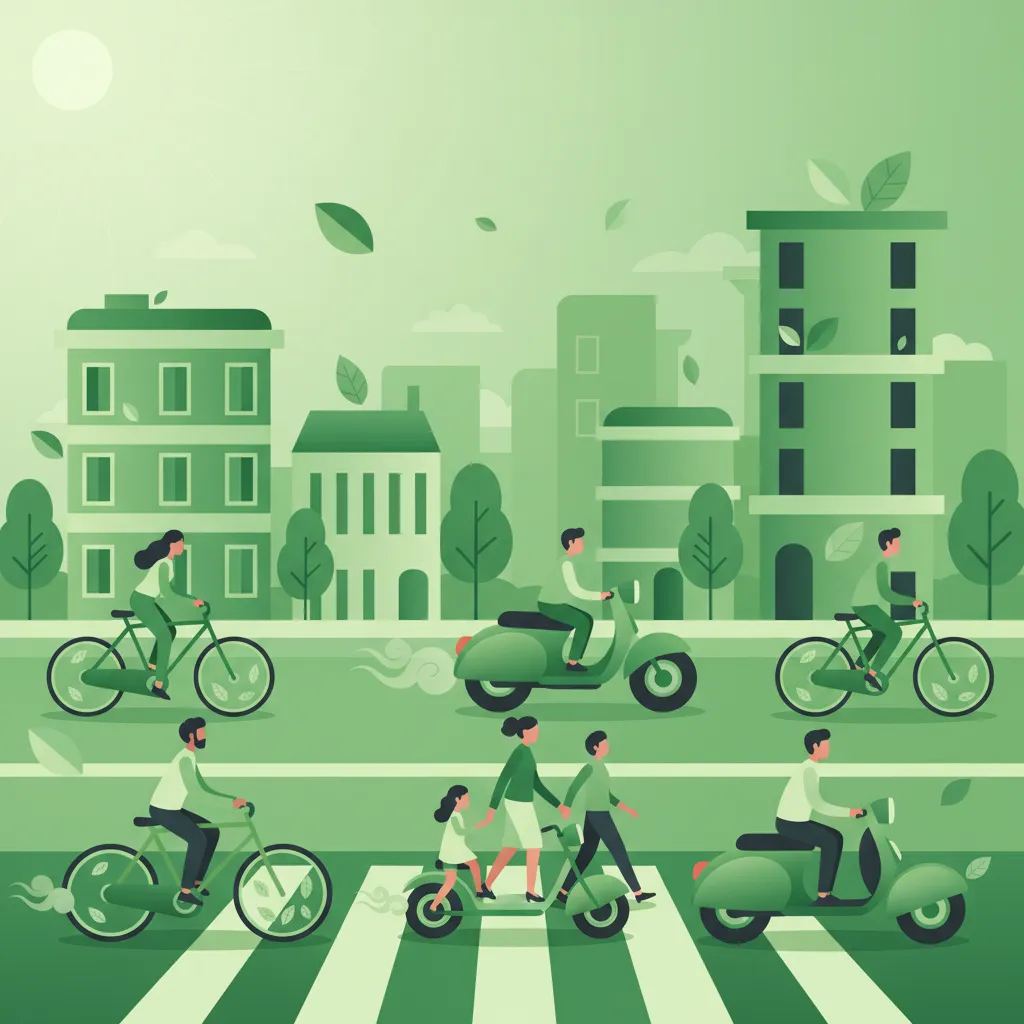
Being a licensed rider is a privilege that comes with social responsibilities. This lesson discusses the importance of ethical and courteous behavior on the road. This includes showing patience, respecting all road users (especially pedestrians and cyclists), and being mindful of your vehicle's noise and environmental impact. By riding responsibly, you not only enhance safety for everyone but also act as a positive ambassador for the entire two-wheeling community.
This lesson examines the statutory duties imposed on motorcyclists, with a strong emphasis on the 'duty of care' (zorgplicht) and the conditions under which legal liability arises after a traffic incident. It clarifies the relationship between personal responsibility, mandatory insurance coverage, and the legal expectation for proactive risk mitigation to prevent accidents. The content also analyzes scenarios to illustrate how liability is typically determined within Dutch traffic jurisprudence, preparing riders for their legal responsibilities.

This lesson provides an in-depth exploration of Article 5 of the Dutch Road Traffic Act, which establishes the general 'duty of care' ('zorgplicht'). It explains that every road user has a fundamental obligation to behave in a way that does not cause danger or hindrance to others. The curriculum clarifies how this broad principle is applied in determining legal liability after an accident, especially in incidents involving vulnerable road users, reinforcing the rider's constant accountability.

This lesson provides a detailed framework for how motorcyclists must safely and legally interact with diverse road users, including cars, trucks, cyclists, and pedestrians. It covers the required communication signals, anticipatory behaviors, and specific positioning techniques necessary to coexist in complex traffic environments like urban centers and shared spaces. Emphasis is placed on legal expectations and practical methods that actively reduce collision risk and promote smooth traffic flow.
This lesson details the procedures of a typical traffic stop ('verkeerscontrole') from a rider's perspective. It outlines the authority of police officers to check documents, inspect the vehicle, and administer sobriety tests, while also explaining the basic rights of the rider during such an interaction. The goal is to demystify the process and encourage a calm, cooperative, and respectful demeanor, which facilitates a more positive and efficient roadside encounter for both parties.
This lesson prepares riders for the possibility of a routine police check ('verkeerscontrole'). It explains what officers typically inspect, which includes the required documentation, the roadworthiness of the motorcycle (e.g., tire tread depth, exhaust legality), and the rider's sobriety. The curriculum provides guidance on how to interact calmly and cooperatively with law enforcement, ensuring the stop proceeds smoothly and efficiently while being aware of one's basic rights.
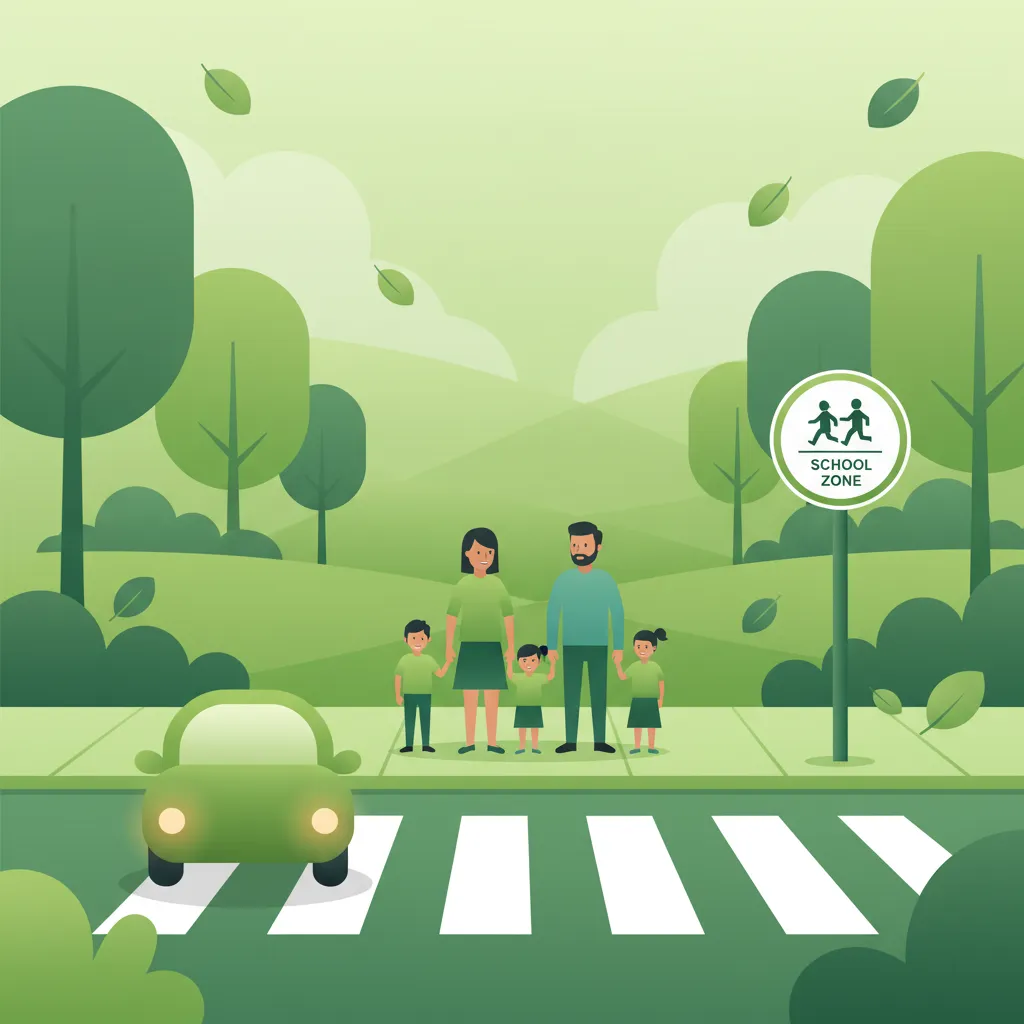
This lesson focuses on the legal requirements and safe practices for riding near pedestrian crossings ('zebrapaden') and designated school zones. It details the absolute obligation to yield to pedestrians on or about to use a crossing and the need for significantly reduced speeds and heightened vigilance in areas with children. The content underscores the importance of anticipation and being prepared for unpredictable movements from vulnerable road users to prevent serious incidents.
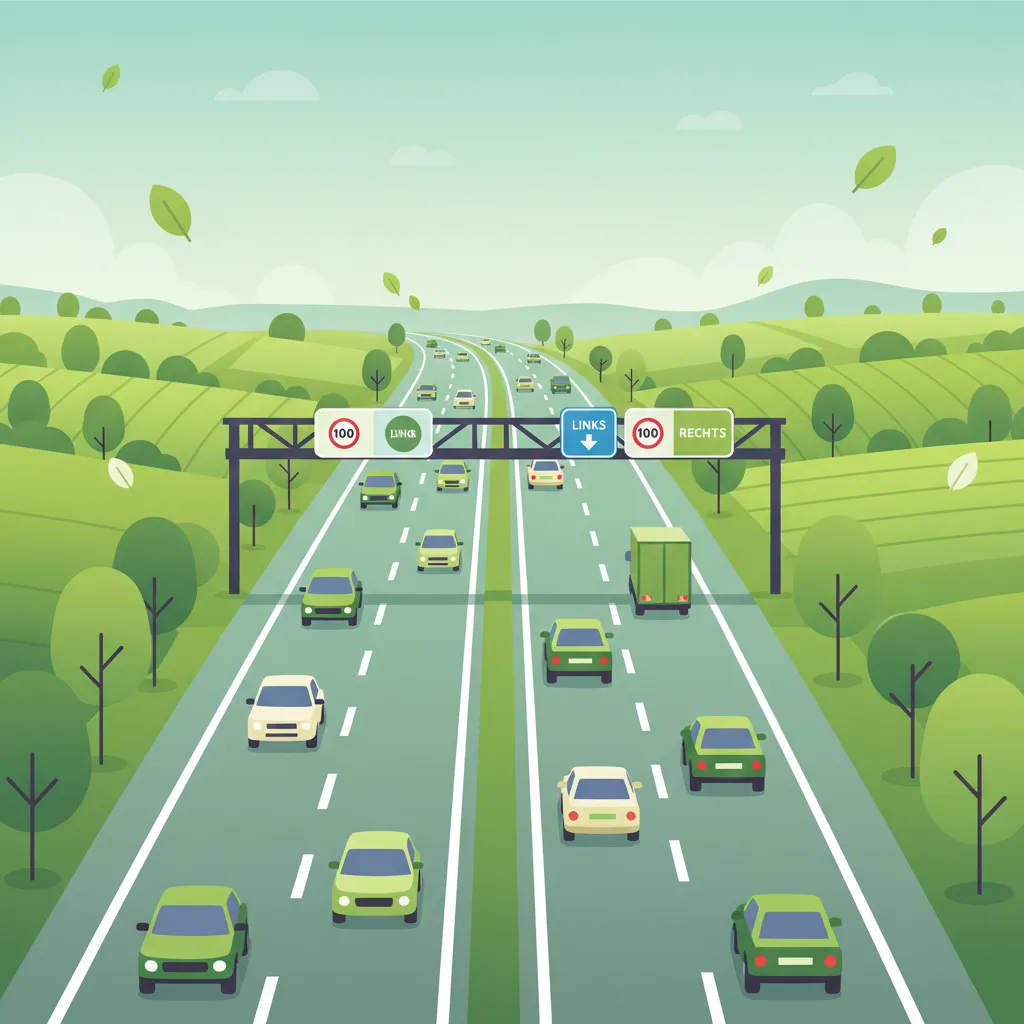
This lesson covers the specific articles of the Dutch Road Traffic Act that apply to motorways, with a primary focus on the strict rule of keeping to the rightmost available lane unless overtaking. It explains the legal and safety reasons for only passing on the left and discusses the correct positioning within a lane for maximum visibility and safety. The content also addresses the nuances of lane usage during heavy congestion, ensuring riders comply with the law and contribute to smooth traffic flow.

This lesson equips riders with cognitive strategies for managing ambiguous or conflicting traffic situations where priority rules may be misinterpreted by other road users. It focuses on the principles of defensive riding, such as making eye contact, using clear signals, and being prepared to yield the right-of-way to avoid a collision. The content teaches how to resolve uncertainty safely by prioritizing hazard avoidance over asserting one's legal right-of-way, a critical skill for motorcyclist survival.

This lesson details the established conventions for safe group riding. You will learn the benefits of the staggered riding formation for maintaining a safety cushion while keeping the group compact. The content also provides a comprehensive guide to the standard hand signals used to communicate turns, stops, hazards, and other essential information to the entire group without relying on electronic systems.
Understand the legal framework behind ethical motorcycle riding in the Netherlands, focusing on specific articles and how they apply to scenarios involving pedestrians, cyclists, and noise regulations. Learn practical application for your Category A exam.
This lesson examines the statutory duties imposed on motorcyclists, with a strong emphasis on the 'duty of care' (zorgplicht) and the conditions under which legal liability arises after a traffic incident. It clarifies the relationship between personal responsibility, mandatory insurance coverage, and the legal expectation for proactive risk mitigation to prevent accidents. The content also analyzes scenarios to illustrate how liability is typically determined within Dutch traffic jurisprudence, preparing riders for their legal responsibilities.
Being a licensed rider is a privilege that comes with social responsibilities. This lesson discusses the importance of ethical and courteous behavior on the road. This includes showing patience, respecting all road users (especially pedestrians and cyclists), and being mindful of your vehicle's noise and environmental impact. By riding responsibly, you not only enhance safety for everyone but also act as a positive ambassador for the entire two-wheeling community.
This lesson provides an in-depth exploration of Article 5 of the Dutch Road Traffic Act, which establishes the general 'duty of care' ('zorgplicht'). It explains that every road user has a fundamental obligation to behave in a way that does not cause danger or hindrance to others. The curriculum clarifies how this broad principle is applied in determining legal liability after an accident, especially in incidents involving vulnerable road users, reinforcing the rider's constant accountability.

This lesson provides a definitive list of the documents a motorcyclist must carry at all times when riding in the Netherlands. It specifies the requirement for a valid driving license ('rijbewijs') for the correct category, the vehicle registration card ('kentekenbewijs'), and proof of valid third-party liability insurance ('verzekeringsbewijs'). The content clarifies that failure to produce these documents during a police check can result in significant fines and legal complications.
This lesson focuses on the legal requirements and safe practices for riding near pedestrian crossings ('zebrapaden') and designated school zones. It details the absolute obligation to yield to pedestrians on or about to use a crossing and the need for significantly reduced speeds and heightened vigilance in areas with children. The content underscores the importance of anticipation and being prepared for unpredictable movements from vulnerable road users to prevent serious incidents.
This lesson prepares riders for the possibility of a routine police check ('verkeerscontrole'). It explains what officers typically inspect, which includes the required documentation, the roadworthiness of the motorcycle (e.g., tire tread depth, exhaust legality), and the rider's sobriety. The curriculum provides guidance on how to interact calmly and cooperatively with law enforcement, ensuring the stop proceeds smoothly and efficiently while being aware of one's basic rights.

This lesson details the legal requirements for reporting a traffic accident in the Netherlands, including the circumstances under which you must involve the police. It explains the correct procedure for exchanging personal, vehicle, and insurance information with any other parties involved. The lesson also covers the use of the European Accident Statement form to document the facts of the incident for insurance purposes.

This lesson outlines the rider's responsibility for ensuring their motorcycle's engine and exhaust system comply with Dutch legal standards. It covers basic but vital pre-ride checks, such as verifying engine oil and coolant levels. A significant focus is placed on exhaust compliance, explaining the regulations regarding noise levels ('geluidseisen') and the rules surrounding aftermarket exhaust systems, including the requirement for approved markings and the use of 'dB-killers'.
This lesson details the procedures of a typical traffic stop ('verkeerscontrole') from a rider's perspective. It outlines the authority of police officers to check documents, inspect the vehicle, and administer sobriety tests, while also explaining the basic rights of the rider during such an interaction. The goal is to demystify the process and encourage a calm, cooperative, and respectful demeanor, which facilitates a more positive and efficient roadside encounter for both parties.
This lesson covers the specific articles of the Dutch Road Traffic Act that apply to motorways, with a primary focus on the strict rule of keeping to the rightmost available lane unless overtaking. It explains the legal and safety reasons for only passing on the left and discusses the correct positioning within a lane for maximum visibility and safety. The content also addresses the nuances of lane usage during heavy congestion, ensuring riders comply with the law and contribute to smooth traffic flow.
Find clear answers to common questions learners have about Ethical Riding Behaviour. Learn how the lesson is structured, which driving theory objectives it supports, and how it fits into the overall learning path of units and curriculum progression in the Netherlands. These explanations help you understand key concepts, lesson flow, and exam focused study goals.
'Zorgplicht', or duty of care, is a fundamental legal and ethical principle in Dutch traffic law. For motorcyclists, it means actively taking responsibility for your own safety and the safety of others around you. This goes beyond simply following the rules and involves anticipating potential hazards and acting to prevent incidents, especially concerning vulnerable road users.
While legal compliance is mandatory, ethical riding involves a higher standard of behaviour. It means making conscious choices based on respect, courtesy, and social responsibility, even when not explicitly mandated by law. For example, choosing to be extra patient with a learner driver or deliberately riding in a way that minimizes noise pollution are acts of ethical riding.
Yes, the Dutch CBR theory exam for Category A includes questions that assess your understanding of responsible and ethical riding. These questions often focus on how to behave in complex situations, interact with different road users, and consider the broader impact of your actions, such as risk perception and environmental awareness.
This refers to riding in a way that reduces your negative impact on the environment and community. It includes avoiding unnecessary revving of the engine, ensuring your exhaust system is compliant with noise regulations (geluidseisen), and riding smoothly to optimize fuel efficiency. Being mindful of noise, especially in residential areas or at night, is a key aspect of ethical consideration.
Solidarity means showing understanding and support for others on the road. For motorcyclists, this can involve being patient with slower vehicles, offering a nod of acknowledgement to other riders, being mindful of cyclists and pedestrians, and generally projecting an image of competence and respect. It's about being part of a cohesive traffic community, not just an individual rider.