
This lesson focuses on ensuring your motorcycle's engine and exhaust system meet Dutch legal standards, specifically covering noise regulations and aftermarket parts. Understanding these rules is crucial for passing the Category A theory exam and for legal, responsible riding on Dutch roads.

Ensuring your motorcycle's engine and exhaust system meet legal requirements is a fundamental responsibility for every rider in the Netherlands. This lesson, part of your Dutch Motorcycle Theory preparation, delves into the essential checks, regulatory standards, and legal obligations surrounding your bike's mechanical health and noise emissions. Compliance isn't just about avoiding penalties; it's crucial for road safety, environmental protection, and maintaining the longevity of your motorcycle.
A well-maintained engine performs reliably, reducing the risk of breakdowns and accidents. Similarly, a compliant exhaust system contributes to public health by mitigating noise pollution, which is a significant concern in densely populated areas. Neglecting these aspects can lead to substantial fines, vehicle impoundment, and even civil liabilities in case of an incident.
Before every ride, a diligent motorcyclist performs a series of quick but vital checks to ensure their machine is in optimal condition. These "pre-ride checks" are not merely suggestions; they are implicitly mandated by Dutch traffic law (RVV 1990, Article 3), which requires all vehicles to be kept in a roadworthy state that does not endanger traffic safety. Focusing on engine oil and coolant levels is paramount for engine longevity and safe operation.
Engine oil is the lifeblood of your motorcycle's engine, performing critical functions such as lubrication, cooling, cleaning, and sealing. An incorrect oil level can lead to severe engine damage, ranging from excessive wear to catastrophic engine seizure. It can also cause increased internal friction, leading to higher operating temperatures and potentially increased exhaust noise due to engine strain.
The oil level is typically checked using either a dipstick or a sight-glass. For an accurate reading, the motorcycle should usually be upright and on level ground, with the engine having been off for a few minutes to allow oil to settle. Always consult your motorcycle's owner's manual for the specific procedure and the recommended oil type (e.g., synthetic, mineral, specific viscosity like 10W-40).
An over-filled engine might seem harmless, but it can lead to oil foaming, increased crankcase pressure, and damage to seals, which can result in leaks or even a loss of power. Conversely, insufficient oil dramatically increases friction and heat, leading to rapid wear and potential engine failure. Riders are legally obliged to maintain their vehicle in a roadworthy state, which includes having adequate and correctly specified engine oil.
Always keep a small quantity of the correct engine oil with you, especially on longer trips, to top up if necessary. Regular oil changes according to the manufacturer's schedule are also crucial for engine health.
For liquid-cooled motorcycles, the coolant system is equally vital. It dissipates excess heat from the engine, maintaining optimal operating temperatures and preventing overheating. Overheating can cause engine damage, loss of power, and can also lead to increased exhaust noise as the engine struggles to function efficiently. Just like engine oil, an adequate coolant level is part of maintaining a roadworthy vehicle.
The coolant level is typically visible in a transparent reservoir, marked with "MIN" and "MAX" lines. Check this level when the engine is cold and the motorcycle is upright. The type of coolant (e.g., ethylene glycol or propylene glycol, specific mixtures) is critical, as incompatible coolants can cause corrosion or damage to cooling system components.
The volume of cooling fluid (a water/antifreeze mixture) circulating through the engine’s cooling system, measured at the reservoir’s designated “MIN‑MAX” marks.
A consistently low coolant level could indicate a leak in the system, which should be investigated and repaired immediately. Never assume a "closed" system never needs attention; evaporation or minor leaks can gradually reduce the level over time.
Check the engine oil level using the dipstick or sight-glass. It should be between the MIN and MAX marks.
For liquid-cooled engines, check the coolant reservoir level. It should also be between the MIN and MAX marks.
Visually inspect for any obvious fluid leaks (oil, coolant, or fuel) under the motorcycle.
Motorcycle exhaust noise is a significant area of regulation in the Netherlands, primarily addressed by the "Besluit Motorrijtuigen" (Decree on Motor Vehicles) and the RVV 1990. These regulations, often referred to as "geluidseisen" (noise requirements), aim to protect public health and reduce environmental noise pollution. Riders must understand that compliance is not just about perceived quietness but about meeting specific, measurable decibel (dB(A)) limits.
For an exhaust system to be legal for use on public roads in the Netherlands, it must have type-approval (typegoedkeuring). This is a formal certification that the component conforms to European Union (EU) and Dutch standards for safety, emissions, and noise. This approval is typically indicated by a permanent CE marking (or E-mark, for European approval) affixed to the muffler itself, often accompanied by a type-approval number.
Official CE certification demonstrating that a component, such as an exhaust system, complies with EU safety, emissions, and noise standards. This is typically indicated by a permanent mark on the part.
The CE marking is visual proof for inspectors and law enforcement that the exhaust system has undergone rigorous testing and meets the legal noise limits for its intended vehicle category. This applies to both original equipment manufacturer (OEM) exhausts that come with the bike and approved aftermarket systems. Riding with an exhaust system that lacks this essential marking is a violation and can lead to fines.
Many riders choose to replace their original exhaust systems with aftermarket alternatives for aesthetic reasons, performance enhancements, or weight reduction. While this is permissible, it is crucial that any aftermarket exhaust system also complies with the "geluidseisen" and is properly certified.
If an aftermarket exhaust has a valid CE or E-mark, it generally means it has met the required noise standards as manufactured. However, the installation of such an exhaust may still require RDW certification (approval from the Rijksdienst voor het Wegverkeer, the Dutch Vehicle Authority). The RDW is responsible for vehicle registration and ensuring that modifications remain within legal limits. For specific aftermarket parts, especially those that significantly alter the vehicle's characteristics, RDW approval may need to be registered in the vehicle's documentation.
This process ensures that even modified motorcycles continue to meet legal limits after changes. Failure to have a properly certified and registered aftermarket exhaust can result in fines and rejection during the APK (Algemene Periodieke Keuring) – the mandatory technical inspection.
A dB-killer is a removable or adjustable device, often an insert or baffle, designed to temporarily dampen exhaust noise. While some manufacturers include them with aftermarket exhausts, their use in a manner that "cheats" official noise tests is explicitly prohibited under the Besluit Motorrijtuigen.
A removable or adjustable device, often an insert, used to artificially lower exhaust noise levels, typically for inspection purposes, but which can be removed or disabled during normal riding.
The intention behind the prohibition is to ensure that a motorcycle's noise emissions are consistently compliant under normal operating conditions, not just during an inspection. Using a dB-killer to pass an APK or police spot check, only to remove it afterwards for louder riding, is considered a serious violation. Detection can lead to significant fines and the possible seizure of the device. The law aims for genuine, real-world compliance, not temporary measures that circumvent regulations.
Do not rely on removable dB-killers to pass inspections. The intent of the law is for your motorcycle to be compliant at all times. Using them to falsify test results is illegal and carries severe penalties.
The Dutch regulatory framework ensures ongoing compliance through both periodic inspections and random roadside checks. Riders must be prepared for both scenarios.
The Algemene Periodieke Keuring (APK) is the mandatory periodic technical inspection for vehicles in the Netherlands, including motorcycles. This inspection includes a specific noise test (dB-meting) to verify that the exhaust system meets the prescribed limits. The frequency of the APK for motorcycles varies (e.g., typically every 2-4 years depending on engine size and age), but the noise test is a standard component.
During the APK noise test, a calibrated sound level meter measures the exhaust noise at a standardized engine speed and distance. The permissible decibel levels are specified in the Besluit Motorrijtuigen and are often tied to the motorcycle's engine displacement. For example, smaller bikes (e.g., up to 125 cc) typically have stricter limits than larger displacement motorcycles.
Failing the APK due to excessive noise means the motorcycle will not receive a valid inspection certificate. The rider must then rectify the issue (e.g., replace the exhaust, tighten loose components) and submit the motorcycle for a re-inspection before it can legally be ridden on public roads.
Beyond the APK, police officers in the Netherlands have the authority to conduct spot checks (Politie, RVV 1990, Article 23) on any motorcycle at any time. These checks can be random or targeted, especially in areas known for noise complaints. During a spot check, an officer may inspect various aspects of your motorcycle, including:
If a motorcycle is found to be non-compliant, an officer can issue a fine, order immediate correction, or even impound the vehicle if the issue poses a significant safety risk or is a repeated offense. Being prepared and having all necessary documentation readily accessible can help streamline these checks.
Understanding common violations and adopting responsible riding practices are key to ensuring continuous compliance and avoiding legal penalties.
Always keep a copy of your RDW approval certificate for any aftermarket exhaust with your vehicle documents. This can expedite police checks and avoid unnecessary complications.
Maintaining your engine and exhaust system properly is not merely a bureaucratic chore; it is a critical component of safe, responsible, and environmentally conscious motorcycling. It prevents mechanical failures, reduces noise pollution, and ensures harmonious coexistence with other road users and residents.
To ensure your motorcycle is always compliant with Dutch regulations regarding its engine and exhaust system, integrate this checklist into your regular maintenance routine and pre-ride preparations.
Engine Oil: Check level with dipstick or sight-glass; ensure it's between MIN and MAX. Verify correct oil type and viscosity are used.
Coolant (Liquid-Cooled Engines): Check reservoir level; ensure it's between MIN and MAX. Inspect for leaks and confirm correct coolant type.
Exhaust System Visual Inspection:
Verify all clamps, bolts, and mounting points are secure and free from corrosion.
Inspect for cracks, holes, or damage to the exhaust pipes, muffler, and silencer.
Confirm the exhaust bears a permanent, legible CE or E-mark (type-approval) plate.
Aftermarket Exhaust Systems:
If required, confirm the exhaust is registered with the RDW and details are on your vehicle's registration certificate.
dB-Killers: Confirm that no removable or adjustable silencing devices (dB-killers) are installed or used to circumvent noise regulations.
APK Readiness: Ensure your motorcycle is prepared for its periodic APK, especially regarding the noise test. Address any known issues beforehand.
Documentation: Have your vehicle registration certificate, proof of insurance, and any RDW modification approvals readily available for police spot checks.
Lesson content overview
Explore all units and lessons included in this driving theory course.
Explore search topics learners often look for when studying Engine and Exhaust System Compliance (geluidseisen). These topics reflect common questions about road rules, driving situations, safety guidance, and lesson level theory preparation for learners in the Netherlands.
Browse additional driving theory lessons that cover connected traffic rules, road signs, and common driving situations related to this topic. Improve your understanding of how different rules interact across everyday traffic scenarios.
Understand Dutch legal requirements for motorcycle engine and exhaust systems. Covers noise regulations (geluidseisen), type-approval, dB-killers, and aftermarket exhaust compliance for road safety and legal riding.

This lesson explains the purpose of audible indicator reminders, often called 'squealers' or 'piepers', which help prevent riders from unintentionally leaving their turn signals on. It also provides a detailed breakdown of the legal nuances and restrictions related to lane splitting and filtering. The content clarifies the distinction between these maneuvers and outlines the specific road situations and traffic conditions where such actions are explicitly prohibited or heavily regulated.

This lesson explains the precise legal definition of a Category A1 motorcycle, including the maximum 125cc displacement and 11 kW power output. It outlines the entire CBR licensing pathway, from meeting the minimum age requirement to passing both the theory and practical exams. Key administrative obligations such as vehicle registration (kenteken), mandatory insurance, and roadworthiness inspections (APK) are also detailed, ensuring a full understanding of legal compliance.
This lesson covers the mandatory lighting and signaling equipment for A2 motorcycles under Dutch law, ensuring you remain visible and communicate your intentions correctly. You will learn the rules for using headlights, taillights, turn signals, and brake lights in various conditions, including daytime and adverse weather. The content also addresses the importance of maintaining this equipment and using hand signals as a valid secondary method of communication in traffic.
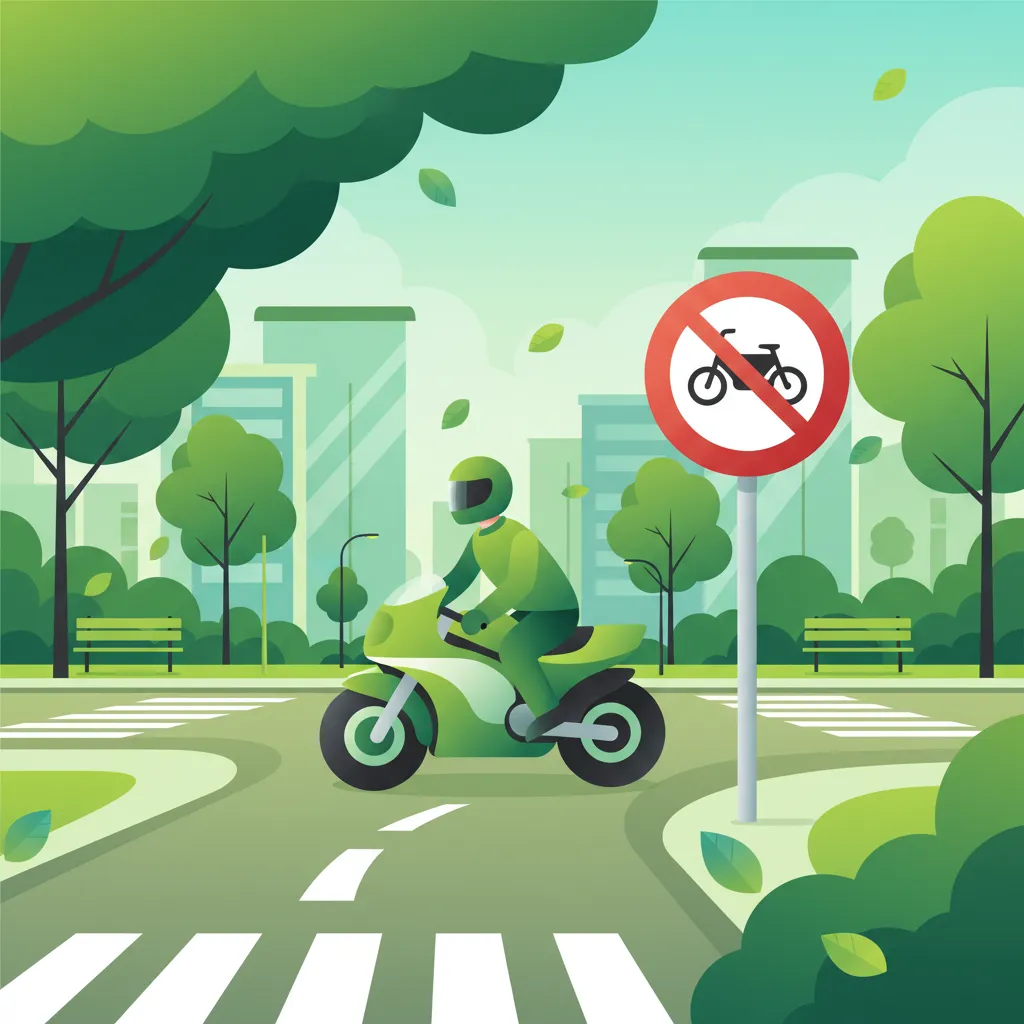
This lesson focuses on Dutch regulatory signs that enforce mandatory rules and restrictions, particularly those impacting A2 motorcyclists. You will learn to recognize and obey prohibition signs, such as those indicating a motorcycle ban (BORD 40), speed limits, and overtaking restrictions (BORD 21). The content explains the legal consequences of non-compliance and how to apply these rules in practical riding scenarios to ensure full adherence to Dutch traffic law.

This lesson provides a detailed overview of the structure of Dutch traffic legislation, focusing on the Road Traffic Act (Wegenverkeerswet 1994) and its relationship with CBR regulations. It explains the hierarchy from national statutes to local ordinances and how these rules govern rider behavior in various traffic situations. Furthermore, the lesson clarifies the mechanisms for enforcement, the types of sanctions for non-compliance, and the legislative goal of ensuring road safety for all participants.

This lesson provides a comprehensive overview of all light and audible signals mandated by Dutch traffic law, detailing when and how each must be used for optimal visibility and communication. It covers the correct use of headlights, turn signals, and hazard lights, as well as the legally appropriate situations for using the horn to alert other road users. The curriculum clarifies legal requirements for lighting equipment and the potential penalties for misuse, ensuring riders can signal their intentions clearly and legally.

This lesson offers an in-depth study of Dutch regulatory signs, which impose mandatory actions or prohibitions on road users, with a specific focus on their impact on motorcyclists. It explains the visual language of prohibition symbols ('verbodsborden') and obligation symbols ('verplichtingsborden'), the contexts in which they appear, and the strict statutory consequences of non-compliance. Real-world examples are used to illustrate how these signs directly influence route planning, overtaking decisions, and speed management.

This lesson covers the universal Dutch road rules with a specific focus on their application to light motorcycles. It details the various speed limits for different road types, from urban areas to motorways, and explains the correct procedures for overtaking and lane positioning. The legal aspects of lane filtering in congestion are also examined, alongside mandatory equipment use like daytime running lights, to ensure riders can integrate safely and legally into traffic flow.

This lesson details the Dutch regulations for carrying passengers on a motorcycle, including the minimum age for the passenger and the mandatory use of approved helmets. It explains the rider's legal responsibility for the passenger's safety and how to properly secure loads to avoid affecting the motorcycle's stability and balance. Understanding these rules is crucial for ensuring safety and legality when riding with a pillion or luggage.

This lesson clarifies the legal status and accepted code of conduct for filtering ('gedogen') between lanes of slow or stationary traffic in the Netherlands. It explains the conditions under which it is generally tolerated, such as maintaining a small speed differential. The content focuses heavily on the associated risks, including drivers changing lanes without looking and opening doors, and emphasizes the need for extreme caution and slow speed.
Learn critical pre-ride checks for your motorcycle's engine and exhaust system. Covers oil and coolant levels, identifying common violations, and understanding APK and police spot check requirements in the Netherlands.

This lesson prepares riders for the possibility of a routine police check ('verkeerscontrole'). It explains what officers typically inspect, which includes the required documentation, the roadworthiness of the motorcycle (e.g., tire tread depth, exhaust legality), and the rider's sobriety. The curriculum provides guidance on how to interact calmly and cooperatively with law enforcement, ensuring the stop proceeds smoothly and efficiently while being aware of one's basic rights.

This lesson explains the legal framework for the mandatory periodic technical inspection (APK) as it applies to motorcycles in the Netherlands, although noting its specific applicability rules. It outlines the key safety and environmental components that are scrutinized during the inspection, such as brakes, tires, lighting, and exhaust emissions. Understanding these criteria helps riders maintain their vehicle in a constant state of roadworthiness and prepare for the formal inspection when required.

This lesson introduces a systematic pre-ride check, often remembered by the acronym T-CLOCS (Tires, Controls, Lights, Oil, Chassis, Stands). It provides a structured routine to ensure a motorcycle is safe to ride before every trip. Learners will understand how to quickly and efficiently inspect tire pressure and condition, verify all lights and controls are working, check fluid levels, and ensure the chassis and stand are secure.

This lesson details the procedures of a typical traffic stop ('verkeerscontrole') from a rider's perspective. It outlines the authority of police officers to check documents, inspect the vehicle, and administer sobriety tests, while also explaining the basic rights of the rider during such an interaction. The goal is to demystify the process and encourage a calm, cooperative, and respectful demeanor, which facilitates a more positive and efficient roadside encounter for both parties.

This lesson details the systematic procedure for checking the functionality of all lights and indicators before a ride. This simple but critical safety check includes verifying the operation of the high and low beam headlight, the taillight, the brake light (using both front and rear brake activators), and all four turn signals. Ensuring all lights are working is a legal requirement and fundamental for visibility and communicating intentions to other road users.

This lesson provides an overview of the most important routine maintenance tasks a rider should be aware of. It covers the why and how of regularly checking and lubricating the drive chain to prevent premature wear. Additionally, it explains how to check the engine oil level and recognize the signs that brake pads or fluid need attention, empowering riders to keep their motorcycles in a safe and reliable condition between professional services.

This lesson details the necessary mechanical adjustments before adding significant weight to your motorcycle. You will learn how to consult your owner's manual to set the correct tyre pressures and suspension preload for the added load, which is crucial for maintaining proper handling and stability. The content also emphasizes checking the security of any luggage and adjusting your headlight aim to avoid dazzling other drivers.

This lesson explains the purpose and frequency of the APK (Algemene Periodieke Keuring), the mandatory periodic safety and emissions inspection for vehicles in the Netherlands. You will understand what aspects of the car are checked, including brakes, steering, lights, and tires. The curriculum also details the essential documents you must have with you when driving, including the vehicle registration certificate (kentekenbewijs) and proof of insurance. Failure to comply with these requirements can result in significant fines.

This lesson teaches riders how to conduct regular visual inspections of their motorcycle's braking system, a critical safety routine. It covers how to check the thickness of brake pads and look for signs of wear or damage on brake discs. The curriculum also explains the importance of monitoring the brake fluid level and condition, as old fluid can compromise braking performance, ensuring the system is always ready for an emergency.

This lesson provides a definitive list of the documents a motorcyclist must carry at all times when riding in the Netherlands. It specifies the requirement for a valid driving license ('rijbewijs') for the correct category, the vehicle registration card ('kentekenbewijs'), and proof of valid third-party liability insurance ('verzekeringsbewijs'). The content clarifies that failure to produce these documents during a police check can result in significant fines and legal complications.
Find clear answers to common questions learners have about Engine and Exhaust System Compliance (geluidseisen). Learn how the lesson is structured, which driving theory objectives it supports, and how it fits into the overall learning path of units and curriculum progression in the Netherlands. These explanations help you understand key concepts, lesson flow, and exam focused study goals.
The Netherlands has strict noise limits for motorcycle exhausts, set by specific regulations. While exact decibel (dB) figures can vary based on the motorcycle's age and type, the key is that the exhaust must not produce excessive noise. Aftermarket exhausts must have official approval markings, and the use of a 'dB-killer' is often mandatory to reduce noise to legally acceptable levels.
Yes, it is generally legal to fit an aftermarket exhaust, provided it complies with Dutch regulations. The exhaust must carry an E-mark (European approval) or a specific Dutch approval number. It must also meet the legal noise ('geluidseisen') and emission standards. Removing or altering a 'dB-killer' to increase noise is illegal.
A 'dB-killer' is a component, often a baffle or perforated tube, installed inside the exhaust silencer to reduce the noise level produced by the engine. It's a crucial part of ensuring the exhaust complies with the legal 'geluidseisen' (noise requirements) in the Netherlands. Riding without a functioning dB-killer when one is legally required will result in non-compliance.
Before each ride, it's essential to perform a quick check of your motorcycle's engine condition. This includes verifying the engine oil level is between the minimum and maximum marks on the dipstick or sight glass, and checking the coolant level if your motorcycle is liquid-cooled. Ensuring these basic fluid levels are correct is vital for engine health and preventing damage.
If your motorcycle's exhaust system does not comply with Dutch noise regulations ('geluidseisen') or lacks the required approval markings, you can face significant penalties. This includes fines from the police and potentially being required to have the exhaust system replaced or modified to meet legal standards before you can continue riding. It can also lead to the motorcycle failing its technical inspection (APK).