
This lesson focuses on Dutch regulatory signs, specifically prohibition ('verbodsborden') and obligation ('verplichtingsborden') signs, which are crucial for Category A motorcyclists. Understanding these signs is vital for safe navigation and passing the CBR theory exam, as they dictate mandatory actions and restrictions on the road.

As a motorcyclist preparing for the Dutch CBR Category A theory exam, a thorough understanding of regulatory signs (known as verbodsborden for prohibitions and verplichtingsborden for obligations) is not just important—it's essential for your safety and legal compliance on Dutch roads. These signs are binding legal commands that dictate what road users must or must not do, shaping traffic flow and significantly impacting a motorcyclist's route planning, speed management, and maneuvering decisions.
This comprehensive lesson will delve into the visual language, statutory authority, and practical implications of Dutch regulatory signs, specifically tailored to the unique considerations of motorcyclists. Mastering this aspect of Dutch traffic law will equip you to interpret signs correctly, anticipate potential hazards, and ride confidently and legally in the Netherlands.
In the Netherlands, all traffic rules and signs are governed by the Reglement Verkeersregels en Verkeerstekens 1990 (RVV 1990), which translates to the Regulation on Traffic Rules and Traffic Signs. Regulatory signs derive their ultimate authority from this national legislation, making them legally binding commands. Disobeying these signs is not merely a suggestion; it constitutes a traffic offense with statutory consequences, including fines, penalty points, and in severe cases, driving licence suspension.
For motorcyclists, this legal binding carries particular weight. The freedom and agility of a motorcycle can sometimes lead to assumptions about maneuvering options that directly contradict regulatory signs. It is crucial to remember that these signs are designed to create a predictable and safe traffic environment for all, often taking into account the physics of vehicle movement and human reaction times. Adherence ensures your safety and that of others.
Dutch regulatory signs employ a clear, international visual syntax, largely conforming to the Vienna Convention on Road Signs and Signals. This standardized design allows for rapid pre-cognitive identification, meaning you can often understand the basic nature of a sign (prohibition or obligation) before fully processing its specific pictogram.
Verbodsborden): The Red CircleProhibition signs, or verbodsborden, are instantly recognizable by their circular shape with a red border, often featuring a white background and a black pictogram. These signs explicitly forbid a specific action, class of vehicles, or indicate a maximum limit. When you encounter a prohibition sign, the indicated activity is immediately prohibited from that point onward, unless a specific end-of-prohibition sign is displayed or an accompanying supplemental plate provides an exemption.
These signs are critical for motorcyclists, as they directly impact permissible maneuvers. Ignoring them can lead to dangerous situations and significant legal repercussions.
Some verbodsborden apply universally to all road users, such as "No Entry" or "No Stopping." Others are specifically tailored to certain vehicle classes. For example, a sign depicting a motorcycle silhouette crossed out strictly prohibits motorcycles from entering or using a particular road segment.
It is vital for motorcyclists to actively look for and interpret these vehicle-specific signs, as they can significantly alter route choices and access. Always ensure you are permitted on a given road.
Many prohibition signs regulate specific maneuvers or impose speed limits. A "No Overtaking" sign (often showing two cars, one red, one black, with a red diagonal line) is a common sight on narrow roads or sections with limited visibility, preventing hazardous overtaking attempts. For a motorcyclist, while a motorcycle's agility might seem to make overtaking easier, this sign is absolute and must be obeyed.
Similarly, speed limit signs, depicted as a red circle with a number (e.g., 50), enforce the maximum permissible speed. Exceeding this limit increases kinetic energy, significantly lengthens braking distances, and drastically elevates the risk and severity of a crash.
Verplichtingsborden): The Blue CircleConversely, obligation signs, or verplichtingsborden, are circular with a blue background and a white pictogram. These signs mandate a specific action or restrict lane usage to a particular direction or vehicle class. They are equally binding as prohibition signs, and failure to comply constitutes a violation.
Obligation signs help maintain orderly traffic flow and ensure predictable movements, which is particularly beneficial in complex urban environments or on high-speed motorways.
Directional obligation signs, such as a blue circle with a white arrow pointing left, dictate that you must turn left at the upcoming intersection. Ignoring such a sign could lead to driving against traffic or entering a prohibited zone.
Lane-specific obligation signs are crucial for motorcyclists. A blue circle with a motorcycle pictogram often indicates a lane reserved exclusively for motorcycles, sometimes referred to as a motorfietspad. Using such a lane when designated can improve a motorcyclist's flow and safety, while other vehicles are prohibited from entering it.
While less common, some obligation signs can specify a minimum speed, particularly on motorways. A blue circle with a number (e.g., 60) signifies that vehicles must maintain at least that speed to avoid impeding traffic flow and creating a hazard.
Other obligation signs might relate to equipment, though these are rare in the Netherlands and more common in specific regions, such as mandatory winter tyre signs in mountainous areas abroad. However, the principle remains: the rider must comply with the specified requirement.
Aanvullende Borden)Regulatory signs often do not stand alone. They can be accompanied by rectangular aanvullende borden, or supplemental plates, placed directly beneath the main sign. These plates provide additional context, modifying the applicability of the regulatory sign by specifying dates, times, vehicle classes, or distances.
It is imperative to read both the main regulatory sign and any accompanying supplemental plate together, as the plate can completely change when or to whom the main sign applies. Ignoring a supplemental plate can lead to an incorrect interpretation and a subsequent violation.
Many supplemental plates indicate temporal restrictions, meaning the main sign applies only during specific hours, days, or seasons. For instance, a "No Stopping" sign combined with a plate showing "07:00 - 19:00" means stopping is prohibited only between those hours; outside of them, it is permitted.
Supplemental plates can also provide vehicle class exemptions. A "No Entry" sign, for example, might have a plate reading "Except bicycles," indicating that while motor vehicles are prohibited, bicycles are allowed. Motorcyclists must check these plates to ensure they are not inadvertently exempt or, conversely, explicitly restricted.
Other plates specify distances ("50 m") or indicate the length of the regulated zone ("over 200 m"). These are crucial for understanding where a restriction begins or ends, helping motorcyclists to anticipate and plan their actions safely.
In modern traffic management, Variable Message Signs (VMS), also known as digital displays, play an increasingly important role in conveying regulatory information dynamically. These electronic signs can display speed limits, lane closures, or other prohibitions in real-time, often in response to changing traffic conditions, accidents, or adverse weather.
VMS are legally binding under RVV 1990 (specifically Article 4.10, which governs digital signage) and take precedence over any conflicting static signs. This hierarchical supremacy ensures that traffic rules can adapt instantly to prevailing conditions, enhancing safety. For motorcyclists, this means constant vigilance and a readiness to react quickly to suddenly reduced speed limits or altered lane guidance displayed on VMS, especially at higher speeds or in challenging weather.
While Dutch regulatory signs largely conform to the Vienna Convention, ensuring international recognisability, some subtle differences or specific combinations with Dutch language supplemental plates can exist. Riders from other EU countries will find the basic shape and colour conventions familiar, but attention to detail, especially regarding accompanying text, is always necessary. This comprehensive course, focused on Dutch-specific nuances, bridges any potential gaps for international riders.
Regulatory signs profoundly influence every aspect of motorcycle riding. Their correct interpretation and unwavering compliance are paramount for a motorcyclist's safety, legal standing, and overall riding experience.
A "No Overtaking" sign directly prohibits one of the most common maneuvers for motorcyclists. On a motorcycle, with often superior acceleration and smaller profile, the temptation to overtake might be higher. However, these signs are typically placed where visibility is limited, oncoming traffic is a risk, or road conditions make overtaking inherently dangerous. Strict adherence prevents head-on collisions, sideswipes, and other serious incidents.
Obligation signs dictating lane usage, such as "Motorcycles only lane" or "Straight ahead only," require precise lane discipline. Using a designated motorcycle lane when available optimizes traffic flow for two-wheelers and can provide a safer passage. Conversely, failing to follow mandatory directional arrows can lead to last-minute lane changes, confusion, and potential collisions with other vehicles.
Speed limit signs (maximum speed and minimum speed) are fundamental to safe riding. For motorcyclists, managing speed is about more than just avoiding fines; it’s about controlling kinetic energy, maintaining safe braking distances, and preserving stability. A sudden reduction in a speed limit, perhaps via a VMS in a construction zone or due to adverse weather, demands immediate and smooth deceleration to avoid dangerous braking maneuvers or loss of control, especially on wet or slippery surfaces.
Vehicle-specific prohibition signs (e.g., "Motorcycles prohibited") are crucial for route planning. A motorcyclist must quickly identify these signs to avoid entering restricted areas, which could lead to fines, inconvenience, or dangerous encounters with prohibited terrains. Being aware of these restrictions helps in choosing legally permissible and safer routes.
Non-compliance with regulatory signs carries significant legal and safety consequences in the Netherlands. Each sign is a command that must be obeyed, backed by specific articles within the RVV 1990.
Motorcyclists sometimes make common errors in interpreting regulatory signs:
Violations of regulatory signs are serious. Penalties typically involve:
verkeersboete): Monetary penalties, which can be substantial.Beyond legal consequences, the greatest risk is the increased likelihood of a crash, which for motorcyclists often leads to more severe injuries due to their inherent vulnerability.
The interpretation and compliance with regulatory signs must always be considered within the broader context of prevailing conditions. A sign's meaning doesn't change, but how you respond to it should adapt.
In adverse weather conditions such as rain, fog, or snow, visibility of regulatory signs can be significantly reduced. Their reflective properties become crucial, but riders must compensate by reducing speed, increasing vigilance, and anticipating restrictions. Flashing beacons or additional temporary signs may accompany static signs in poor weather, emphasizing increased caution or stricter limits. Reduced stopping distances in wet conditions mean that speed limits must be respected even more diligently.
The type of road (urban street, rural road, motorway) often dictates the kinds of regulatory signs you will encounter. Minimum speed signs are exclusive to motorways, while no overtaking zones are more prevalent on winding rural roads or busy urban arteries. High traffic density in urban areas requires constant awareness of lane-specific obligations and directional arrows to maintain flow and avoid conflicts.
A motorcycle carrying a heavy load or a passenger will have different handling and braking characteristics. While regulatory signs apply equally, a motorcyclist should exercise extra caution, for instance, by giving themselves more buffer room when a no overtaking sign is present, even if they could technically complete the maneuver. When regulatory signs appear near areas with vulnerable road users (pedestrians, cyclists), compliance with speed limits and prohibitions (e.g., no entry into pedestrian zones) becomes critical to prevent serious harm.
Understanding regulatory signs is not a standalone skill; it is deeply interwoven with other fundamental aspects of Dutch traffic law and safe riding.
By mastering regulatory signs, you are simultaneously reinforcing your knowledge in these interconnected areas, paving the way for advanced riding strategies discussed in future modules like Highway and Tunnel Riding Strategies (Lesson 7) and further Emergency Braking techniques (Lesson 9).
Understanding the precise vocabulary is crucial for success in the Dutch motorcycle theory exam and for effective communication on the road.
Let's consider practical situations to solidify your understanding of regulatory signs.
Urban Intersection with Directional Arrows: On a busy city street, you approach an intersection and see a blue circular sign with a white arrow pointing right.
Motorway Entry with Minimum Speed:
Entering a motorweg (motorway), you pass a blue circular sign indicating "60."
Road Works Zone with Dynamic Speed Limits:
You are riding on a provincial road at 80 km/h when you see a Variable Message Sign (VMS) displaying "Speed Limit 50 km/h" and flashing amber lights, due to ongoing road works.
The strict enforcement and clear design of regulatory signs are rooted in fundamental safety principles:
cognitive load. This means your brain spends less effort deciphering the sign and more on observing the road and traffic around you, especially valuable under stress or fatigue.This lesson has provided an in-depth exploration of Dutch regulatory signs, which are fundamental to safe and legal motorcycle riding in the Netherlands. You should now understand that:
verbodsborden and verplichtingsborden) are legally binding commands under RVV 1990, dictating mandatory actions or prohibitions.aanvullende borden) provide crucial additional context, modifying the applicability of the main sign through temporal, vehicle-class, or distance restrictions.Dutch Motorcycle Theory – Category A Comprehensive Preparation.By integrating this knowledge into your riding practice, you will not only comply with Dutch traffic law but also significantly enhance your safety and confidence on the road.
Lesson content overview
Explore all units and lessons included in this driving theory course.
Explore search topics learners often look for when studying Regulatory Signs (verbodsborden, verbods- en verplichtingsborden). These topics reflect common questions about road rules, driving situations, safety guidance, and lesson level theory preparation for learners in the Netherlands.
Browse additional driving theory lessons that cover connected traffic rules, road signs, and common driving situations related to this topic. Improve your understanding of how different rules interact across everyday traffic scenarios.
Explore how supplemental plates and variable message signs modify Dutch regulatory signs. This lesson focuses on understanding the nuances and dynamic application of traffic commands for motorcyclists.
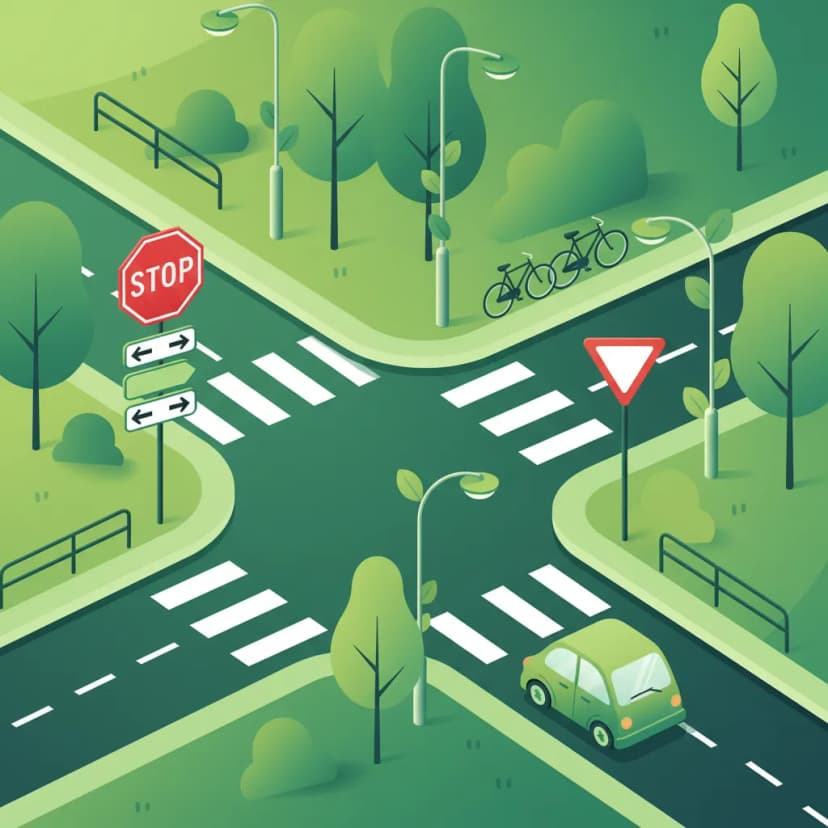
This lesson focuses on regulatory signs, which impose legal obligations on drivers and are essential for maintaining traffic order. You will learn to identify and act upon fundamental signs such as the octagonal B6 Stop sign, the diamond-shaped B1 Priority Road sign, and various compulsory direction arrows. The content explains the legal implications of these signs, detailing when a driver must stop completely, when they have priority, or the required path they must follow. Understanding these commands is crucial for safe and lawful driving at intersections and on designated routes.

This lesson covers prohibition signs, which are used to forbid specific maneuvers or restrict access for certain vehicles. You will study the characteristics of these signs, typically circular with a red border, such as the C2 'No Entry for any vehicle' or the F1 'No Parking' sign. The content details the legal consequences of ignoring these prohibitions and explains how they contribute to traffic flow and safety in congested or sensitive areas. Recognizing these signs is fundamental to avoiding fines and dangerous situations on the road.

This lesson covers the most critical category of traffic signs: regulatory signs, which impose a legal obligation or prohibition. You will learn the precise meaning and required action for essential signs such as the B6 Stop sign, which mandates a full stop, and the C2 No Entry sign, which forbids access. Understanding the shapes, colors, and symbols of these signs is fundamental to safe driving and a major focus of the official CBR theory test.

This lesson introduces warning signs, which are designed to alert drivers to potential dangers or changes in road layout ahead. You will learn to interpret the triangular-shaped signs that indicate hazards such as sharp curves, slippery road surfaces (J27), or upcoming road works (J8). The curriculum explains how these signs help in anticipating risks and adjusting driving behavior accordingly, such as reducing speed or increasing alertness. A thorough understanding of warning signs is vital for proactive and defensive driving in various environments.

This lesson focuses on C-code regulatory signs, which impose legal obligations and prohibitions on road users. Learners will study signs that establish speed limits, forbid entry, mandate specific directions, and restrict overtaking or parking. Understanding these signs is non-negotiable for legal compliance and safety, as they form the basis of traffic regulation and are a major component of the CBR theory exam for motorcyclists.
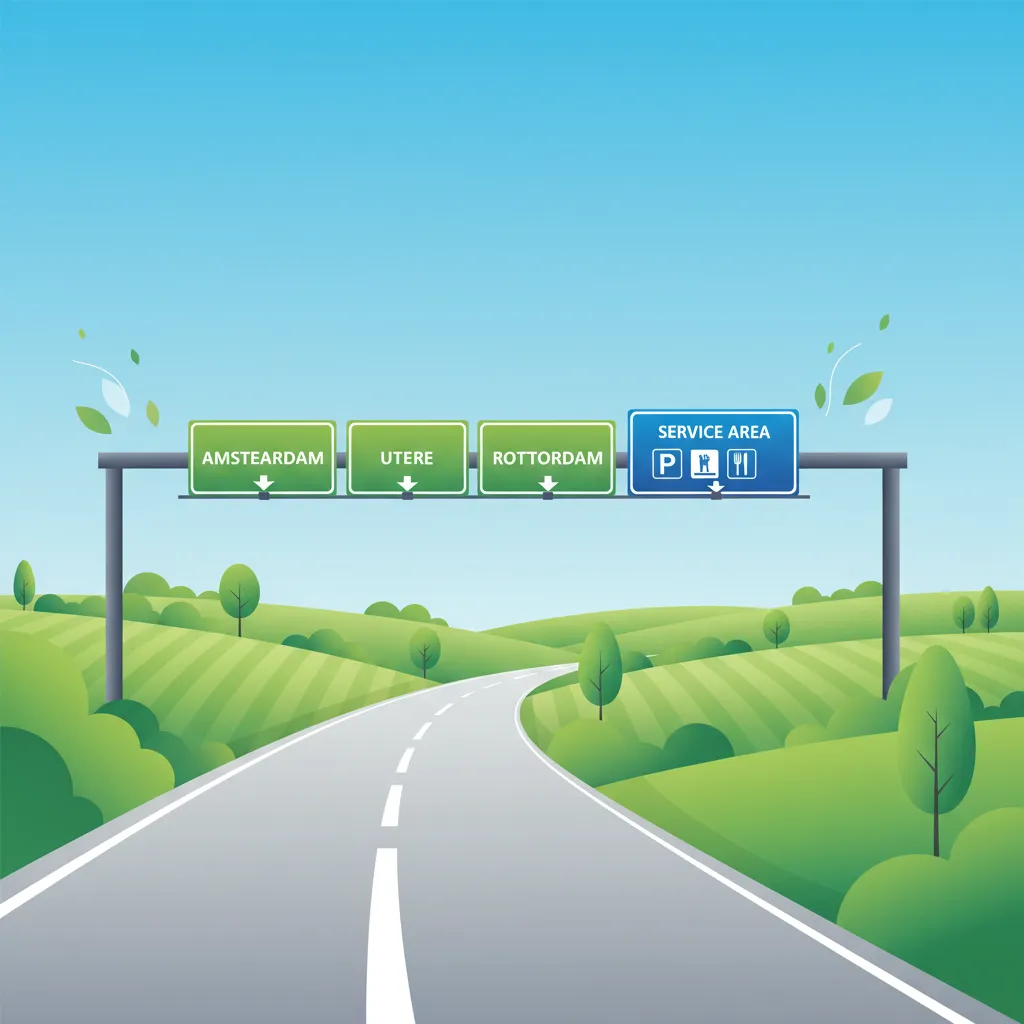
This lesson explains how to interpret informational signs that provide guidance and navigational aid. You will learn to read directional signs indicating cities and locations, understand route numbering on major roads, and recognize signs for services like fuel stations or parking areas. It also covers the signs that mark the beginning and end of a built-up area ('bebouwde kom'), which have important implications for speed limits and traffic rules.
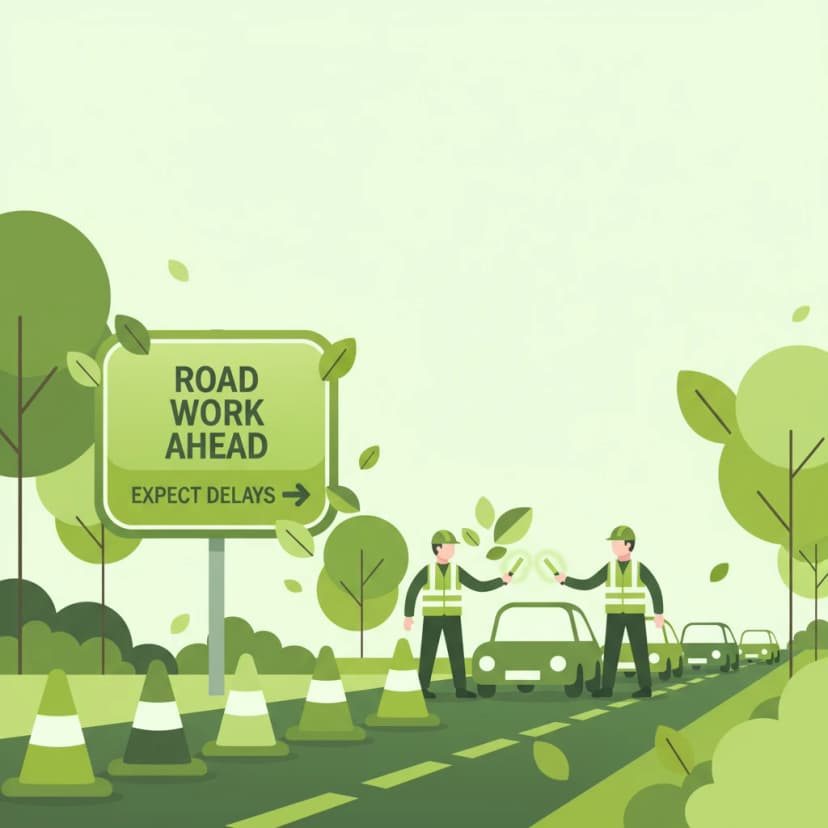
This lesson prepares you for encountering road works, a common feature on any road network. You will learn that signs and markings related to road works are often yellow and that they temporarily override permanent white markings and signs. The curriculum stresses the importance of adhering to temporary speed limits, being alert for workers and machinery, and navigating narrowed lanes. It also covers how to follow diversion routes ('omleiding') and obey instructions given by traffic controllers.

This lesson focuses on Dutch regulatory signs that enforce mandatory rules and restrictions, particularly those impacting A2 motorcyclists. You will learn to recognize and obey prohibition signs, such as those indicating a motorcycle ban (BORD 40), speed limits, and overtaking restrictions (BORD 21). The content explains the legal consequences of non-compliance and how to apply these rules in practical riding scenarios to ensure full adherence to Dutch traffic law.

This lesson focuses on informational signs that guide motorcyclists in navigation, route planning, and locating essential services while on the road. It examines the standardized symbols and color-coding for directions ('richtingsborden'), destinations, distances, and amenities, explaining how these signs support efficient and safe travel. Learners will understand how to use this information for strategic route selection, especially on long journeys or in unfamiliar areas, ensuring a smooth and predictable trip.

This lesson details the purpose and visual design of Dutch warning signs ('gevarendriehoeken') that alert riders to potential hazards ahead. It covers a wide range of scenarios, from road narrowing and dangerous curves to construction zones and the risk of falling rocks, emphasizing the need for early anticipation and speed adaptation. The content also explains how these warning signs integrate with other traffic information to help a rider form an accurate risk assessment and make safer decisions.
Learn to interpret and apply Dutch regulatory signs like 'no overtaking' and 'motorcycles only' in practical driving situations. This lesson uses examples to solidify understanding of their impact on motorcyclist behaviour.
This lesson focuses on Dutch regulatory signs that enforce mandatory rules and restrictions, particularly those impacting A2 motorcyclists. You will learn to recognize and obey prohibition signs, such as those indicating a motorcycle ban (BORD 40), speed limits, and overtaking restrictions (BORD 21). The content explains the legal consequences of non-compliance and how to apply these rules in practical riding scenarios to ensure full adherence to Dutch traffic law.
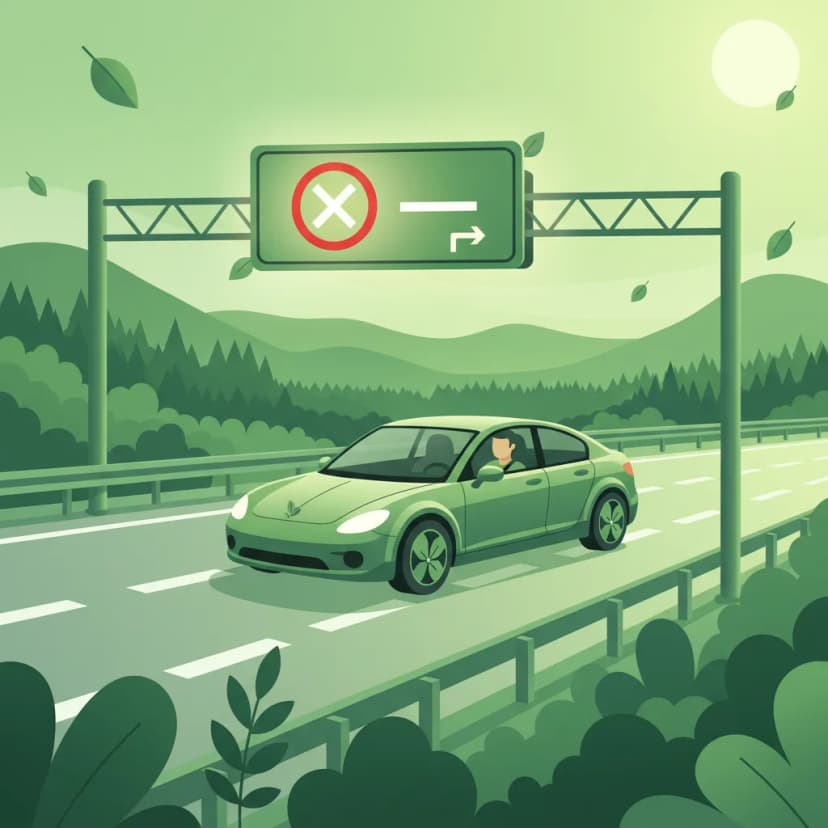
This lesson examines the function and interpretation of variable message signs (VMS) and other digital displays that provide real-time traffic information on Dutch roads. It explains how these systems communicate dynamic speed limits, congestion alerts, lane closures, and diversion routes, and how motorcyclists must legally comply with these instructions. Understanding these 'matrixborden' is critical for adapting to changing road conditions and ensuring safety on motorways and in tunnels.
This lesson focuses on informational signs that guide motorcyclists in navigation, route planning, and locating essential services while on the road. It examines the standardized symbols and color-coding for directions ('richtingsborden'), destinations, distances, and amenities, explaining how these signs support efficient and safe travel. Learners will understand how to use this information for strategic route selection, especially on long journeys or in unfamiliar areas, ensuring a smooth and predictable trip.

This lesson provides essential guidance on recognizing and interpreting traffic signs that may differ from Dutch standards but are commonly encountered when riding across borders within the European Union. It highlights key differences based on the Vienna Convention on Road Signs and Signals, helping riders understand variations in regulatory, warning, and informational signs. This knowledge is crucial for maintaining legal compliance and safety when navigating foreign road systems, ensuring a confident international riding experience.
This lesson explains how to interpret directional and informational signs to navigate the Dutch road network effectively. You will learn to read route signs on highways, understand lane guidance arrows for complex intersections, and identify panels indicating services like fuel stations or rest areas. The content focuses on how motorcyclists can use this information for safe and efficient route planning, including adapting to real-time information from electronic signs.

This lesson explores the legal meaning of various road surface markings, including solid and broken lane delimiters, directional arrows, and special-purpose lane indicators. It describes how markings dictate permitted maneuvers, such as overtaking and lane changes, and alert riders to upcoming hazards or changes in road layout. The content also examines the relationship between markings and road design in the Netherlands, emphasizing how a motorcyclist must interpret these visual cues for safe positioning.
This lesson builds on the understanding of international signage by focusing on the practical recognition of common foreign road signs ('buitenlandse borden'). While many symbols are standardized under the Vienna Convention, this lesson points out subtle but important differences in design and meaning. It helps riders develop the skill of quickly interpreting unfamiliar signage, ensuring they can understand and comply with local traffic regulations when riding abroad.
This lesson details the purpose and visual design of Dutch warning signs ('gevarendriehoeken') that alert riders to potential hazards ahead. It covers a wide range of scenarios, from road narrowing and dangerous curves to construction zones and the risk of falling rocks, emphasizing the need for early anticipation and speed adaptation. The content also explains how these warning signs integrate with other traffic information to help a rider form an accurate risk assessment and make safer decisions.

This lesson explains how to respond to variable speed limits shown on overhead electronic signs, which are used to manage traffic flow in real-time. You will learn why these limits are adjusted for factors like congestion, accidents, or bad weather, and the legal requirement to obey them. The content focuses on the importance of anticipatory riding, scanning far ahead for these signs to allow for smooth and safe speed adjustments.

This lesson covers A-code signs, which are designed to warn drivers of potential hazards on the road ahead. For motorcyclists, warnings about sharp bends, slippery surfaces, crosswinds, or falling rocks are especially critical for maintaining control and stability. The content explains how to interpret these triangular signs to anticipate changing conditions, adjust speed, and adopt a defensive riding posture well in advance of the hazard.
Find clear answers to common questions learners have about Regulatory Signs (verbodsborden, verbods- en verplichtingsborden). Learn how the lesson is structured, which driving theory objectives it supports, and how it fits into the overall learning path of units and curriculum progression in the Netherlands. These explanations help you understand key concepts, lesson flow, and exam focused study goals.
'Verbodsborden' (prohibition signs) tell you what you are NOT allowed to do, such as speed limits or not entering certain roads. 'Verplichtingsborden' (obligation signs) tell you what you MUST do, like riding in a specific lane or turning in a certain direction. Both are critical for safe riding and passing your exam.
Yes, while many regulatory signs apply to all road users, some may have specific implications or exemptions for motorcycles. For example, signs indicating a prohibition for certain vehicle types might implicitly exclude motorcycles, or vice-versa. It's crucial to understand how general rules are applied to your Category A machine.
The CBR exam will present scenarios where you must identify a regulatory sign and choose the correct action or consequence. Questions might ask about speed limits, prohibitions (like no entry or no overtaking), or required actions (like mandatory turns or lane usage) as depicted by these signs.
Ignoring regulatory signs can lead to immediate fines from the police, points on your driving record, or even temporary revocation of your driving privileges. In an exam context, failing to answer correctly about these signs means failing the exam. Always adhere strictly to what these signs instruct.
While the signs themselves follow national standards, their placement and frequency differ. You'll encounter more speed limits, pedestrian zone prohibitions, and lane obligations within urban areas ('binnen de bebouwde kom'). Rural areas ('buiten de bebouwde kom') might have different speed prohibitions or overtaking restrictions on specific road types.