
Your final lesson in the Human Factors unit focuses on the crucial aspects of ethical riding, courtesy, and your impact on the community. Being a responsible rider goes beyond knowing the rules; it involves interacting respectfully with all road users and acting as a positive ambassador for the AM category. This lesson will solidify your understanding of these important social responsibilities, preparing you for the final stages of your theory exam and for confident riding.
Being a licensed Category AM rider in the Netherlands is a privilege that extends beyond merely understanding traffic rules. It encompasses a profound social responsibility to contribute positively to road safety, foster community acceptance, and minimize environmental impact. This lesson delves into the importance of ethical and courteous behavior, transforming you from a mere road user into a positive ambassador for the entire two-wheeling community.
Ethical riding integrates legal obligations with voluntary courteous actions. These actions are crucial for protecting vulnerable road users like pedestrians and cyclists, reducing your environmental footprint, and cultivating public goodwill towards mopeds and scooters. By adopting these principles, you directly enhance safety for everyone and help ensure the sustainable future of two-wheeled urban mobility.
Ethical riding for Category AM license holders in the Netherlands is built upon several core principles. These principles guide your decisions and actions, ensuring you contribute to a safe, respectful, and sustainable traffic environment.
Adhering to the law is the absolute baseline of ethical riding. This involves understanding and complying with all national statutes, regulations, and local municipal ordinances that apply to mopeds and scooters (bromfietsen and snorfietsen). Legal compliance prevents sanctions and establishes a foundational level of safety for all road users.
The Dutch Traffic Regulations and Traffic Signs Act (Reglement Verkeersregels en Verkeerstekens 1990, or RVV 1990) contains many articles directly relevant to Category AM riders. These cover fundamental aspects such as right-of-way rules, proper signaling before maneuvers, and strict adherence to speed limits. For example, knowing when to yield or how to signal a turn is not just a rule, but a safety mechanism.
Beyond general traffic laws, specific regulations govern the environmental impact of your moped or scooter. The Besluit Geluid en Geluidshinder (Noise and Noise Nuisance Decree) sets maximum permissible noise levels, while other environmental decrees (such as Besluit Emissie) mandate compliance with emission standards (like Euro-2 or Euro-3). These regulations aim to limit disturbance to residents and reduce air pollution, aligning with broader Dutch sustainability goals.
Local authorities, through municipal ordinances (gemeentelijke verordeningen), can impose additional rules specific to their areas. These might include stricter speed caps in residential zones, specific parking restrictions, or unique rules for "fietsstraten" (bicycle streets) where mopeds may have limited access or lower speed expectations. Always be aware of local signage and regulations, as they can vary significantly between cities.
Courteous behavior extends beyond legal minimums, focusing proactively on the safety and comfort of those most vulnerable in traffic. Pedestrians and cyclists, lacking the protection of a vehicle chassis, are at significantly higher risk in a collision. Your actions can make a substantial difference in preventing accidents and fostering a positive shared road environment.
A critical aspect of courtesy is yielding to pedestrians at zebra crossings (zebrapad), even if traffic signals appear green for vehicles. Pedestrians have absolute right-of-way in these designated areas. Similarly, being patient and allowing groups of cyclists (pelotons) to pass safely demonstrates respect and reduces potential conflict.
When overtaking cyclists or pedestrians, it is essential to provide ample lateral clearance. A minimum distance of 1.5 meters from a cyclist is generally recommended to account for sudden movements or instability, ensuring their safety and comfort. This space is not just a guideline; it's a vital safety buffer.
Early and clear signaling—using hand signals or indicators—provides advance warning of your intentions, preventing surprises for other road users. The horn (claxon) should be used judiciously, only to avert an immediate danger, not to express frustration or impatience. Unnecessary horn use is both illegal and inconsiderate.
Category AM vehicles, while efficient, contribute to urban noise and air pollution. Ethical riders take deliberate steps to minimize these impacts, contributing to a better quality of life for communities and aligning with Dutch environmental values.
Beyond legal noise limits, ethical riders strive to reduce their moped's sound. This involves ensuring your engine is well-maintained, using compliant mufflers, and avoiding rapid acceleration or "revving" the engine, especially in quiet residential areas, near schools, or early in the morning. Excessive noise is a leading cause of complaints against moped riders.
Maintaining your vehicle to meet Euro-2 or Euro-3 emission standards is crucial for cleaner air. Regular exhaust checks and proper engine tuning help reduce harmful pollutants like carbon monoxide (CO), hydrocarbons (HC), and nitrogen oxides (NOx). Additionally, adopting a smooth riding style with gentle acceleration and anticipating traffic flow can significantly improve fuel efficiency and further reduce emissions. Turning off your engine when stopped for more than 30 seconds, instead of idling, also contributes to cleaner air.
Every time you ride your moped or scooter, you represent the entire two-wheeling community. Your actions, positive or negative, influence public perception and can either encourage broader acceptance or lead to stricter regulations.
As an ambassador, you can contribute to public safety by sharing tips with new riders, participating in local traffic safety campaigns, or simply by consistently demonstrating proper helmet use and signaling. Your responsible behavior sets an example.
This includes avoiding parking on sidewalks or in pedestrian zones (voetgangersgebieden) unless explicitly permitted by signage. Thoughtful parking ensures clear pathways for pedestrians and prevents obstruction. Reporting road hazards like potholes or broken traffic signs to authorities also shows a commitment to the safety of all road users.
Ethical riding demands constant vigilance and the ability to adapt your behavior to ever-changing traffic, road, and environmental conditions. This continuous assessment, known as situational awareness, allows for timely and context-appropriate actions.
Continuously evaluate factors such as speed, visibility, traffic density, and the presence of vulnerable users. This proactive risk assessment helps you identify potential hazards before they escalate into dangerous situations.
Based on your risk assessment, you must be prepared to adjust your speed, choose a different lane position, or alter your overtaking plan. For example, reducing speed in a dense crowd near a tram stop or yielding to a cyclist signaling a turn requires dynamic decision-making.
Weather conditions significantly impact riding safety and courtesy. Under rain, fog, or at night, adjust your speed, activate appropriate lighting, and increase following distances. Failure to adapt to these changes can lead to dangerous situations and reflects a lack of duty of care.
Understanding the specific legal framework is paramount for ethical and responsible Category AM riding in the Netherlands. Here's a summary of key regulations that underpin courteous behavior.
| Regulation | Rule Statement | Applicability | Legal Status | Rationale | Correct Example | Incorrect Example |
|---|---|---|---|---|---|---|
| RVV 1990 art. 7 (Speed limits for AM) | Mopeds (snorfietsen) must not exceed 45 km/h; speed pedelecs are also limited to 45 km/h (or 25 km/h if designated as "snorfiets"). | All public roads, unless a lower limit is posted. | Mandatory | Prevents excessive kinetic energy, reduces stopping distance, matches vehicle design. | Riding a snorfiets at 40 km/h on a residential road. | Riding at 55 km/h on a main road where a 50 km/h limit applies. |
| RVV 1990 art. 12 (Pedestrian priority) | Drivers must yield to pedestrians on zebra crossings (zebrapad), even if traffic signals are green for vehicles. | When a pedestrian is on the crossing or about to step onto it. | Mandatory | Pedestrians are highly vulnerable; gives them right-of-way and requires driver vigilance. | Stopping before a zebra crossing as a pedestrian approaches. | Continuing through a zebra crossing while a pedestrian steps onto it. |
| RVV 1990 art. 24 & 30 (Overtaking & Signaling) | When overtaking a cyclist or pedestrian, the rider must indicate the maneuver at least 3 seconds before passing. A minimum lateral clearance of 1.5 meters is required when overtaking cyclists (or 1 meter if a solid line separates lanes). | Overtaking on any road type, unless prohibited. | Mandatory | Provides advance warning and a safety buffer, reducing surprise and collision risk. | Signaling left and creating ample space before passing a cyclist. | Overtaking a cyclist without signaling, with only 0.5 m clearance. |
| Besluit Geluid en Geluidshinder (Noise limits) | Mopeds may not emit sound pressure levels exceeding a specified decibel limit (e.g., 70 dB(A)) measured at 7 meters from the vehicle. | All public roads, especially in residential zones and near schools. | Mandatory | Limits disturbance to residents, promotes public health and aligns with quality-of-life standards. | Riding a well-maintained scooter with a compliant exhaust system. | Riding a modified exhaust that produces 78 dB(A). |
| Besluit Emissie (Euro emission standards) | Moped engines must meet at least specific Euro emission standards (e.g., Euro-2 or newer) for pollutants like CO, HC, NOx. | All newly registered mopeds; existing vehicles must pass periodic technical inspections. | Mandatory | Reduces air pollutants, supports national and international climate goals. | Owning a scooter that passes its yearly emission check without issues. | Using a non-compliant engine conversion kit that increases emissions. |
| RVV 1990 art. 5 (Duty of care) | The driver must drive with reasonable care, taking into account road conditions, visibility, and vehicle state. | All driving situations. | Mandatory | General safety principle; forces proactive risk assessment and adaptive driving. | Reducing speed and increasing following distance during heavy rain. | Riding at normal speed during heavy rain without adjusting behavior. |
| RVV 1990 art. 26 (Use of horns) | The horn (claxon) may only be used to avoid an imminent danger; continuous or unnecessary use is prohibited. | All traffic situations. | Mandatory | Prevents noise pollution and unnecessary alarm to other road users. | Briefly honking to warn a pedestrian who is about to step onto the road unexpectedly. | Honking repeatedly to express frustration in traffic congestion. |
| RVV 1990 art. 33 (Lighting) | Rear lights (red) must be illuminated from sunset to sunrise and during reduced visibility; a headlamp (white/yellow) must be used at night. | Nighttime (sunset to sunrise) and any condition where visibility is < 200 meters. | Mandatory | Ensures visibility to other road users, significantly reduces collision risk in low light. | Activating both front and rear lights before entering a tunnel during the day. | Riding at night without the rear red light activated. |
Municipal ordinances can introduce local variations to parking rules, speed limits in specific zones (e.g., "fietsstraten"), or noise restrictions. Always pay attention to local signage.
Even experienced riders can sometimes inadvertently violate ethical riding principles. Understanding common pitfalls can help you avoid them.
Ethical and courteous riding is dynamic, requiring constant adaptation to prevailing circumstances. Your ability to adjust ensures safety and respect for all road users, regardless of the environment.
The collective effect of ethical and courteous riding is far-reaching, creating a positive ripple effect throughout the community and traffic system.
Let's explore some practical situations where ethical riding principles come into play.
The concepts discussed in this lesson are not merely additional rules; they are the bedrock of responsible road use and community living.
This comprehensive understanding of ethical riding, courtesy, and community impact is crucial for all Category AM license holders in the Netherlands. It builds upon foundational knowledge from earlier units, such as right-of-way rules, vehicle control, and human factors, preparing you to be a truly responsible and respected member of the Dutch road community.
Lesson content overview
Explore all units and lessons included in this driving theory course.
Explore search topics learners often look for when studying Ethical Riding, Courtesy, and Community Impact. These topics reflect common questions about road rules, driving situations, safety guidance, and lesson level theory preparation for learners in the Netherlands.
Browse additional driving theory lessons that cover connected traffic rules, road signs, and common driving situations related to this topic. Improve your understanding of how different rules interact across everyday traffic scenarios.
Explore the ethical responsibilities of Category AM riders in the Netherlands. Learn about legal foundations, courtesy towards pedestrians and cyclists, noise and emission regulations, and how to be a positive community ambassador.

This lesson addresses the moral and societal dimensions of motorcycling beyond strict legal compliance, encouraging riders to adopt principles of respect, solidarity, and social responsibility. It outlines how ethical considerations should influence day-to-day riding decisions, from showing courtesy to vulnerable road users to minimizing environmental and noise impact. The content provides a framework for reflective and conscientious riding that contributes positively to the broader traffic culture and public perception of motorcyclists.
As a motorized road user, you have a special responsibility towards more vulnerable participants. This lesson focuses on the rules giving priority to pedestrians at marked zebra crossings and the importance of anticipating the movements of cyclists, children, and the elderly. You will learn about maintaining a safe lateral distance when overtaking cyclists and how to navigate shared spaces with heightened awareness, a key component of social and safe driving behavior.

This lesson provides an in-depth exploration of Article 5 of the Dutch Road Traffic Act, which establishes the general 'duty of care' ('zorgplicht'). It explains that every road user has a fundamental obligation to behave in a way that does not cause danger or hindrance to others. The curriculum clarifies how this broad principle is applied in determining legal liability after an accident, especially in incidents involving vulnerable road users, reinforcing the rider's constant accountability.
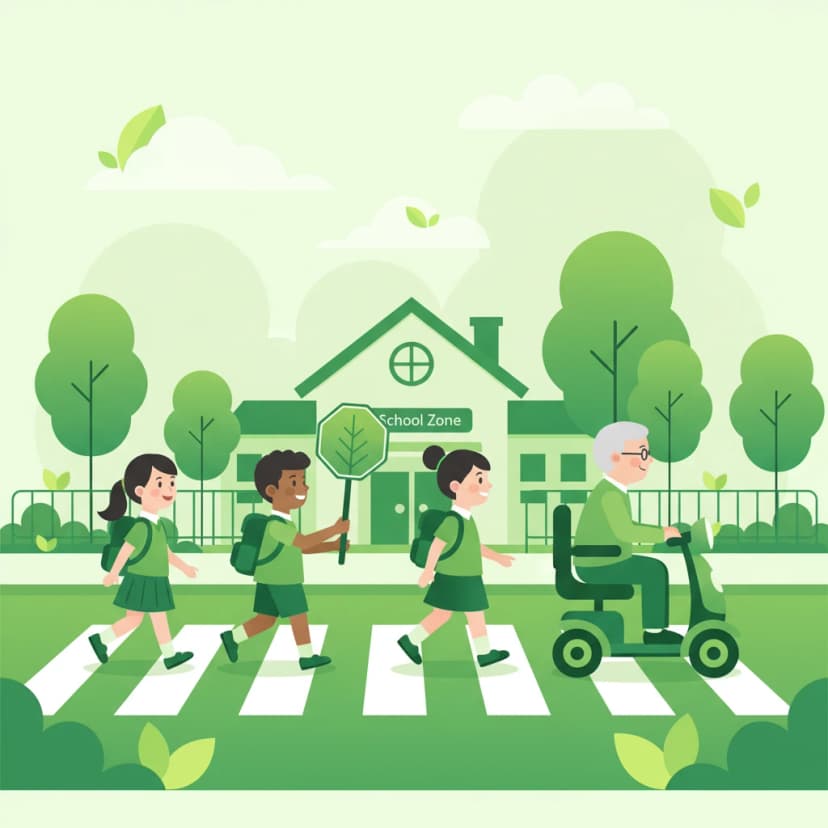
This lesson focuses on the legal and moral responsibility to be extra vigilant around certain groups of vulnerable road users. You will learn that children can be impulsive and have poor traffic awareness, requiring drivers to be prepared to stop suddenly, especially near schools and playgrounds. The content also discusses the need for patience with elderly or disabled road users, who may move more slowly. You will learn to recognize signs of disability, like a white cane or a guide dog, and give these individuals extra space and time.
This lesson examines the statutory duties imposed on motorcyclists, with a strong emphasis on the 'duty of care' (zorgplicht) and the conditions under which legal liability arises after a traffic incident. It clarifies the relationship between personal responsibility, mandatory insurance coverage, and the legal expectation for proactive risk mitigation to prevent accidents. The content also analyzes scenarios to illustrate how liability is typically determined within Dutch traffic jurisprudence, preparing riders for their legal responsibilities.
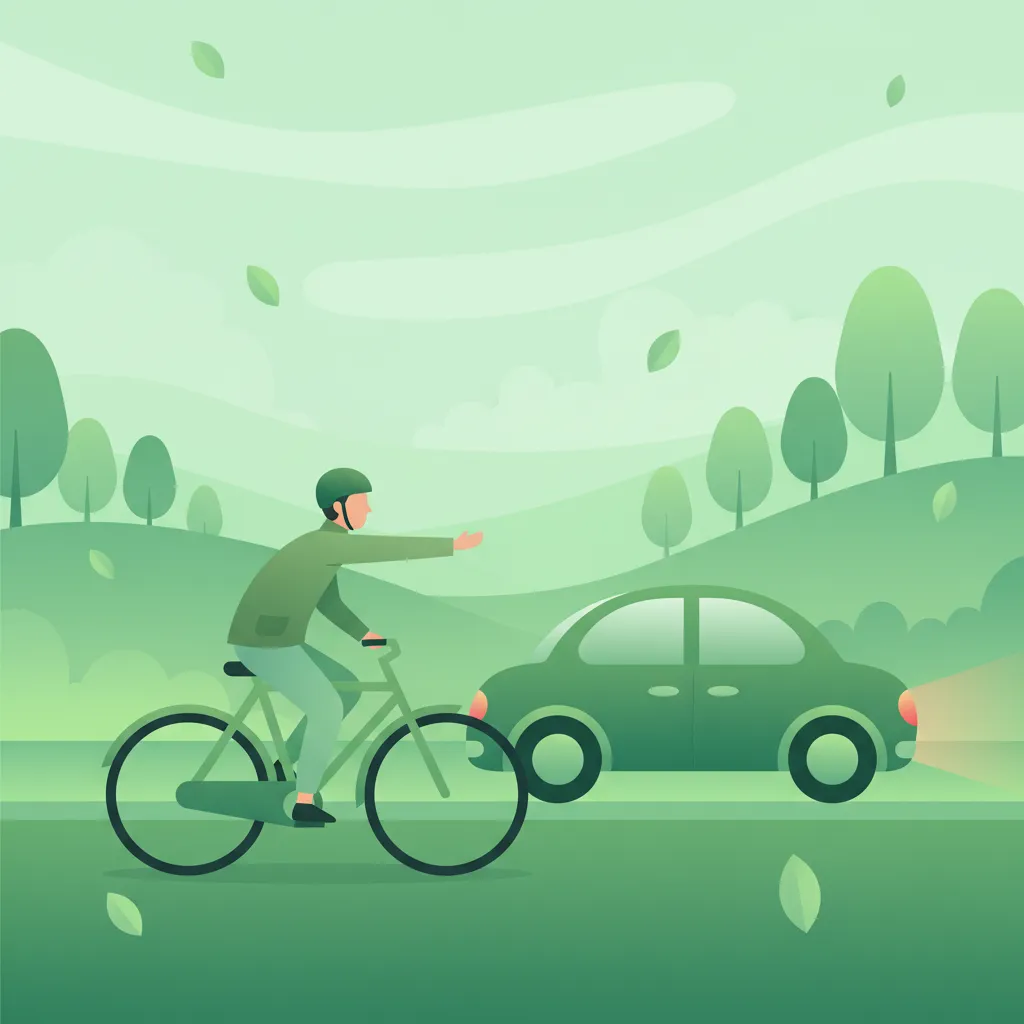
This lesson provides a detailed framework for how motorcyclists must safely and legally interact with diverse road users, including cars, trucks, cyclists, and pedestrians. It covers the required communication signals, anticipatory behaviors, and specific positioning techniques necessary to coexist in complex traffic environments like urban centers and shared spaces. Emphasis is placed on legal expectations and practical methods that actively reduce collision risk and promote smooth traffic flow.
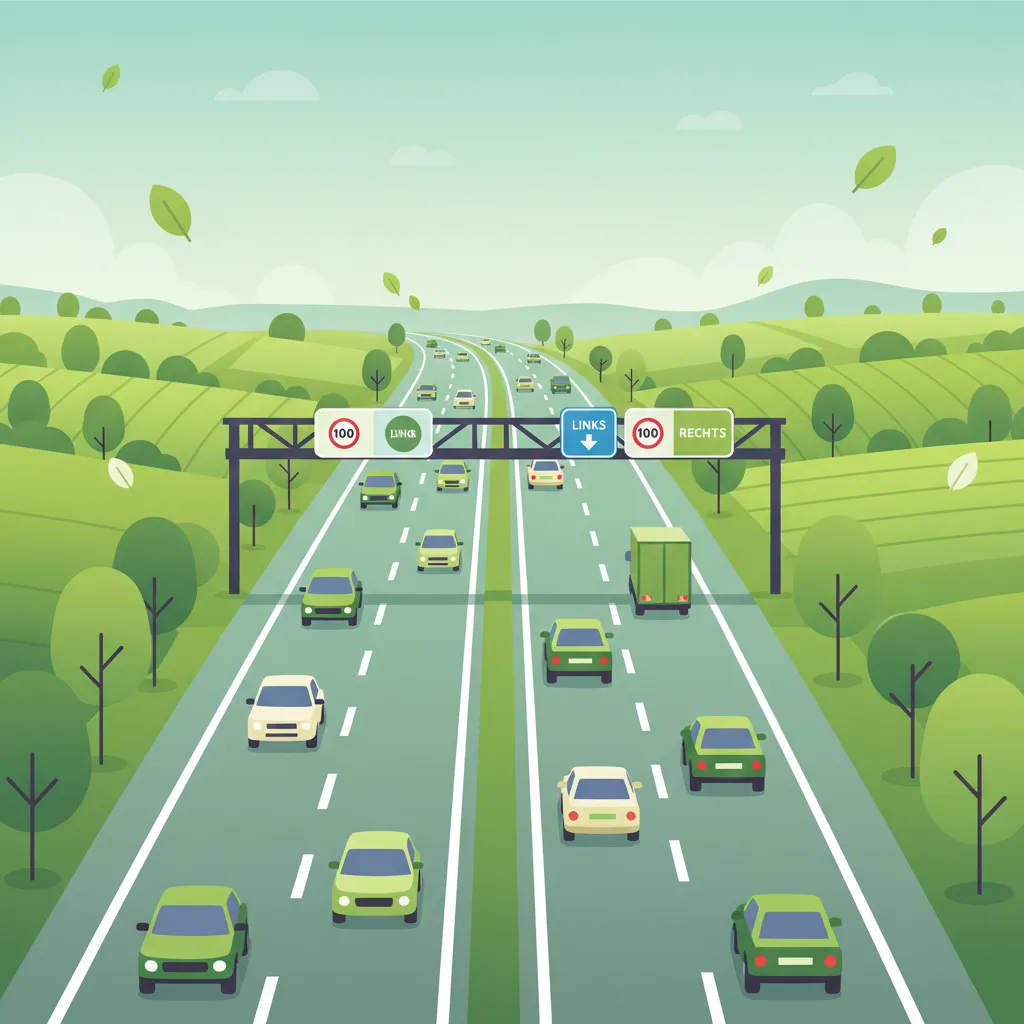
This lesson covers the specific articles of the Dutch Road Traffic Act that apply to motorways, with a primary focus on the strict rule of keeping to the rightmost available lane unless overtaking. It explains the legal and safety reasons for only passing on the left and discusses the correct positioning within a lane for maximum visibility and safety. The content also addresses the nuances of lane usage during heavy congestion, ensuring riders comply with the law and contribute to smooth traffic flow.
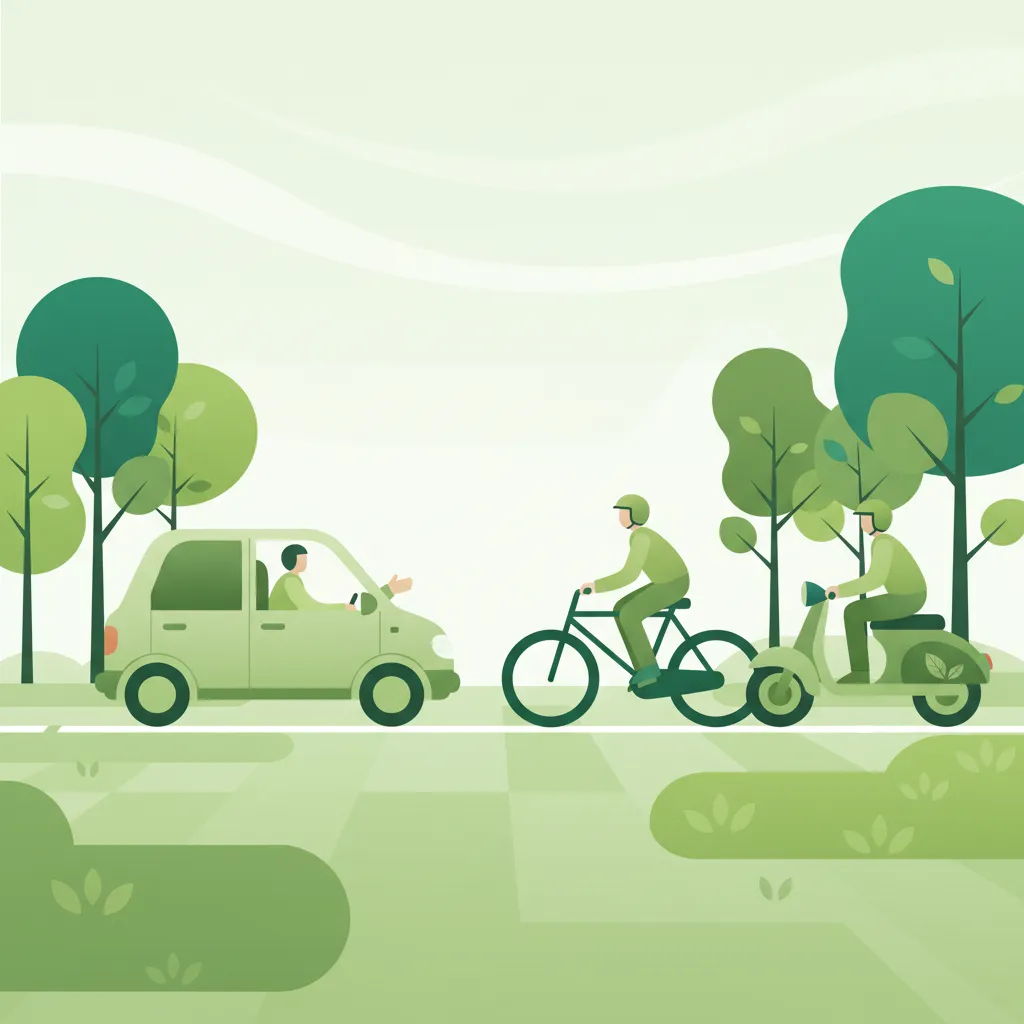
This lesson is critical for driving in the Netherlands, a country with more bicycles than people. You will learn about the different types of cycle paths and how priority rules apply, especially at junctions. The content stresses the importance of checking the blind spot for cyclists before turning right ('dode hoek'). It also covers the rules for different types of mopeds (snorfiets and bromfiets) and the importance of giving all two-wheeled road users ample space when overtaking.
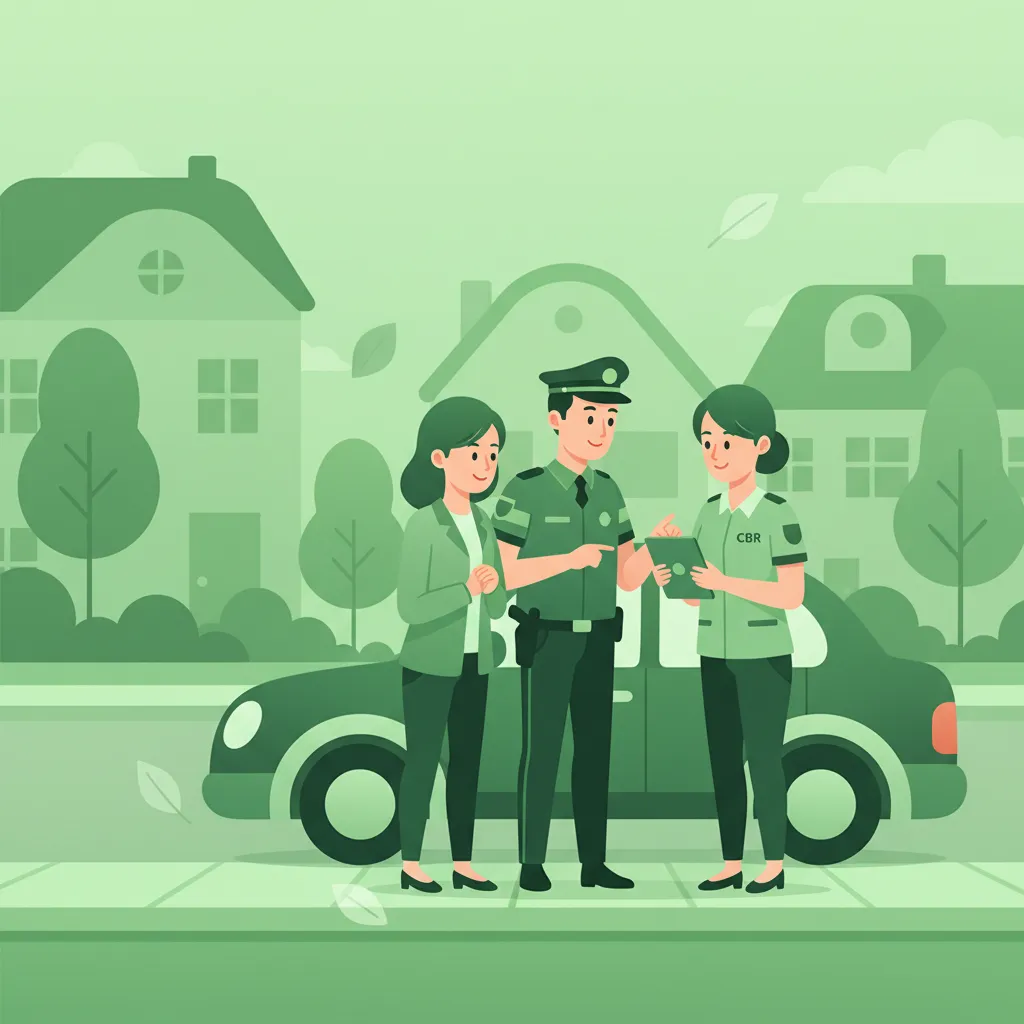
This lesson prepares you for a routine traffic stop by law enforcement. It outlines your legal obligation to stop when signaled to do so and to provide your driving license, vehicle registration certificate, and proof of insurance upon request. The lesson covers expected procedures, such as breathalyzer tests, and advises on maintaining a respectful and cooperative attitude. Understanding the process ensures any interaction with police is handled correctly and without unnecessary complications.

Holding a license and owning a vehicle comes with continuous legal responsibilities. This lesson reminds you of the importance of renewing your driving license before it expires and ensuring your vehicle's insurance policy remains active. It also covers your duty to inform the relevant authorities (like the RDW) of any changes, such as a change of address. Fulfilling these administrative obligations is essential to remaining a legal and responsible road user in the Netherlands.
Master safe and courteous interactions with pedestrians and cyclists in the Netherlands. This lesson covers yielding, safe overtaking distances, and responsible behavior, crucial for Category AM riders.
This lesson is critical for driving in the Netherlands, a country with more bicycles than people. You will learn about the different types of cycle paths and how priority rules apply, especially at junctions. The content stresses the importance of checking the blind spot for cyclists before turning right ('dode hoek'). It also covers the rules for different types of mopeds (snorfiets and bromfiets) and the importance of giving all two-wheeled road users ample space when overtaking.
This lesson provides a detailed framework for how motorcyclists must safely and legally interact with diverse road users, including cars, trucks, cyclists, and pedestrians. It covers the required communication signals, anticipatory behaviors, and specific positioning techniques necessary to coexist in complex traffic environments like urban centers and shared spaces. Emphasis is placed on legal expectations and practical methods that actively reduce collision risk and promote smooth traffic flow.
As a motorized road user, you have a special responsibility towards more vulnerable participants. This lesson focuses on the rules giving priority to pedestrians at marked zebra crossings and the importance of anticipating the movements of cyclists, children, and the elderly. You will learn about maintaining a safe lateral distance when overtaking cyclists and how to navigate shared spaces with heightened awareness, a key component of social and safe driving behavior.
This lesson focuses on the legal and moral responsibility to be extra vigilant around certain groups of vulnerable road users. You will learn that children can be impulsive and have poor traffic awareness, requiring drivers to be prepared to stop suddenly, especially near schools and playgrounds. The content also discusses the need for patience with elderly or disabled road users, who may move more slowly. You will learn to recognize signs of disability, like a white cane or a guide dog, and give these individuals extra space and time.
This lesson addresses interactions with other types of road users. You will learn about motorcyclists, who can accelerate and brake quickly and may filter through slow traffic. The curriculum explains how to anticipate their movements and check for them carefully at junctions. It also covers how to safely approach and overtake slow-moving vehicles, such as agricultural tractors, and how to behave around horse riders, which requires slowing down and giving a very wide berth.
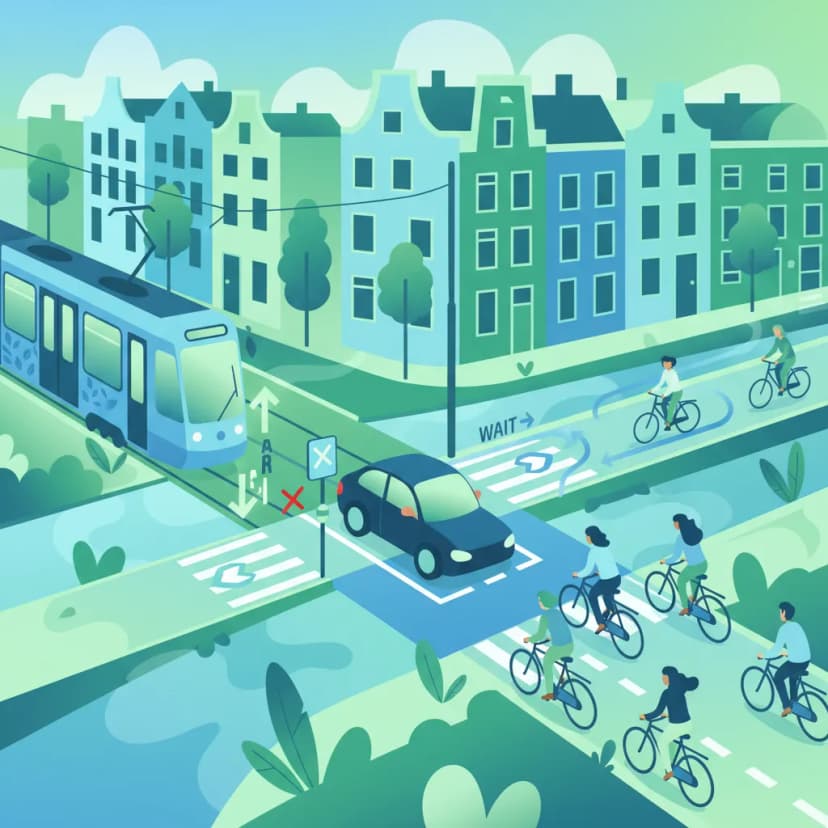
This lesson breaks down the rules of priority at intersections. You will learn to identify an 'equal' intersection where the default rule of giving way to traffic from the right applies. It also explains how priority is regulated by signs (such as the B6 Stop sign and B7 priority road sign) and road markings ('shark's teeth'). Understanding these hierarchies is crucial for making safe and correct decisions when crossing or turning at any junction.

Overtaking is a high-risk maneuver that must be executed correctly. This lesson provides a step-by-step guide: assess if it is safe and legal, check mirrors and blind spots, signal your intention, accelerate smoothly past the other vehicle, and return to your lane leaving adequate space. You will also learn to identify situations where overtaking is prohibited, such as before a pedestrian crossing or when approaching a blind corner.
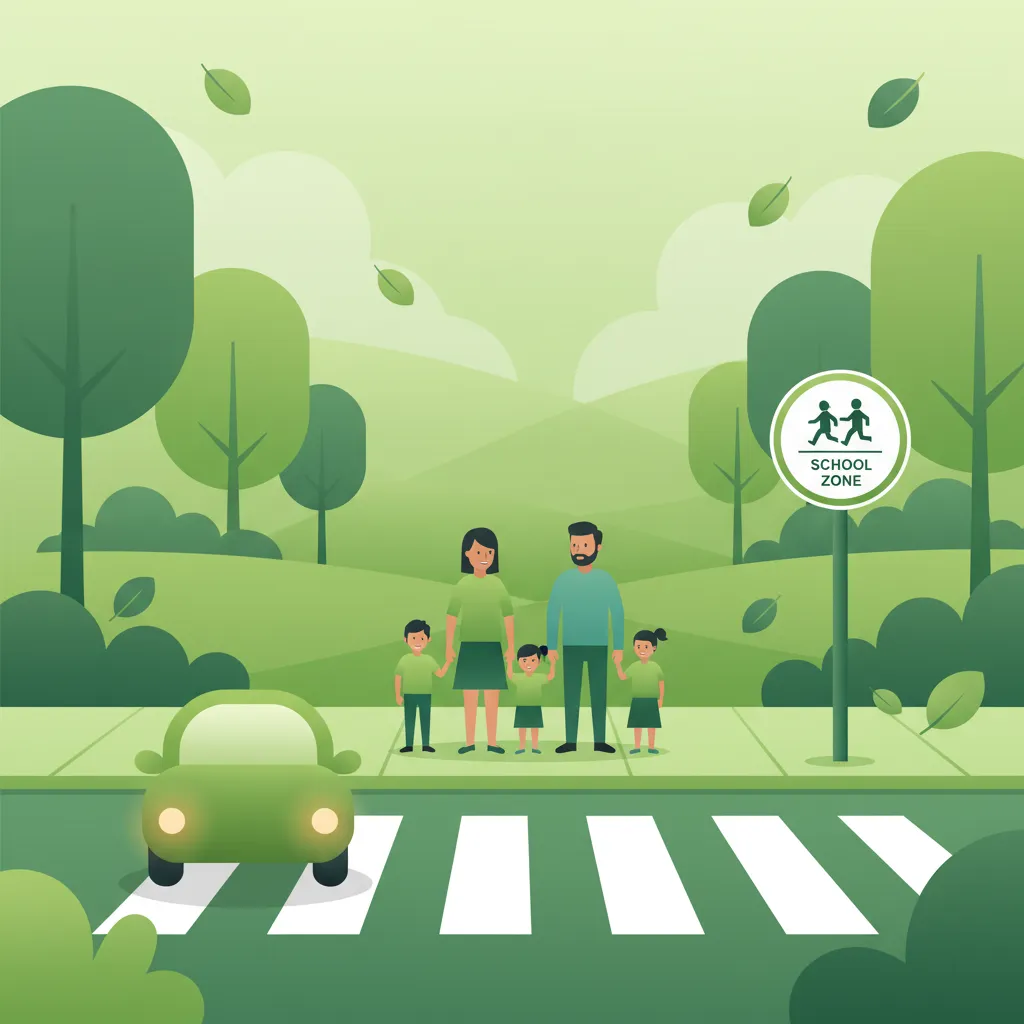
This lesson focuses on the legal requirements and safe practices for riding near pedestrian crossings ('zebrapaden') and designated school zones. It details the absolute obligation to yield to pedestrians on or about to use a crossing and the need for significantly reduced speeds and heightened vigilance in areas with children. The content underscores the importance of anticipation and being prepared for unpredictable movements from vulnerable road users to prevent serious incidents.
This lesson explains the critical rules of priority involving pedestrians and cyclists to ensure the safety of vulnerable road users. You will learn the absolute requirement to stop for pedestrians on or waiting to use a 'zebrapad' (zebra crossing). The content also covers situations where you must yield to cyclists crossing your path, such as when turning across a dedicated bicycle lane (fietspad).
This lesson focuses on the rules governing interactions with pedestrians. You will learn the absolute requirement to stop for pedestrians who are on or clearly intending to cross at a designated zebra crossing. The curriculum also covers how to share the road in a 'woonerf' (home zone) where pedestrians have priority. It emphasizes being particularly cautious around children, the elderly, and disabled pedestrians, who may require more time or behave unpredictably.
Find clear answers to common questions learners have about Ethical Riding, Courtesy, and Community Impact. Learn how the lesson is structured, which driving theory objectives it supports, and how it fits into the overall learning path of units and curriculum progression in the Netherlands. These explanations help you understand key concepts, lesson flow, and exam focused study goals.
Ethical riding refers to adhering to the spirit of the law and showing consideration for others, even beyond strict rules. It includes being patient, not intimidating other road users, and riding in a way that promotes safety and harmony on the road. For the AM exam, this often translates to questions about attitude and how you interact with vulnerable road users.
Excessive or loud noise from a moped or scooter, especially in residential areas or at night, can be a significant nuisance and negatively impact the quality of life for residents. Responsible riders are mindful of their vehicle's noise levels and avoid unnecessary revving or acceleration.
Courtesy is essential because mopeds and scooters share the road with a diverse mix of users, including pedestrians, cyclists, car drivers, and public transport. Showing courtesy, such as yielding appropriately and being patient, helps prevent conflicts, improves traffic flow, and contributes to a safer environment for everyone.
You can represent the two-wheeler community positively by consistently demonstrating safe, ethical, and courteous riding habits. This includes following traffic rules, being predictable, showing respect to others, and maintaining your vehicle properly. Positive representation helps build trust and good relations between motorcyclists, moped riders, and other road users.
Yes, the CBR exam may include questions that assess your understanding of social responsibilities, including courtesy, respect for traffic laws and other users, and the impact of your riding behaviour on the community. This lesson prepares you for such scenarios.