
This lesson is crucial for understanding your responsibilities when stopped by law enforcement or CBR enforcement officers in the Netherlands. It builds on foundational knowledge of traffic laws and vehicle documentation, preparing you for practical encounters that could be tested in your AM category theory exam.
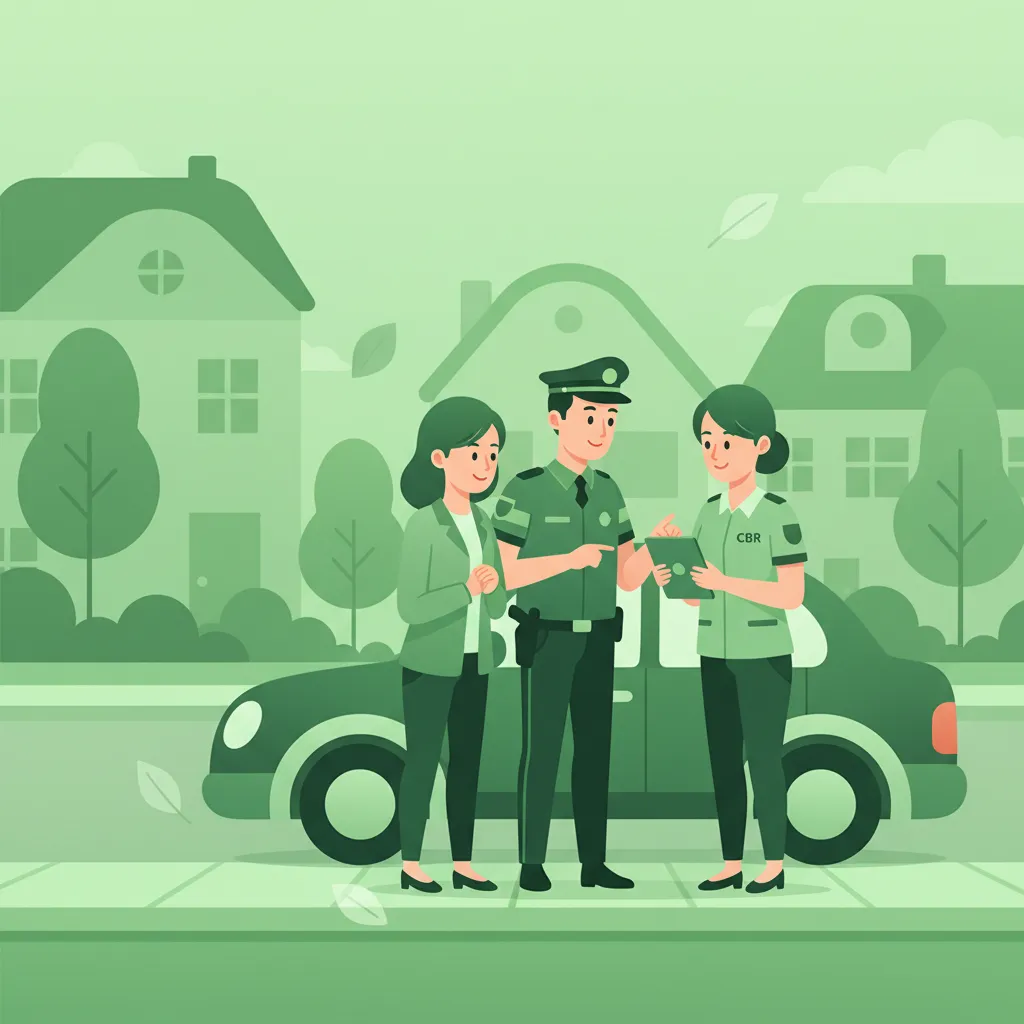
Navigating the roads of the Netherlands as a moped or scooter rider comes with the responsibility of understanding your legal obligations, especially when interacting with law enforcement. This lesson prepares you for potential encounters with Dutch police and CBR (Centraal Bureau Rijvaardigheidsbewijs) enforcement officers, detailing the procedures, your rights, and the correct conduct during a traffic stop. By understanding these guidelines, you ensure that any interaction is handled correctly, preventing unnecessary complications and safeguarding your driving privileges within the Dutch Driving License Theory Course for Category AM.
When a law enforcement officer signals you to stop on Dutch roads, you are legally obligated to comply. This fundamental principle ensures public safety and allows officers to perform their duties effectively. Your cooperation is paramount, not only to comply with the Road Traffic Act (RVV 1990) but also to maintain a respectful and smooth interaction.
The first step in a lawful traffic stop is recognizing the signal to halt. Dutch police officers and authorized CBR enforcement officers use specific visual and auditory cues to indicate that you must stop your Category AM vehicle.
A common visual signal is a hand-held black sign with white lettering spelling "STOP". In addition to this, police vehicles typically activate flashing blue lights, often accompanied by a siren, especially if the lights alone might not be sufficient to draw your attention or if the stop needs to be initiated quickly. It's crucial to understand that any of these signals, whether a hand sign, flashing blue lights, or a siren, constitutes a lawful command to stop. Misinterpreting or ignoring these signals is a traffic violation under Article 7 (1) of the RVV 1990 and can lead to immediate penalties.
Once you have safely stopped, the officer will likely request to see your official documents. As a rider of a Category AM vehicle in the Netherlands, you are legally required to carry and present three specific documents upon request:
These documents must be readily accessible. Article 5 (2) of the RVV 1990 explicitly states your obligation to provide them on demand. Delaying presentation or claiming they are not immediately available can lead to administrative penalties. Always ensure these documents are up-to-date and valid. For instance, an expired insurance card will be considered as driving without valid insurance, carrying significant consequences.
One of the critical components of road safety enforcement is preventing impaired driving. If an officer suspects you are driving under the influence of alcohol or drugs, they have the authority to request you undergo specific tests.
Refusing to cooperate with a lawful request for a breath-alcohol or drug test carries severe penalties. This refusal itself is a separate punishable offence, potentially leading to substantial fines, penalty points on your licence, and even imprisonment, as outlined in Article 73 of the law on traffic offences.
It's a common misunderstanding that you can refuse a breathalyzer if you believe it to be inaccurate, or if you've only consumed a "small amount" of alcohol. Any level above the legal limit is illegal, and refusal is an immediate offence. Always comply with the test; if you believe the result is incorrect, you will have opportunities to contest it later through a blood draw, but refusal at the roadside is never advisable.
While most traffic stops are conducted by police, you might also encounter CBR (Centraal Bureau Rijvaardigheidsbewijs) enforcement officers. Their authority is distinct from that of the police and is specifically focused on driver competence and vehicle compliance related to licensing.
CBR enforcement officers can:
However, it is crucial to understand what CBR officers cannot do:
If a CBR officer signals you to stop, your obligation to comply with document presentation and basic requests is the same. Refusal to cooperate with a CBR inspection can also lead to consequences, potentially escalating to police involvement if necessary.
While you have clear obligations during a traffic stop, you also retain certain rights that protect you from unlawful stops and ensure transparency. Understanding these rights empowers you to interact confidently and correctly.
Transparency is a cornerstone of lawful enforcement. You have the right to know who is stopping you and why.
Politely requesting this information is within your rights and does not constitute obstruction, provided it doesn't disrupt the officer's legitimate duties. However, if an officer refuses to provide this information, you should make a mental note of the time, location, and any visible identifiers (e.g., vehicle number) and report the incident later if you believe the stop was unlawful or handled improperly.
Beyond providing your identification and required documents, your rights as a citizen are protected during a traffic stop.
Maintaining a calm and respectful demeanor during any interaction with law enforcement can significantly improve the outcome. Always be polite, follow instructions, but be aware of your rights.
Failing to comply with lawful commands from police or CBR officers can lead to significant legal consequences, ranging from fines and penalty points to licence suspension or even imprisonment. Understanding these repercussions can help you make informed decisions during a stop.
Non-compliance with the initial commands of a traffic stop often leads to immediate and escalating penalties.
rijbewijs, kentekenbewijs, and verzekeringsbewijs upon request. Refusal to do so or presenting invalid/expired documents can lead to immediate administrative penalties, fines, and potentially even the impoundment of your vehicle until valid documents are produced.Refusing to comply with a breath-alcohol or drug test is considered a serious offence in the Netherlands, carrying some of the harshest penalties during a routine stop.
These penalties are designed to deter unsafe driving practices and ensure that all road users comply with public safety regulations. Knowing these consequences underscores the importance of cooperation and compliance during any interaction with law enforcement.
While adherence to rules and awareness of rights are crucial, practical considerations regarding road conditions, vehicle state, and other road users can further ensure a safe and smooth interaction with officers.
The manner in which you pull over can impact both your safety and that of the officer and other road users.
Even with the best intentions, certain situations can lead to misunderstandings or complications. Being prepared can help.
Understanding how to interact with police and CBR enforcement officers is a critical part of your overall legal responsibilities as a Category AM rider. This lesson builds upon foundational knowledge from other parts of the Dutch Driving License Theory Course for Category AM. For instance, a solid grasp of the Dutch Road Traffic Act (RVV 1990) and specific traffic signs, particularly those indicating police presence or instruction, is essential. Future lessons on accident reporting and liability will further elaborate on how your actions during a stop can influence subsequent legal or insurance processes.
Lesson content overview
Explore all units and lessons included in this driving theory course.
Explore search topics learners often look for when studying Interaction with Police and CBR Enforcement Officers. These topics reflect common questions about road rules, driving situations, safety guidance, and lesson level theory preparation for learners in the Netherlands.
Browse additional driving theory lessons that cover connected traffic rules, road signs, and common driving situations related to this topic. Improve your understanding of how different rules interact across everyday traffic scenarios.
Learn the correct procedures and your legal rights when interacting with police or CBR enforcement officers in the Netherlands. This lesson clarifies what documents to present, how to handle tests, and your responsibilities during traffic stops for Category AM drivers.
This lesson details the procedures of a typical traffic stop ('verkeerscontrole') from a rider's perspective. It outlines the authority of police officers to check documents, inspect the vehicle, and administer sobriety tests, while also explaining the basic rights of the rider during such an interaction. The goal is to demystify the process and encourage a calm, cooperative, and respectful demeanor, which facilitates a more positive and efficient roadside encounter for both parties.
This lesson serves as a critical reinforcement of the legal requirement to carry specific documents ('verkeersdocumenten') while riding. It explicitly lists the mandatory items—driving license, vehicle registration, and proof of insurance—and explains the legal consequences of failing to produce them on demand during a police stop. The content stresses that having these documents readily accessible is a basic and non-negotiable aspect of legal motorcycling in the Netherlands.
This lesson prepares riders for the possibility of a routine police check ('verkeerscontrole'). It explains what officers typically inspect, which includes the required documentation, the roadworthiness of the motorcycle (e.g., tire tread depth, exhaust legality), and the rider's sobriety. The curriculum provides guidance on how to interact calmly and cooperatively with law enforcement, ensuring the stop proceeds smoothly and efficiently while being aware of one's basic rights.
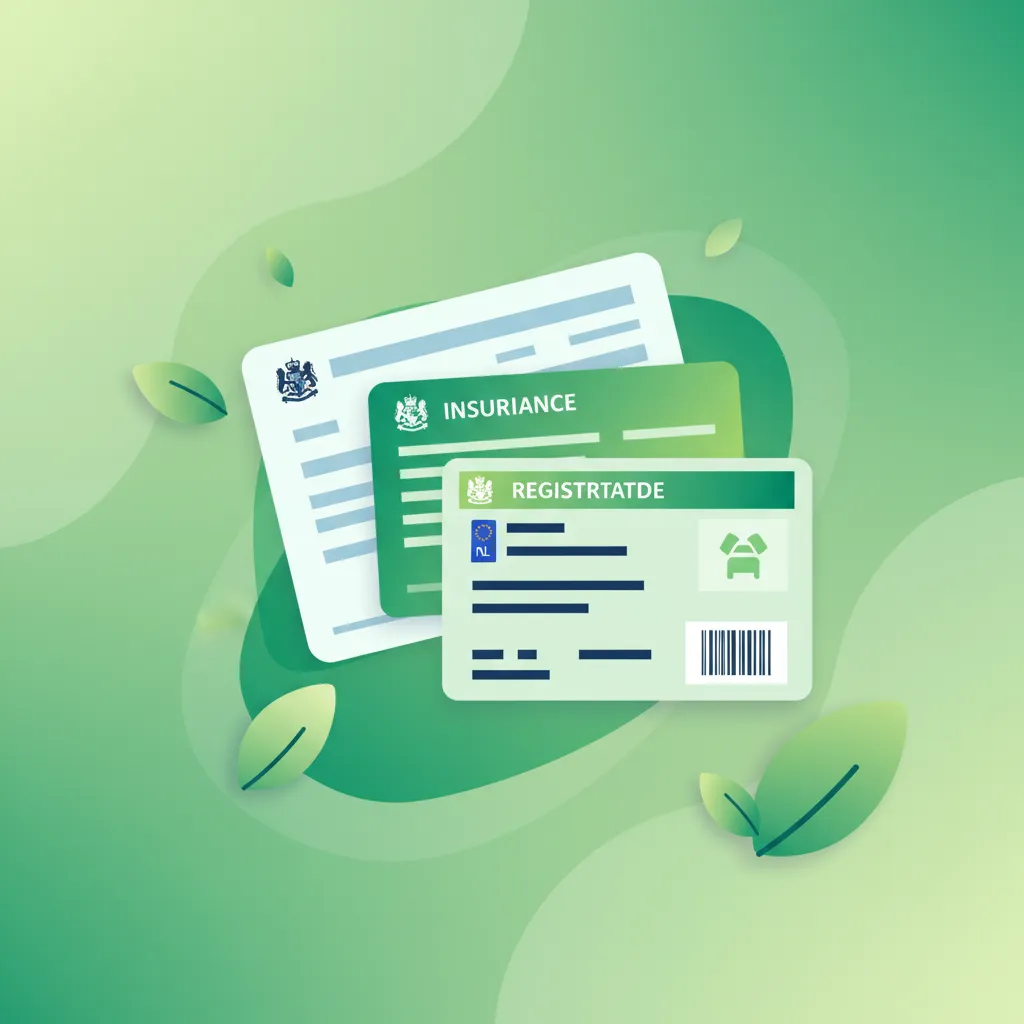
This lesson provides a definitive list of the documents a motorcyclist must carry at all times when riding in the Netherlands. It specifies the requirement for a valid driving license ('rijbewijs') for the correct category, the vehicle registration card ('kentekenbewijs'), and proof of valid third-party liability insurance ('verzekeringsbewijs'). The content clarifies that failure to produce these documents during a police check can result in significant fines and legal complications.
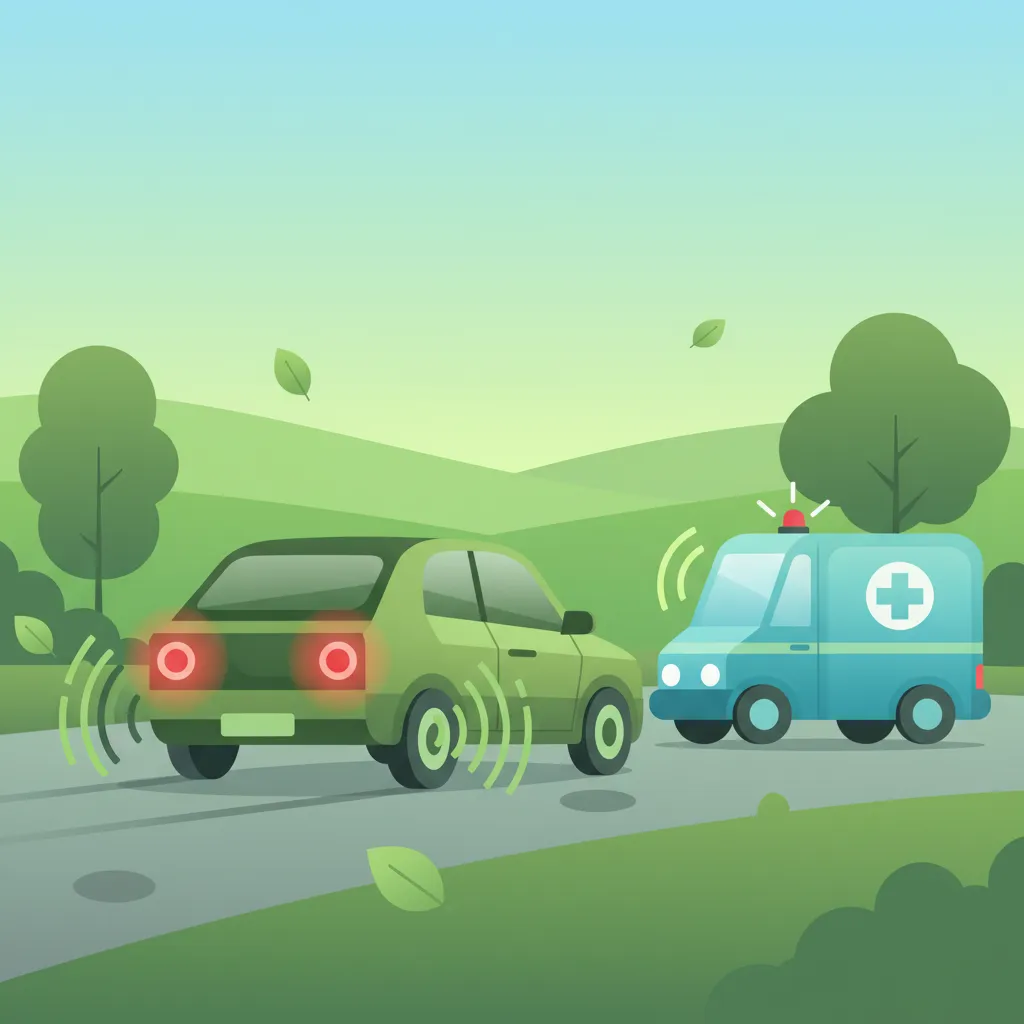
When an emergency vehicle approaches with sirens and blue flashing lights, you are legally required to give way. This lesson explains the correct procedure: check your surroundings, signal your intention, and move to the side of the road as safely and quickly as possible to create a clear path. It also covers the procedure for making an emergency stop due to a vehicle breakdown, including the use of hazard warning lights and positioning your vehicle for maximum safety.
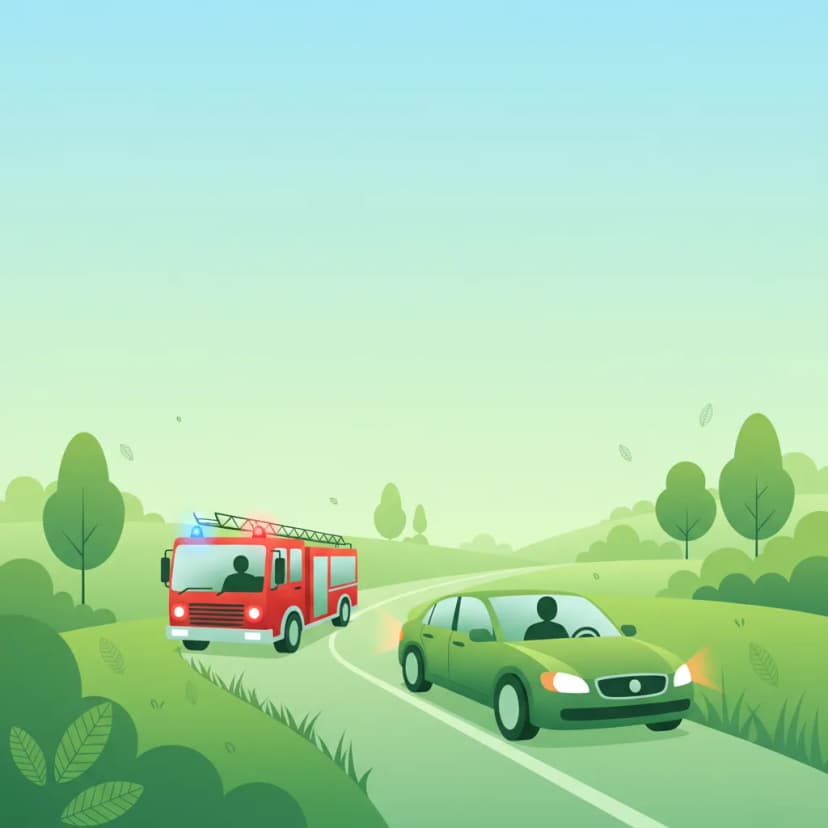
This lesson details the legal obligation and safe procedures for yielding to emergency vehicles ('noodvoertuigen' or 'voorrangsvoertuigen') that are using audible and visual warnings. It provides clear guidance on how to safely create space, whether by pulling over, adjusting speed, or clearing an intersection, without causing a secondary hazard. The content emphasizes maintaining composure and making predictable maneuvers to allow emergency services to pass quickly and safely.

Holding a license and owning a vehicle comes with continuous legal responsibilities. This lesson reminds you of the importance of renewing your driving license before it expires and ensuring your vehicle's insurance policy remains active. It also covers your duty to inform the relevant authorities (like the RDW) of any changes, such as a change of address. Fulfilling these administrative obligations is essential to remaining a legal and responsible road user in the Netherlands.
Explore typical scenarios and best practices for interacting with law enforcement during traffic stops in the Netherlands. Understand potential challenges, document requirements, and the legal ramifications of non-compliance for Category AM riders.
This lesson details the procedures of a typical traffic stop ('verkeerscontrole') from a rider's perspective. It outlines the authority of police officers to check documents, inspect the vehicle, and administer sobriety tests, while also explaining the basic rights of the rider during such an interaction. The goal is to demystify the process and encourage a calm, cooperative, and respectful demeanor, which facilitates a more positive and efficient roadside encounter for both parties.
This lesson prepares riders for the possibility of a routine police check ('verkeerscontrole'). It explains what officers typically inspect, which includes the required documentation, the roadworthiness of the motorcycle (e.g., tire tread depth, exhaust legality), and the rider's sobriety. The curriculum provides guidance on how to interact calmly and cooperatively with law enforcement, ensuring the stop proceeds smoothly and efficiently while being aware of one's basic rights.

This lesson provides a detailed overview of the structure of Dutch traffic legislation, focusing on the Road Traffic Act (Wegenverkeerswet 1994) and its relationship with CBR regulations. It explains the hierarchy from national statutes to local ordinances and how these rules govern rider behavior in various traffic situations. Furthermore, the lesson clarifies the mechanisms for enforcement, the types of sanctions for non-compliance, and the legislative goal of ensuring road safety for all participants.
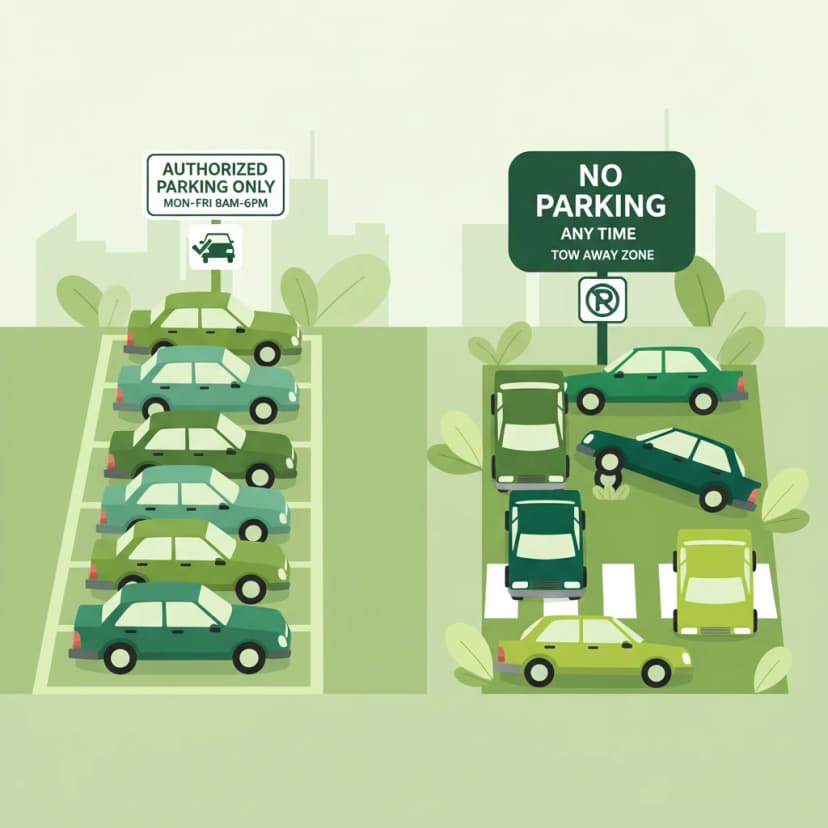
This lesson clarifies the legal distinction between stopping (briefly, while the driver remains with the vehicle) and parking (leaving the vehicle). You will learn to recognize signs and road markings, such as yellow lines, that indicate where stopping or parking is prohibited. The curriculum covers rules for parking in designated zones, such as blue zones requiring a parking disc, and provides a list of locations where parking is always forbidden, for example, on a cycle path or too close to an intersection.
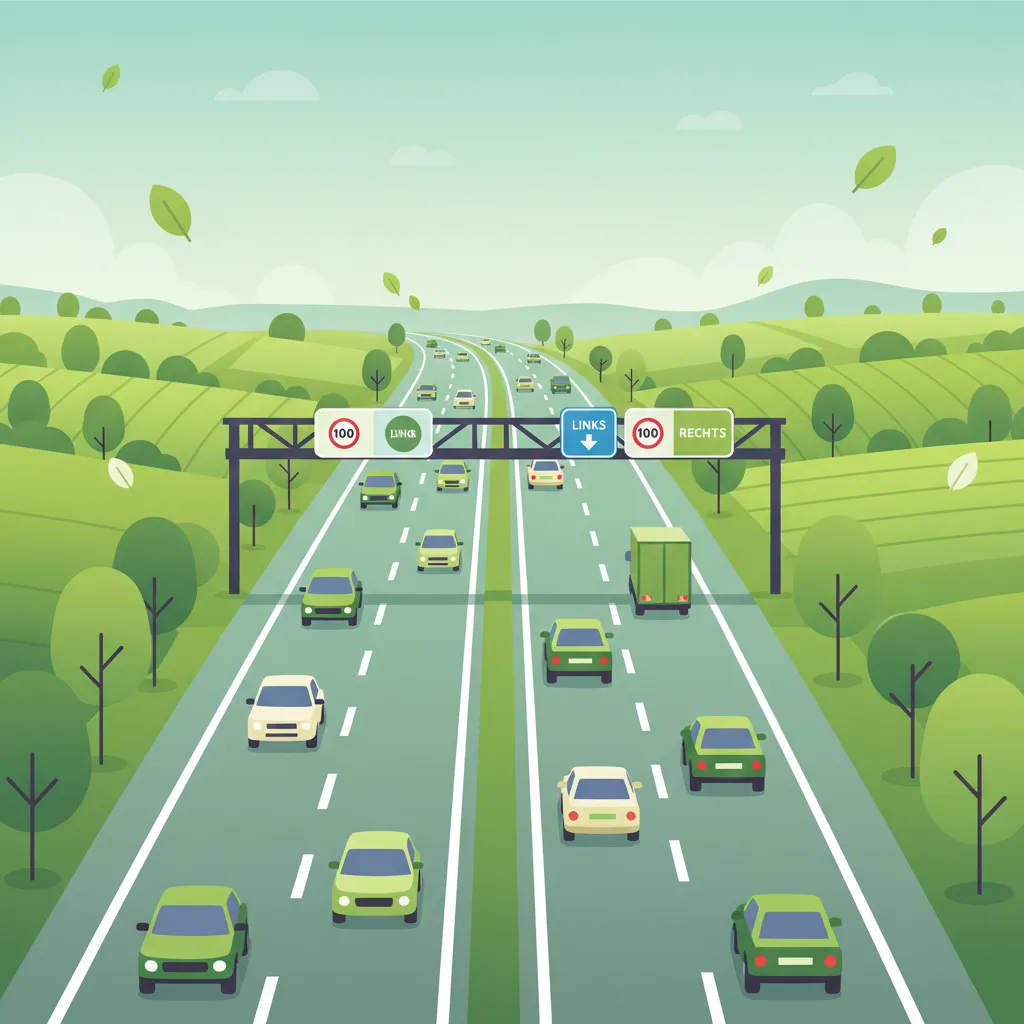
This lesson covers the specific articles of the Dutch Road Traffic Act that apply to motorways, with a primary focus on the strict rule of keeping to the rightmost available lane unless overtaking. It explains the legal and safety reasons for only passing on the left and discusses the correct positioning within a lane for maximum visibility and safety. The content also addresses the nuances of lane usage during heavy congestion, ensuring riders comply with the law and contribute to smooth traffic flow.

Effective communication with other road users is vital for safety. This lesson details the legal requirements and proper use of your vehicle's signaling equipment, including headlights, brake lights, and turn signals (indicators). It also explains the specific situations in which using the horn is permitted to avert danger. Finally, it covers the mandatory placement and type of reflectors that ensure your vehicle remains visible to others, especially in low-light conditions.
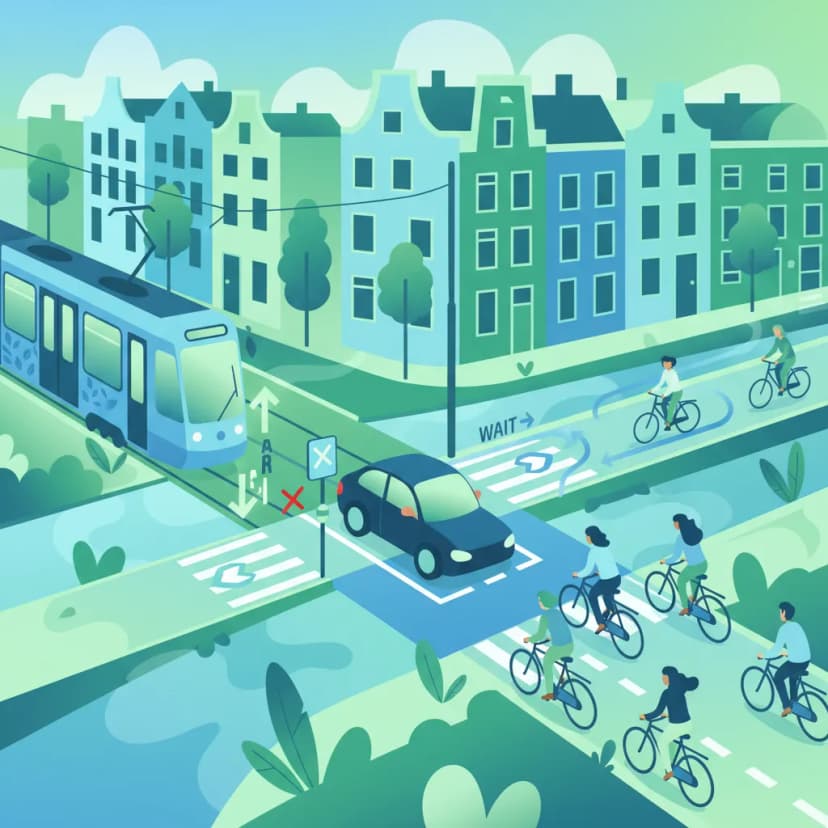
This lesson breaks down the rules of priority at intersections. You will learn to identify an 'equal' intersection where the default rule of giving way to traffic from the right applies. It also explains how priority is regulated by signs (such as the B6 Stop sign and B7 priority road sign) and road markings ('shark's teeth'). Understanding these hierarchies is crucial for making safe and correct decisions when crossing or turning at any junction.
This lesson serves as a critical reinforcement of the legal requirement to carry specific documents ('verkeersdocumenten') while riding. It explicitly lists the mandatory items—driving license, vehicle registration, and proof of insurance—and explains the legal consequences of failing to produce them on demand during a police stop. The content stresses that having these documents readily accessible is a basic and non-negotiable aspect of legal motorcycling in the Netherlands.
When an emergency vehicle approaches with sirens and blue flashing lights, you are legally required to give way. This lesson explains the correct procedure: check your surroundings, signal your intention, and move to the side of the road as safely and quickly as possible to create a clear path. It also covers the procedure for making an emergency stop due to a vehicle breakdown, including the use of hazard warning lights and positioning your vehicle for maximum safety.
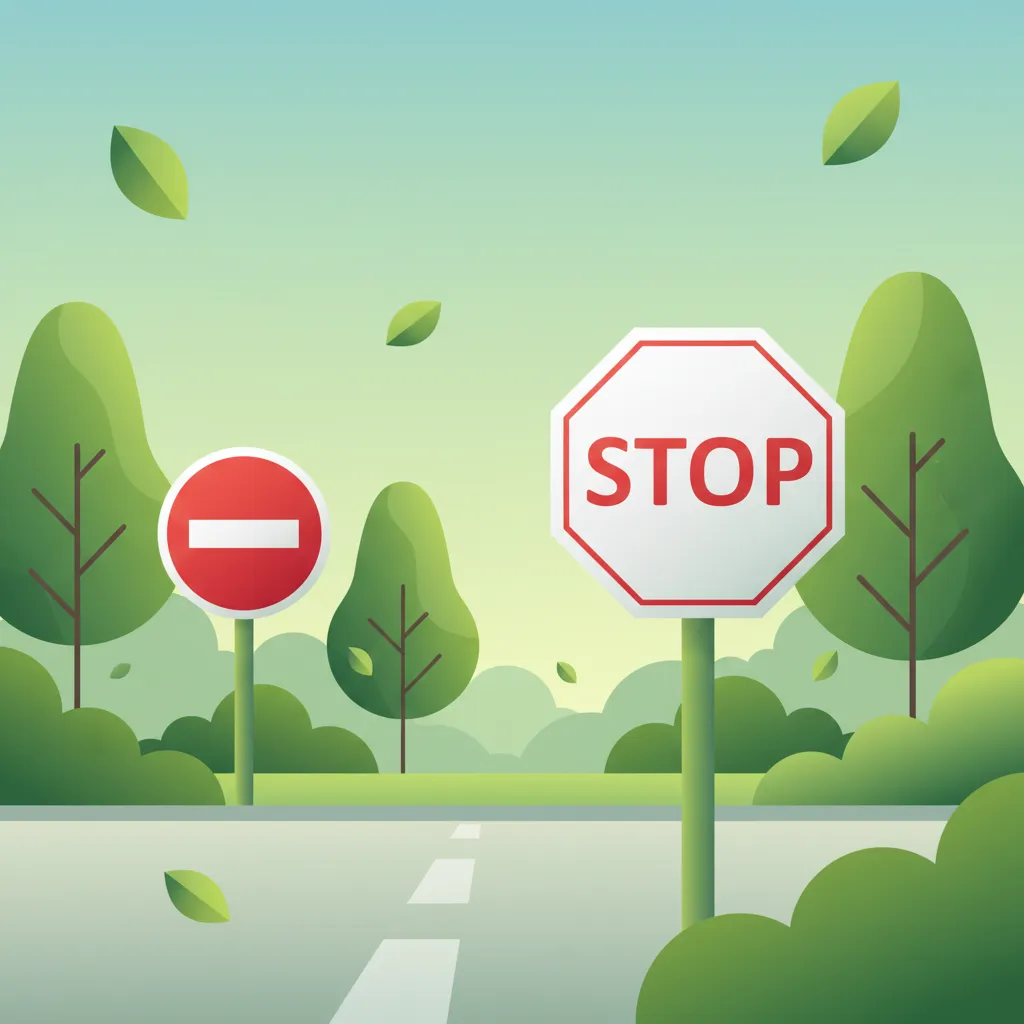
This lesson covers the most critical category of traffic signs: regulatory signs, which impose a legal obligation or prohibition. You will learn the precise meaning and required action for essential signs such as the B6 Stop sign, which mandates a full stop, and the C2 No Entry sign, which forbids access. Understanding the shapes, colors, and symbols of these signs is fundamental to safe driving and a major focus of the official CBR theory test.
Find clear answers to common questions learners have about Interaction with Police and CBR Enforcement Officers. Learn how the lesson is structured, which driving theory objectives it supports, and how it fits into the overall learning path of units and curriculum progression in the Netherlands. These explanations help you understand key concepts, lesson flow, and exam focused study goals.
In the Netherlands, you have a legal obligation to stop your vehicle when signaled to do so by a police officer or other authorized enforcement official, such as those from the CBR. This signal can be given verbally, with hand gestures, or by flashing lights. Failure to stop can result in penalties.
You must always carry your valid driving license (rijbewijs), the vehicle's registration certificate (kentekenbewijs), and proof of valid insurance (verzekeringsbewijs). These must be presented immediately upon request by law enforcement.
Yes, police officers have the authority to conduct breathalyzer tests (alcoholinterrogatie) on riders of all motor vehicles, including mopeds and scooters (bromfietsen and snorfietsen), to check for alcohol consumption. You are legally required to cooperate with such tests.
Even if you don't understand the reason for the stop, you must still stop and cooperate. You can politely ask for the reason for the stop after complying with the initial request to present documents or undergo a test. Maintaining a calm and respectful demeanor is crucial.
CBR enforcement officers may also conduct checks related to driving licenses and vehicle compliance, particularly concerning specific vehicle types or safety regulations. Their authority is similar to police officers in these specific contexts, and you are required to cooperate with their requests.