
Welcome to the crucial lesson on alcohol, drugs, and substance limits for your Category AM moped and scooter theory exam. Understanding these rules is vital for your safety and legal compliance on Dutch roads. This lesson builds on the foundational legal knowledge from Unit 1 and prepares you for specific exam questions on impaired riding.
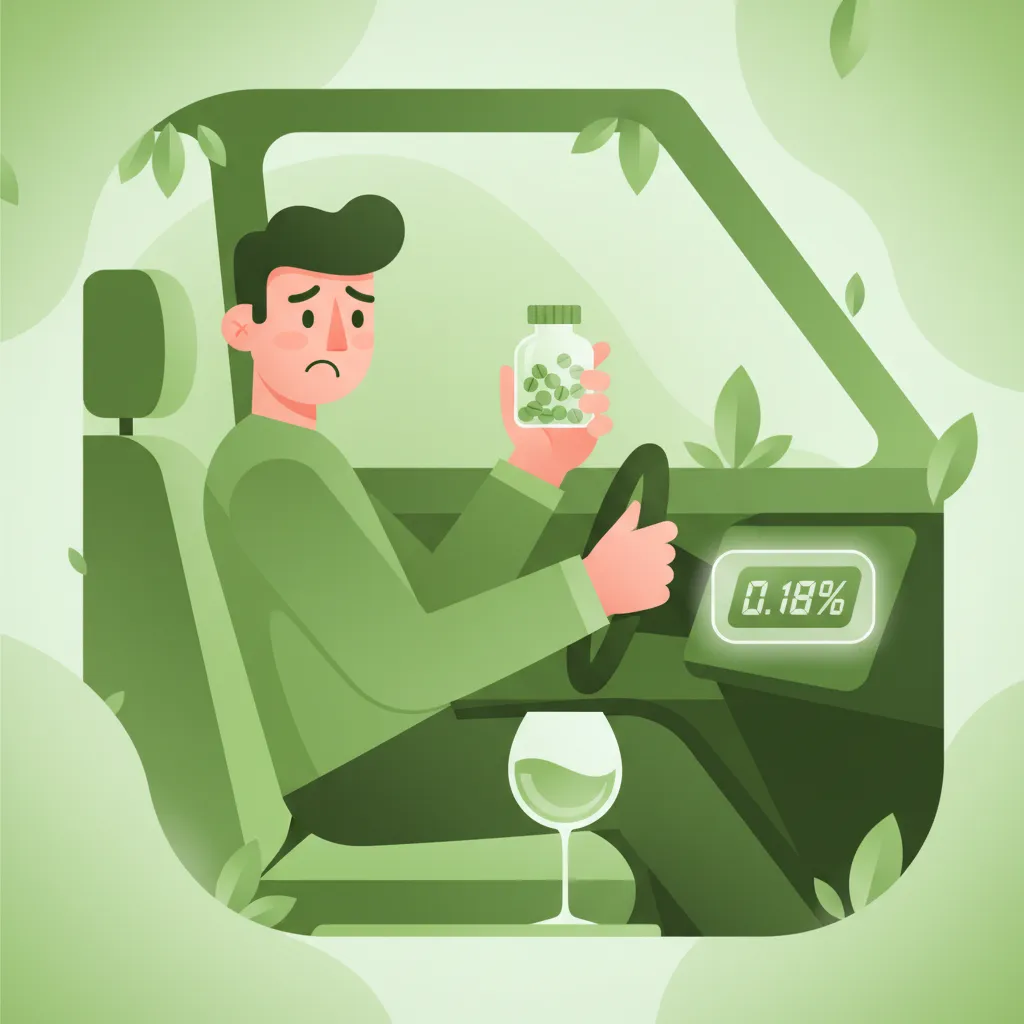
Driving under the influence of alcohol or drugs is one of the most significant dangers on the road, severely compromising safety for all road users. For anyone aspiring to ride a moped or scooter (Category AM) in the Netherlands, understanding the precise legal limits, the testing procedures, and the severe penalties for violations is not just a legal obligation but a fundamental aspect of responsible road behavior. This lesson provides an in-depth look at the Dutch regulations concerning psychoactive substances and vehicle operation, ensuring you have the knowledge to stay safe and compliant.
Operating a moped or scooter demands sharp reflexes, keen perception, and sound judgment. Alcohol, drugs, and even certain medications can critically impair these essential abilities, drastically increasing the risk of accidents. Even small amounts of alcohol or drugs can affect your:
Understanding these physiological and psychological impacts underscores the importance of the strict legal frameworks in place to prevent impaired driving.
Blood Alcohol Concentration (BAC) is the primary legal metric used to quantify alcohol impairment. It measures the amount of ethanol (pure alcohol) present in a person's blood, typically expressed in per mille (‰), which means grams of alcohol per kilogram of blood. The Dutch legal system sets specific BAC limits to ensure road safety.
BAC is most commonly measured through a breathalyzer test at the roadside, which estimates the alcohol content in your breath. If there is a suspicion of impairment or if the breathalyzer shows a reading above the legal limit, a more definitive blood test may be requested at a medical facility.
The practical meaning of BAC is straightforward: it directly determines whether a rider is legally permitted to operate a Category AM vehicle. Even at levels below the legal limit, alcohol can begin to affect judgment and coordination, making it crucial to understand how quickly BAC can rise and how slowly it declines.
Do not rely on common misconceptions like "one drink is safe" or that BAC returns to zero quickly. Alcohol metabolism varies significantly between individuals based on factors like body weight, gender, metabolism rate, and even recent food intake.
In the Netherlands, a lower, stricter BAC limit applies to novice drivers and riders, including those with a Category AM license. This limit is set at 0.2 per mille (0.2 ‰). You are considered a novice rider if:
This stricter limit, codified in Article 62, paragraph 1(b) of the Dutch Road Traffic Regulations (RVV 1990), acknowledges that young and inexperienced riders have less experience in managing both vehicle control and unexpected traffic situations. Their vulnerability to the effects of alcohol is therefore higher, and the law encourages a "zero-alcohol" approach for this group.
Example: A 19-year-old rider, who obtained their Category AM license three months ago, consumes two standard Dutch beers within an hour. This could easily result in an estimated BAC of 0.25‰, which is above the novice limit and therefore illegal.
For experienced Category AM riders who are not subject to the novice limit (i.e., they are over 21 years old AND have held their license for more than two years), the standard legal BAC limit is 0.5 per mille (0.5 ‰).
While this limit is higher than for novices, it is still a very low threshold. It aligns with European Union harmonisation efforts and is significantly below levels that cause severe impairment. This limit is specified in Article 62, paragraph 1(a) of the RVV 1990. Even at this level, your ability to react, judge distances, and maintain control can be compromised. Therefore, it is always safest to refrain from alcohol entirely before riding.
Beyond alcohol, the Netherlands enforces a strict zero-tolerance policy for driving under the influence of drugs. This policy applies to all road users, including Category AM riders, and means that any detectable amount of prohibited psychoactive substances in your system while operating a vehicle is illegal.
The zero-tolerance policy primarily targets illicit drugs such as:
It's crucial to understand that this policy extends to prescription or over-the-counter medication that may cause impairment. If you are taking medication that can affect your alertness, concentration, or motor skills (e.g., strong painkillers, sedatives, certain antihistamines), you must discuss this with your physician. A doctor's note may be required to confirm that the medication does not impair your ability to ride safely at the prescribed dose. This is regulated under Article 56 of the Wet verkeer (Road Traffic Act).
Always read the labels of any medication you take. If it warns against operating machinery or driving, consult your doctor before getting on your moped or scooter.
The zero-tolerance approach eliminates ambiguity. Unlike alcohol, where a measurable threshold is established, the effects of drugs can be highly variable and even low concentrations can cause significant impairment, especially when combined with fatigue or other substances. This policy simplifies enforcement and sends a clear message: if you consume illicit drugs, you cannot drive or ride.
Example: A rider tests positive for 0.5 ng/mL of THC in an oral fluid test. Even if they claim not to feel impaired, the presence of any detectable illicit drug automatically constitutes a violation under the zero-tolerance policy, leading to legal consequences.
To ensure compliance with alcohol and drug limits, Dutch law enforcement has a structured hierarchy of tests they can request from drivers and riders. It is mandatory to cooperate with these tests. Refusal to submit is considered an administrative offense and carries its own penalties.
These procedures are outlined in Article 10 of the Dutch Police Act (Politiewet) and Annex III of the RVV 1990.
You are legally obligated to comply with all requested tests. Refusing a breathalyzer, oral fluid test, or blood test is not a way to avoid consequences; instead, it is treated as a separate administrative offense. In most cases, the penalty for refusal can be as severe as, or even harsher than, the penalty for actual impairment. This rule ensures the enforceability of the limits and the integrity of the legal process.
Example: A rider is pulled over for erratic riding and refuses to take a breathalyzer test. Instead of avoiding a penalty, they will immediately face a fine and licence suspension for the refusal itself, regardless of their actual BAC.
The Netherlands imposes a comprehensive penalty matrix for driving under the influence of alcohol or drugs. These sanctions are designed to be deterrents, promote rehabilitation, and ensure the safety of all road users. Penalties escalate significantly with the severity of the offense, the level of impairment, and if there are aggravating circumstances (e.g., causing an accident, repeat offenses).
For alcohol-related offenses:
For drug-related offenses:
For refusal to submit to a test:
Beyond monetary fines and licence actions, the Dutch system emphasizes rehabilitation and education:
The penalties can escalate significantly under certain conditions:
The framework for these penalties is largely governed by the Dutch Rijkswet (national law), specifically the Road Traffic Act 1994 (Wegenverkeerswet 1994).
Understanding the letter of the law is crucial, but so is recognizing common pitfalls and real-world situations where impairment can lead to violations.
Many riders mistakenly believe that after a few hours of sleep, their BAC will automatically be zero. However, alcohol leaves the system slowly (roughly 0.1 to 0.15 per mille per hour). Miscalculating this can lead to being over the limit the morning after. Correct behavior: Use a reliable BAC calculator if you must estimate, but the safest approach is to wait at least 12-24 hours after heavy drinking before riding, or simply don't ride if you've consumed alcohol.
Some riders assume that because CBD oil is legal, it's permissible to ride after using it. However, some CBD products contain trace amounts of THC. The zero-tolerance drug policy means any detectable THC can result in a violation. Correct behavior: Only use certified THC-free CBD products, and if in doubt, refrain from riding after use.
A common misconception is that refusing a breathalyzer will prevent incrimination. In reality, refusal itself is a separate, serious offense with automatic penalties that can be harsher than for a low-level impairment. Correct behavior: Cooperate with police requests for breath, saliva, or blood tests. If you believe there's an error, you can request a confirmatory blood test, which offers a definitive measurement.
Many common over-the-counter medications, such as some antihistamines or cold remedies, can cause drowsiness or impair reaction time. Riding while visibly impaired by such medication can still lead to police action, even without alcohol or illicit drugs. Correct behavior: Always read medication labels carefully. If a medication affects your ability to concentrate or ride safely, either avoid riding or consult a doctor for advice on safe usage. If you have a doctor's note stating the medication does not impair you at the prescribed dose, carry it with you.
Even if your BAC is just below the legal limit, if your riding behavior suggests impairment (e.g., weaving, slow reaction), police can still issue a citation for reckless driving or general impairment based on observed behavior. The legal limit is a guideline, not an excuse for unsafe riding. Correct behavior: Always self-assess your ability. If you feel any degree of impairment, do not ride.
The inherent risk of driving under the influence is significantly amplified by various external conditions. These conditional variations can effectively lower your "safe operating capacity," meaning even a legal BAC or a medically cleared medication could become dangerous.
Navigating the Dutch roads on your Category AM vehicle safely and legally requires a clear understanding of alcohol, drugs, and substance limits.
Staying sober and drug-free when riding is not merely about avoiding legal penalties; it's about making a responsible choice that protects your life and the lives of others on the road.
Lesson content overview
Explore all units and lessons included in this driving theory course.
Explore search topics learners often look for when studying Alcohol, Drugs, and Substance Limits. These topics reflect common questions about road rules, driving situations, safety guidance, and lesson level theory preparation for learners in the Netherlands.
Browse additional driving theory lessons that cover connected traffic rules, road signs, and common driving situations related to this topic. Improve your understanding of how different rules interact across everyday traffic scenarios.
Understand the severe legal consequences for driving under the influence in the Netherlands. This lesson details fines, licence suspension, revocation periods, and mandatory courses for alcohol and drug violations under Dutch traffic law.
This lesson outlines the significant penalties for driving under the influence in the Netherlands. You will learn about the scale of fines, the potential for an immediate driving ban (rijverbod), and the circumstances under which a driver's license can be suspended or revoked. The curriculum also covers the mandatory and costly educational courses (like LEMA or EMG) that convicted drivers may be forced to attend to regain their driving privileges. A DUI conviction results in a criminal record, which can have long-lasting personal and professional consequences.

This lesson explores the physiological and cognitive effects of alcohol on a driver. You will learn how alcohol acts as a depressant on the central nervous system, leading to a measurable decrease in reaction speed, blurred vision, and a loss of coordination. The curriculum explains how alcohol impairs judgment, often leading to increased risk-taking and a failure to perceive hazards. Understanding these dangerous effects reinforces the critical importance of separating drinking from driving completely.
This lesson extends the topic of impaired driving to include illegal drugs and certain medications. You will learn that the Netherlands has a zero-tolerance policy for driving under the influence of many illegal substances, enforced with saliva tests. The curriculum also highlights the importance of checking for warnings on prescription and over-the-counter medicines, often indicated by a yellow sticker, as many can cause drowsiness or impair concentration. The driver is always responsible for ensuring they are fit to drive.
This lesson covers the critical topic of impaired riding, detailing the legal blood alcohol limits for drivers in the Netherlands. It explains how alcohol, illegal drugs, and even some legal medications drastically impair judgment, coordination, and reaction time, making riding a motorcycle extremely dangerous. The severe legal penalties, including fines, license suspension, and imprisonment, are also clearly outlined.
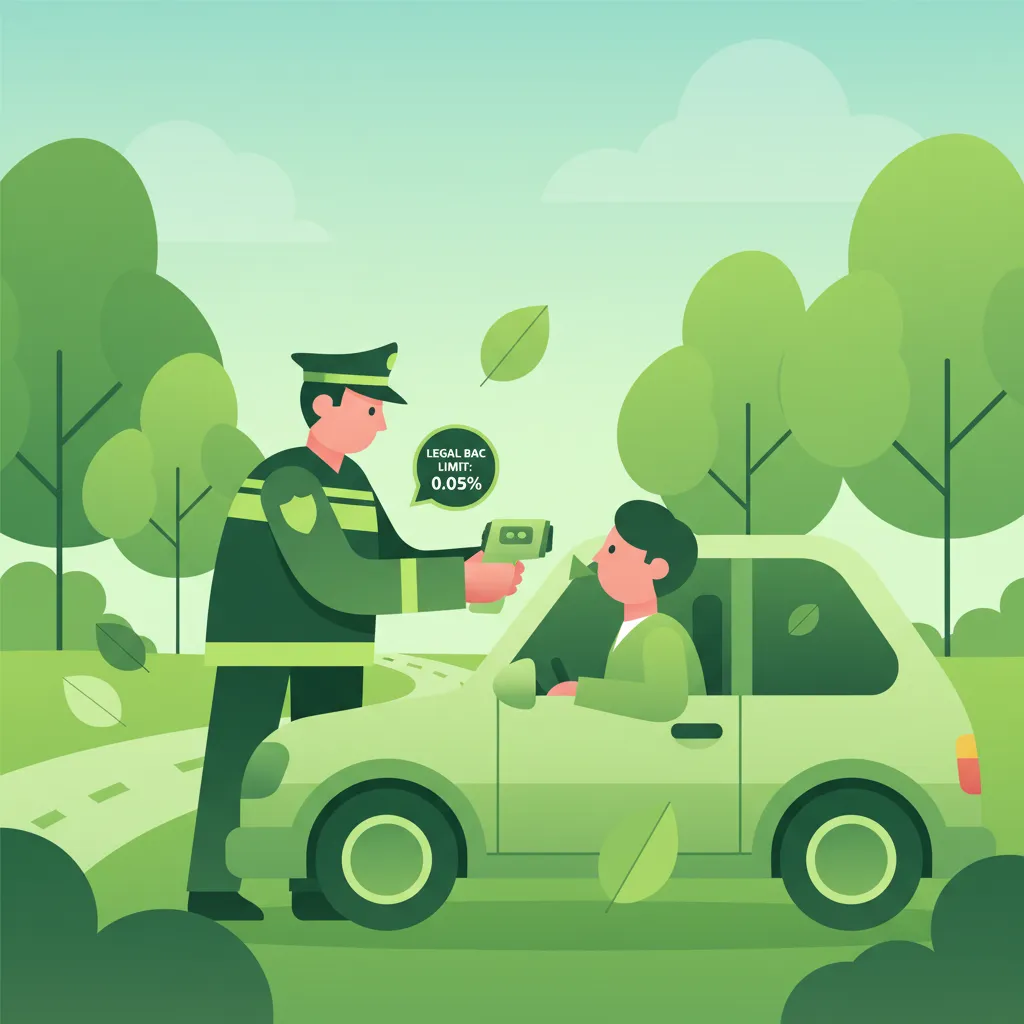
This lesson details the legal limits for alcohol consumption when driving. You will learn that for experienced drivers (who have held their license for more than five years), the BAC limit is 0.5 promille. For novice drivers, a stricter limit of 0.2 promille applies, which effectively means a zero-tolerance policy. The content explains how these levels are measured by police using breathalyzer tests and the factors that can influence a person's BAC, stressing that the only safe approach is not to drink and drive.
This lesson covers prohibition signs, which are used to forbid specific maneuvers or restrict access for certain vehicles. You will study the characteristics of these signs, typically circular with a red border, such as the C2 'No Entry for any vehicle' or the F1 'No Parking' sign. The content details the legal consequences of ignoring these prohibitions and explains how they contribute to traffic flow and safety in congested or sensitive areas. Recognizing these signs is fundamental to avoiding fines and dangerous situations on the road.
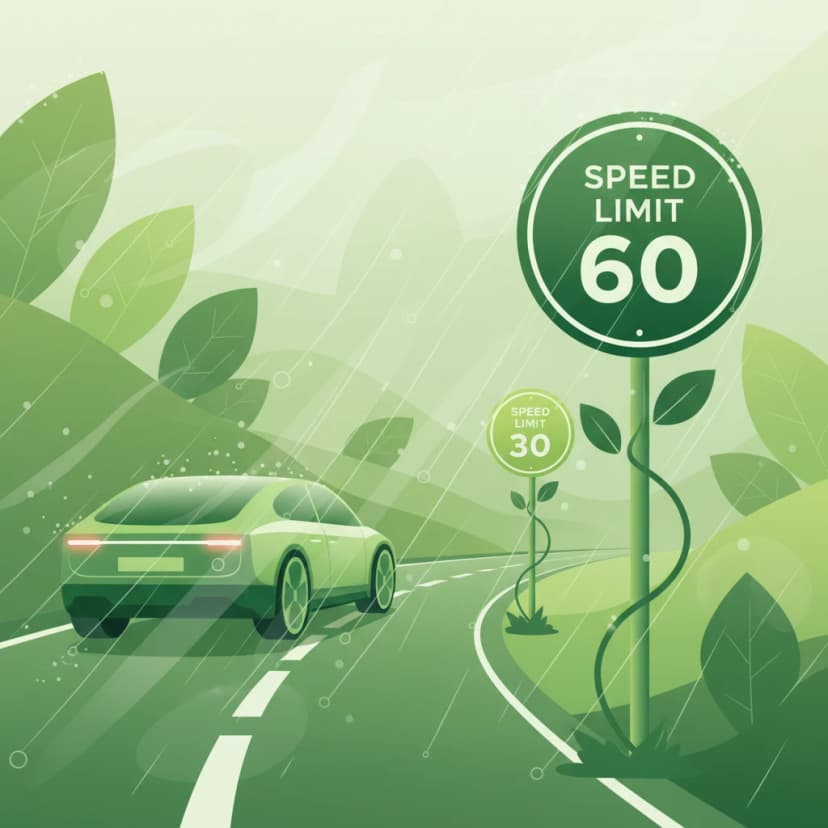
This lesson emphasizes the critical importance of adapting your speed to prevailing conditions, which may require driving slower than the legal limit. You will learn how factors like rain, fog, snow, and darkness significantly increase braking distances and reduce visibility. The curriculum explains the dangers of aquaplaning on wet roads and black ice in winter. The core principle taught is that a safe driver always adjusts their speed to ensure they can stop within the distance they can see to be clear.
Clarify the distinct Blood Alcohol Concentration (BAC) limits for novice and experienced riders in the Netherlands. Learn the differences between the 0.2‰ and 0.5‰ legal thresholds and their implications for Category AM licence holders.
This lesson details the legal limits for alcohol consumption when driving. You will learn that for experienced drivers (who have held their license for more than five years), the BAC limit is 0.5 promille. For novice drivers, a stricter limit of 0.2 promille applies, which effectively means a zero-tolerance policy. The content explains how these levels are measured by police using breathalyzer tests and the factors that can influence a person's BAC, stressing that the only safe approach is not to drink and drive.
This lesson explores the physiological and cognitive effects of alcohol on a driver. You will learn how alcohol acts as a depressant on the central nervous system, leading to a measurable decrease in reaction speed, blurred vision, and a loss of coordination. The curriculum explains how alcohol impairs judgment, often leading to increased risk-taking and a failure to perceive hazards. Understanding these dangerous effects reinforces the critical importance of separating drinking from driving completely.
This lesson covers the critical topic of impaired riding, detailing the legal blood alcohol limits for drivers in the Netherlands. It explains how alcohol, illegal drugs, and even some legal medications drastically impair judgment, coordination, and reaction time, making riding a motorcycle extremely dangerous. The severe legal penalties, including fines, license suspension, and imprisonment, are also clearly outlined.
This lesson outlines the significant penalties for driving under the influence in the Netherlands. You will learn about the scale of fines, the potential for an immediate driving ban (rijverbod), and the circumstances under which a driver's license can be suspended or revoked. The curriculum also covers the mandatory and costly educational courses (like LEMA or EMG) that convicted drivers may be forced to attend to regain their driving privileges. A DUI conviction results in a criminal record, which can have long-lasting personal and professional consequences.
This lesson extends the topic of impaired driving to include illegal drugs and certain medications. You will learn that the Netherlands has a zero-tolerance policy for driving under the influence of many illegal substances, enforced with saliva tests. The curriculum also highlights the importance of checking for warnings on prescription and over-the-counter medicines, often indicated by a yellow sticker, as many can cause drowsiness or impair concentration. The driver is always responsible for ensuring they are fit to drive.
Find clear answers to common questions learners have about Alcohol, Drugs, and Substance Limits. Learn how the lesson is structured, which driving theory objectives it supports, and how it fits into the overall learning path of units and curriculum progression in the Netherlands. These explanations help you understand key concepts, lesson flow, and exam focused study goals.
For Category AM riders in the Netherlands, there is a standard BAC limit of 0.5 parts per thousand (‰). However, a lower limit of 0.2 parts per thousand (‰) applies to novice riders who have held their licence for less than five years.
No, the BAC limits are the same for both bromfietsen and snorfietsen within Category AM. The key distinction is whether the rider is considered a novice (less than 5 years of licence holding) or an experienced rider.
The Netherlands has a strict zero-tolerance policy for driving under the influence of drugs. This means any detectable amount of illegal drugs or certain prescribed medications that impair driving ability can lead to penalties, regardless of concentration.
If the police suspect you are riding under the influence, they can conduct a breathalyser test for alcohol. For drug impairment, they may ask you to perform a series of coordination tests, and if impairment is suspected, a blood sample may be taken for analysis.
Penalties can be severe and include substantial fines, immediate suspension of your driving licence, and potentially mandatory participation in expensive re-education courses or rehabilitation programs. The severity depends on the level of impairment and whether it's a first offense.