
Logo
Dutch Driving Theory Courses

Lesson 4 of the Legal Foundations & Vehicle Types unit

Dutch Driving Theory AM: Helmet and Protective Gear Regulations

Welcome to the unit on Legal Responsibilities & Safety! This lesson specifically covers the mandatory Helmet and Protective Gear Regulations crucial for all Category AM riders in the Netherlands. Understanding these rules is vital for your safety and for passing the CBR theory exam.
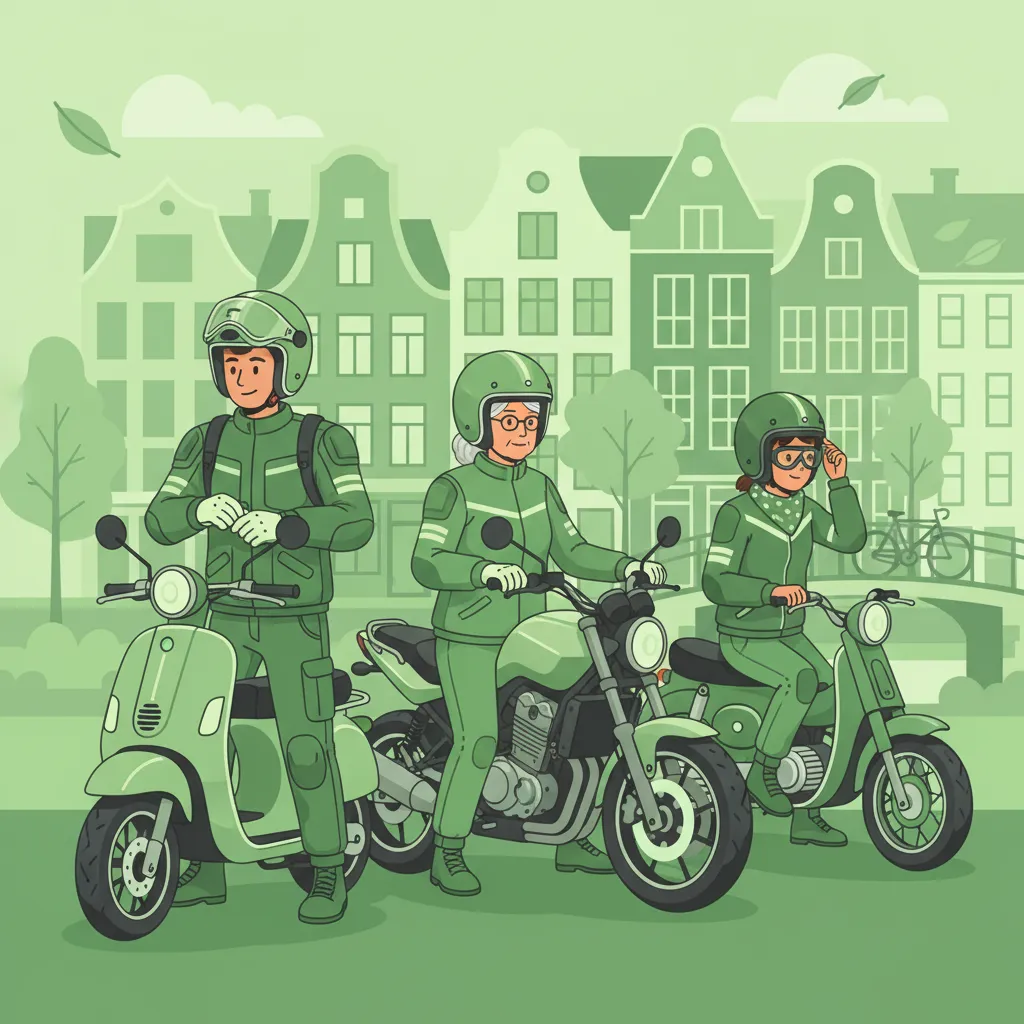
helmet lawsprotective gearAM categorybromfietssnorfiets
Dutch Driving Theory AM: Helmet and Protective Gear Regulations
Dutch Driving Theory AM

Helmet and Protective Gear Regulations for Mopeds and Scooters in the Netherlands

Riding a moped or scooter in the Netherlands offers a convenient and enjoyable way to navigate cities and rural areas. However, with the freedom of two wheels comes a significant responsibility for personal safety. This lesson delves into the crucial regulations and recommendations concerning helmets and protective gear for all riders of Dutch Category AM vehicles, including bromfietsen, speed pedelecs, and snorfietsen. Understanding and adhering to these rules is not just a legal obligation but a fundamental aspect of safeguarding yourself against serious injury.

Wearing an approved helmet can dramatically reduce the risk of fatal head injuries by up to 70% in the event of a crash. Beyond helmets, other protective gear such as gloves, sturdy footwear, and eye protection play a vital role in preventing secondary injuries and enhancing overall rider control and visibility. This guide will provide you with the essential knowledge to make informed decisions about your safety equipment, ensuring a compliant and secure riding experience on Dutch roads.

Mandatory Helmet Use for Mopeds and Speed Pedelecs in the Netherlands

In the Netherlands, specific laws dictate when and what type of helmet must be worn by riders of certain motorised two-wheel vehicles. These regulations are designed to protect vulnerable road users and are strictly enforced to minimise severe head trauma during accidents.

Dutch Category AM Vehicles: Classifications and Helmet Rules

The Category AM driving licence in the Netherlands covers several types of motorised two-wheelers, each with distinct characteristics and helmet requirements. Understanding these classifications is the first step in knowing your obligations.

Definition

Category AM

The Dutch licence class for motorised mopeds, scooters, bromfietsen, snorfietsen, and speed pedelecs, typically with a maximum design speed of 45 km/h.
  • Bromfiets (Moped): These are motorised two-wheel vehicles with a maximum design speed of 45 km/h, an engine displacement of no more than 50 cubic centimetres (for petrol engines), or a maximum power output of 4 kW (for electric motors). Riders of bromfietsen are legally required to wear an approved helmet at all times while the vehicle is in motion. This applies to all routes, whether on cycle paths or the main road.
  • Speed Pedelec: These are electrically assisted bicycles where the electric motor provides assistance up to 45 km/h. They are classified as bromfietsen under Dutch law due to their higher speed capabilities compared to standard e-bikes. Consequently, riders of speed pedelecs must also wear an approved helmet, identical to the requirements for bromfietsen.
  • Snorfiets: These are pedal-assisted vehicles with a maximum speed limit of 25 km/h and a motor power output of no more than 250 W. For snorfietsen, there is no national legal mandate to wear a helmet. However, if a snorfiets rider chooses to wear a helmet, it must still meet the required European safety standards (ECE certified). This recommendation for voluntary helmet use underscores the general principle of enhancing safety, even when not legally compelled.

These distinctions are critical because they directly determine your legal obligations regarding head protection. Non-compliance can lead to significant penalties, but more importantly, it leaves you highly exposed to serious injury.

ECE Safety Certification: Understanding Helmet Standards

For any helmet worn on a Category AM vehicle where mandatory use applies, or even voluntarily on a snorfiets, it must meet stringent European safety standards. This is known as ECE certification.

Definition

ECE 22.05 / 22.06 / 22.07

European safety standards (Regulation 22) for motorcycle and moped helmets, specifying requirements for impact absorption, penetration resistance, visor quality, and retention system performance. The numbers 22.05, 22.06, or 22.07 indicate the version of the standard.

The current standard enforced in the Netherlands and across the European Union is ECE Regulation 22.05, or its newer versions, ECE 22.06 and 22.07. Helmets meeting these standards have undergone rigorous testing to ensure they provide a minimum level of protection. You can identify an ECE-approved helmet by a specific label, typically stitched into the chin strap or found on the helmet shell. This label contains the letter 'E' (for Europe) followed by a number indicating the country where the helmet was certified, then '05', '06', or '07' for the regulation version, and further numbers and letters identifying the production batch and type.

It is a common misunderstanding to assume that helmets with a 'DOT' label (Department of Transportation, a U.S. standard) are automatically acceptable in the Netherlands. While DOT-certified helmets provide protection, they do not automatically fulfil the European legal requirement. For use in the Netherlands, a helmet must explicitly bear the ECE label to be considered legally compliant. Using a helmet that lacks this certification, even if it appears robust, constitutes a violation of Dutch traffic law.

Types of Approved Helmets for Road Safety

Helmets come in various designs, each offering different levels of protection and features. When choosing an ECE-approved helmet for your Category AM vehicle, consider your typical riding speed, comfort, and the level of protection you desire.

  • Full-face Helmets: These helmets offer the most comprehensive protection, covering the entire head, including the chin and face. They are ideal for higher-speed riding (such as on a bromfiets or speed pedelec) as they provide excellent impact absorption, wind protection, and often reduce noise. The integrated visor protects your eyes from wind, debris, and insects.
  • Modular (Flip-up) Helmets: These combine aspects of full-face and open-face helmets. They have a hinged chin bar that can be flipped up, offering the convenience of an open-face helmet for talking or brief stops, while providing full-face protection when closed. They are a popular choice for riders who value versatility.
  • Open-face (3-quarter) Helmets: These helmets cover the top, back, and sides of the head but leave the face and chin exposed. They are generally lighter and offer more ventilation, making them suitable for lower speeds or warmer weather. However, they provide less protection against facial injuries in a crash compared to full-face or modular helmets. If you choose an open-face helmet, consider wearing additional eye protection.

Regardless of the type, it is paramount that your helmet fits correctly. It should be snug but not uncomfortably tight, sit level on your head, and not move freely when you shake your head. The retention system (chin strap) must always be securely fastened. A poorly fitting or unfastened helmet cannot provide adequate protection.

While the helmet is the only piece of protective gear legally mandated for bromfiets and speed pedelec riders, other equipment is strongly recommended to enhance your safety and comfort. This gear significantly reduces the risk and severity of injuries to other body parts, improves vehicle control, and makes riding more pleasant in varying conditions.

Essential Protective Gear Beyond the Helmet

The Dutch Traffic Safety Board (SWOV) and other road safety organisations consistently advocate for the use of additional protective equipment, especially given the vulnerability of moped and scooter riders in traffic.

  • Gloves: Protective gloves are essential for several reasons. In the event of a fall, our natural instinct is to put our hands out to break the impact. Gloves protect your hands from abrasions, cuts, and fractures. They also improve your grip on the handlebars, which is crucial for maintaining control, especially in wet or cold conditions, and can reduce hand fatigue on longer rides. Look for gloves designed for motorcycle or scooter riding, as they often feature reinforced palms and knuckle protection.
  • Sturdy Footwear: Your feet and ankles are particularly vulnerable in a crash. Sturdy, closed-toe shoes or boots provide crucial protection against crushing injuries and abrasions. They also offer better grip on the footrests or pedals, enhancing your control over the vehicle. Avoid open-toed shoes like sandals, or light fabric shoes, as they offer minimal protection in an accident. Boots that cover the ankle provide an even greater level of safety.
  • Eye Protection: Even if your helmet has a visor, ensure it is clear and scratch-free for optimal visibility. For open-face helmet users or if your visor is lifted, shatter-proof glasses or goggles are highly recommended. They protect your eyes from wind, dust, insects, road debris, and harmful UV rays, all of which can impair vision and cause discomfort or injury, potentially leading to a loss of control.

Maximizing Visibility with Reflective Clothing

Being seen by other road users is one of the most fundamental aspects of rider safety. Mopeds and scooters are smaller than cars and can be harder to spot, especially in challenging light conditions.

Tip

Always assume other road users might not see you, and actively work to make yourself as visible as possible.
  • Reflective Clothing and Accessories: These materials dramatically increase your conspicuity, especially during low-visibility conditions such as night, dusk, dawn, fog, or heavy rain. Reflective elements work by bouncing light from vehicle headlights or streetlights directly back to the source, making you stand out.
  • Bright Colours: While not reflective, wearing brightly coloured clothing (e.g., neon yellow, orange, or lime green) during daylight hours also helps you stand out against the background clutter of urban environments. Combining bright colours with reflective strips offers the best all-around visibility.

While there isn't a direct legal penalty for not wearing reflective clothing, the Dutch Road Safety Act implicitly encourages measures that enhance road safety. Failing to wear such gear in low-light conditions increases your risk of being involved in a collision, which could have serious consequences.

Non-compliance with the mandatory helmet regulations in the Netherlands carries specific legal penalties. These consequences serve as a deterrent and underscore the seriousness with which Dutch law treats rider safety.

Dutch Traffic Law: Helmet Non-Compliance Penalties

The relevant legislation for helmet requirements falls under the Road Traffic Act (Wegenverkeerswet) and the Road Traffic Regulations (Reglement Verkeersregels en Verkeerstekens, RVV 1990).

Definition

RVV 1990

The primary Dutch Road Traffic Regulations, outlining rules for road users and traffic signs.

If a rider of a bromfiets or speed pedelec is caught without a legally approved helmet while the vehicle is in motion, or if the helmet is not worn correctly (e.g., strap unfastened), an administrative fine will be issued.

In addition to a monetary fine, a helmet violation may also result in points being added to your driving record. Accumulating too many points can lead to the suspension or revocation of your driving licence. Repeated non-compliance could even, in rare and extreme cases, lead to the seizure of the vehicle. These penalties highlight the importance of not just owning an approved helmet, but also wearing it correctly at all times while riding.

Common Helmet Violations and How to Avoid Them

Beyond simply not wearing a helmet, there are several other ways riders can inadvertently violate helmet regulations or compromise their safety.

  1. Helmet Removal at Traffic Lights or Stops: The law stipulates that the helmet must be worn whenever the vehicle is in motion. This includes brief stops at traffic lights, stop signs, or in traffic jams. Removing your helmet at these times is a violation. Keep it securely fastened until your journey is complete and you have dismounted.
  2. Use of Non-ECE Helmets: As discussed, a helmet must bear the ECE certification label. Using helmets that are only DOT certified, 'off-road' helmets without ECE approval, or simple fashion helmets, even if they appear protective, is illegal for mandatory helmet situations. Such helmets do not guarantee the minimum safety standards required by European law.
  3. Worn-Out or Damaged Helmets: A helmet that is cracked, has a damaged retention strap, a missing visor, or significant impact damage is considered non-compliant. Its structural integrity is compromised, and it will not provide adequate protection. Helmets should be replaced after a crash or if they show signs of significant wear and tear.
  4. Incorrect Helmet Fit or Fastening: A helmet must sit level on your head, covering your forehead, and the strap must be securely fastened under your chin. A helmet that is too loose, tilted backwards, or has an unbuckled strap can easily come off during an impact, rendering it useless.
  5. Obscured ECE Label: If the ECE label on your helmet is covered by custom paint, stickers, or is otherwise unreadable, it might be interpreted as non-compliant during an inspection. Ensure the label remains visible.

By being aware of these common pitfalls, you can ensure full compliance with the law and, more importantly, maximum personal safety.

Adapting Protective Gear to Riding Conditions

Effective protective gear isn't a one-size-fits-all solution; it should be adapted to the specific conditions you encounter. Environmental factors like weather and light, along with the type of road, should influence your gear choices to maintain safety and comfort.

Weather-Specific Gear for Moped and Scooter Riders

The Dutch climate can be unpredictable, making weather-appropriate gear essential for safe riding.

  • Rain and Snow: In wet conditions, a clear, anti-fog visor is crucial for maintaining visibility. Ensure your visor is free of scratches and treated with an anti-fog coating. Waterproof gloves are highly recommended to keep your hands warm and maintain a firm grip on controls. Consider waterproof outerwear to stay dry and comfortable, preventing distraction from discomfort.
  • Extreme Heat: While tempting to wear less, full protection is still important. Opt for helmets with good ventilation to allow airflow. Lightweight, breathable protective jackets (e.g., mesh jackets with armour) can offer protection without causing excessive overheating. Always stay hydrated.
  • Fog and Dusk: As visibility significantly decreases in fog, at dawn, or at dusk, reflective clothing becomes even more critical. Ensure your helmet also has reflective elements. This increases your chances of being seen by other road users who might not be looking specifically for smaller vehicles.

Visibility and Road Conditions: Choosing Your Gear Wisely

Your riding environment also plays a role in gear selection, particularly regarding visibility and the potential for impact.

  • Daylight vs. Night: During daylight, bright colours enhance your visibility. At night, reflective materials are paramount. Ensure your gear has ample reflective surfaces, especially on the front, back, and sides. A clear visor is mandatory at night; tinted visors should only be used in bright daylight.
  • Urban Streets: In busy urban areas with frequent stops and lower speeds, an open-face helmet might be considered for comfort and increased awareness, though a full-face helmet still offers superior protection. Reflective gear is vital due to the high density of other vehicles and pedestrians. Sturdy footwear helps with frequent stopping and starting.
  • High-Speed Residential Roads (up to 45 km/h): For routes where you consistently ride at higher speeds, a full-face helmet is strongly encouraged. The increased impact protection, aerodynamics, and wind noise reduction offered by full-face helmets are significant advantages. Gloves, sturdy footwear, and a protective jacket are also highly recommended to mitigate injuries at these speeds.

By consciously adjusting your gear to the conditions, you not only comply with safety recommendations but also significantly enhance your riding experience and reduce inherent risks.

The Science of Safety: Why Helmets and Gear Matter

The regulations and recommendations for protective gear are not arbitrary; they are rooted in the physics of impacts, human behaviour, and extensive injury data. Understanding the "why" behind these rules can further motivate their consistent application.

  • Physics of Head Impacts: When your head strikes a surface, the impact generates a sudden deceleration force. Without a helmet, this force is directly transmitted to your skull and brain, causing severe trauma, concussions, or even fatal injuries. A helmet works by:
    1. Spreading the Impact: The outer shell distributes the impact force over a larger area, preventing concentrated blows.
    2. Absorbing Energy: The inner liner (typically made of EPS foam) crushes on impact, absorbing and dissipating the energy, thereby reducing the peak acceleration (G-forces) transmitted to your brain.
    3. Preventing Penetration: The rigid outer shell resists sharp objects from penetrating and directly injuring the skull.
  • Human Factors and Risk Perception: Wearing protective gear can influence a rider's confidence. While increased confidence can be positive, sometimes it can lead to "risk compensation," where riders subconsciously take more risks because they feel safer. This highlights the importance of combining proper gear with cautious, defensive riding behaviour, as emphasized throughout the Dutch Driving License Theory Course. Safety is a holistic approach.
  • Visibility Data and Collision Avoidance: Studies, including those by the Dutch SWOV (Stichting Wetenschappelijk Onderzoek Verkeersveiligheid - Institute for Road Safety Research), consistently show that higher visibility significantly reduces collision risk. Riders wearing high-visibility clothing, especially with reflective elements, are spotted earlier by other road users, allowing more time for reaction and avoidance. For example, during low-light periods, reflective gear can decrease collision involvement by a notable percentage.
  • Injury Statistics: Tragically, official Dutch traffic safety reports often confirm that a significant percentage of fatal moped or scooter accidents involve riders who were not wearing a helmet or were wearing a non-compliant one. These statistics underscore the life-saving potential of proper head protection. Furthermore, even in non-fatal accidents, proper gloves and sturdy footwear drastically reduce the incidence and severity of abrasions, cuts, and fractures to the extremities.

By embracing these insights, riders can appreciate that helmets and protective gear are not merely accessories or legal burdens, but vital life-saving equipment integral to safe travel on Dutch roads.

Conclusion: Safe and Responsible Riding in the Netherlands

Navigating the Dutch road network on a moped, scooter, or speed pedelec is an enriching experience, but it demands an unwavering commitment to safety. The regulations surrounding helmets and the strong recommendations for additional protective gear are designed with your well-being as the highest priority.

To summarise the key takeaways from this lesson:

  • Mandatory Helmet Use: All riders of bromfietsen and speed pedelecs in the Netherlands are legally required to wear an ECE-approved helmet whenever the vehicle is in motion.
  • Snorfiets Helmet Option: While not mandatory for snorfietsen, if you choose to wear a helmet, it must still be ECE-certified. Voluntary helmet use for snorfietsen is strongly recommended for enhanced safety.
  • ECE Certification is Key: Always ensure your helmet displays a valid ECE label (e.g., 22.05, 22.06, or 22.07), verifying it meets European safety standards. Helmets without this certification are illegal for use in mandatory situations.
  • Recommended Protective Gear: Beyond the helmet, incorporating gloves, sturdy closed-toe footwear, eye protection, and reflective clothing significantly enhances your safety. These items reduce secondary injuries, improve control, and increase your visibility to other road users.
  • Compliance and Consequences: Failure to adhere to mandatory helmet laws results in administrative fines and potential points on your driving record. Always wear your helmet correctly, securely fastened, and in good condition.
  • Adapt Your Gear: Adjust your protective equipment based on weather conditions (rain, heat, fog), light levels (day, dusk, night), and the type of road you're riding on. Maximise visibility, especially in low-light situations.

Embracing these guidelines is not just about avoiding penalties; it's about adopting a responsible riding culture that prioritises your life and well-being. By consistently using appropriate and compliant protective gear, you significantly reduce the risks associated with riding and contribute to a safer environment for all road users in the Netherlands.

Category AM
The Dutch licence class for motorised mopeds, scooters, bromfietsen, snorfietsen, and speed pedelecs, typically with a maximum design speed of 45 km/h.
Bromfiets
A motorised two-wheel vehicle with a maximum design speed of 45 km/h, requiring a mandatory ECE-approved helmet.
Speed Pedelec
An electrically assisted bicycle with pedal assistance up to 45 km/h, classified as a bromfiets and requiring a mandatory ECE-approved helmet.
Snorfiets
A pedal-assisted vehicle limited to 25 km/h, where helmet use is optional but any helmet worn must be ECE-certified.
ECE 22.05 / 22.06 / 22.07
European safety standards for helmets, specifying requirements for impact absorption, penetration resistance, and visor quality.
Full-face Helmet
A helmet covering the entire head, including the chin and face, offering the highest level of protection.
Open-face Helmet
A helmet that covers the top, back, and sides of the head but leaves the face and chin exposed, offering less protection.
Reflective Clothing
Garments or accessories that reflect light, significantly increasing a rider's visibility to other road users, especially in low-light conditions.
Retention System
The straps and buckles of a helmet designed to keep it securely fastened on the head during riding and in the event of an impact.
Administrative Fine
A monetary penalty imposed by traffic authorities for legal violations, such as not wearing a mandatory helmet.
SWOV
Stichting Wetenschappelijk Onderzoek Verkeersveiligheid, the Dutch Institute for Road Safety Research.
RVV 1990
Reglement Verkeersregels en Verkeerstekens, the primary Dutch Road Traffic Regulations.
Visor
The transparent shield on a helmet that protects the eyes and face from wind, debris, and weather.
Sturdy Footwear
Closed-toe, non-slipping shoes or boots that provide protection for the feet and ankles and improve pedal control.

Learn more with these articles

Check out these practice sets


Search topics related to Helmet and Protective Gear Regulations

Explore search topics learners often look for when studying Helmet and Protective Gear Regulations. These topics reflect common questions about road rules, driving situations, safety guidance, and lesson level theory preparation for learners in the Netherlands.

helmet rules for scooter Netherlandsdo I need a helmet on a snorfietsECE helmet certification moped NLprotective gear requirements bromfietsDutch driving theory AM helmet lawsspeed pedelec helmet rules Netherlandswhat safety gear is mandatory for mopeds in NLtheory test questions helmet use AM category

Related driving theory lessons for Helmet and Protective Gear Regulations

Browse additional driving theory lessons that cover connected traffic rules, road signs, and common driving situations related to this topic. Improve your understanding of how different rules interact across everyday traffic scenarios.

Dutch Helmet and Protective Gear Rules for AM Category Vehicles

Understand the legal requirements for helmets and other protective gear for Category AM vehicles in the Netherlands. Covers bromfiets, snorfiets, and speed pedelec regulations, including ECE certification and recommended safety equipment.

helmet lawsprotective gearAM categorybromfietssnorfietsspeed pedelecECE certificationDutch driving theory
Mandatory Protective Gear and Legal Standards lesson image

Mandatory Protective Gear and Legal Standards

This lesson details the legal requirements for personal protective equipment in the Netherlands, with a primary focus on the mandatory use of an approved helmet meeting ECE 22.05 or 22.06 standards. It explains the different types of helmets and the pros and cons of each. While other gear like jackets, gloves, and boots may not be legally mandatory, the lesson strongly emphasizes their critical role in injury prevention.
Dutch A1 Motorcycle TheorySafety Equipment and Vehicle Checks
View lesson
Registration, Plates, and Insurance lesson image

Registration, Plates, and Insurance

Explore the essential administrative requirements for any Category AM vehicle owner. This lesson covers the mandatory vehicle registration process, the distinction between yellow plates for bromfietsen and blue plates for snorfietsen, and the legal obligation for third-party liability insurance (WA-verzekering). You will learn what documentation is required, the consequences of non-compliance, and how these elements are verified during traffic enforcement, ensuring your vehicle is always road-legal.

Dutch Driving Theory AMLegal Foundations & Vehicle Types
View lesson
Light, Reflector, and Horn Functionality lesson image

Light, Reflector, and Horn Functionality

Your vehicle's lights and horn are your primary tools for seeing, being seen, and communicating warnings. This lesson guides you through a simple but vital check of all electrical components before you ride. You will learn how to verify the function of your headlight (high and low beam), taillight, brake light (using both front and rear brake levers), and turn signals. It also covers checking the horn's operation and ensuring all mandatory reflectors are clean and intact.

Dutch Driving Theory AMSafety Equipment & Vehicle Checks
View lesson
Cycle Paths, Bromfietspad, and Carriageways lesson image

Cycle Paths, Bromfietspad, and Carriageways

This lesson clarifies the regulations determining where each type of Category AM vehicle is allowed to travel. It explains the rules for using mandatory cycle paths (fietspad) and combined moped/cycle paths (bromfietspad), identified by specific road signs. You will also learn the conditions under which a bromfiets must use the main carriageway. Understanding these positioning rules is essential for legal compliance and for ensuring safety in mixed traffic environments with cyclists and cars.

Dutch Driving Theory AMRoadway Access & Navigation
View lesson
Signal Lights, Horns, and Reflectors lesson image

Signal Lights, Horns, and Reflectors

Effective communication with other road users is vital for safety. This lesson details the legal requirements and proper use of your vehicle's signaling equipment, including headlights, brake lights, and turn signals (indicators). It also explains the specific situations in which using the horn is permitted to avert danger. Finally, it covers the mandatory placement and type of reflectors that ensure your vehicle remains visible to others, especially in low-light conditions.

Dutch Driving Theory AMTraffic Signs & Signals
View lesson
Night Riding, Visibility, and Lighting Requirements lesson image

Night Riding, Visibility, and Lighting Requirements

Riding at night presents two main challenges: seeing the road and being seen by others. This lesson covers the legal requirements for your vehicle's lighting system and how to use it effectively, including when to use high beams. It also emphasizes strategies to increase your own conspicuity, such as wearing bright or reflective clothing. You will learn how darkness affects your perception of speed and distance and how to adapt your riding to compensate for these limitations.
Dutch Driving Theory AMEnvironmental & Weather Influences
View lesson
Speed Limits per Vehicle Category lesson image

Speed Limits per Vehicle Category

This lesson details the statutory maximum speeds for each Category AM vehicle: 25 km/h for snorfietsen, and 45 km/h for both bromfietsen and speed pedelecs on the carriageway. It explains how these limits apply within built-up areas, outside built-up areas, and on specific road types like residential zones ('woonerf'). The content covers how to interpret speed limit signs and the legal consequences of exceeding these strict limits, which is a key component of the CBR theory exam.
Dutch Driving Theory AMRoadway Access & Navigation
View lesson
Signal Devices and Lighting Requirements for A2 Motorcycles lesson image

Signal Devices and Lighting Requirements for A2 Motorcycles

This lesson covers the mandatory lighting and signaling equipment for A2 motorcycles under Dutch law, ensuring you remain visible and communicate your intentions correctly. You will learn the rules for using headlights, taillights, turn signals, and brake lights in various conditions, including daytime and adverse weather. The content also addresses the importance of maintaining this equipment and using hand signals as a valid secondary method of communication in traffic.

Dutch Motorcycle Theory (A2)Road Signs and Motorcycle-Specific Indicators
View lesson
Rain, Puddles, and Hydroplaning Risks lesson image

Rain, Puddles, and Hydroplaning Risks

Rain significantly reduces tire grip and rider visibility. This lesson covers the essential adjustments needed for wet-weather riding, including reducing speed, increasing following distance, and applying all controls more smoothly. It explains the danger of hydroplaning (aquaplaning) when tires lose contact with the road over standing water and how to avoid it. You will also learn about the importance of good tire tread depth for channeling water away and maintaining traction.
Dutch Driving Theory AMEnvironmental & Weather Influences
View lesson
General Road Rules for Light Motorcycles lesson image

General Road Rules for Light Motorcycles

This lesson covers the universal Dutch road rules with a specific focus on their application to light motorcycles. It details the various speed limits for different road types, from urban areas to motorways, and explains the correct procedures for overtaking and lane positioning. The legal aspects of lane filtering in congestion are also examined, alongside mandatory equipment use like daytime running lights, to ensure riders can integrate safely and legally into traffic flow.

Dutch A1 Motorcycle TheoryDutch Traffic Laws for A1 Motorcycles
View lesson

Adapting Protective Gear for Moped and Scooter Riding Conditions

Learn how to choose and adapt protective gear, including helmets, gloves, and footwear, based on weather, visibility, and road conditions in the Netherlands. Essential knowledge for safe and responsible riding.

protective gearrider safetyvisibilityweather conditionsmoped safetyscooter ridingDutch traffic rules
Seasonal Road Conditions and Maintenance Awareness lesson image

Seasonal Road Conditions and Maintenance Awareness

Each season brings unique challenges for riders. This lesson discusses common seasonal hazards, such as wet autumn leaves that are as slippery as ice, the risk of black ice in winter, and increased agricultural traffic in the summer. It also highlights the importance of seasonal vehicle maintenance. For example, after winter, it is crucial to wash away corrosive road salt, and before winter, to check antifreeze and battery health, ensuring your vehicle is prepared for the conditions ahead.

Dutch Driving Theory AMEnvironmental & Weather Influences
View lesson
Mandatory Protective Gear and Legal Standards lesson image

Mandatory Protective Gear and Legal Standards

This lesson details the legal requirements for personal protective equipment in the Netherlands, with a primary focus on the mandatory use of an approved helmet meeting ECE 22.05 or 22.06 standards. It explains the different types of helmets and the pros and cons of each. While other gear like jackets, gloves, and boots may not be legally mandatory, the lesson strongly emphasizes their critical role in injury prevention.
Dutch A1 Motorcycle TheorySafety Equipment and Vehicle Checks
View lesson
Defensive Riding Strategies for Two‑Wheelers lesson image

Defensive Riding Strategies for Two‑Wheelers

Defensive riding means riding to prevent collisions, despite the actions of others or the conditions around you. This lesson teaches the core principles of this proactive safety strategy. Key techniques include managing the space cushion around your vehicle, positioning yourself in your lane for maximum visibility, constantly planning an escape route, and communicating your intentions clearly to other road users. This mindset acknowledges your vulnerability and empowers you to take control of your own safety.

Dutch Driving Theory AMHuman Factors & Risk Management
View lesson
Night Riding, Visibility, and Lighting Requirements lesson image

Night Riding, Visibility, and Lighting Requirements

Riding at night presents two main challenges: seeing the road and being seen by others. This lesson covers the legal requirements for your vehicle's lighting system and how to use it effectively, including when to use high beams. It also emphasizes strategies to increase your own conspicuity, such as wearing bright or reflective clothing. You will learn how darkness affects your perception of speed and distance and how to adapt your riding to compensate for these limitations.

Dutch Driving Theory AMEnvironmental & Weather Influences
View lesson
Rain, Puddles, and Hydroplaning Risks lesson image

Rain, Puddles, and Hydroplaning Risks

Rain significantly reduces tire grip and rider visibility. This lesson covers the essential adjustments needed for wet-weather riding, including reducing speed, increasing following distance, and applying all controls more smoothly. It explains the danger of hydroplaning (aquaplaning) when tires lose contact with the road over standing water and how to avoid it. You will also learn about the importance of good tire tread depth for channeling water away and maintaining traction.

Dutch Driving Theory AMEnvironmental & Weather Influences
View lesson
Wet, Icy, and Slippery Surface Adjustments lesson image

Wet, Icy, and Slippery Surface Adjustments

Riding on two wheels requires special care on surfaces with reduced grip. This lesson teaches you how to handle challenging conditions like rain, ice, wet leaves, or tram tracks. Key principles include reducing speed significantly, making all control inputs (braking, accelerating, steering) much more smoothly and gradually, and increasing your following distance to allow for much longer stopping distances. Recognizing potentially slippery areas is a critical part of proactive hazard perception.

Dutch Driving Theory AMSpeed Management & Braking
View lesson
Protective Clothing and Gear for Low Temperatures lesson image

Protective Clothing and Gear for Low Temperatures

This lesson covers the principles of selecting and using appropriate protective gear to combat the effects of low temperatures and wind chill. It explains the concept of layering with a base, mid, and outer layer to trap heat and manage moisture. The content also discusses the benefits of heated grips and clothing, effective waterproofing, and solutions like Pinlock inserts to prevent visor fogging, all of which are crucial for maintaining comfort, concentration, and control in the cold.
Dutch Motorcycle Theory ARiding in Adverse Weather and Night Conditions
View lesson
Riding in Rain, Snow, and Ice (ijs, sneeuw, regen) lesson image

Riding in Rain, Snow, and Ice (ijs, sneeuw, regen)

This lesson provides survival strategies for riding in the most challenging weather conditions, including heavy rain, snow, and potential ice. It emphasizes the importance of mental preparation, drastically reduced speeds, and hyper-smooth inputs for throttle, brakes, and steering. The content also covers identifying high-risk areas for 'black ice,' such as bridges and shaded spots, and the critical role of appropriate waterproof and insulated gear in preventing hypothermia and maintaining concentration.

Dutch Motorcycle Theory ARiding in Adverse Weather and Night Conditions
View lesson
Visibility Challenges in Fog, Rain, and Snow lesson image

Visibility Challenges in Fog, Rain, and Snow

This lesson addresses the dual challenge of poor visibility: being able to see the road ahead and ensuring other road users can see you. It covers techniques for riding in fog and heavy rain, such as using appropriate lights and reducing speed to match sight distance. The lesson also discusses practical issues like helmet visor fogging and the importance of wearing high-visibility or reflective clothing to enhance conspicuity in low-light conditions.
Dutch A1 Motorcycle TheoryEnvironmental Factors and Weather Impact
View lesson
Speed Adaptation to Conditions lesson image

Speed Adaptation to Conditions

The posted speed limit is a maximum, not a target. This lesson teaches the crucial skill of adapting your speed to prevailing conditions. You will learn how to assess factors like traffic density, poor weather (rain, fog), limited visibility (at night), and slippery road surfaces. Adjusting your speed downwards in these situations provides you with more time to react to hazards and significantly reduces the risk of losing control or being involved in a collision.

Dutch Driving Theory AMSpeed Management & Braking
View lesson

Frequently asked questions about Helmet and Protective Gear Regulations

Find clear answers to common questions learners have about Helmet and Protective Gear Regulations. Learn how the lesson is structured, which driving theory objectives it supports, and how it fits into the overall learning path of units and curriculum progression in the Netherlands. These explanations help you understand key concepts, lesson flow, and exam focused study goals.

Is a helmet always mandatory for Category AM vehicles in the Netherlands?

No, a helmet is not mandatory for all Category AM vehicles. It is legally required for riders of bromfietsen and speed pedelecs. Snorfiets riders are also required to wear a helmet, but this rule has specific exceptions related to the vehicle's speed and emission standards, which are clarified in this lesson.

What does ECE certification mean for helmets?

ECE certification (Economic Commission for Europe) is a standard that helmets must meet to be legally sold and used in the Netherlands and other European countries. It means the helmet has passed rigorous safety tests for impact absorption, retention systems, and field of vision. Always ensure your helmet has an ECE approval label.

Are there specific rules for snorfiets riders regarding helmets?

Yes, since 2023, snorfiets riders must wear an approved helmet. Previously, there were exceptions for certain types of snorfietsen (blue license plates) that were not permitted on main roads, but the current regulation mandates helmets for all snorfiets riders.

What other protective gear is recommended besides a helmet?

While only helmets are strictly mandatory for certain AM vehicles, wearing gloves, sturdy footwear that covers the ankles, long trousers, and a jacket is highly recommended. This gear provides crucial protection against abrasions and impacts in case of a fall, contributing significantly to your overall safety.

How do these rules apply to speed pedelecs?

Speed pedelecs, which are faster than regular mopeds, are subject to strict regulations. Riders must wear an approved ECE-certified helmet, similar to those required for motorcycles, and are also required to have a valid driving license and vehicle registration.

Continue your Dutch driving theory learning journey

Dutch road signsDutch article topicsSearch Dutch road signsDutch driving theory homeDutch road sign categoriesSearch Dutch theory articlesDutch driving theory coursesDutch Driving Theory B courseDutch driving theory articlesDutch driving theory practiceDutch practice set categoriesDutch Driving Theory AM courseDutch Motorcycle Theory A courseDutch A1 Motorcycle Theory courseDutch Motorcycle Theory (A2) courseSearch Dutch driving theory practiceTowing, Trailers, and Loads unit in Dutch Driving Theory BRoadway Access & Navigation unit in Dutch Driving Theory AMVehicle Positioning and Lane Use unit in Dutch Driving Theory BHuman Factors & Risk Management unit in Dutch Driving Theory AMInfrastructure and Special Roads unit in Dutch Driving Theory BLegal Foundations & Vehicle Types unit in Dutch Driving Theory AMDefinitions and Classifications lesson in Legal Foundations & Vehicle TypesLegal Responsibilities & Incident Procedures unit in Dutch Driving Theory AMAge Requirements & Licence Validity lesson in Legal Foundations & Vehicle TypesRegistration, Plates, and Insurance lesson in Legal Foundations & Vehicle TypesHighway (Autosnelweg) Rules for Motorcycles unit in Dutch Motorcycle Theory (A2)Alcohol, Drugs, and Substance Limits lesson in Legal Foundations & Vehicle TypesHelmet and Protective Gear Regulations lesson in Legal Foundations & Vehicle TypesAdvanced Riding Techniques and High-Speed Control unit in Dutch Motorcycle Theory AAccident Management, Legal Responsibilities & Substance Use unit in Dutch A1 Motorcycle Theory