
This lesson focuses on the specific demands of riding large displacement, heavy motorcycles (grote motoren), a key aspect of advanced riding techniques in the Netherlands. You'll explore how to manage their significant mass and power for both slow-speed control and confident acceleration. Understanding these nuances is crucial for safety and success in your Dutch CBR Category A theory exam and on the road.

Navigating the roads on a large displacement motorcycle, often referred to as a 'grote motor' in the Netherlands, offers an exhilarating experience but demands a distinct set of skills and a nuanced understanding of motorcycle dynamics. These powerful machines, typically with engine capacities of 600cc and above for sport bikes or 1000cc and above for touring and cruisers, possess significant mass, immense torque, and high-performance capabilities. This lesson, part of your Dutch Motorcycle Theory – Category A Comprehensive Preparation, will equip you with the knowledge to safely and confidently manage these characteristics, ensuring both your safety and adherence to Dutch traffic regulations.
The core principle behind mastering large displacement motorcycles is to work with the bike's inherent characteristics – its weight and power – rather than fighting against them. Mismanaging these attributes, particularly at low speeds or when applying power abruptly, can lead to instability, loss of traction, and increased accident risk. By understanding and applying the techniques covered here, you will build the confidence required for safe riding in various conditions, from congested urban traffic to open motorways.
Large displacement motorcycles differ significantly from smaller bikes due to their increased mass and the resulting physical phenomena. Understanding these concepts is fundamental to safe handling.
Mass refers to the amount of matter in the motorcycle-rider system, while inertia is the resistance of that system to changes in its state of motion. In simpler terms, a heavier motorcycle has greater inertia, meaning it requires more force to start moving, to stop, or to change direction. This affects both its translational inertia (resisting acceleration and deceleration) and rotational inertia (resisting leaning and turning).
Practically, this means large bikes take longer to stop and are slower to turn compared to lighter models. However, this increased mass also contributes to greater stability at higher speeds, making them feel more planted on the road. Riders must internalize that increased mass necessitates longer following distances and earlier, more gradual braking inputs. Failing to account for this can lead to being unable to stop in time or overshooting a turn.
The Centre of Gravity (CoG) is the imaginary point where the entire mass of the motorcycle and rider system is concentrated. Its vertical and horizontal position profoundly influences the bike's stability and handling characteristics.
For large motorcycles, actively managing the CoG is crucial. During acceleration, the dynamic CoG shifts rearward, potentially lightening the front wheel. Conversely, during braking, it shifts forward, heavily loading the front wheel. In corners, the CoG needs to be precisely controlled to maintain balance and achieve the desired lean angle. Deliberate body positioning by the rider can effectively shift this dynamic CoG, enhancing stability during low-speed maneuvers and improving cornering ability at speed. For instance, leaning with the bike at speed helps optimize cornering stability, while counter-balancing (leaning your body opposite to the bike's lean) is key for slow-speed control, like in U-turns.
Large displacement engines are engineered to produce substantial torque – the rotational force that propels the motorcycle forward. While exhilarating, this power must be managed with precision to maintain traction and control.
Torque is the twisting force generated by the engine and transmitted to the rear wheel. Large motorcycles typically produce high levels of torque, often peaking at relatively low to mid-RPMs. The sudden, uncontrolled application of this power can easily exceed the rear tyre's grip, leading to rear-wheel slip. This is particularly dangerous on wet, loose, or uneven surfaces.
Rear-wheel slip can cause a sudden loss of control, potentially resulting in a low-side crash (where the bike slides out from under you) or, even worse, a high-side crash (where the rear wheel regains traction abruptly, throwing the rider over the handlebars). Dutch traffic law, specifically Article 17 of the RVV 1990, mandates that a vehicle must be driven so as not to endanger traffic. Abrupt throttle application leading to wheel slip can be interpreted as a breach of this regulation.
Smooth and progressive throttle control is paramount for large motorcycles. It involves modulating throttle input skillfully to match road conditions, rider intent, and the bike's capabilities. Instead of abruptly twisting the throttle, riders should progressively increase power, allowing the tyre to maintain optimal grip.
This technique prevents jerky acceleration that can upset the bike's balance and ensures maximum effective power transfer to the road. On manual transmission bikes, this often involves coordinating clutch release with gentle throttle input to achieve a seamless launch or acceleration. Even bikes equipped with electronic rider aids like Traction Control Systems (TCS), which modulate engine torque to prevent wheel slip, benefit from a rider's smooth input. Relying solely on electronic aids without developing proper throttle control can lead to over-reliance and a diminished understanding of the bike's limits.
Due to their mass and power, large motorcycles require specific techniques for everyday maneuvers, particularly at low speeds and during braking.
Large, heavy motorcycles can be challenging to handle at low speeds (typically below 15 km/h) because the gyroscopic effect that aids stability at higher speeds is diminished. This makes maneuvers like U-turns and tight cornering particularly demanding.
To execute low-speed turns and U-turns effectively, riders must utilize a combination of techniques:
Attempting a U-turn without proper rear-brake assistance and counter-balancing can cause the bike to sweep out wide, potentially crossing into an opposing lane or requiring the rider to put a foot down, which can lead to a tip-over.
Large motorcycles, due to their higher kinetic energy, require longer stopping distances and sophisticated braking techniques. Progressive braking is key to stopping safely and efficiently.
Progressive Braking involves gradually increasing brake pressure, starting gently and building to maximal force, rather than grabbing the brakes abruptly. This allows the weight transfer to the front wheel to occur smoothly, maximizing the front tyre's grip before applying full pressure.
For optimal braking on a large motorcycle:
The performance and handling of a large motorcycle can be significantly altered by factors such as payload, environmental conditions, and interactions with other road users.
The weight and distribution of a passenger, luggage, accessories, and even fuel levels dramatically affect a large motorcycle’s dynamics.
Large displacement motorcycles respond differently to various environmental conditions. Riders must adapt their techniques accordingly.
Riding a large motorcycle requires heightened awareness when interacting with pedestrians, cyclists, and other motorcyclists.
Riding a large displacement motorcycle in the Netherlands comes with specific legal obligations that riders must understand and adhere to. These regulations are designed to ensure safety for all road users, particularly given the increased power and mass of these vehicles.
Riding large displacement motorcycles presents specific challenges. Being aware of these and knowing the correct responses is vital for safety.
| Situation | Why It’s Wrong | Correct Behaviour | Consequence |
|---|---|---|---|
| Abrupt throttle on wet surface | Exceeds tyre traction, causing rear-wheel spin. | Apply throttle gradually, modulate with clutch if needed. | Loss of control, potential crash. |
| Attempting U-turn without rear-brake | Insufficient counter-steer, bike sweeps wide. | Use rear-brake to stabilize, lean bike into turn. | Near miss or collision with oncoming traffic. |
| Overloading beyond MAM | Increases inertia, reduces braking efficiency. | Load bike within manufacturer’s limits; adjust technique. | Extended stopping distance, legal penalty. |
| Cornering at excessive speed | Centrifugal force exceeds tyre grip, leads to high-side. | Decelerate before entry, maintain smooth throttle through apex. | High-side crash, severe injury. |
| Insufficient overtaking clearance | Leaves no room for bike’s swing-out and reaction. | Maintain ≥ 1.5m clearance, signal early. | Close call or collision. |
| Ignoring headlight use in dusk rain | Reduces conspicuity, increases collision risk. | Keep low-beam on, use high-beam briefly when safe. | Reduced visibility, higher accident risk. |
| Riding with worn rear tyre tread | Diminished grip, especially under high torque. | Replace tyre when tread < 1.6 mm; check for even wear. | Wheel spin, loss of traction. |
| Relying solely on front brake in emergency | Front-wheel lock-up possible; rear brake helps stabilise. | Apply front brake progressively, use rear brake for balance. | Skidding, possible loss of control. |
| Incorrect body position when cornering | Reduces lean angle, increases lateral load on tyres. | Lean with the bike, shift body weight inward. | Understeer, inability to negotiate corner. |
| Disabling rider-aids (e.g., traction control) | Rider may overestimate grip, leading to abrupt throttle. | Keep rider-aids on in adverse conditions; understand limits. | Unexpected loss of traction, crash. |
Setting: A narrow, one-way street in a Dutch city, it's raining, and the speed limit is 12 km/h. You need to make a sharp left U-turn into a side street. Correct Behaviour: You reduce your speed to approximately 8 km/h. You look sharply to where you want the bike to go. While gently turning the handlebars to the left (counter-steer principle), you apply light, consistent pressure to the rear brake to control speed and stabilize the bike. You lean the motorcycle into the turn, keeping your body relatively upright (counter-balance), allowing for a tight, controlled radius. Your throttle remains slightly open to maintain engine stability. Reasoning: This approach leverages rear-brake assistance and CoG management to overcome the inertia of the heavy bike at low speeds, preventing it from sweeping wide on a slippery surface.
Setting: You are on a dry motorway (snelweg) traveling at 120 km/h on a 1000cc touring motorcycle. Suddenly, traffic ahead comes to an abrupt halt. Correct Behaviour: You immediately assess the situation and quickly but progressively apply the front brake, building up pressure rapidly but smoothly to near maximum without locking the wheel. Simultaneously, you apply the rear brake with controlled pressure to aid stability and further reduce speed. Your body shifts slightly back to counteract weight transfer and maintain rear-wheel contact. If your bike has ABS, it will help prevent wheel lock-up, but your progressive input is still critical. Reasoning: The high kinetic energy of a large bike at speed demands immediate and effective progressive braking with a strong front-brake bias. Smooth application maximizes grip and prevents loss of control.
Setting: You are riding a fully loaded touring bike with a passenger and full panniers through a residential street with a 30 km/h limit, approaching a sharp right-hand turn. Correct Behaviour: Well before the corner, you reduce your speed to about 20 km/h, much lower than you would if unloaded. As you initiate the turn, you gently shift your body weight slightly forward to increase the load on the front wheel, aiding steering. You enter the turn with a smooth, gentle lean, maintaining a steady, constant throttle through the apex to stabilize the suspension. Only once the bike is upright and exiting the turn do you gradually accelerate. Reasoning: The added mass and altered CoG from the load increase braking distances and widen the turning radius. Reducing entry speed and maintaining smooth inputs compensate for these changes, ensuring tyre grip is not exceeded.
Understanding the "why" behind these techniques is crucial for developing safe riding habits on large displacement motorcycles.
A heavy motorcycle traveling at speed possesses significantly more kinetic energy (KE = ½mv²) than a lighter bike. For example, a 250 kg bike at 100 km/h has roughly double the kinetic energy of a 150 kg bike at the same speed. This increased energy directly translates to:
Large engines deliver torque rapidly. While tyres are designed for optimal grip, their maximum friction coefficient (e.g., ~0.9 on dry asphalt) can be quickly exceeded by sudden, powerful torque. The rider's ability to smoothly modulate this power is paramount.
Human reaction time, typically around 1.5 seconds for motorcyclists to perceive a hazard and react, means that at 120 km/h, approximately 50 metres are covered before any braking or evasive action even begins. This underscores the critical need for increased following distances and constant hazard perception, especially on a heavy bike that requires more space to maneuver.
Riders of powerful motorcycles can sometimes fall prey to overconfidence, leading to aggressive throttle use or underestimation of risks, a phenomenon sometimes referred to as "speed-tunnel effect." Your Category A training emphasizes risk awareness and accurate self-assessment. It's crucial to acknowledge the bike's capabilities and your own skill level, riding within safe margins, especially when learning to master a large machine.
Dutch road safety statistics have consistently shown that motorcycles over 600cc are involved in a significant percentage of fatal motorcycle collisions, often attributed to loss of control during low-speed maneuvers or abrupt acceleration. This highlights the practical importance of mastering the specific techniques and principles discussed in this lesson.
Mastering the 'grote motor' involves a holistic approach, integrating physical understanding with precise riding techniques and a deep respect for traffic laws and safety.
This comprehensive understanding forms the bedrock for safe and enjoyable riding of large displacement motorcycles in the Netherlands, directly building on foundational lessons like Body Positioning, Counter-Steering, Throttle Control, and Braking Techniques, and preparing you for advanced topics such as Riding in Adverse Weather and Emergency Braking.
Lesson content overview
Explore all units and lessons included in this driving theory course.
Explore search topics learners often look for when studying Riding Large Displacement Motorcycles (grote motoren). These topics reflect common questions about road rules, driving situations, safety guidance, and lesson level theory preparation for learners in the Netherlands.
Browse additional driving theory lessons that cover connected traffic rules, road signs, and common driving situations related to this topic. Improve your understanding of how different rules interact across everyday traffic scenarios.
Understand the physics behind large motorcycle dynamics, such as mass, inertia, and centre of gravity. Learn essential techniques for effective power delivery, smooth throttle control, and mastering low-speed maneuvers like U-turns on heavy bikes.
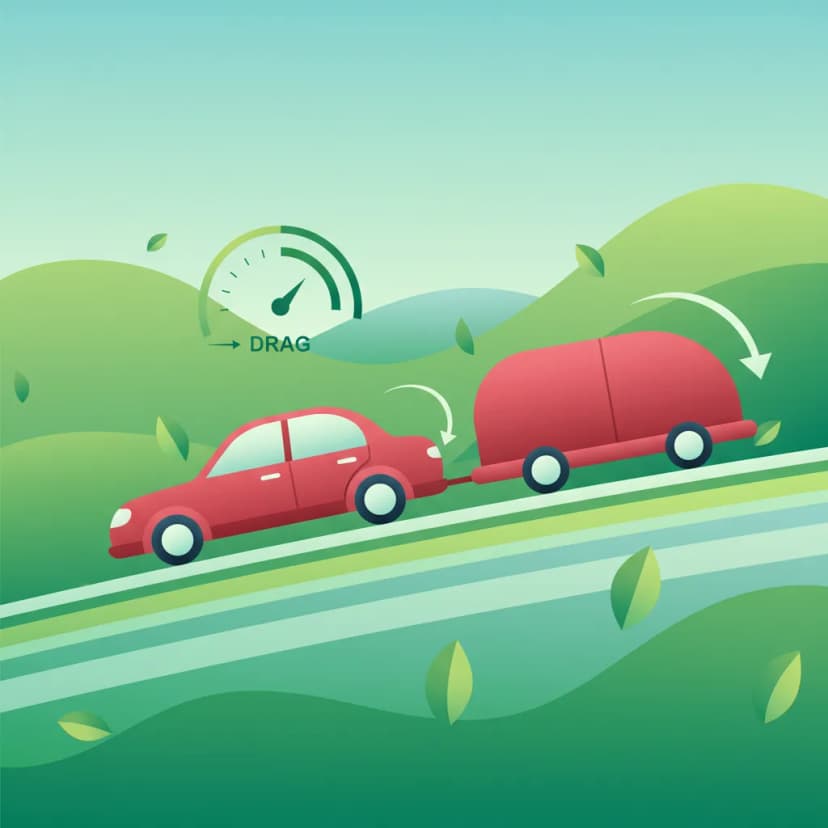
This lesson examines how adding weight, such as a pillion passenger or luggage, and changes in aerodynamics affect a motorcycle's performance and stability at speed. It explains the impact on acceleration, braking distances, and cornering ability due to a higher center of gravity and increased mass. Riders will learn how to adjust their speed and control inputs to safely manage the altered handling characteristics, especially when riding in windy conditions or at high motorway speeds.

This lesson explains the physics of how weight distribution affects a motorcycle's stability. You will learn the golden rule of packing: keep the weight as low and as close to the motorcycle's center of gravity as possible. The content provides practical advice on loading panniers evenly, placing heavier items in a tank bag rather than a high top case, and respecting the manufacturer's maximum load capacity.
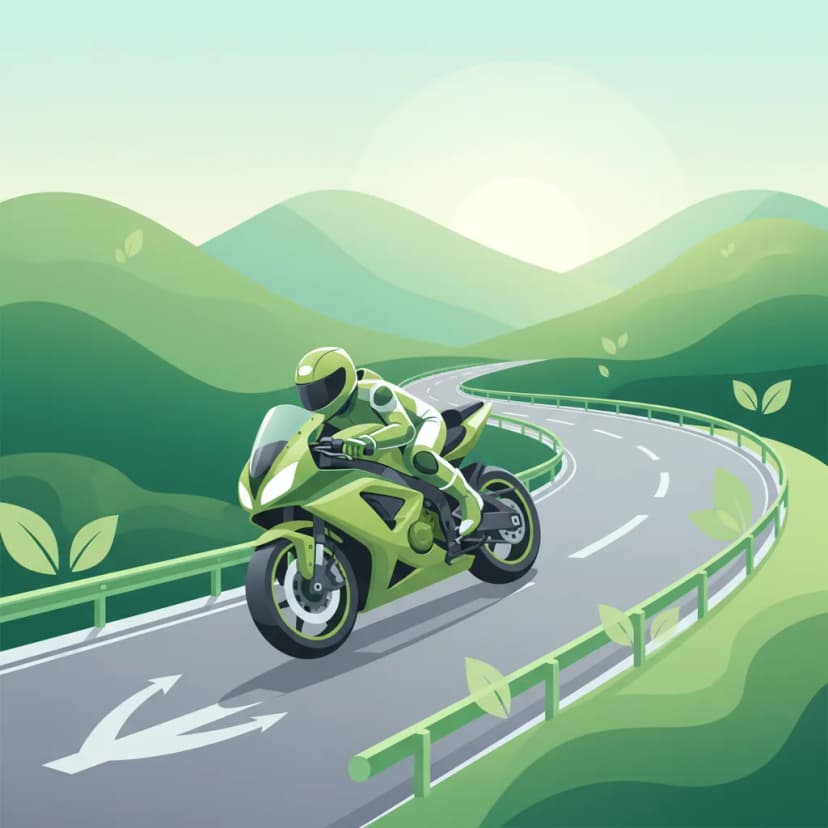
This lesson explains the critical role of the rider's body in controlling the motorcycle's dynamics, especially during cornering. It details how shifting body weight alters the combined center of gravity, allowing for greater cornering speed at a given lean angle or a safer lean angle for a given speed. Techniques for correct posture, footpeg weighting, and active body positioning are covered to enhance stability, maximize grip, and provide more precise control.

This lesson explains how you, the rider, are an active part of the motorcycle's dynamics. You will learn how shifting your body weight into the turn can reduce the required lean angle of the motorcycle itself, increasing the margin of safety and grip. The content covers correct posture, the importance of looking through the turn with your head up, and how to stay relaxed on the controls to allow the bike to work effectively.

This lesson focuses on how you must adapt your riding style when the motorcycle is heavily loaded. You will learn that your braking distances will be significantly longer, requiring you to increase your following distance and begin braking earlier. The content also explains that acceleration will be slower, and cornering will require smoother, more deliberate inputs to avoid upsetting the motorcycle's altered balance.

This lesson teaches the technique of progressive braking, which involves applying the brakes smoothly and gradually rather than abruptly. This method allows the motorcycle's weight to transfer forward in a controlled manner, compressing the front suspension and increasing the size of the front tire's contact patch. This, in turn, maximizes available grip and allows for harder, safer braking without unsettling the chassis or locking a wheel.

This lesson provides a detailed framework for how motorcyclists must safely and legally interact with diverse road users, including cars, trucks, cyclists, and pedestrians. It covers the required communication signals, anticipatory behaviors, and specific positioning techniques necessary to coexist in complex traffic environments like urban centers and shared spaces. Emphasis is placed on legal expectations and practical methods that actively reduce collision risk and promote smooth traffic flow.

This lesson provides a comprehensive guide to safe and effective deceleration on a motorcycle. You will learn the principles of controlled braking, including the progressive application of both the front and rear brakes to maximize stopping power while maintaining stability. The content also explains the role of engine braking in managing speed and how the Anti-lock Braking System (ABS) helps prevent wheel lock-up during hard braking.

This lesson focuses on the critical skill of throttle control, which directly influences the motorcycle's stability and traction. It covers the techniques for smooth roll-on and roll-off of the throttle to prevent abrupt weight shifts and potential loss of grip. Learners will understand the relationship between throttle input, engine response, and power delivery to the rear wheel, a concept essential for safe riding in all conditions, especially during cornering and on wet surfaces.

This lesson prepares you for the challenge of riding in strong winds. You will learn to anticipate areas prone to gusts, such as exiting a tunnel or passing a large truck. The content explains how to maintain a relaxed grip on the handlebars and use subtle counter-steering inputs and body lean to counteract the force of the wind, keeping the motorcycle on its intended path.
Explore the specific handling techniques required for large, heavy motorcycles ('grote motoren') in the Netherlands. Understand how to manage mass, torque, and power safely, alongside key Dutch traffic regulations (RVV 1990) applicable to these powerful machines.
This lesson details the precise technical and legal definitions distinguishing Category A motorcycles from other vehicle classes in the Netherlands. It explores key parameters such as engine capacity, minimum power output, and power-to-weight ratios, clarifying how these factors dictate licensing requirements for unrestricted bikes. Learners will also gain insight into the European harmonisation of motorcycle categories and its implications for vehicle registration and cross-border travel.
This lesson explains the physics of how weight distribution affects a motorcycle's stability. You will learn the golden rule of packing: keep the weight as low and as close to the motorcycle's center of gravity as possible. The content provides practical advice on loading panniers evenly, placing heavier items in a tank bag rather than a high top case, and respecting the manufacturer's maximum load capacity.
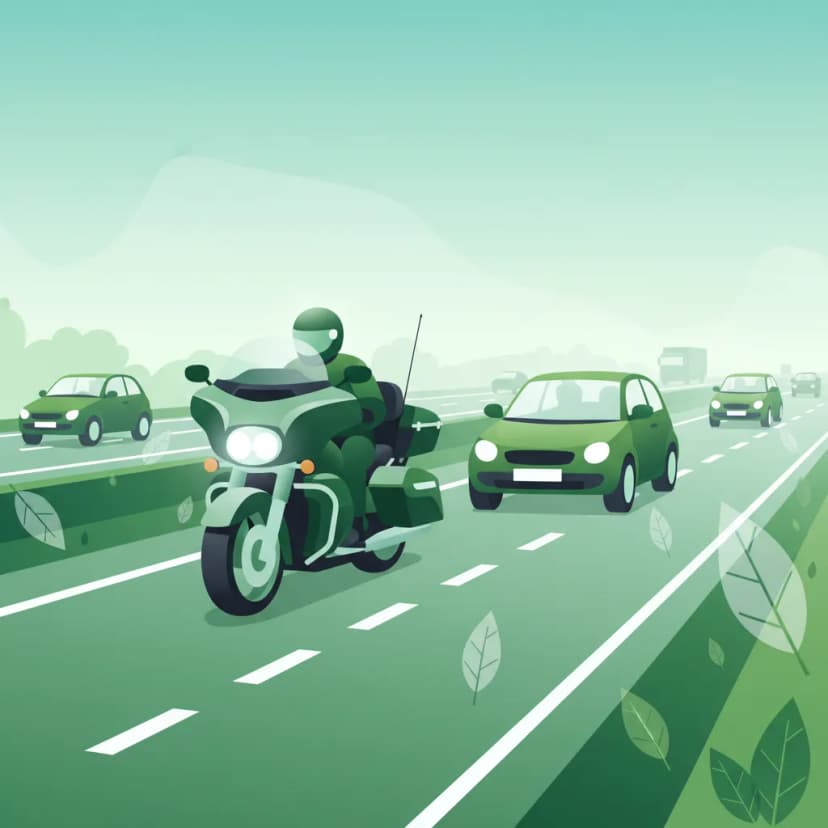
This lesson details the systematic process for safely overtaking on a multi-lane motorway, leveraging the acceleration capabilities of a Category A motorcycle. It covers the 'mirror, signal, maneuver' sequence, with a strong emphasis on the critical shoulder check to clear the blind spot before moving out. The content also discusses how to judge closing speeds, ensure adequate space before returning to the lane, and how to handle situations involving multiple lanes and slower-moving heavy vehicles.

This lesson details the Dutch regulations for carrying passengers on a motorcycle, including the minimum age for the passenger and the mandatory use of approved helmets. It explains the rider's legal responsibility for the passenger's safety and how to properly secure loads to avoid affecting the motorcycle's stability and balance. Understanding these rules is crucial for ensuring safety and legality when riding with a pillion or luggage.

This lesson explains the precise legal definition of a Category A1 motorcycle, including the maximum 125cc displacement and 11 kW power output. It outlines the entire CBR licensing pathway, from meeting the minimum age requirement to passing both the theory and practical exams. Key administrative obligations such as vehicle registration (kenteken), mandatory insurance, and roadworthiness inspections (APK) are also detailed, ensuring a full understanding of legal compliance.
This lesson focuses on the specific hazards and techniques for safely sharing the road with heavy goods vehicles (HGVs) and buses. It provides a detailed explanation of their extensive blind spots ('dode hoek') and teaches riders where to position themselves to remain visible. The curriculum also covers how to manage the significant air turbulence created by these vehicles when overtaking and how to anticipate their wide turning circles at junctions and roundabouts.
This lesson focuses on managing the unique acceleration characteristics of a 35 kW A2 motorcycle. You will learn about the relationship between engine power, torque, and acceleration, and how to apply throttle smoothly to maintain traction and stability. The content provides techniques for effective gear selection to ensure you have responsive power when needed for overtaking, while also preventing jerky or uncontrolled acceleration.
This lesson focuses on how you must adapt your riding style when the motorcycle is heavily loaded. You will learn that your braking distances will be significantly longer, requiring you to increase your following distance and begin braking earlier. The content also explains that acceleration will be slower, and cornering will require smoother, more deliberate inputs to avoid upsetting the motorcycle's altered balance.

This lesson examines the statutory duties imposed on motorcyclists, with a strong emphasis on the 'duty of care' (zorgplicht) and the conditions under which legal liability arises after a traffic incident. It clarifies the relationship between personal responsibility, mandatory insurance coverage, and the legal expectation for proactive risk mitigation to prevent accidents. The content also analyzes scenarios to illustrate how liability is typically determined within Dutch traffic jurisprudence, preparing riders for their legal responsibilities.
This lesson examines how adding weight, such as a pillion passenger or luggage, and changes in aerodynamics affect a motorcycle's performance and stability at speed. It explains the impact on acceleration, braking distances, and cornering ability due to a higher center of gravity and increased mass. Riders will learn how to adjust their speed and control inputs to safely manage the altered handling characteristics, especially when riding in windy conditions or at high motorway speeds.
Find clear answers to common questions learners have about Riding Large Displacement Motorcycles (grote motoren). Learn how the lesson is structured, which driving theory objectives it supports, and how it fits into the overall learning path of units and curriculum progression in the Netherlands. These explanations help you understand key concepts, lesson flow, and exam focused study goals.
Generally, Category A unrestricted motorcycles, typically over 500cc, are considered large displacement. The key is their weight and powerful engine characteristics, which demand specific handling techniques for both the Dutch CBR exam and safe real-world road use.
Yes, the CBR exam often includes scenario-based questions testing your knowledge of low-speed maneuvering, emergency braking, and smooth power management unique to powerful Category A bikes. These questions assess your understanding of how to control a large motorcycle safely.
While core body positioning is similar, heavy bikes often require more deliberate and precise inputs. For low speeds, using your body to subtly shift weight and engaging the friction zone of the clutch becomes even more critical to maintain balance and avoid tipping over.
Common mistakes include abrupt throttle inputs, which can lead to unintended wheelies, loss of traction, or instability, especially in wet conditions or during cornering. Smooth, progressive power application is crucial to effectively manage the bike's torque and maintain control.
Key techniques include consistent throttle control in the friction zone, light rear brake application, looking far ahead through the turn, and using subtle counter-balance with your body. These help maintain stability and control at very low speeds, as required for figures like U-turns.