
This lesson breaks down advanced motorcycle cornering into a systematic approach, covering the critical entry, apex, and exit phases. Mastering these techniques is vital for safe and controlled riding, especially on a powerful Category A motorcycle. It builds upon previous lessons on throttle and braking control, preparing you for complex road scenarios and specific questions on the Dutch CBR theory exam.
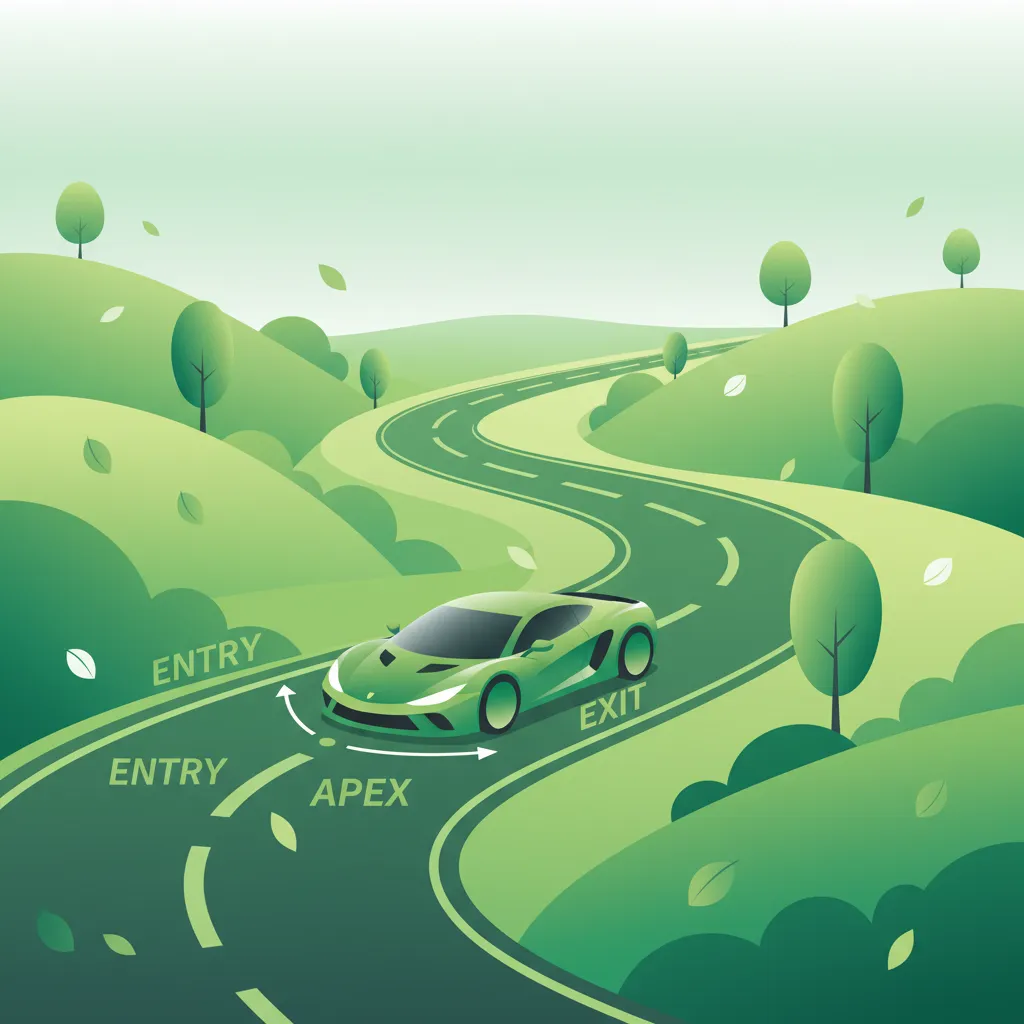
Navigating corners safely and efficiently is a fundamental skill for every motorcyclist, particularly in the diverse road conditions of the Netherlands. This lesson, part of your Dutch Motorcycle Theory – Category A Comprehensive Preparation, will break down the complex art of cornering into three distinct, manageable phases: entry, apex, and exit. By understanding and mastering these phases, you will develop a systematic approach that enhances control, improves safety, and ensures compliance with Dutch traffic regulations (RVV 1990).
Effective cornering is not merely about speed; it's about precision, foresight, and understanding the intricate dance between physics, road geometry, and your motorcycle's capabilities. This 'slow in, fast out' methodology provides a structured, repeatable process for navigating any corner with confidence and control, reducing accident risk and improving your overall riding experience.
Motorcycle cornering involves a sophisticated interplay of forces. As you lean into a turn, centrifugal force attempts to push you outwards, while the friction between your tires and the road provides the necessary grip to maintain your line. The tighter the corner and the higher your speed, the greater the lean angle required and the higher the demand on your tires' limited traction.
Safety is paramount, and Dutch traffic law reinforces this through regulations that mandate riding at a speed appropriate for conditions (RVV 1990 article 2.2) and maintaining control (RVV 1990 article 4.2). By systematically managing your speed, road position, and throttle application throughout a corner, you minimize lateral load on your tires, reduce the risk of exceeding their friction limits, and create a wider safety margin for unexpected hazards.
When you brake, the motorcycle's weight (load) shifts forward, increasing pressure on the front tire but simultaneously reducing grip on the rear tire. Conversely, accelerating shifts load to the rear, increasing rear tire grip while potentially reducing front tire traction. Effective cornering requires understanding and managing this load transfer to ensure that neither tire is overloaded beyond its friction circle (also known as the traction circle), which defines the maximum combined longitudinal and lateral forces a tire can generate before slipping. Maintaining a balanced friction circle is key to stability and control through every phase of a corner.
Several fundamental principles underpin safe and efficient motorcycle cornering. These principles form a mental checklist that riders can apply to every turn, regardless of its complexity or the prevailing conditions.
The Slow-In, Fast-Out philosophy is a cornerstone of safe and performance riding. It advocates for reducing your speed significantly before the apex of the corner, entering the turn at a manageable pace, and then smoothly accelerating after the apex as you exit the bend. This strategy minimizes the lateral forces on your tires at the point of highest curvature, allowing you to maintain better control and maximize available grip. By shedding speed early, you can often achieve a higher, safer exit speed, which is particularly beneficial when preparing for the next straight or overtaking maneuver.
Line selection refers to choosing the continuous path your motorcycle takes from the entry of a corner, through its apex, and out to the exit. The goal is to maximize the radius of the turn while staying strictly within your legal lane markings. A wider, smoother arc reduces the required steering angle and lean angle, thereby decreasing the demands on tire grip and enhancing stability. This strategic line choice is crucial for maintaining control and complying with Dutch road rules, especially RVV 1990 article 3.1, which prohibits crossing solid lane markings.
The apex is the optimal point within a corner where the rider should be closest to the geometric center of the curve, allowing a smooth transition to the exit. While the geometric apex is the exact mathematical center of the curve, the dynamic apex (or safe apex) is the point chosen by the rider based on real-world conditions like speed, road surface, visibility, and traffic. This dynamic approach allows for adaptation to situations such as wet roads, blind corners, or the presence of other road users. Choosing an appropriate dynamic apex is critical for setting up a safe and controlled exit.
Progressive throttle application involves gradually increasing engine power after passing the apex, synchronizing it with the motorcycle's reduction in lean angle and its straightening. This smooth, controlled increase prevents sudden torque spikes that could cause the rear wheel to lose traction (rear-wheel slip) or lead to over-steer. Applying throttle progressively stabilizes the motorcycle, shifts weight to the rear for better grip, and ensures a controlled, safe exit from the corner at an optimal speed.
Effective load transfer management means controlling how the motorcycle's weight shifts between its front and rear tires. During braking, weight shifts forward (front-heavy transfer), increasing front tire grip but reducing rear tire grip. During acceleration, weight shifts rearward (rear-heavy transfer). Understanding this dynamic allows riders to apply brakes and throttle smoothly, maintaining a balanced distribution of grip across both tires. This helps avoid exceeding the friction circle of either tire, which could lead to a loss of control. Techniques like trail braking (light braking into a turn) subtly manage load transfer to maintain front tire grip and tighten a line, but must be used judiciously, especially on less-than-ideal surfaces.
The entry phase is where you set the stage for a successful corner. It begins from the point you decide to initiate the cornering maneuver (the braking point) until you reach the apex. This phase is crucial for establishing the correct speed, road position, and initial lean angle.
Two primary techniques define how you enter a corner:
Your braking point is the precise location on the approach to a corner where you begin to decelerate. Accurately determining this point is vital for entering the corner at a controllable speed, allowing for a safe margin and preventing the need for emergency braking mid-corner. Factors influencing your braking point include:
Visual cues like road signs, lane markings, or distinct landmarks can serve as mental markers for your braking point. Always prioritize safety and err on the side of braking earlier rather than too late.
The apex is the heart of the cornering maneuver, representing the point where you transition from entry to exit. Your aim is to smoothly guide the motorcycle through this point, maintaining balance and setting yourself up for a strong exit.
As previously discussed, the geometric apex is simply the mathematical point of greatest curvature in a corner. On a public road, however, relying solely on the geometric apex can be risky due to varying conditions and the presence of other road users. The dynamic apex is the strategically chosen point that optimizes safety, visibility, and the ability to exit the corner cleanly.
Choosing the correct dynamic apex allows you to maintain stability, keep your motorcycle within the legal lane, and prepare for potential hazards beyond the curve.
The placement of your dynamic apex has significant implications for your line and exit:
Always aim for a dynamic apex that allows for maximum visibility and a smooth, stable exit while remaining within your lane.
The exit phase completes the cornering maneuver, starting from the apex until the motorcycle is fully upright and stable on the subsequent straight. This phase is all about controlled acceleration and returning to a steady course.
As you pass the dynamic apex and the motorcycle begins to straighten up (reducing its lean angle), it's time to progressively apply throttle. This means gradually rolling on the power, matching the increase in throttle with the decrease in lean. This smooth application achieves several things:
Avoid abruptly opening the throttle, especially when still at a significant lean angle, as this can easily overwhelm the rear tire's traction, leading to wheel spin and a loss of control. Traction Control (TC) systems, present on many modern motorcycles, can mitigate this risk by reducing engine torque when slip is detected, but they are an aid, not a replacement for good throttle judgment.
Compliance with Dutch traffic legislation is non-negotiable for safe and legal motorcycling. Several articles from the Reglement Verkeersregels en Verkeerstekens 1990 (RVV 1990) directly pertain to cornering.
Drivers must adapt their speed such that they can stop their vehicle safely within the visible and predictable distance ahead under the prevailing conditions.
This fundamental rule is paramount for cornering. It legally obliges you to reduce speed sufficiently before entering a corner so that you can maintain control, safely navigate the bend, and stop if an unforeseen hazard (e.g., debris, another vehicle, pedestrian) appears mid-corner. Failing to adapt your speed can lead to loss of control, an accident, and a conviction for unsafe driving.
Vehicles must stay within their designated lane markings. Crossing a solid lane marking (e.g., a solid centre line or solid white line) is prohibited.
Your chosen line through a corner must always respect lane boundaries. You are not permitted to cross solid centre lines to take a "racing line" that cuts into the opposing lane. Similarly, you must stay within your own lane when cornering, even if it feels restrictive. Violating this article carries penalties and significantly increases the risk of head-on collisions.
Braking must not cause a hazard to following traffic. Abrupt braking is prohibited if it leads to rear-end collisions.
While braking effectively for a corner is essential, it must be done smoothly and predictably. Sudden, harsh braking without warning can startle or endanger following drivers, potentially leading to a rear-end collision. Plan your braking early, signal your intentions with your brake light, and decelerate gradually.
Drivers must keep a safe following distance from the vehicle in front, allowing them to react to its actions.
This rule applies especially during corner exit. As you accelerate out of a corner, ensure you do not rapidly close the gap to any vehicles ahead. Maintain at least a two-second following distance to allow sufficient reaction time, especially if the vehicle in front suddenly brakes or changes speed.
Drivers must conduct their vehicle in a manner that does not endanger other road users or obstruct traffic.
This overarching principle dictates that all your cornering decisions and maneuvers must prioritize overall road safety. This includes choosing lines that maximize visibility, being prepared for vulnerable road users (cyclists, pedestrians), and not taking unnecessary risks for the sake of speed.
Understanding common errors helps in avoiding them. Here are some frequent mistakes made during cornering, along with their potential consequences:
No two corners are exactly alike, and conditions constantly change. Mastering cornering means being able to adapt your approach to various contexts.
When riding in wet or slippery conditions (rain, frost, gravel, oil spills), the friction coefficient between your tires and the road significantly decreases. This demands:
Low visibility (fog, heavy rain, night riding) further complicates matters by shortening your sight distance. In these situations:
The environment significantly dictates your cornering strategy:
Special conditions require specific adjustments:
Mastering corner entry, apex, and exit strategies doesn't happen in isolation. It is a synthesis of several foundational riding skills taught in your Dutch Motorcycle Theory course:
This lesson serves as a crucial building block for more advanced modules, such as Riding Large Displacement Motorcycles (where powerful engines make throttle control even more critical) and Risk Assessment for Fast Overtaking (which often involves accelerating out of a corner).
Let's look at how these principles are applied in various real-world scenarios.
Setting: An 80 km/h two-lane road in a rural area, dry asphalt, with a moderate 90-degree left-hand bend. No oncoming traffic is visible.
Correct Behavior: The rider assesses the corner and starts braking gently about 120 meters before the bend, reducing speed to approximately 45 km/h. They maintain a wide entry line, positioning the motorcycle towards the right edge of their lane (for a left-hand bend). They aim for a late apex, entering the turn after the initial curve, which allows for a smoother, wider arc. After passing the apex, they smoothly roll on the throttle, progressively increasing power as the motorcycle straightens, exiting the corner at around 70 km/h. This approach ensures maximum stability and control.
Incorrect Behavior: The rider maintains 80 km/h for too long, brakes sharply only 30 meters before the curve, and quickly turns in, aiming for an early apex. This forces an excessive lean angle at speed, causing the motorcycle to feel unstable and run wide (under-steer). Upon realizing this, the rider might panic and apply full throttle abruptly, leading to rear-wheel slip or loss of control.
Setting: A 50 km/h urban street in the rain, significantly reducing tire grip. The rider needs to make a right-hand turn at an intersection with a marked pedestrian crossing ahead.
Correct Behavior: Recognizing the reduced friction, the rider begins braking much earlier, about 80 meters out, gently reducing speed to a very cautious 30 km/h. They ensure full braking is completed before initiating the turn, avoiding trail braking. They follow the right-hand lane carefully, staying well within markings and avoiding any cuts. They select an early apex to straighten the motorcycle sooner, giving them a better view of the pedestrian crossing and ample time to stop safely if pedestrians are present. Throttle application on exit is minimal and very gradual until the motorcycle is fully upright and clear of the crossing.
Incorrect Behavior: The rider underestimates the reduced grip in the wet. They attempt a higher-speed entry and a late apex, hoping to carry more speed through the turn. This forces them to lean aggressively on a slippery surface, risking a front-end slide. They might also cut the corner, crossing a solid line (violating RVV 1990 Art. 3.1) and potentially endangering pedestrians or other traffic.
Setting: A 120 km/h motorway with a long, gentle 5-degree left curve. Conditions are dry, and traffic is moderate.
Correct Behavior: The rider begins gentle, progressive braking approximately 250 meters before the curve, reducing their speed to about 100 km/h. They choose a wide entry line, maintaining a position towards the right side of their lane. Given the gentle curve and good visibility, they aim for a geometric or slightly late apex, maintaining a smooth, wide arc. They may apply very light trail braking to maintain front-end feel and fine-tune their line. After the apex, they smoothly roll on the throttle, gradually increasing speed back towards 115 km/h as they exit the curve, ensuring they maintain a safe following distance.
Incorrect Behavior: The rider maintains 120 km/h for too long, then brakes abruptly only 30 meters before the curve. This causes excessive load transfer and instability. They might attempt an overly tight line, requiring an extreme lean angle at high speed, which significantly reduces the safety margin and increases the risk of loss of traction.
Setting: A 60 km/h rural road at night, with reduced visibility due to fog. The rider encounters a right-hand bend, with illuminated road edge markers providing some guidance.
Correct Behavior: Recognizing the severely limited visibility and potential for reduced grip, the rider adopts a highly cautious approach. They begin braking much earlier, around 130 meters out, and reduce their speed to a very conservative 35 km/h. They maintain a steady position near the center of their lane, using the illuminated road edge markers as their primary visual reference for the curve. They aim for a mid-curve apex, avoiding the very edges of the road where hazards might be obscured. Acceleration after the apex is extremely gentle and controlled, ensuring they stay well within their lane and can react to any unforeseen obstacles appearing from the fog.
Incorrect Behavior: The rider, frustrated by the low visibility, delays braking, enters the corner too fast, and attempts to "cut" the corner to gain a quicker view of the exit. This dangerous maneuver could cause them to cross into the oncoming lane, leading to a potential head-on collision, or to encounter an unexpected hazard at speed in the fog.
The "Slow-In, Fast-Out" methodology is not just a riding technique; it's a comprehensive safety strategy with strong legal and physical backing.
Mastering corner entry, apex, and exit strategies is a journey that integrates physics, observation, and practiced technique. By consistently applying the principles outlined in this lesson, you will become a safer, more confident, and more skilled motorcyclist.
Key takeaways include:
Lesson content overview
Explore all units and lessons included in this driving theory course.
Explore search topics learners often look for when studying Corner Entry, Apex, and Exit Strategies. These topics reflect common questions about road rules, driving situations, safety guidance, and lesson level theory preparation for learners in the Netherlands.
Browse additional driving theory lessons that cover connected traffic rules, road signs, and common driving situations related to this topic. Improve your understanding of how different rules interact across everyday traffic scenarios.
Understand the complex physics behind motorcycle cornering. This lesson explores load transfer, tire friction circle dynamics, and how they impact grip and stability during turns, crucial for safe riding in the Netherlands.

This lesson provides a foundational understanding of the physics that govern motorcycle cornering. It explains how leaning the motorcycle shifts its center of gravity, creating a centripetal force that counteracts the outward centrifugal force of the turn. Learners will explore the relationship between speed, turn radius, and the required lean angle, as well as the critical role of tire traction in this dynamic balance.

This lesson demystifies the concept of counter-steering, the primary method for steering a motorcycle at speed. It explains how a small push on the handlebar initiates a lean, allowing the bike to turn effectively. The lesson also details how a rider's body position and weight shifting are used in conjunction with steering inputs to control the motorcycle's center of gravity, ensuring stability and precision while cornering.

This lesson explains how you, the rider, are an active part of the motorcycle's dynamics. You will learn how shifting your body weight into the turn can reduce the required lean angle of the motorcycle itself, increasing the margin of safety and grip. The content covers correct posture, the importance of looking through the turn with your head up, and how to stay relaxed on the controls to allow the bike to work effectively.

This lesson focuses on the critical relationship between speed, braking, and throttle control in cornering. You will learn the golden rule: complete your braking while the motorcycle is still upright, before initiating your lean. The content then explains how to use a neutral or slightly positive 'maintenance throttle' to keep the suspension settled mid-corner, followed by smoothly rolling on the throttle as you exit the turn to aid stability.

This lesson explains the critical role of the rider's body in controlling the motorcycle's dynamics, especially during cornering. It details how shifting body weight alters the combined center of gravity, allowing for greater cornering speed at a given lean angle or a safer lean angle for a given speed. Techniques for correct posture, footpeg weighting, and active body positioning are covered to enhance stability, maximize grip, and provide more precise control.

This lesson addresses the specific challenge of cornering when road grip is compromised. It teaches riders how to identify potential low-traction surfaces like wet manhole covers, painted lines, gravel, or oil patches. The content focuses on techniques to mitigate risk, such as reducing speed, minimizing lean angle, and applying all control inputs—braking, steering, and throttle—with exceptional smoothness to avoid overwhelming the available grip.

This lesson details the correct, systematic procedure for safely navigating a corner. It teaches the 'slow in, fast out' principle, where all necessary braking and downshifting is completed before entering the turn. The content covers how to choose the correct line, identify the apex, and use smooth throttle application on the exit to maintain stability and traction, ensuring a safe and controlled passage through the bend.

Proper cornering technique is vital for safety and stability on a two-wheeler. This lesson explains the physics of turning, including the concepts of lean angle and counter-steering. You will learn the importance of adjusting your speed before the turn, looking where you want to go, and maintaining a smooth throttle through the corner. These techniques help you maximize grip and maintain control, ensuring you can navigate bends safely.

This lesson demystifies the concept of counter-steering, the primary method for controlling a motorcycle at any speed above a walking pace. It explains the physics behind why pressing on the inside handlebar initiates a lean and turn in that direction. Mastering this non-intuitive but essential skill is fundamental for fluid cornering, precise line control, and the ability to execute rapid, life-saving swerves to avoid unexpected obstacles.

This lesson prepares you for real-world cornering challenges where conditions are not always perfect. You will learn how to identify clues that a corner may be tightening (a decreasing radius) and how to adjust your line accordingly. The content covers strategies for dealing with unexpected hazards like gravel or wet patches mid-corner and emphasizes the importance of always riding in a way that leaves you an escape route or a margin for error.
Master road-legal cornering strategies for the Netherlands. This lesson focuses on RVV 1990 regulations, safe line selection, speed adaptation, and managing urban and highway curves legally and responsibly.
This lesson addresses the specific challenge of cornering when road grip is compromised. It teaches riders how to identify potential low-traction surfaces like wet manhole covers, painted lines, gravel, or oil patches. The content focuses on techniques to mitigate risk, such as reducing speed, minimizing lean angle, and applying all control inputs—braking, steering, and throttle—with exceptional smoothness to avoid overwhelming the available grip.
This lesson details the correct, systematic procedure for safely navigating a corner. It teaches the 'slow in, fast out' principle, where all necessary braking and downshifting is completed before entering the turn. The content covers how to choose the correct line, identify the apex, and use smooth throttle application on the exit to maintain stability and traction, ensuring a safe and controlled passage through the bend.
Proper cornering technique is vital for safety and stability on a two-wheeler. This lesson explains the physics of turning, including the concepts of lean angle and counter-steering. You will learn the importance of adjusting your speed before the turn, looking where you want to go, and maintaining a smooth throttle through the corner. These techniques help you maximize grip and maintain control, ensuring you can navigate bends safely.
This lesson prepares you for real-world cornering challenges where conditions are not always perfect. You will learn how to identify clues that a corner may be tightening (a decreasing radius) and how to adjust your line accordingly. The content covers strategies for dealing with unexpected hazards like gravel or wet patches mid-corner and emphasizes the importance of always riding in a way that leaves you an escape route or a margin for error.

This lesson delves into the critical skill of determining a safe and appropriate speed for navigating curves and bends. It explains the physical principles involved, including the relationship between speed, lean angle, and available traction, and teaches riders how to assess a corner's radius and camber visually. Techniques such as using the 'vanishing point' to judge a curve's tightness are covered, enabling riders to select a safe entry speed and maintain control throughout the turn.
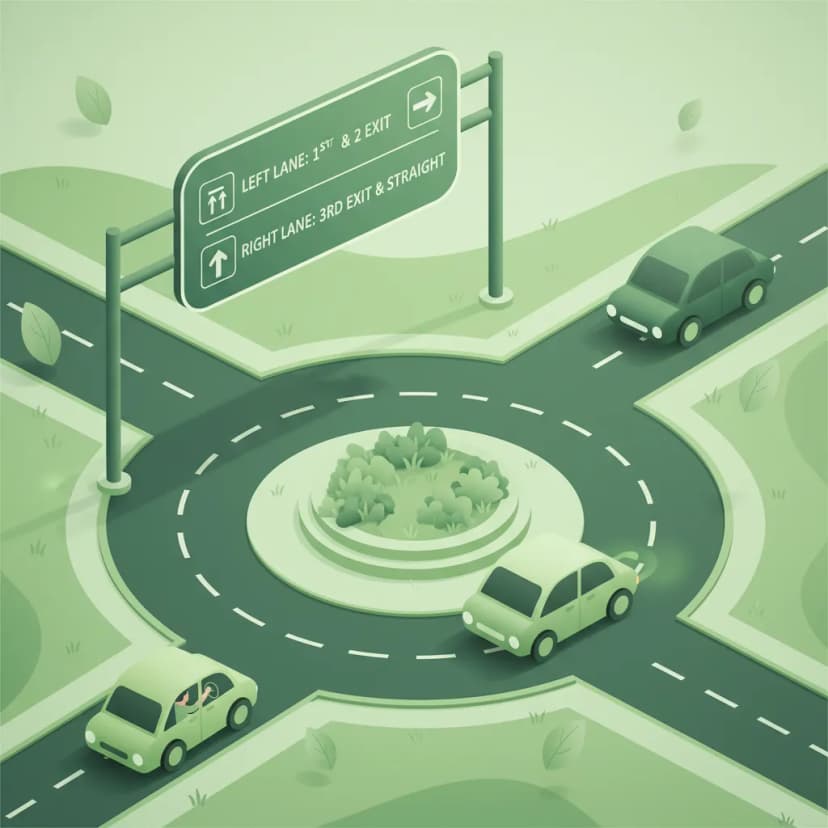
This lesson provides a detailed guide to navigating Dutch roundabouts ('rotondes'), including single-lane, multi-lane, and 'turbo' designs. It clarifies the specific priority rules that apply when entering the roundabout and the critical importance of correct signaling when changing lanes or exiting. Special attention is given to the vulnerable position of motorcyclists and the need to be aware of other vehicles' blind spots and the priority rules concerning cyclists on or near the roundabout.

This lesson explains how to apply the principle of counter-steering decisively in an emergency situation to perform a rapid swerve. It covers the importance of looking where you want to go, avoiding 'target fixation' on the obstacle, and executing a firm push on the appropriate handlebar to initiate a quick lean and change of direction. This skill is a critical component of collision avoidance for any motorcyclist.

This lesson focuses on advanced low-speed control required for maneuvers like making a U-turn on a narrow road. It covers the correct procedure, which involves comprehensive observation (checking all around for traffic), signaling, and using a combination of steering input and controlled power to execute the turn smoothly. Mastering these skills is a requirement for the practical test and is useful in many real-world riding situations.

This lesson focuses on the rules and techniques for safely navigating Dutch roundabouts, a common feature of the road network. You will learn that traffic circulating on the roundabout typically has priority and that you must yield before entering. The content covers correct lane selection for your intended exit, proper use of turn signals, and maintaining awareness of cyclists who may have priority on adjacent paths.

This lesson introduces the Dutch concept of 'voorspellend rijgedrag,' or anticipatory riding, a proactive approach to safety. It teaches motorcyclists how to look beyond the immediate vehicle in front and scan for clues that predict the actions of other road users, such as turn signals, wheel direction, and driver head movement. By anticipating potential conflicts before they happen, riders can position themselves to avoid danger and ensure a smoother, safer journey through complex traffic.
Find clear answers to common questions learners have about Corner Entry, Apex, and Exit Strategies. Learn how the lesson is structured, which driving theory objectives it supports, and how it fits into the overall learning path of units and curriculum progression in the Netherlands. These explanations help you understand key concepts, lesson flow, and exam focused study goals.
A geometric apex is the point furthest inside the corner, which might offer the shortest path. A safe apex, however, is chosen to maximize visibility through the corner, allow for a smoother exit, and provide a safety margin for unexpected hazards. For Category A riders in the Netherlands, prioritizing safety and visibility over the shortest line is crucial.
Smooth, progressive throttle application on corner exit helps to stabilize the motorcycle by transferring weight to the rear wheel, enhancing traction. Abrupt throttle changes can upset the bike's balance, potentially leading to a loss of control, especially on powerful Category A machines. Mastering this is key for a stable departure from the turn.
Yes, counter-steering is fundamental for initiating lean and changing direction efficiently, particularly on heavier Category A motorcycles. It's an integral part of the corner entry process, allowing you to quickly set your lean angle. The entry, apex, and exit strategies dictate when and how you apply counter-steering to achieve the desired path through the bend.
Common mistakes include entering a corner too fast, looking down at the front wheel instead of through the turn, chopping the throttle mid-corner, and making abrupt steering or braking inputs. This lesson helps you avoid these pitfalls by teaching a structured, disciplined approach to each phase of cornering, crucial for the CBR A-license exam and real-world safety.
On wet roads, reducing your entry speed significantly, aiming for a wider, more upright line, and using extremely gentle inputs for steering, braking, and throttle is essential. The 'slow in, fast out' principle becomes even more critical, and you must avoid sudden movements to maintain traction and prevent skidding, a key safety aspect for Dutch conditions.