
Logo
Dutch Driving Theory Courses

Lesson 5 of the Curve Negotiation and Advanced Cornering unit

Dutch Motorcycle Theory (A2): Managing Hazards in Curves

This lesson is crucial for A2 motorcycle riders, preparing you for real-world cornering challenges on Dutch roads. It builds upon your understanding of curve negotiation by focusing on how to manage unexpected hazards. You’ll learn to identify tightening corners, react to obstacles like gravel or wet patches mid-curve, and always ride with a safety margin, ensuring you're ready for complex situations both on the road and in your CBR theory exam.

Curve HazardsMotorcycle Safety A2CBR TheoryHazard PerceptionCornering Techniques
Dutch Motorcycle Theory (A2): Managing Hazards in Curves
Dutch Motorcycle Theory (A2)

Mastering Motorcycle Cornering Challenges: Managing Hazards in Curves

Navigating curves safely is a fundamental skill for every motorcycle rider, especially on diverse Dutch roads that present a mix of tight urban bends, sweeping rural turns, and varying weather conditions. While ideal cornering techniques focus on smooth lines and consistent speed, real-world riding often introduces unexpected challenges. This lesson prepares you for these real-world scenarios, teaching you how to identify potential dangers, adapt your riding strategy, and maintain a crucial margin of safety when conditions are less than perfect. Understanding and applying these principles is vital for securing your Dutch Category A2 motorcycle license and ensuring your safety on the road.

The Dynamics of Motorcycle Cornering and Grip Limits

Every time a motorcycle leans into a curve, it relies on the friction between its tyres and the road surface to generate the necessary centripetal force. This force keeps the motorcycle on its curved path. The amount of grip available is finite and depends on several factors, including tyre condition, road surface, and the degree of lean. When a hazard, such as a tightening curve or a patch of gravel, reduces the available grip or increases the demand for it, the risk of a slide or loss of control rises significantly.

The physics dictates that centripetal force increases with the square of your speed and decreases with the radius of the curve. This means even a small increase in speed or a slight tightening of the curve demands a disproportionately larger amount of grip. On Dutch roads, where curve radii can change unexpectedly and surface conditions vary, mastering dynamic assessment and adaptation is not just about skill; it's about survival.

Understanding Key Principles for Safe Curve Navigation

Successfully managing hazards in curves is an intricate blend of perception, assessment, and swift, precise action. It requires integrating your understanding of how to detect a potential problem, evaluate its impact on your riding, and then execute appropriate adjustments while always preserving a safety margin.

Dynamic Curve Assessment: Continuously Evaluating the Road Ahead

Dynamic curve assessment involves the continuous evaluation of the curve's characteristics as you approach and navigate it. This includes judging its radius, camber (the slope of the road into the bend), and surface condition. The goal is to detect any changes, such as a curve that tightens unexpectedly, early enough to adjust your speed and line. This proactive approach prevents you from being surprised mid-corner and having to make emergency, high-risk corrections.

The Critical Margin of Error: Your Escape Route in Curves

A margin of error, often referred to as an "escape route," is the deliberate space you maintain between your motorcycle's trajectory and the absolute limits of tyre grip or the edge of the road. This buffer provides the essential room needed to react to unexpected hazards, such as an oil spill or loose gravel, without losing control or leaving your lane. Maintaining this margin often means adopting a slightly wider entry line and maintaining a speed that allows for some deceleration if needed.

Definition

Margin of Error (Escape Route)

The intentional excess space (both lateral and longitudinal) left by the rider to allow corrective action without leaving the lane or exceeding tyre grip limits.

Adapting to Surface Conditions: Maintaining Traction

The road surface is rarely uniform. Wet patches, gravel, oil, or even fallen leaves can drastically reduce tyre-road friction. Surface-condition adaptation means immediately adjusting your riding technique – primarily speed, throttle input, and body lean – whenever the road surface changes. This is crucial for maintaining traction and preventing a slide, even if it means temporarily deviating from the 'ideal line'.

Proactive Hazard Anticipation: Reading the Road

Proactive hazard anticipation is the skill of using all available information, from road signs and environmental cues to your peripheral vision, to predict potential hazards before they become directly visible. This allows for smoother, earlier corrective actions, reducing the need for sudden braking or swerving, which can be dangerous in a lean. For instance, spotting a "slippery road" sign or noticing standing water ahead can prompt an early speed reduction.

Definition

Proactive Hazard Anticipation

The process of using visual scanning, road signage, and environmental cues to predict hazards before they become directly observable.

Controlled Deceleration: Braking Before the Hazard

One of the most critical principles is controlled deceleration, which means applying brakes before reaching a hazard or entering a demanding section of a curve, ideally while the motorcycle is still upright or only lightly leaned. This preserves the maximum tyre contact patch for braking and ensures that when you do lean, your tyres can dedicate their full grip to cornering forces, not simultaneously braking. Applying heavy braking while leaned dramatically increases the risk of losing traction.

Line-Adjustment Hierarchy: Prioritizing Safety in Decisions

When faced with a hazard in a curve, you may need to adjust your intended line. A practical hierarchy guides these adjustments:

  1. Reduce Speed First: This is generally the safest and most effective immediate action.
  2. Widen Your Line: Move slightly further to the outside of the curve if possible, creating more space.
  3. Shift Apex Early or Late: Adjusting the point where you are closest to the inside of the curve can lengthen your exit arc, providing more time and space. This hierarchy prioritizes safety by keeping the motorcycle stable and within its grip limits.

Not all curves maintain a constant radius. Many curves, particularly on Dutch urban or rural roads, can "tighten" or "decrease in radius" as you progress through them. This means the curve becomes sharper, demanding more centripetal force and thus more grip, as you ride deeper into it.

What is a Dynamic Radius Change?

A dynamic radius change refers to a curve whose tightness (radius) varies along its length. A "tightening curve" is one where the radius progressively shrinks, requiring increasingly more lean angle or a lower speed to maintain the same path. Conversely, a "widening curve" (increasing radius) becomes less demanding.

Visual Cues for Decreasing Radius Turns

Recognizing a tightening curve requires advanced visual scanning. Look for:

  • Vanishing Point: If the point where the inside and outside edges of the road appear to meet (the vanishing point) moves closer to you or disappears entirely, the curve is likely tightening.
  • Roadside Features: Trees, fences, or buildings on the inside of the curve that suddenly appear closer together suggest a decreasing radius.
  • Guardrails/Barriers: If a guardrail on the inside seems to converge more sharply than expected, prepare for a tighter turn.

Adapting Your Line and Speed for Tightening Curves

When you identify a tightening curve, your primary response should be to reduce speed early, ideally before initiating your lean.

Strategy for Tightening Curves

  1. Early Speed Reduction: Brake gently and progressively on the straight approach.
  2. Widen Your Entry: Enter the curve from a slightly wider position than usual. This effectively makes the perceived radius of the initial part of the curve larger, giving you more time to assess the tightening section.
  3. Delay Your Apex: Aim for a later apex. By delaying the point where you get closest to the inside of the curve, you can see further around the bend and effectively straighten out the latter, tighter section of the curve, providing more time to react and reduce speed further if necessary.
  4. Maintain an Escape Route: Always ensure you have sufficient space, especially on the outside, to allow for further speed reduction or a slight widening of your line if the curve tightens more than anticipated.

Failing to anticipate a tightening curve and maintaining excessive speed is a common cause of riders "running wide" or crossing into the opposite lane, a serious violation of Dutch traffic law (RVV 1990, Art. 9).

Road surface hazards are among the most unpredictable and dangerous challenges for motorcyclists, especially when encountered mid-corner while the bike is already leaned over. Any condition that reduces the tyre-road friction can lead to a sudden loss of grip and a slide.

Common Surface Hazards on Dutch Roads

  • Loose Aggregate: Gravel, sand, or dirt often collects at the edges of rural roads or on urban construction sites. These materials significantly reduce the friction coefficient.
  • Fluid Films: Rain, standing water, oil, diesel spills, or hydraulic fluid leaks create extremely slippery patches. Oil and diesel are particularly treacherous as they mix with water, forming a slick film.
  • Contaminants: Wet leaves, algae, moss, or even painted lines (especially when wet) can drastically reduce grip. Drainage grates and manhole covers are also notoriously slippery when wet.

Maintaining Traction on Low-Friction Surfaces

When you encounter a low-friction surface mid-curve, or anticipate one, the goal is to minimize the demands on your tyres.

Dealing with Slippery Patches

  1. Reduce Speed Beforehand: The best approach is to have already reduced speed significantly before reaching the hazard.
  2. Maintain a Smooth Throttle: Avoid sudden acceleration or deceleration. Maintain a constant, light throttle, or gently close it if you need to slow down slightly.
  3. Minimize Lean Angle: Try to straighten the bike as much as possible before or while crossing the slippery patch. This means taking a slightly wider, more upright path if safe to do so.
  4. Avoid Braking or Hard Acceleration: Do not apply brakes, especially the front brake, and do not accelerate sharply while on a low-friction surface. This can easily cause a lock-up or high-side crash.
  5. Look Towards Your Exit: Keep your eyes focused on your intended path beyond the hazard, not on the hazard itself. Your body and motorcycle will tend to follow your gaze.

Strategies for Unexpected Mid-Corner Obstacles

Sometimes, hazards like debris, potholes, or even fallen branches appear without warning.

  • Small, Unavoidable Obstacles: For very small, unavoidable items, aim to hit them while the motorcycle is as upright as possible. Slightly lift your weight off the seat if safe to do so, to allow the suspension to absorb the impact better.
  • Larger, Avoidable Obstacles: If you can safely adjust your line to avoid a larger obstacle, do so gently. Remember the line-adjustment hierarchy: reduce speed first, then widen your line, then shift your apex. Avoid sudden, aggressive steering inputs.
  • Emergency Braking/Evasion: If a serious, unavoidable hazard suddenly appears, and you have no other option, emergency evasive manoeuvres (covered in Lesson 9) may be required. However, the aim of managing hazards in curves is to prevent reaching this point through proactive anticipation and preparation.

Proactive Hazard Anticipation: Seeing the Danger Early

Anticipating hazards rather than reacting to them is a hallmark of skilled, safe riding. This proactive approach gives you more time to process information, make decisions, and execute smooth, controlled adjustments.

Visual Scanning and Environmental Cues

Your eyes are your most important safety tool.

  • Look Far Ahead: Scan the road surface and surroundings 12 to 15 seconds ahead (about 200 metres at 60 km/h) on rural roads, and maintain a constant scan of 2-3 seconds ahead even in dense urban traffic.
  • Read the Road Surface: Look for changes in pavement colour or texture that might indicate wetness, oil, or gravel. Darker patches after rain can signify oil mixing with water.
  • Observe Drainage Points: Anticipate wet or slippery spots near drainage culverts, storm drains, or areas where water naturally collects.
  • Environmental Context: Be aware of your surroundings. Are there farms nearby (potential for mud/manure on the road)? Is it an industrial area (oil/diesel spills)? Are there trees (wet leaves, shade creating ice patches)?
  • Traffic Behaviour: Observe other vehicles. If a car ahead brakes unexpectedly or swerves, it might be reacting to a hazard you haven't seen yet.

The Role of Road Signs in Predicting Curve Hazards

Dutch road signs provide crucial warnings. Pay close attention to:

These signs indicate the presence of a sharp curve. Sometimes, supplemental panels may provide additional information, such as "nat wegdek" (wet road surface) or "gevaarlijk" (dangerous). These are explicit calls for increased caution and reduced speed.

Tip

When you see a curve warning sign, mentally prepare to reduce speed more than usual and to perform a thorough visual scan for additional hazards within the curve itself.

Mastering Controlled Deceleration Before Entering a Hazard

The principle of "brake before you lean" is even more critical when managing hazards in curves. Applying effective deceleration techniques before you reach a problematic section ensures maximum stability and tyre grip when you need it most for cornering.

Why Brake Before You Lean?

  • Maximizes Grip: When a motorcycle is upright, its tyres present the largest possible contact patch to the road, allowing for maximum braking force. As you lean, the contact patch changes shape, and a portion of the available grip is already being used for cornering, leaving less for braking.
  • Prevents Instability: Heavy braking while leaned can cause the front wheel to tuck, the rear wheel to slide, or the motorcycle to stand up, making it harder to maintain your desired line.
  • Maintains Control: Reducing speed on the straight approach gives you more time and options to adjust your line or react to unforeseen hazards within the curve.

Effective Braking Techniques for Curve Preparation

  • Progressive Braking: Apply the front brake smoothly and progressively. Start gently, then increase pressure, allowing the motorcycle's weight to transfer forward and load the front tyre. This maximizes stopping power without causing a lock-up.
  • Engine Braking: Downshifting before entering the curve can effectively reduce speed and provide additional stability by loading the rear tyre. Integrate this with your progressive front braking.
  • Focus on the Front Brake: The front brake provides approximately 70-90% of a motorcycle's stopping power. Use it predominantly for controlled deceleration before a curve. The rear brake can be used lightly to settle the chassis or fine-tune speed, but avoid heavy rear braking, especially while leaned.
Definition

Controlled Deceleration

Braking performed while the motorcycle is upright or at a low lean angle, before entering a curve or a known hazardous section.

Adjusted Line Strategies for Safer Cornering

While the "ideal line" (outside-inside-outside) is optimal for smooth, fast cornering under perfect conditions, hazards often necessitate a deviation for safety. These adjusted line strategies are about compromising for safety rather than speed.

Deviating from the Ideal Line for Safety

The ideal line is a template, not an immutable rule. When facing hazards like gravel, a tightening radius, or a wet patch, adapting your line is crucial.

  • Widened Entry: Instead of starting at the far outside edge, you might enter slightly wider still to gain an extra margin or to clearly see further into a blind curve. This allows for a later apex and more gradual steering input.
  • Late Apex: Delaying the point where you are closest to the inside of the curve. This effectively straightens out the exit of the curve, allowing you to accelerate more safely out of the bend, especially useful for tightening curves or where hazards are known to be near the curve's exit.
  • Inside Clipping (Extreme Cases): In very rare, extreme cases, if the outside of the curve is entirely blocked or hazardous (e.g., a massive oil spill), you might need to hug the inside edge more closely. This reduces your cornering radius significantly and demands much lower speed, but it might be the only safe path. Always do this cautiously and ensure you do not cross into oncoming traffic or endanger pedestrians.

The Line-Adjustment Hierarchy: Prioritizing Safety

As discussed, the decision-making process for adjusting your line should follow a hierarchy:

  1. Reduce Speed: Always the first and safest option.
  2. Widen Line: If safe, move slightly outward to create more space.
  3. Adjust Apex: Delay or advance the apex to manage the curve's geometry or avoid a specific hazard.

Note

Any significant adjustment to your riding line, especially moving laterally within your lane, requires you to signal your intent to other road users (RVV 1990, Art. 2).

Maintaining an Escape Route in Challenging Curves

Regardless of your chosen line, maintaining an escape route is paramount. This means:

  • Lateral Margin: Keep a reasonable distance from the curb or road edge, both inside and outside the curve. This lateral space provides room to make small corrective steering inputs without running off the road or into oncoming traffic.
  • Longitudinal Margin: Ensure your speed allows you to stop within the visible distance ahead, even if a hazard appears suddenly. This translates to maintaining enough braking distance to the point of a perceived hazard.

Dutch Traffic Laws and Cornering Safety (RVV 1990)

The Dutch Traffic Rules and Traffic Signs Regulation (Reglement Verkeersregels en Verkeerstekens 1990, or RVV 1990) sets the legal framework for safe road use. Several articles are particularly relevant to managing hazards in curves.

Article 5: Reasonable Speed (Redelijke Snelheid)

  • Rule: "Every road user must drive at a speed that is reasonable, taking into account the traffic, road, and weather conditions."
  • Applicability to Curves: This article directly impacts how you approach curves, especially those with hazards. The posted speed limit is a maximum under ideal conditions, not a target. If a curve is wet, has gravel, or tightens unexpectedly, a lower speed becomes "reasonable" and legally mandatory. Failure to reduce speed in such conditions is a breach of your duty of care.

Article 9: Staying Within Your Lane (Binnen de rijbaan blijven)

  • Rule: "Drivers must keep as far right as possible. Vehicles must remain within their lane unless overtaking or avoiding danger."
  • Applicability to Curves: When adjusting your line to avoid a hazard in a curve, you must primarily remain within your designated lane. Crossing into the adjacent lane (especially an oncoming lane) is only permissible if it is the only safe option to avoid immediate danger, and you must do so with extreme caution, ensuring no other road users are endangered. Recklessly drifting into another lane due to excessive speed is a violation.

Article 10: Maintaining Safe Distance (Voldoende Afstand Houden)

  • Rule: "Drivers must keep such a distance from the vehicle in front that they can stop at any moment."
  • Applicability to Curves: This applies not only to following other vehicles but also to your personal 'safety distance' within the curve. If you enter a curve behind another vehicle, ensure you have enough space to react if they encounter a hazard or brake suddenly. This also relates to your longitudinal margin of error; you must be able to stop before any hazard you encounter.

Article 24: Braking Responsibilities (Remmen)

  • Rule: While not explicitly dictating 'front brake before lean', the broader intent of Article 24 (relating to abrupt braking and endangering others) and driving guidelines (Rijrichtlijn) imply proper braking technique.
  • Applicability to Curves: Applying heavy braking while leaned in a curve, which can cause instability or a slide, could be interpreted as a failure to maintain control and potentially endanger others, especially if it leads to a crash. The emphasis is on controlled, predictable deceleration.

Article 2: Signalling Intent (Tijdige en Duidelijke Indicatie)

  • Rule: "Road users must, if they intend to change direction, indicate this by means of a signal or hand gesture."
  • Applicability to Curves: If your chosen line adjustment (e.g., widening your entry or shifting significantly within your lane) could be perceived as a change of direction or lane by other road users, you are legally obligated to signal your intent early and clearly with your turn indicators. This helps prevent collisions and surprises for other drivers and cyclists.

Conditional Riding: Adapting to Environment and Vehicle State

Managing hazards in curves is not a one-size-fits-all skill. The specific actions you take must be dynamically adjusted based on prevailing conditions.

Weather Impacts

  • Rain / Wet Roads: Reduce speed by 20-30% compared to dry conditions. Wet surfaces drastically reduce the friction coefficient (µ). Avoid sudden braking, acceleration, or aggressive lean angles. Increase your margin of error significantly. Watch for oil slicks, which are more visible and dangerous in the rain.
  • Snow / Ice: Treat all curves as extremely low-friction zones. Reduce speed dramatically (sometimes to walking pace). Minimize lean angle, use higher gears for gentle engine braking, and avoid any sudden inputs. Consider whether riding is safe at all.
  • Wind: Strong crosswinds can push your motorcycle laterally, especially when leaned. Be prepared to counter-steer more aggressively to maintain your line. Reduce speed to maintain stability.

Lighting Conditions

  • Night Riding: Reduced visibility demands slower speeds and increased scanning distance. Your eyes must work harder to identify hazards. Use your high-beam where permitted, but be quick to switch to low-beam for oncoming traffic. Avoid "outrunning" your headlights.
  • Dusk / Dawn Glare: Sun glare can obscure hazards or blind oncoming drivers. Adjust your visor, use sunglasses if appropriate, and maintain a wider margin of safety. Be aware that shadows can hide potholes or debris.

Road Type Variations

  • Urban Residential Curves: Often short, tight, and prone to surface contaminants (oil, gravel, parked cars). Expect frequent radius changes. Maintain lower speeds and be prepared for pedestrians or cyclists.
  • Rural Winding Roads: May feature longer curves, but also hidden hazards like leaf litter, standing water from poor drainage, or farm vehicles leaving mud. Be mindful of wildlife.
  • Motorway (Autosnelweg) Off-Ramps: These curves are typically designed for higher speeds but still require significant speed reduction. With increased inertia from motorway speeds, earlier and stronger controlled deceleration is vital. Maintain a large escape route, as run-off areas are often limited.

Vehicle State and Load Considerations

  • Heavy Load / Passenger: Additional weight increases inertia, leading to longer braking distances and altered handling dynamics. Enter curves at lower speeds, allow for more braking distance, and be gentler with steering and throttle inputs.
  • Worn Tyres: Tyres with reduced tread depth have significantly less grip, especially on wet surfaces. Treat all conditions as if they are slightly more hazardous.
  • Improper Tyre Pressure: Incorrect tyre pressure compromises the tyre's contact patch and overall stability. Check pressures regularly. Over-inflated tyres reduce grip, under-inflated tyres make the bike feel sluggish and can overheat.

Interaction with Vulnerable Users

  • Cyclists and Pedestrians: In urban curves, be extremely aware of cyclists who may be on your inside or outside, and pedestrians who might step into the road. Adjust your line to give them ample space and be prepared to stop. Signal your intentions clearly if your line deviates.

Safety and Reasoning Insights

Understanding the 'why' behind these principles reinforces their importance:

  • Physics of Grip: A 10% increase in speed demands roughly 21% more lateral grip due to the factor in centripetal force. This non-linear relationship highlights why even small speed adjustments are critical for safety.
  • Human Perception-Reaction Time: An experienced rider's perception-reaction time is approximately 1.5 seconds. At 70 km/h, this means you travel about 30 meters before you even begin to react. Proactive hazard anticipation drastically reduces this effective reaction distance, providing precious extra time.
  • Cognitive Load: Constantly making last-minute corrections is mentally exhausting and error-prone. By planning and executing early, you reduce cognitive load under stress, allowing for smoother, safer riding.
  • Road Safety Statistics: Data, such as Dutch road safety statistics (2022), consistently show that a significant percentage of motorcycle crashes involve loss of traction in curves, with surface hazards being a leading contributing factor. This underscores the real-world impact of these lessons.

Final Concept Summary: Safe Curve Management

  • Dynamic Assessment: Continuously evaluate the curve's radius and surface condition, especially looking for tightening bends.
  • Safety Margin: Always maintain an "escape route" by preserving sufficient lateral and longitudinal space for error or correction.
  • Proactive Anticipation: Use visual scanning, road signs, and environmental cues to predict hazards long before they become immediate threats. Signal any significant line changes.
  • Controlled Deceleration: Perform your primary braking before leaning into the curve or before encountering a hazard, ensuring maximum tyre grip for cornering.
  • Adjusted Line Strategies: Be willing to deviate from the ideal line (e.g., widen entry, late apex) to prioritize safety when hazards are present, always respecting lane boundaries.
  • Contextual Adaptation: Modify your approach based on weather, light, road type, vehicle load, and the presence of other road users.
  • Legal Compliance: Adhere to Dutch traffic laws, particularly those regarding reasonable speed (Art. 5), lane discipline (Art. 9), safe following distance (Art. 10), and signaling intent (Art. 2).
  • Cause-Effect: Correct application of these principles leads to maintained traction and reduced crash risk, while neglecting them increases the likelihood of loss of control and legal violations.
  • Dependencies: This lesson integrates knowledge from fundamental counter-steering, ideal line principles, braking techniques, and body positioning, and forms a crucial foundation for advanced hazard anticipation and emergency evasion skills.
Dynamic Radius
The measure of curve tightness that changes continuously along the curve’s length, especially when a curve tightens or widens.
Escape Route
The intentional space left by the rider (lateral and longitudinal) to allow recovery from a loss of traction or to avoid an unexpected hazard.
Margin of Error
A synonym for escape route, referring to the safety buffer maintained for unexpected events in a curve.
Proactive Hazard Anticipation
The practice of looking far ahead and using environmental cues and road signs to predict upcoming dangers before they are directly visible.
Controlled Deceleration
Applying brakes while the motorcycle is upright or only lightly leaned, typically before entering a curve or a known hazard.
Line-Adjustment Hierarchy
An ordered set of preferred corrective actions to manage hazards in a curve: speed reduction, line widening, then apex shift.
Surface Friction Coefficient (µ)
A numerical value representing the amount of grip between the tyre and the road surface, which changes significantly with surface type and condition (e.g., wet, gravel).
Centripetal Force
The inward force required to keep a vehicle moving in a curved path, directly related to speed, curve radius, and mass.
Counter-Steering
A motorcycle steering technique where a slight push on the handlebar in one direction causes the bike to lean and turn in the opposite direction.
Ideal Line
The optimal geometric path through a curve (typically outside-inside-outside) that minimizes steering input and maximizes speed under ideal conditions.
Road Surface Hazard
Any condition on the road (e.g., water, oil, gravel, leaves) that reduces tyre-road friction and compromises stability.
Signalling Intent
Using turn signals or clear body language to indicate an upcoming change in direction or position on the road, as required by law.

Learn more with these articles

Check out these practice sets


Search topics related to Managing Hazards in Curves

Explore search topics learners often look for when studying Managing Hazards in Curves. These topics reflect common questions about road rules, driving situations, safety guidance, and lesson level theory preparation for learners in the Netherlands.

motorcycle hazards in curves Dutch theoryhow to handle gravel in a turn motorcycle A2decreasing radius turn motorcycle explanationCBR A2 exam questions curve hazardsmotorcycle safe line wet corner Netherlandsescape route motorcycle cornering techniqueunexpected hazards while cornering A2 licenseadjusting line in tightening curve motorcycle

Related driving theory lessons for Managing Hazards in Curves

Browse additional driving theory lessons that cover connected traffic rules, road signs, and common driving situations related to this topic. Improve your understanding of how different rules interact across everyday traffic scenarios.

Advanced Management of Curve Hazards in Dutch Motorcycle Theory

Explore advanced techniques for identifying and managing unexpected curve hazards. Learn to adapt to tightening radii, slippery surfaces like gravel or oil, and maintain a crucial safety margin according to Dutch traffic laws.

curve hazardsadvanced ridinghazard perceptiontightening curvesroad surface conditionsDutch traffic rulesmotorcycle safety A2
Warning Signs and Hazard Anticipation lesson image

Warning Signs and Hazard Anticipation

This lesson details the interpretation of Dutch warning signs, which alert riders to potential dangers and changing road conditions. You will study signs indicating sharp curves, road narrowing (BORD 30), and temporary hazards like road works (BORD 36), learning to adjust speed and road position proactively. The content emphasizes how the A2 motorcycle's characteristics require earlier hazard recognition and response compared to other vehicles for maintaining control.
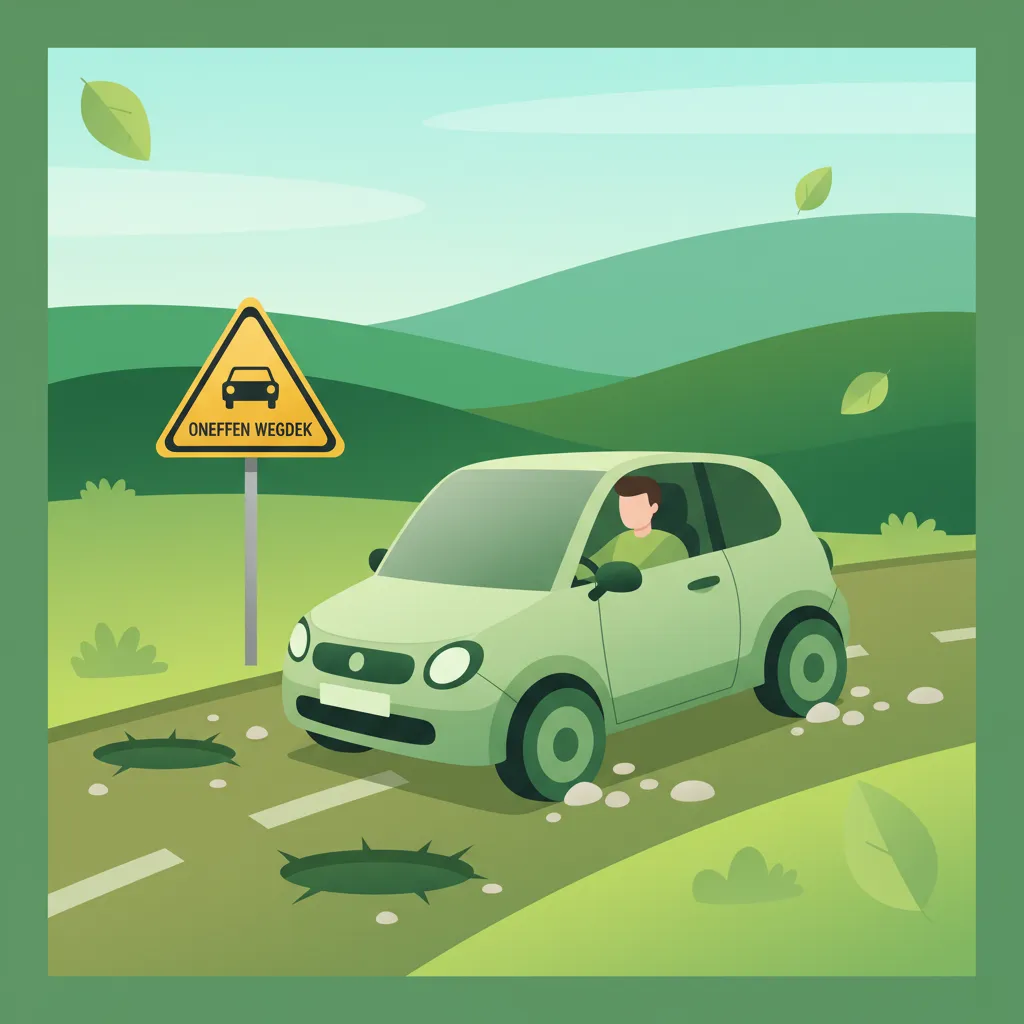
Dutch Motorcycle Theory (A2)Road Signs and Motorcycle-Specific Indicators
View lesson
Handling Road Surface Hazards lesson image

Handling Road Surface Hazards

This lesson prepares you to deal with sudden changes in road surface that can cause a loss of traction. You will learn to scan for these hazards and, if they cannot be avoided, how to ride over them safely. The key technique is to keep the motorcycle upright and maintain smooth, steady control inputs—no abrupt braking, accelerating, or steering—to minimize the risk of a skid.

Dutch Motorcycle Theory (A2)Emergency Evasive Manoeuvres and Hazard Anticipation
View lesson
Handling Low-Grip Surfaces in Curves lesson image

Handling Low-Grip Surfaces in Curves

This lesson addresses the specific challenge of cornering when road grip is compromised. It teaches riders how to identify potential low-traction surfaces like wet manhole covers, painted lines, gravel, or oil patches. The content focuses on techniques to mitigate risk, such as reducing speed, minimizing lean angle, and applying all control inputs—braking, steering, and throttle—with exceptional smoothness to avoid overwhelming the available grip.
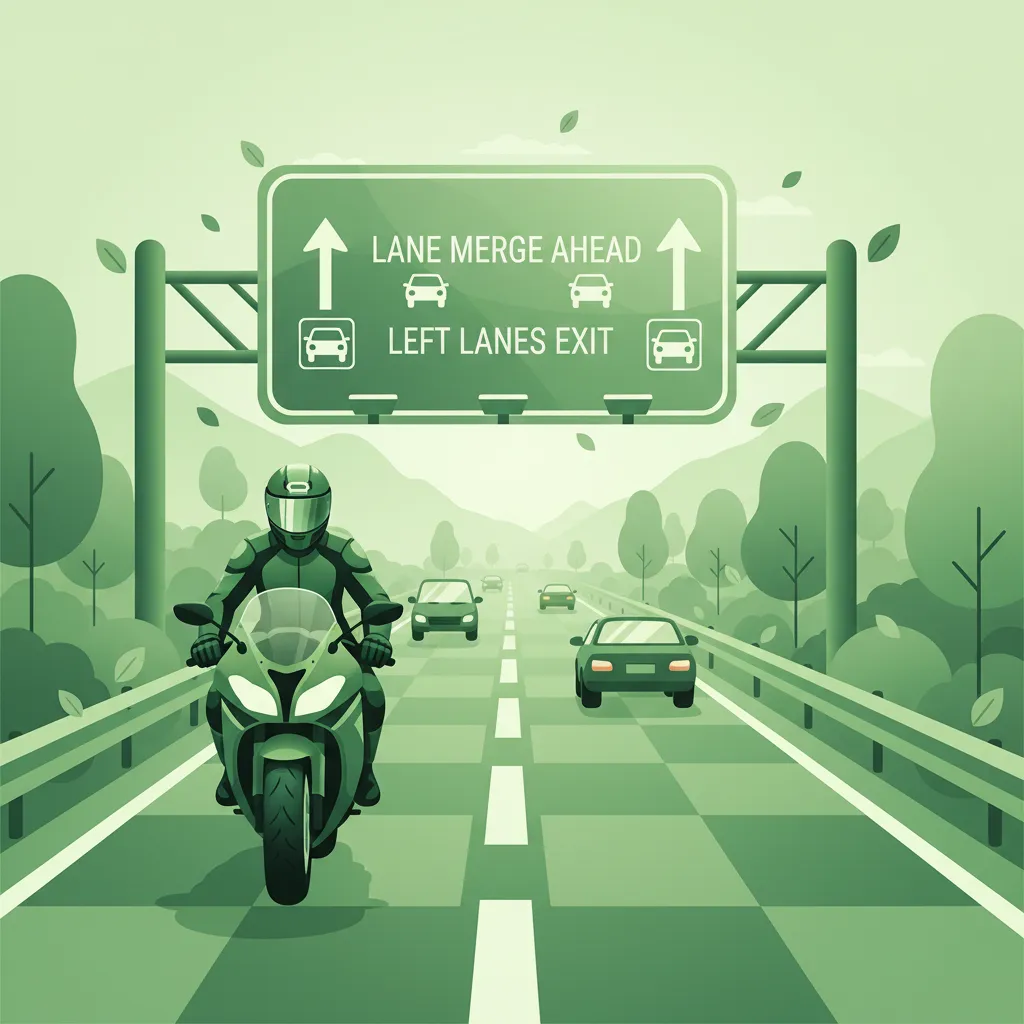
Dutch A1 Motorcycle TheoryCornering, Leaning and Stability
View lesson
Highway-Specific Hazards for Motorcyclists lesson image

Highway-Specific Hazards for Motorcyclists

This lesson prepares you for the unique dangers of high-speed highway riding. You will learn to scan for and navigate road hazards like debris, potholes, and slippery steel expansion joints on bridges. The content also addresses the powerful air turbulence created by large trucks that can upset a motorcycle's stability and the mental challenge of maintaining focus on long, monotonous stretches of road.

Dutch Motorcycle Theory (A2)Highway (Autosnelweg) Rules for Motorcycles
View lesson
Warning Signs (A-codes) lesson image

Warning Signs (A-codes)

This lesson covers A-code signs, which are designed to warn drivers of potential hazards on the road ahead. For motorcyclists, warnings about sharp bends, slippery surfaces, crosswinds, or falling rocks are especially critical for maintaining control and stability. The content explains how to interpret these triangular signs to anticipate changing conditions, adjust speed, and adopt a defensive riding posture well in advance of the hazard.

Dutch A1 Motorcycle TheoryRoad Signs and Markings (Motorcycle Perspective)
View lesson
Braking Before and Accelerating Through Curves lesson image

Braking Before and Accelerating Through Curves

This lesson focuses on the critical relationship between speed, braking, and throttle control in cornering. You will learn the golden rule: complete your braking while the motorcycle is still upright, before initiating your lean. The content then explains how to use a neutral or slightly positive 'maintenance throttle' to keep the suspension settled mid-corner, followed by smoothly rolling on the throttle as you exit the turn to aid stability.
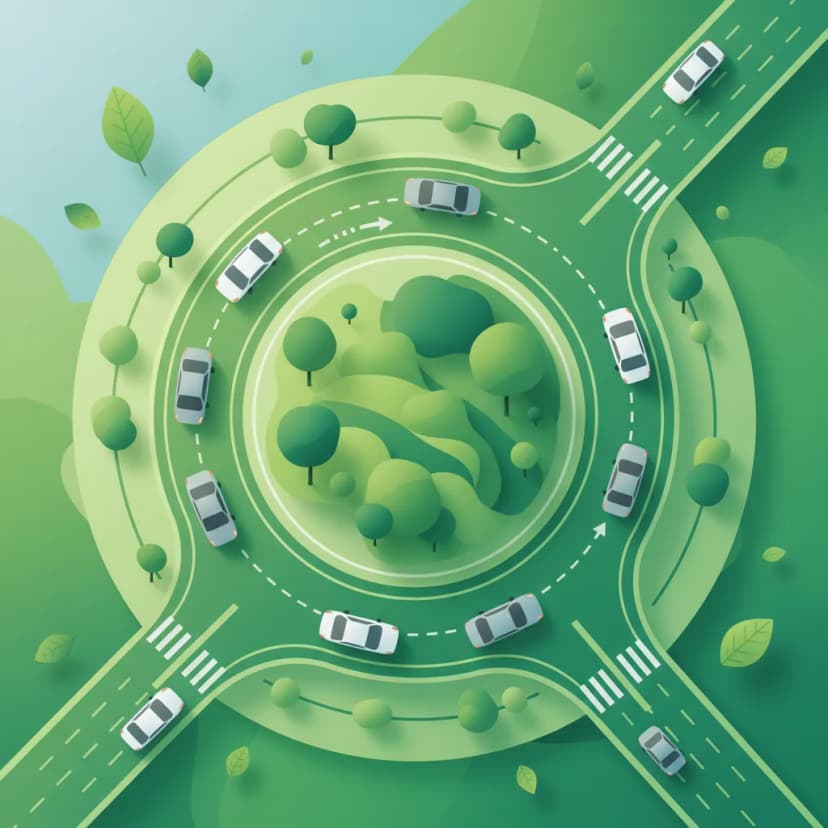
Dutch Motorcycle Theory (A2)Curve Negotiation and Advanced Cornering
View lesson
Roundabout Navigation and Right-of-Way lesson image

Roundabout Navigation and Right-of-Way

This lesson focuses on the rules and techniques for safely navigating Dutch roundabouts, a common feature of the road network. You will learn that traffic circulating on the roundabout typically has priority and that you must yield before entering. The content covers correct lane selection for your intended exit, proper use of turn signals, and maintaining awareness of cyclists who may have priority on adjacent paths.

Dutch Motorcycle Theory (A2)Rights of Way and Priority Situations
View lesson
Stopping, Parking, and Tunnels lesson image

Stopping, Parking, and Tunnels

This lesson clarifies the specific Dutch regulations concerning stopping and parking for motorcycles, including designated parking bays and rules for parking on pavements. It also covers the mandatory procedures for safely navigating tunnels, such as required lighting, lane discipline, and actions to take during a breakdown or emergency. By understanding these rules, riders can avoid fines and navigate these specific traffic situations with confidence.

Dutch A1 Motorcycle TheoryDutch Traffic Laws for A1 Motorcycles
View lesson
Priority Rules & Roundabout Navigation lesson image

Priority Rules & Roundabout Navigation

This lesson delves into the hierarchy of priority rules on Dutch roads, clarifying who has the right-of-way in various intersection scenarios. It explains the meaning of signs like 'voorrangsweg' and road markings such as shark's teeth ('haaientanden'). Special attention is given to the correct procedure for entering, navigating, and exiting roundabouts on a motorcycle, including proper signaling and lane choice to ensure safe and efficient passage.
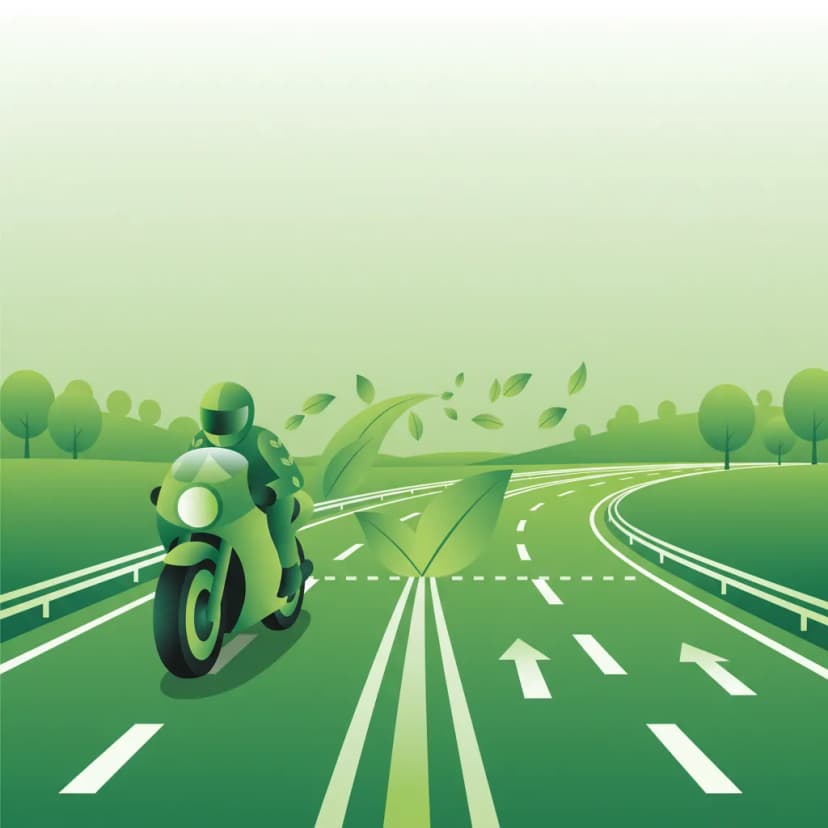
Dutch A1 Motorcycle TheoryDutch Traffic Laws for A1 Motorcycles
View lesson
Road Markings and Lane Discipline for Motorcyclists lesson image

Road Markings and Lane Discipline for Motorcyclists

This lesson focuses on the meaning of different road markings and their implications for motorcycle lane discipline. You will learn the legal distinction between solid and broken lines regarding overtaking, how to interpret directional arrows for lane choice, and the rules for using special lanes. The content emphasizes maintaining a safe and strategic position within the lane to maximize visibility and create a safety buffer from other vehicles.

Dutch Motorcycle Theory (A2)Road Signs and Motorcycle-Specific Indicators
View lesson

Factors and Legal Aspects of Motorcycle Cornering in the Netherlands

Understand how various factors like weather, road type, and vehicle load influence safe curve riding. This lesson covers the legal requirements under RVV 1990 for maintaining reasonable speed and lane discipline in curves.

cornering techniquesDutch traffic lawRVV 1990weather conditionsload distributionmotorcycle safetytheory explanations
Handling Low-Grip Surfaces in Curves lesson image

Handling Low-Grip Surfaces in Curves

This lesson addresses the specific challenge of cornering when road grip is compromised. It teaches riders how to identify potential low-traction surfaces like wet manhole covers, painted lines, gravel, or oil patches. The content focuses on techniques to mitigate risk, such as reducing speed, minimizing lean angle, and applying all control inputs—braking, steering, and throttle—with exceptional smoothness to avoid overwhelming the available grip.

Dutch A1 Motorcycle TheoryCornering, Leaning and Stability
View lesson
Braking Before and Accelerating Through Curves lesson image

Braking Before and Accelerating Through Curves

This lesson focuses on the critical relationship between speed, braking, and throttle control in cornering. You will learn the golden rule: complete your braking while the motorcycle is still upright, before initiating your lean. The content then explains how to use a neutral or slightly positive 'maintenance throttle' to keep the suspension settled mid-corner, followed by smoothly rolling on the throttle as you exit the turn to aid stability.
Dutch Motorcycle Theory (A2)Curve Negotiation and Advanced Cornering
View lesson
Corner Entry, Apex, and Exit Strategies lesson image

Corner Entry, Apex, and Exit Strategies

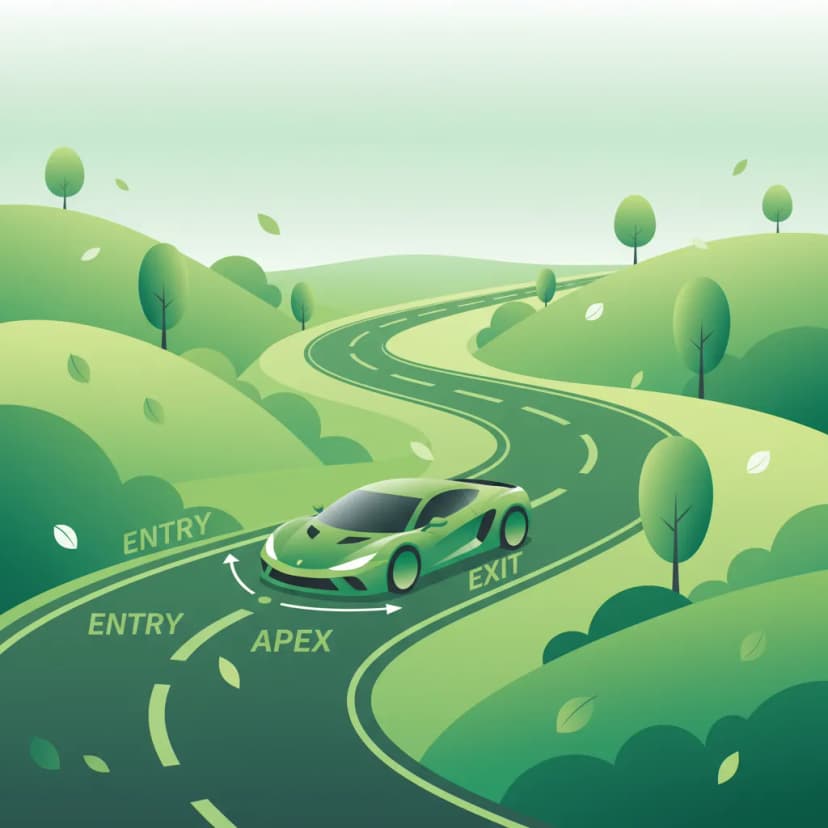
This lesson teaches a systematic approach to cornering by breaking it down into three distinct phases: entry, apex, and exit. It explains how to choose the correct road position and entry speed, identify the safest apex (not always the geometric one), and apply the throttle smoothly on exit to maximize stability and safety. This 'slow in, fast out' methodology provides a structured, repeatable process for navigating any corner with confidence and control.

Dutch Motorcycle Theory AAdvanced Riding Techniques and High-Speed Control
View lesson
Calculating Safe Speed in Curves (bochtsnelheid) lesson image

Calculating Safe Speed in Curves (bochtsnelheid)

This lesson delves into the critical skill of determining a safe and appropriate speed for navigating curves and bends. It explains the physical principles involved, including the relationship between speed, lean angle, and available traction, and teaches riders how to assess a corner's radius and camber visually. Techniques such as using the 'vanishing point' to judge a curve's tightness are covered, enabling riders to select a safe entry speed and maintain control throughout the turn.

Dutch Motorcycle Theory ASpeed Management and Legal Limits
View lesson
Proper Corner Entry and Exit Techniques lesson image

Proper Corner Entry and Exit Techniques

This lesson details the correct, systematic procedure for safely navigating a corner. It teaches the 'slow in, fast out' principle, where all necessary braking and downshifting is completed before entering the turn. The content covers how to choose the correct line, identify the apex, and use smooth throttle application on the exit to maintain stability and traction, ensuring a safe and controlled passage through the bend.

Dutch A1 Motorcycle TheoryCornering, Leaning and Stability
View lesson
Cornering Techniques and Lean Angles lesson image

Cornering Techniques and Lean Angles

Proper cornering technique is vital for safety and stability on a two-wheeler. This lesson explains the physics of turning, including the concepts of lean angle and counter-steering. You will learn the importance of adjusting your speed before the turn, looking where you want to go, and maintaining a smooth throttle through the corner. These techniques help you maximize grip and maintain control, ensuring you can navigate bends safely.

Dutch Driving Theory AMVehicle Control & Maneuvers
View lesson
Roundabout Navigation and Right-of-Way lesson image

Roundabout Navigation and Right-of-Way

This lesson focuses on the rules and techniques for safely navigating Dutch roundabouts, a common feature of the road network. You will learn that traffic circulating on the roundabout typically has priority and that you must yield before entering. The content covers correct lane selection for your intended exit, proper use of turn signals, and maintaining awareness of cyclists who may have priority on adjacent paths.

Dutch Motorcycle Theory (A2)Rights of Way and Priority Situations
View lesson
Riding in Rain, Fog, and Low Visibility lesson image

Riding in Rain, Fog, and Low Visibility

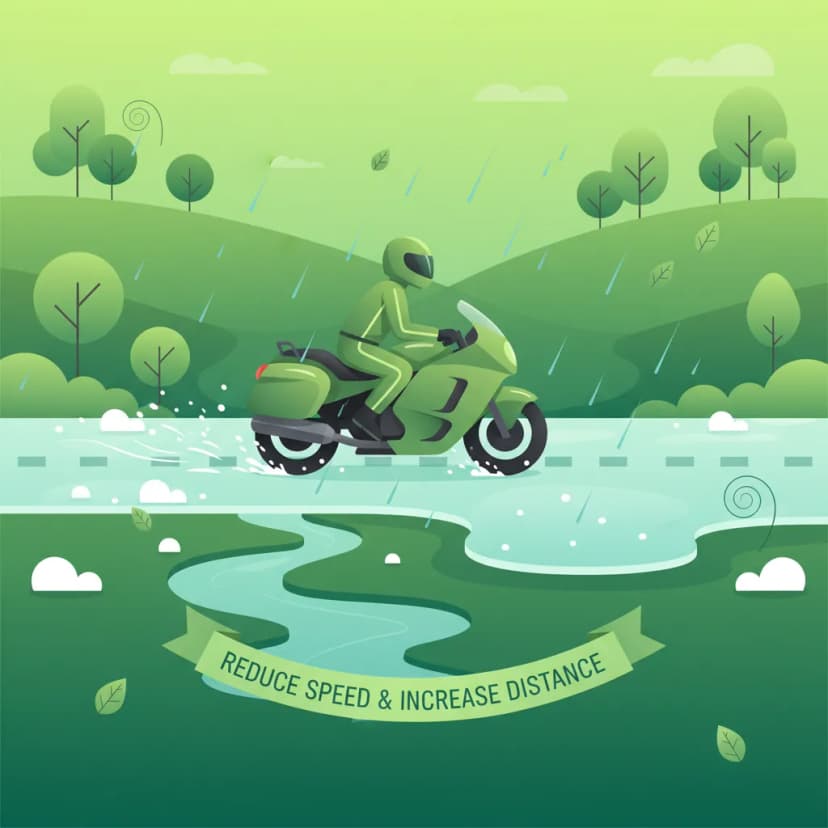
This lesson provides a detailed guide to riding in wet and low-visibility conditions. You will learn to make all your control inputs—braking, accelerating, and steering—exceptionally smooth to avoid breaking traction on slippery surfaces. The content covers the dangers of painted lines and manhole covers when wet, and the importance of increasing your following distance dramatically to account for longer braking distances.
Dutch Motorcycle Theory (A2)Visibility, Lighting, and Weather-Related Hazards
View lesson
Riding in Rain, Snow, and Ice (ijs, sneeuw, regen) lesson image

Riding in Rain, Snow, and Ice (ijs, sneeuw, regen)

This lesson provides survival strategies for riding in the most challenging weather conditions, including heavy rain, snow, and potential ice. It emphasizes the importance of mental preparation, drastically reduced speeds, and hyper-smooth inputs for throttle, brakes, and steering. The content also covers identifying high-risk areas for 'black ice,' such as bridges and shaded spots, and the critical role of appropriate waterproof and insulated gear in preventing hypothermia and maintaining concentration.

Dutch Motorcycle Theory ARiding in Adverse Weather and Night Conditions
View lesson
Handling Road Surface Hazards lesson image

Handling Road Surface Hazards

This lesson prepares you to deal with sudden changes in road surface that can cause a loss of traction. You will learn to scan for these hazards and, if they cannot be avoided, how to ride over them safely. The key technique is to keep the motorcycle upright and maintain smooth, steady control inputs—no abrupt braking, accelerating, or steering—to minimize the risk of a skid.

Dutch Motorcycle Theory (A2)Emergency Evasive Manoeuvres and Hazard Anticipation
View lesson

Frequently asked questions about Managing Hazards in Curves

Find clear answers to common questions learners have about Managing Hazards in Curves. Learn how the lesson is structured, which driving theory objectives it supports, and how it fits into the overall learning path of units and curriculum progression in the Netherlands. These explanations help you understand key concepts, lesson flow, and exam focused study goals.

What is a 'decreasing radius turn' and how should I react on my A2 motorcycle?

A decreasing radius turn, also known as a tightening curve, is one that becomes sharper as you progress through it. On an A2 motorcycle, if you enter too fast, you risk running wide. The best reaction is to look further ahead, gently apply the rear brake to slow down, and adjust your lean angle to tighten your line, always keeping an escape route in mind.

If I encounter gravel mid-corner, should I brake hard or try to steer around it with my A2?

Encountering gravel mid-corner on your A2 motorcycle requires a very gentle touch. Avoid sudden braking or steering. Instead, roll off the throttle smoothly, keep the motorcycle upright as much as possible, and look towards your escape route. Trying to steer sharply or brake hard will likely cause a loss of traction. A light touch on the controls is key.

How does maintaining an 'escape route' help me manage hazards in Dutch curves for my A2 license?

An escape route is a clear path you can take to avoid an unexpected hazard. In curves, this means riding in a position that leaves you room to manoeuvre, either to widen your line, reduce speed, or even straighten up if necessary. For your Dutch A2 license, always riding with this margin allows you critical reaction time and space when a hazard, like a fallen branch or spilled oil, appears suddenly.

Does the CBR theory exam test my knowledge of advanced curve hazard management for A2 motorcycles?

Yes, the CBR theory exam for the A2 motorcycle license often includes situational questions that assess your judgment and reactions to unexpected hazards in curves. These questions might describe scenarios involving tightening turns, slippery surfaces, or obstacles, requiring you to choose the safest and most legally correct course of action. Understanding these concepts is vital for passing.

What's the biggest mistake A2 riders make when facing an unexpected hazard in a curve?

The biggest mistake A2 riders often make is target fixation and panic braking or steering. Instead of looking at the hazard, riders should quickly scan for an escape route. Panic braking, especially on the front wheel in a lean, can cause a loss of traction. Smooth, controlled actions while looking where you want to go, not at the hazard, are crucial for safe recovery.

Continue your Dutch driving theory learning journey

Dutch road signsDutch article topicsSearch Dutch road signsDutch driving theory homeDutch road sign categoriesSearch Dutch theory articlesDutch driving theory coursesDutch Driving Theory B courseDutch driving theory articlesDutch driving theory practiceDutch practice set categoriesDutch Driving Theory AM courseDutch Motorcycle Theory A courseDutch A1 Motorcycle Theory courseDutch Motorcycle Theory (A2) courseSearch Dutch driving theory practiceTowing, Trailers, and Loads unit in Dutch Driving Theory BRoadway Access & Navigation unit in Dutch Driving Theory AMVehicle Positioning and Lane Use unit in Dutch Driving Theory BHuman Factors & Risk Management unit in Dutch Driving Theory AMInfrastructure and Special Roads unit in Dutch Driving Theory BLegal Foundations & Vehicle Types unit in Dutch Driving Theory AMLegal Responsibilities & Incident Procedures unit in Dutch Driving Theory AMManaging Hazards in Curves lesson in Curve Negotiation and Advanced CorneringBody Positioning and Leaning lesson in Curve Negotiation and Advanced CorneringHighway (Autosnelweg) Rules for Motorcycles unit in Dutch Motorcycle Theory (A2)Advanced Riding Techniques and High-Speed Control unit in Dutch Motorcycle Theory AFundamentals of Counter-Steering lesson in Curve Negotiation and Advanced CorneringThe Ideal Line: Entry, Apex, and Exit lesson in Curve Negotiation and Advanced CorneringAccident Management, Legal Responsibilities & Substance Use unit in Dutch A1 Motorcycle TheoryBraking Before and Accelerating Through Curves lesson in Curve Negotiation and Advanced Cornering