
This lesson focuses on the critical aspects of motorcycle visibility, covering both your ability to see the road and ensuring you are seen by others. We'll explore the legal requirements and effective use of headlights and high-visibility gear, crucial for safe riding and passing the Category A theory exam in the Netherlands.
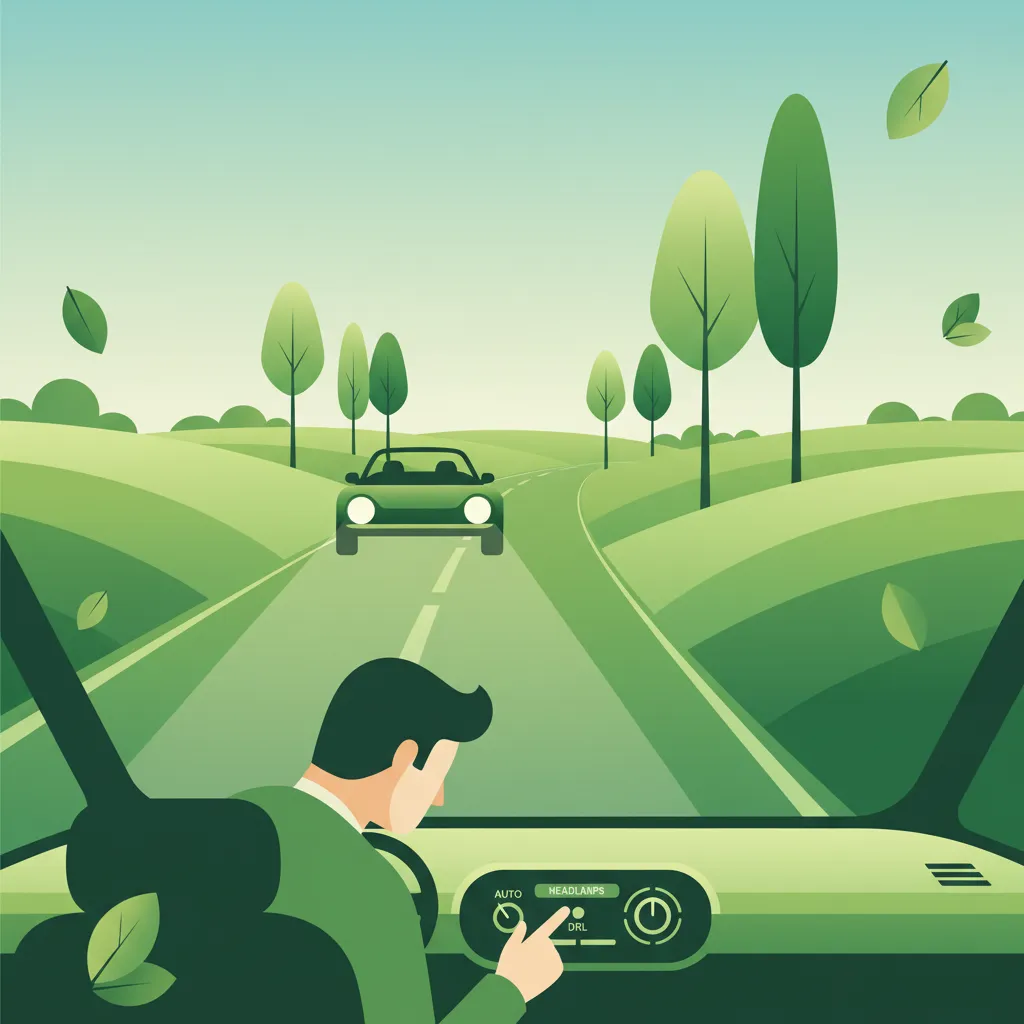
Welcome to this comprehensive lesson, part of the Dutch Motorcycle Theory – Category A Comprehensive Preparation curriculum. Navigating the roads safely on a motorcycle requires not only mastering your vehicle but also ensuring you can see and, crucially, be seen by other road users. This lesson delves into the critical aspects of motorcycle visibility, focusing on legal requirements and tactical approaches to lighting and rider conspicuity in the Netherlands.
Visibility is paramount for motorcyclists. It forms the bedrock of collision prevention, as the ability to detect hazards early and be perceived by others in time to react is vital. This lesson explores the dual challenge of visibility: ensuring adequate illumination of the road ahead for the rider and guaranteeing the rider's conspicuity to surrounding traffic. Mastering these elements significantly reduces accident risks, especially in challenging conditions such as night riding, adverse weather, or complex urban environments.
Dutch traffic law, primarily the Reglement Verkeersregels en Verkeerstekens (RVV 1990), codifies specific requirements for headlamp usage and rider visibility to safeguard all road users. Ignoring these regulations can lead to dangerous situations and legal penalties. This chapter connects directly with other essential topics such as road signs, adverse weather riding, and defensive riding strategies.
Safe riding hinges on maintaining sufficient illumination levels to detect obstacles and hazards. Human visual perception degrades sharply in low light, making adequate headlamp output essential. Headlights are designed to provide luminance levels above a crucial threshold, typically around 30 lux, for the rider to see effectively. Conversely, for other road users to see you, your motorcycle and gear must reflect or emit enough light.
The physics of light, particularly the inverse-square law, dictates how light intensity diminishes with distance. This principle influences headlamp beam focus, balancing the need for long-distance road illumination with the imperative to avoid dazzling oncoming traffic. Understanding these principles helps motorcyclists appreciate the legal and practical reasons behind specific lighting rules.
Different types of headlamps serve distinct purposes, and their correct application is crucial for safety and legal compliance. Each lighting setting has specific conditions under which it should be used, ensuring optimal visibility for the rider while preventing glare for other road users.
The low beam, known as dimlicht or dipped beam in the Netherlands, is the fundamental headlamp setting for all motor vehicles during night-time hours and in conditions of reduced visibility. It projects a downward-focused light pattern that illuminates the road directly ahead without blinding oncoming traffic. This controlled light distribution is engineered to maintain visibility of road markings, hazards, and other road users at a safe distance.
When to Use Low Beam:
Legal Requirements (RVV 1990 Article 33): The low beam is mandatory in these conditions. Failing to use it not only compromises your safety but also constitutes a violation of Dutch traffic law. Riders should never assume that well-lit urban roads negate the need for low beam; it must be on when legally required, regardless of ambient light.
The high beam, or hooglicht, projects a powerful, long-range, and upward-focused light pattern. This setting dramatically increases your visibility distance, potentially illuminating the road up to approximately 300 meters ahead. It is designed for use on open roads where there is no street lighting and no risk of dazzling other drivers.
When to Use High Beam:
Legal Requirements (RVV 1990 Article 19): High beam must be immediately dimmed to low beam when:
Using high beam in rain or fog is strongly discouraged as it creates significant glare and backscatter, actually reducing your own visibility rather than improving it.
Daytime Running Lights (DRL), or daglichtkoplampen, are low-intensity lights specifically designed to enhance a motorcycle's conspicuity during daylight hours. They are typically illuminated automatically from the moment the engine starts until it is turned off. DRLs are not intended to illuminate the road for the rider but solely to make the motorcycle more visible to other road users, reducing the risk of daytime collisions.
Legal Requirements (RVV 1990 Article 45): DRLs are a legal requirement for all new motorcycles with an engine displacement of 125 cc or greater sold in the Netherlands. Even for older motorcycles, their use is strongly recommended. For certain riders, DRLs complement other mandatory visibility measures.
It is a common misunderstanding that DRLs can replace the low beam at dusk or in low-light conditions. DRLs do not provide sufficient illumination for night driving or poor weather conditions; in these situations, the low beam must be activated.
Fog lights, or mistlampen, are specialized lights designed to cut through dense atmospheric conditions such as fog, heavy rain, or snow. They are mounted low on the vehicle and produce a wide, flat beam that illuminates the road surface directly in front of the motorcycle, minimizing light reflection (backscatter) off airborne particles.
When to Use Fog Lights:
Legal Requirements (RVV 1990 Article 23): It is illegal to use fog lights in clear weather or when visibility exceeds 50 meters, as they can cause significant glare for other road users. As soon as visibility improves, fog lights must be switched off. Misusing fog lights can result in fines.
Auxiliary lights, distinct from fog lights, are additional forward-facing lights that can be fitted to motorcycles. Their use is also governed by strict regulations to prevent dazzling. Generally, they may only be used when main headlights are on and must comply with specific brightness and aiming standards.
While headlamps illuminate the road and make your motorcycle visible, personal conspicuity measures are equally crucial. These strategies directly address how well you, the rider, are perceived by others, significantly reducing the chance of being overlooked.
High-visibility (hi-vis) clothing and reflective gear are essential components of a motorcyclist's safety equipment, especially in low light or at night. Hi-vis materials typically use fluorescent colours (like neon yellow or orange) to stand out in daylight, while reflective materials contain retroreflective elements that bounce incident light directly back to its source, making the rider highly visible when illuminated by other vehicles' headlights.
Legal Requirements (RVV 1990 Article 45):
Reflective surfaces are engineered to return a minimum of 30 candela per square meter (cd/m²) when illuminated, allowing other drivers to detect a rider from up to 150 meters away even in very low light. This simple addition to your gear can be a life-saver.
Your position within a lane significantly influences how visible you are to surrounding traffic. Riding tactically can help you avoid blind spots of larger vehicles and ensure you are within the line of sight of other drivers, cyclists, and pedestrians.
Key principles of lane positioning for conspicuity:
There are no specific RVV 1990 regulations mandating lane positioning, but it falls under the general duty of care (RVV 1990 Article 5) to take reasonable measures to ensure your safety and that of others. Riding on the extreme edge of a lane, mistakenly thinking it offers more safety, actually increases the risk of being overlooked.
Vulnerable Road Users (VRUs) such as pedestrians, cyclists, and other motorcyclists require special consideration regarding visibility. Your lighting choices and positioning can significantly impact their safety and perception of you.
While no direct legal clauses mandate specific lighting adjustments for VRUs, the general duty of care (RVV 1990 Article 5) requires riders to avoid endangering them. Thoughtful lighting and positioning are crucial components of this responsibility.
Adhering to Dutch traffic legislation is non-negotiable for motorcyclists. The RVV 1990 clearly outlines when and how different lighting systems must be used. Understanding these rules protects you from fines and, more importantly, enhances road safety.
Dutch law specifies the mandatory use of headlamps under various conditions:
Beyond general headlamp use, specific rules apply to enhance a motorcyclist's visibility:
daglichtkoplampen must be on during daylight hours. This is a crucial measure to counteract inattentional blindness, a phenomenon where other drivers might fail to notice motorcycles even in plain sight.Tunnels and underpasses present unique lighting challenges. Even if the interior of a tunnel is well-lit, the sudden transition from bright daylight to an enclosed space, and vice-versa, demands specific lighting behavior.
RVV 1990 Article 13:
Always switch to low beam before entering a tunnel, regardless of ambient light conditions inside.
This rule ensures consistent visibility for all road users within the enclosed environment and prevents dangerous glare.
The effectiveness of your lighting system is not just about knowing when to use which light; it also depends on proper maintenance and understanding modern automotive technologies. Neglecting these aspects can compromise your safety and lead to legal issues.
Correct headlamp alignment is critical. Misaligned headlamps can either fail to illuminate the road sufficiently for you or, worse, blind oncoming traffic.
Legal Requirements (RVV 1990 Article 26): Headlamp alignment must comply with Dutch Type Approval standards (NTA 7505) and is checked during the periodic vehicle inspection (APK). Any significant impact or maintenance involving the front suspension or frame can alter alignment, necessitating a check.
Maintenance Tips:
Many modern motorcycles come equipped with automatic lighting systems, including auto-on/off headlights and automatic high beam systems. While convenient, riders remain responsible for ensuring these systems comply with legal requirements.
Legal Requirements (RVV 1990 Article 20): Automatic high-beam systems must dim the high beam when an oncoming vehicle is detected within the legal distance (approximately 500 meters) or when following a vehicle. Crucially, the rider must always have the ability to manually override the system if it malfunctions or makes an inappropriate decision. Always verify the system's function, especially when encountering varied traffic conditions.
The effective range and aim of your headlamps can be significantly altered by changes in your motorcycle's load, the attachment of a trailer (like a sidecar), or its general condition.
Legal Requirements (RVV 1990 Article 24): Vehicles, including motorcycles, must ensure their lighting systems function correctly and are not obstructed. If carrying a load that changes the vehicle's height, adjusting headlamp aim might be necessary to comply with glare limits.
Understanding the rules is the first step; applying them correctly is paramount. Misuse of lighting systems or neglecting conspicuity can lead to severe consequences.
| Violation | Why It's Wrong | Correct Behavior | Consequence |
|---|---|---|---|
| Using high beam when an oncoming car is 400m away. | Causes temporary blindness for the other driver. | Switch to low beam as soon as oncoming traffic is within 500m. | Fine, increased collision risk. |
| Riding a 250cc motorcycle with DRLs off during the day. | Reduces daytime conspicuity, violates RVV 1990 Art. 45. | Ensure DRLs are always on while riding during daylight. | Fine. |
| Activating fog lights in clear weather or when visibility is >50m. | Creates unnecessary glare and back-scatter. | Use fog lights only when visibility is genuinely <50m and switch off immediately when it improves. | Fine. |
| Neglecting headlamp cleaning or riding with a misaligned headlamp. | Diminishes road illumination for rider; can cause glare for others. | Regularly clean headlamps; check and adjust alignment after any front-end maintenance. | Increased crash risk, potential vehicle inspection failure. |
| Rider <130cm without reflective vest or full-cover visor. | Fails mandatory conspicuity requirements, highly vulnerable. | Wear a reflective vest or ensure your helmet visor meets reflective criteria. | Fine, significantly increased crash risk. |
| Using high beam inside a tunnel. | Causes dangerous glare on tunnel walls and for other drivers. | Switch to low beam before entering a tunnel and keep it on until exit. | Fine, major safety hazard. |
| Automatic high-beam system fails to dim, and rider doesn't intervene. | Creates glare for others, rider is still responsible. | Manually override the system if it doesn't dim automatically. | Legal liability for glare-related incidents. |
Effective motorcycle riding involves dynamic adaptation to changing conditions. The choice of lighting is a prime example of this.
| Condition | Variation in Principle / Rule | Reasoning |
|---|---|---|
| Clear Night, Open Rural Highway | High beam permitted if no oncoming/following traffic. | Maximises forward visibility for hazard detection at speed. |
| Light Rain, Visibility > 100m | Low beam mandatory; fog lights prohibited. | Low beam is sufficient; fog lights would cause unnecessary glare and backscatter in light rain. |
| Dense Fog, Visibility < 30m | Low beam + fog lights allowed; high beam prohibited. | Fog lights are effective in cutting through dense fog; high beam worsens visibility. |
| Urban Street, Well-Lit, Dusk (Ambient light ~100 lux) | Low beam mandatory. DRLs are insufficient when ambient light drops below daylight levels. | Ensures clear visibility of the motorcycle to others and adequate road illumination for the rider. |
| Motorcycle with Heavy Luggage | Adjust headlamp aim downwards. | Prevents the front end from lifting and causing the low beam to become a dazzling high beam for others. |
| Curved Mountain Road, Night, Potential Oncoming Traffic in Blind Spot | Use low beam, especially through curves. Briefly flash high beam before blind curves if safe to alert others. | Prevents dazzling drivers in potential blind spots; a quick flash can serve as a warning. |
The rules and best practices surrounding motorcycle visibility are deeply rooted in scientific understanding of human perception and accident statistics. These insights reinforce the critical importance of proper headlamp usage and conspicuity measures.
Dutch traffic data and international studies consistently highlight the direct correlation between enhanced visibility and a reduction in accident rates. For example, the mandatory use of DRLs for motorcycles has been shown to reduce daytime multi-vehicle collisions significantly. Studies indicate that a noticeable reduction in night-time and low-visibility crashes occurs when riders consistently use DRLs and wear reflective clothing.
These statistics underscore that visibility is not merely a legal compliance issue but a fundamental safety strategy. Every decision regarding your lights and gear directly impacts your probability of being involved in a collision.
Ensuring optimal visibility is a fundamental skill for every motorcyclist. To deepen your understanding and solidify your knowledge of Dutch traffic regulations related to lighting and conspicuity, consider exploring these additional resources.
Lesson content overview
Explore all units and lessons included in this driving theory course.
Explore search topics learners often look for when studying Visibility Requirements and Headlamp Usage (koplampen). These topics reflect common questions about road rules, driving situations, safety guidance, and lesson level theory preparation for learners in the Netherlands.
Browse additional driving theory lessons that cover connected traffic rules, road signs, and common driving situations related to this topic. Improve your understanding of how different rules interact across everyday traffic scenarios.
Explore advanced strategies for motorcycle visibility beyond basic headlamp use. Understand the nuances of fog lights, auxiliary lighting, and how to leverage them legally and safely in challenging Dutch weather and traffic conditions. Enhance your conspicuity to avoid common hazards.

This lesson focuses on the use of specialized lights for specific situations. You will learn the strict conditions under which fog lights may be used: the rear fog light is only permitted when visibility from fog or snow is less than 50 meters, and not in rain. The lesson also explains the correct use of hazard warning lights, which are intended to warn other drivers of a stationary obstruction (like a breakdown or the tail end of a sudden traffic jam) or while being towed.
This lesson covers the mandatory lighting and signaling equipment for A2 motorcycles under Dutch law, ensuring you remain visible and communicate your intentions correctly. You will learn the rules for using headlights, taillights, turn signals, and brake lights in various conditions, including daytime and adverse weather. The content also addresses the importance of maintaining this equipment and using hand signals as a valid secondary method of communication in traffic.
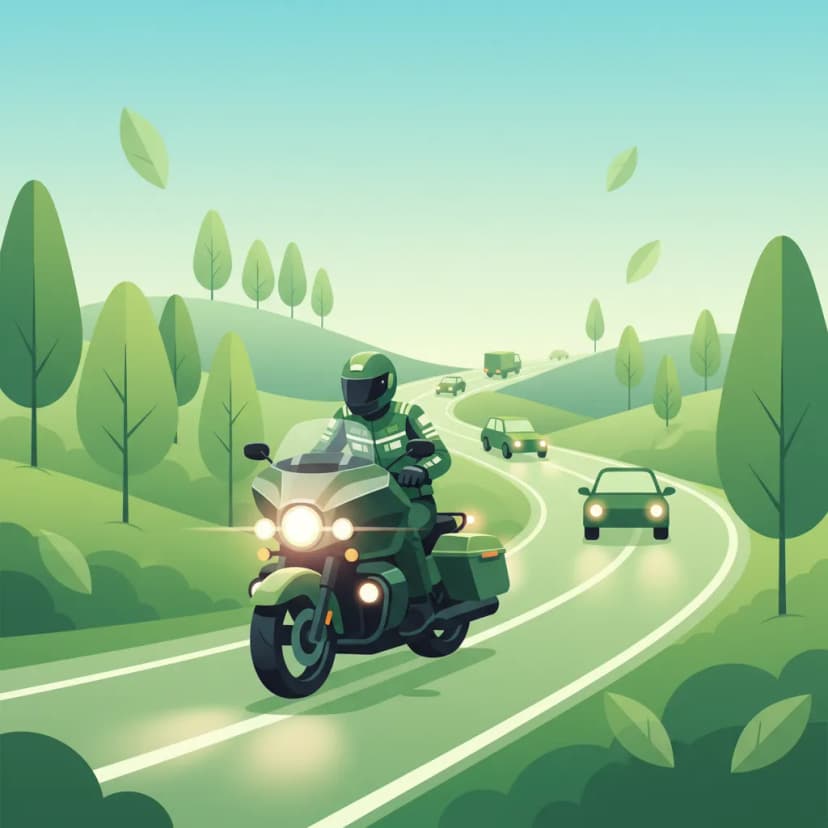
This lesson goes beyond the legal requirements of lighting to teach you how to use it strategically to stand out in traffic. You will learn the importance of always riding with your low-beam headlight on, and the appropriate, considerate use of the high beam to make yourself more noticeable from a distance. The content also covers using turn signals well in advance and tapping the brakes to flash the brake light before slowing.

Riding at night presents two main challenges: seeing the road and being seen by others. This lesson covers the legal requirements for your vehicle's lighting system and how to use it effectively, including when to use high beams. It also emphasizes strategies to increase your own conspicuity, such as wearing bright or reflective clothing. You will learn how darkness affects your perception of speed and distance and how to adapt your riding to compensate for these limitations.
This lesson covers the full range of lights and signals required on a vehicle for visibility and communication. You will learn about the mandatory requirements for headlights, taillights, brake lights, indicators, and reflectors. The curriculum emphasizes the driver's legal responsibility to ensure all lights are clean and functional before every journey. The correct use and function of the horn as an audible warning device in case of imminent danger are also explained.
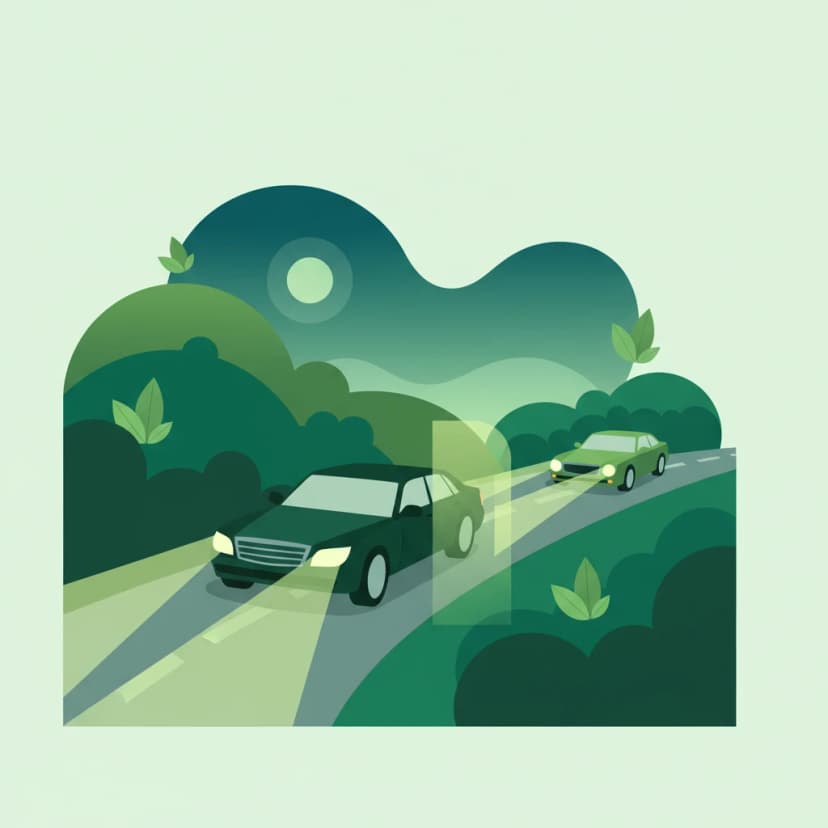
This lesson details the functions of the various lights on a car and the legal requirements for their use. You will learn the difference between dipped beams (dimlicht), which are the standard headlights for night driving and poor visibility, and main beams (grootlicht), which can only be used when they won't dazzle other road users. The content also covers the use of sidelights (stadslicht) for parking and the automatic function of Daytime Running Lights (DRLs). Correct usage is vital for visibility and avoiding blinding other drivers.

This lesson addresses the dual challenge of poor visibility: being able to see the road ahead and ensuring other road users can see you. It covers techniques for riding in fog and heavy rain, such as using appropriate lights and reducing speed to match sight distance. The lesson also discusses practical issues like helmet visor fogging and the importance of wearing high-visibility or reflective clothing to enhance conspicuity in low-light conditions.

Your vehicle's lights and horn are your primary tools for seeing, being seen, and communicating warnings. This lesson guides you through a simple but vital check of all electrical components before you ride. You will learn how to verify the function of your headlight (high and low beam), taillight, brake light (using both front and rear brake levers), and turn signals. It also covers checking the horn's operation and ensuring all mandatory reflectors are clean and intact.
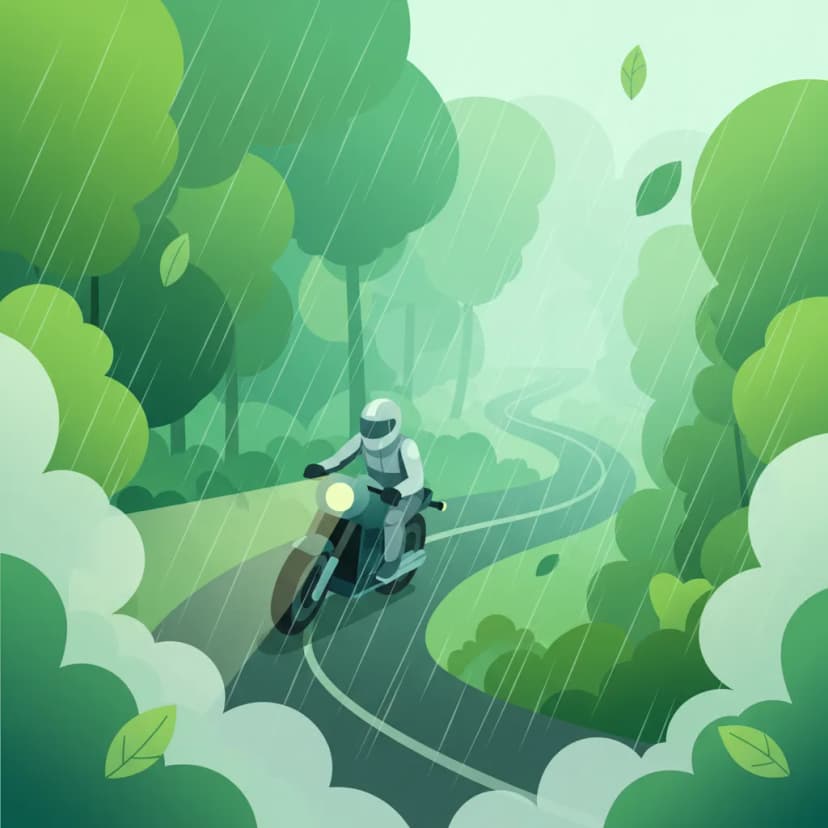
This lesson provides a detailed guide to riding in wet and low-visibility conditions. You will learn to make all your control inputs—braking, accelerating, and steering—exceptionally smooth to avoid breaking traction on slippery surfaces. The content covers the dangers of painted lines and manhole covers when wet, and the importance of increasing your following distance dramatically to account for longer braking distances.
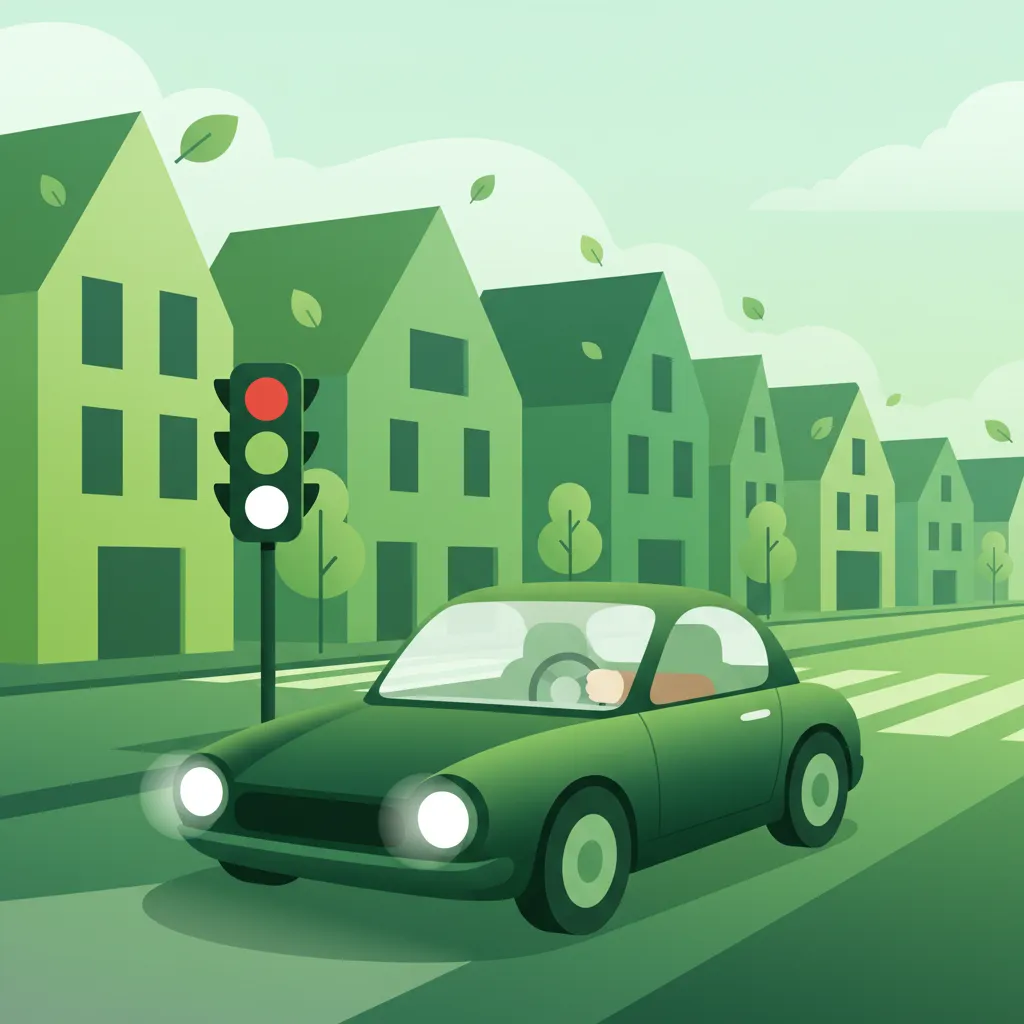
This lesson provides a comprehensive overview of all light and audible signals mandated by Dutch traffic law, detailing when and how each must be used for optimal visibility and communication. It covers the correct use of headlights, turn signals, and hazard lights, as well as the legally appropriate situations for using the horn to alert other road users. The curriculum clarifies legal requirements for lighting equipment and the potential penalties for misuse, ensuring riders can signal their intentions clearly and legally.
Learn how to use strategic lane positioning to significantly increase your visibility to other road users in the Netherlands. This lesson focuses on avoiding blind spots, maximizing your presence, and mitigating risks associated with being overlooked, complementing headlamp usage with active conspicuity techniques.

This lesson explains that where you ride in your lane is a critical safety choice. You will learn to avoid lingering in the blind spots ('dode hoek') of cars and trucks, and how to position yourself to be clearly visible in their mirrors. The content teaches you to constantly adjust your lane position to create a space cushion and ensure you always have a planned escape path in case of an emergency.

This lesson provides critical instruction on managing blind spots ('dode hoek') to prevent collisions, particularly during lane changes. It covers the correct setup and use of mirrors, but stresses their limitations and the absolute necessity of the 'lifesaver' shoulder check before any lateral movement. Furthermore, it teaches riders how to be aware of the large blind spots around cars and especially trucks, and how to position themselves on the road to remain visible to other drivers at all times.

This lesson explains the concept of strategic lane positioning, moving beyond simply staying in the center of the lane. It details how to select a position—typically in the left or right wheel track of cars—to be more visible in other drivers' mirrors, avoid the slippery center strip, and maintain a space cushion. The content emphasizes constantly adjusting position based on traffic, road conditions, and potential hazards.
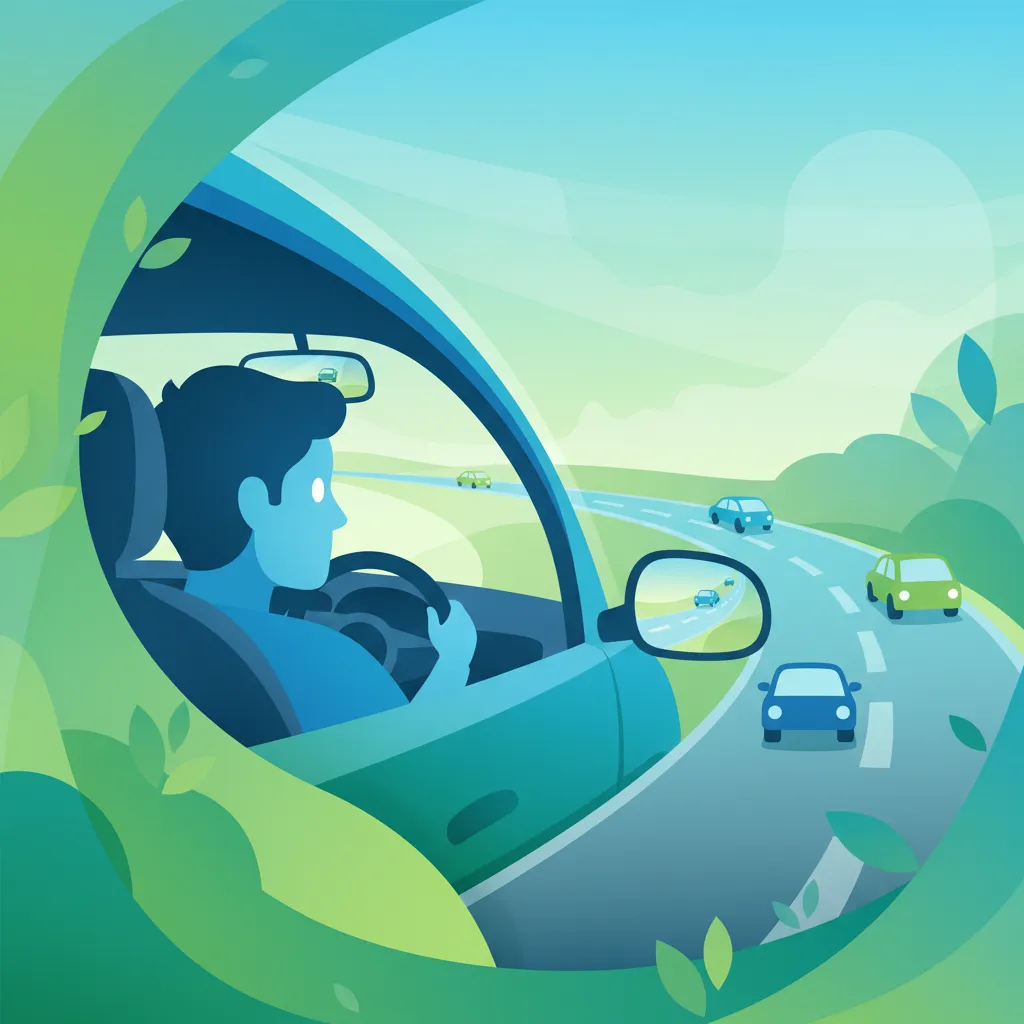
This lesson covers the critical safety practice of maintaining 360-degree awareness through the effective use of mirrors and blind-spot checks. It details a systematic approach to scanning mirrors and performing a physical head check (shoulder check) before any change in position or direction. Understanding the limitations of mirrors and identifying the motorcycle's blind spots are key learning outcomes for preventing collisions with other vehicles.
This lesson addresses the dual challenge of poor visibility: being able to see the road ahead and ensuring other road users can see you. It covers techniques for riding in fog and heavy rain, such as using appropriate lights and reducing speed to match sight distance. The lesson also discusses practical issues like helmet visor fogging and the importance of wearing high-visibility or reflective clothing to enhance conspicuity in low-light conditions.
This lesson covers strategies for safely navigating around vehicles at both ends of the size spectrum. It details the large blind spots ('no-zones') around trucks and buses and advises on where to position a motorcycle to remain visible. Equally, it emphasizes the duty of care towards vulnerable road users, teaching riders to anticipate the movements of pedestrians and cyclists and to always provide them with ample space when passing.
This lesson goes beyond the legal requirements of lighting to teach you how to use it strategically to stand out in traffic. You will learn the importance of always riding with your low-beam headlight on, and the appropriate, considerate use of the high beam to make yourself more noticeable from a distance. The content also covers using turn signals well in advance and tapping the brakes to flash the brake light before slowing.
Defensive riding means riding to prevent collisions, despite the actions of others or the conditions around you. This lesson teaches the core principles of this proactive safety strategy. Key techniques include managing the space cushion around your vehicle, positioning yourself in your lane for maximum visibility, constantly planning an escape route, and communicating your intentions clearly to other road users. This mindset acknowledges your vulnerability and empowers you to take control of your own safety.
This lesson provides a detailed framework for how motorcyclists must safely and legally interact with diverse road users, including cars, trucks, cyclists, and pedestrians. It covers the required communication signals, anticipatory behaviors, and specific positioning techniques necessary to coexist in complex traffic environments like urban centers and shared spaces. Emphasis is placed on legal expectations and practical methods that actively reduce collision risk and promote smooth traffic flow.

This lesson equips riders with cognitive strategies for managing ambiguous or conflicting traffic situations where priority rules may be misinterpreted by other road users. It focuses on the principles of defensive riding, such as making eye contact, using clear signals, and being prepared to yield the right-of-way to avoid a collision. The content teaches how to resolve uncertainty safely by prioritizing hazard avoidance over asserting one's legal right-of-way, a critical skill for motorcyclist survival.
Find clear answers to common questions learners have about Visibility Requirements and Headlamp Usage (koplampen). Learn how the lesson is structured, which driving theory objectives it supports, and how it fits into the overall learning path of units and curriculum progression in the Netherlands. These explanations help you understand key concepts, lesson flow, and exam focused study goals.
In the Netherlands, motorcycles must always use their low beam headlights ('dimlicht') when riding on public roads, day or night. High beam ('grootlicht') should only be used when there is no oncoming traffic or when visibility is severely limited, to avoid dazzling other road users. Daytime running lights are also mandatory for motorcycles.
High-visibility and reflective clothing are extremely important for motorcyclists in the Netherlands. While not always legally mandated as a specific item, it significantly enhances your conspicuity, especially in low light, adverse weather, or busy traffic. It directly contributes to preventing accidents by making you more noticeable to other drivers.
To maximize visibility, a common strategy is to ride in a position within your lane that allows you to see and be seen by other road users. This often means riding slightly to the left or right of the center of the lane, depending on the traffic situation and potential hazards like blind spots of cars or trucks. Avoid riding directly behind a vehicle or in their blind spot.
Yes, daytime running lights are mandatory for all motorcycles in the Netherlands. This ensures that your motorcycle is visible to other road users even during daylight hours, significantly reducing the risk of collisions.
Bad weather such as rain, fog, or snow drastically reduces visibility for both you and other road users. In these conditions, you must always use your low beam headlights and consider wearing highly visible or reflective gear. You should also reduce your speed and increase your following distance to compensate for reduced visibility and potentially slippery road surfaces.