
This lesson provides a practical framework for planning safe and enjoyable multi-day motorcycle journeys, essential for A2 riders on Dutch roads. It expands on managing human factors by equipping you with the skills to proactively prepare your motorcycle and yourself for extended trips. Understanding these planning elements is crucial for both the CBR theory exam and real-world riding confidence.

Embarking on a long-distance motorcycle journey is an exhilarating experience, offering freedom and adventure on the open road. However, these trips, especially multi-day excursions on a Category A2 (35 kW) motorcycle, demand meticulous preparation. Comprehensive planning reduces risks, enhances safety, and ensures compliance with Dutch traffic laws. This lesson provides a practical, step-by-step framework to plan a successful and safe multi-day motorcycle adventure across varied road environments, from urban streets to winding rural roads and the autosnelweg (highway).
Effective planning for long-distance motorcycle journeys is paramount for several critical reasons. It directly contributes to preventing fatigue-related incidents, ensures your motorcycle remains roadworthy and legally compliant, optimizes fuel consumption, and ultimately maximizes your safety and enjoyment on the road. Without a systematic approach, riders can face unexpected mechanical failures, become stranded due to lack of fuel, or experience significant fatigue that impairs judgment and reaction times. This preparation is a blend of understanding legal requirements, vehicle mechanics, human physiology, and environmental factors.
Every decision made during the planning phase, from route selection to equipment choices, must place rider safety at the forefront. This principle guides the limits set for daily distances, the frequency and duration of rest stops, and the selection of contingency routes. By prioritizing safety, you actively mitigate exposure to preventable hazards such as mechanical breakdowns, adverse weather conditions, and rider fatigue, which is a major contributor to accidents.
Adherence to Dutch traffic law, specifically the Reglement Verkeersregels en Verkeerstekens 1990 (RVV 1990), and relevant European standards, is not merely about avoiding fines. It ensures your motorcycle is roadworthy and that you are equipped and behave in a manner that does not endanger yourself or other road users. This includes regular vehicle inspections, proper tyre tread depth, correct chain tension, and the mandatory use of approved helmets and protective clothing.
Calculating your motorcycle's fuel consumption based on various factors like distance, load, terrain, and anticipated weather is crucial. This proactive approach ensures you always have sufficient fuel, preventing inconvenient and potentially unsafe situations where you might run out in remote areas. It also helps in planning efficient stops, reducing unnecessary detours, and contributing to better environmental practices. A minimum 10% fuel reserve in your tank is a highly recommended safety buffer.
Properly securing and distributing luggage and gear is vital to maintain the motorcycle's centre of gravity (CG) within safe, manufacturer-specified limits. Incorrect load distribution can severely compromise handling stability, increase tyre wear, and even lead to dangerous load-shift accidents, particularly during cornering, braking, or encountering crosswinds. It's essential to use appropriate luggage systems like saddlebags and rear racks, ensuring weight is balanced side-to-side and front-to-back.
Integrating accurate short-term (24-hour) and medium-term (3-day) weather forecasts into your planning allows you to adapt proactively. Weather can drastically affect road traction, visibility, and rider comfort. Responsive planning means adjusting tyre pressures, selecting appropriate riding gear, and being prepared to alter your route or schedule if severe conditions are anticipated, such as heavy rain, strong winds, or fog.
Structured breaks, realistic daily mileage targets, and good sleep hygiene are critical components of fatigue management. Long hours of continuous riding without adequate rest significantly increase the risk of cognitive decline, elongated reaction times, and even microsleeps—brief, involuntary episodes of sleep that can be catastrophic on a motorcycle. A recommended minimum of a 30-minute break every two hours of riding is a good guideline to follow.
In today's digital age, relying solely on one navigation system or communication method can be risky. Planning to use at least two independent navigation methods (e.g., a GPS device coupled with an offline map application or a physical paper map) ensures route continuity even if your primary system fails due to battery drain or loss of signal. Similarly, carrying a fully charged mobile phone along with an alternative emergency beacon or a detailed emergency contact list provides critical communication redundancy.
Beyond core principles, practical application involves a series of detailed steps to ensure every aspect of your long-distance trip is covered.
Choosing your route involves more than just finding the shortest distance. Consider the types of roads you'll encounter – high-speed autosnelwegen (highways), winding rural roads, or potentially congested urban areas. Factor in your riding experience and comfort level with different road conditions.
Your daily mileage target should be carefully set, taking into account your stamina, the motorcycle's capabilities, anticipated weather, and the terrain. For A2 riders, covering excessive distances can lead to accelerated fatigue.
While there's no statutory daily limit for private riders, fatigue guidelines strongly recommend keeping daily distances to a maximum of 250-300 km for A2 riders under normal circumstances, especially on multi-day trips where fatigue accumulates.
Regular breaks are not optional; they are a critical safety measure. They allow for physical rest, hydration, nutrition, and vital mental recovery.
Understanding your motorcycle's fuel economy is fundamental. Plan your refueling stops in advance, especially when traveling through remote areas or on Sundays when some smaller stations might be closed.
Weather is one of the most unpredictable variables for motorcyclists. Always check both short-term (24-hour) and medium-term (3-day) forecasts.
If heavy rain or strong crosswinds are expected, consider reducing your tyre pressure by approximately 0.2 bar to increase the tyre's contact patch for better grip. Remember to adjust back for dry conditions.
Before any long journey, a thorough inspection of your Category A2 motorcycle is non-negotiable. This prevents mechanical failures, ensures legal compliance, and is a cornerstone of safe riding.
The way you pack and distribute weight significantly impacts your motorcycle's handling characteristics.
Long-distance riding can take a toll on your body. Adjusting your ergonomics and incorporating preventive measures can significantly reduce fatigue and discomfort.
Always ensure you carry the necessary legal documents and mandatory safety equipment. Failure to do so can result in fines or other legal penalties.
Reliable navigation is crucial, especially when exploring new territories. Always have a backup.
Even with the best planning, unforeseen events can occur. Being prepared for emergencies can make a significant difference.
Specific rules govern motorcycle operation in the Netherlands, impacting long-distance planning.
Even experienced riders can make mistakes. Understanding common pitfalls helps you avoid them.
Your plan should be flexible enough to adapt to real-world conditions.
Planning long-distance motorcycle journeys, especially on a Category A2 motorcycle in the Netherlands, is a multi-faceted process that combines legal compliance, mechanical readiness, and an understanding of human physical and mental limits. Prioritizing safety through diligent preparation is the single most important factor. By meticulously planning your route, managing your fuel and rest, preparing your vehicle, and adapting to potential conditions, you ensure a safer, more enjoyable, and truly memorable adventure on two wheels.
Lesson content overview
Explore all units and lessons included in this driving theory course.
Explore search topics learners often look for when studying Planning Long-Distance Journeys. These topics reflect common questions about road rules, driving situations, safety guidance, and lesson level theory preparation for learners in the Netherlands.
Browse additional driving theory lessons that cover connected traffic rules, road signs, and common driving situations related to this topic. Improve your understanding of how different rules interact across everyday traffic scenarios.
Learn to identify and avoid common pitfalls when planning motorcycle trips in the Netherlands. This lesson focuses on preventing errors in fatigue management, vehicle maintenance, load distribution, and navigation to ensure safer and more enjoyable rides.
This lesson prepares you for the unique dangers of high-speed highway riding. You will learn to scan for and navigate road hazards like debris, potholes, and slippery steel expansion joints on bridges. The content also addresses the powerful air turbulence created by large trucks that can upset a motorcycle's stability and the mental challenge of maintaining focus on long, monotonous stretches of road.
This lesson revisits the concept of following distance, emphasizing its heightened importance in the high-speed motorway environment. It explains how increased speeds dramatically lengthen both reaction and braking distances, making a minimum two-to-three-second gap absolutely critical for safety. The content also stresses the importance of maintaining a space cushion to the sides, creating potential escape routes in case of sudden incidents in adjacent lanes.
This lesson reinforces the fundamental rule of Dutch highway driving: use the rightmost lane available and use the lanes to the left only for overtaking. You will learn the complete, safe overtaking procedure: check mirrors, signal, perform a shoulder check for the blind spot, smoothly move over, accelerate past the vehicle, and then return to the right lane when safe.
This lesson focuses on the unique demands of riding at sustained high speeds on motorways ('snelwegen'). It covers essential topics such as strict lane discipline, safe overtaking procedures, and maintaining a greater following distance to compensate for higher reaction and braking times. The content also addresses the physical and mental challenges, including managing wind blast, increased noise levels, and maintaining heightened situational awareness over long distances to combat fatigue.
This lesson provides a clear action plan for when your car breaks down. You will learn to pull over to a safe location, preferably the hard shoulder on a motorway, and immediately activate your hazard warning lights. The curriculum explains the legal requirement to place a warning triangle a suitable distance behind the vehicle (if safe to do so) and the strong recommendation to wear a high-visibility jacket. Crucially, it instructs that all occupants should exit the vehicle on the safe side and wait behind the guardrail for assistance.

This lesson explains the concept of strategic lane positioning, moving beyond simply staying in the center of the lane. It details how to select a position—typically in the left or right wheel track of cars—to be more visible in other drivers' mirrors, avoid the slippery center strip, and maintain a space cushion. The content emphasizes constantly adjusting position based on traffic, road conditions, and potential hazards.

This lesson provides critical instruction on managing blind spots ('dode hoek') to prevent collisions, particularly during lane changes. It covers the correct setup and use of mirrors, but stresses their limitations and the absolute necessity of the 'lifesaver' shoulder check before any lateral movement. Furthermore, it teaches riders how to be aware of the large blind spots around cars and especially trucks, and how to position themselves on the road to remain visible to other drivers at all times.
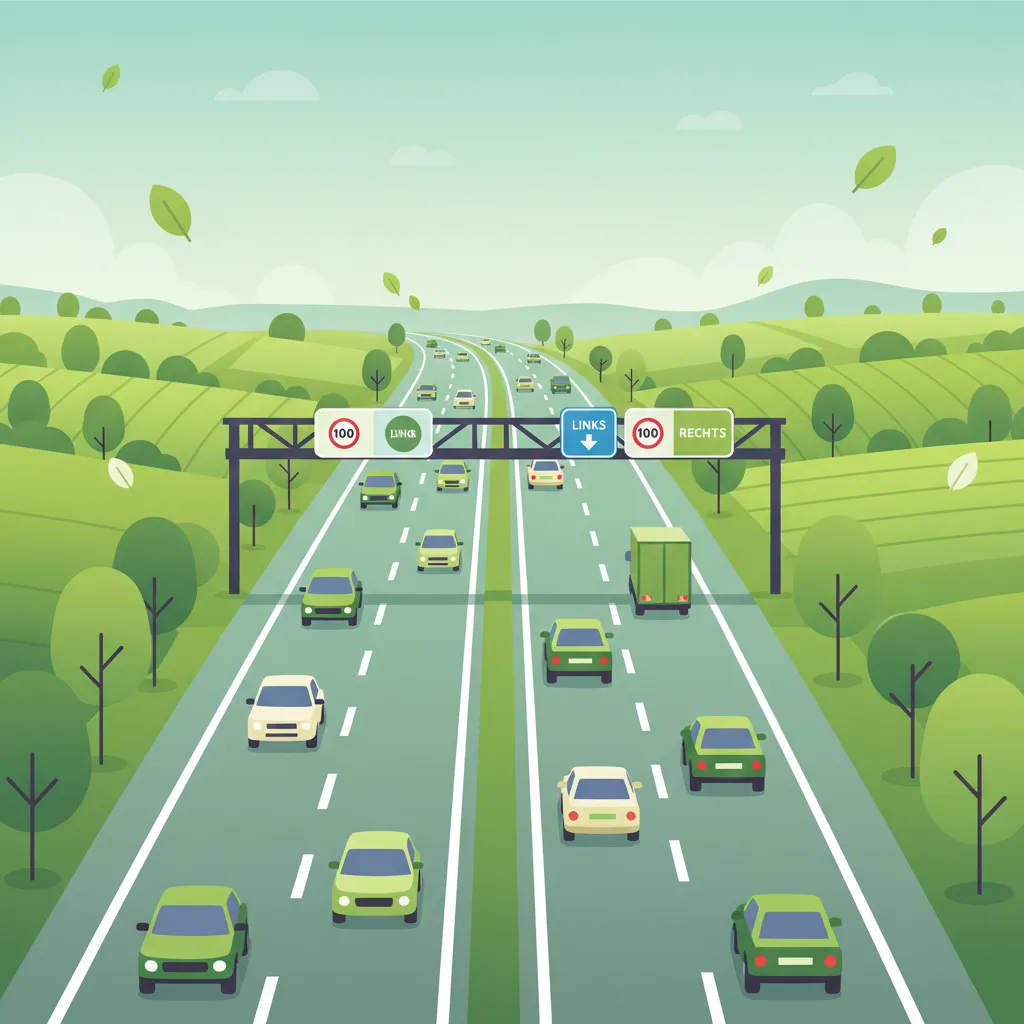
This lesson covers the specific articles of the Dutch Road Traffic Act that apply to motorways, with a primary focus on the strict rule of keeping to the rightmost available lane unless overtaking. It explains the legal and safety reasons for only passing on the left and discusses the correct positioning within a lane for maximum visibility and safety. The content also addresses the nuances of lane usage during heavy congestion, ensuring riders comply with the law and contribute to smooth traffic flow.
This lesson provides essential information for riders planning to travel outside the Netherlands into other European countries. It highlights that while many rules are harmonized, significant local variations exist regarding speed limits, motorway tolls or vignettes, and mandatory equipment (e.g., carrying a first-aid kit or visibility vest). The curriculum advises riders to research the specific regulations for each country on their itinerary to ensure a safe and legally compliant international journey.

This lesson covers the universal Dutch road rules with a specific focus on their application to light motorcycles. It details the various speed limits for different road types, from urban areas to motorways, and explains the correct procedures for overtaking and lane positioning. The legal aspects of lane filtering in congestion are also examined, alongside mandatory equipment use like daytime running lights, to ensure riders can integrate safely and legally into traffic flow.
Understand the essential legal documents, mandatory safety equipment, and specific Dutch traffic regulations for motorcyclists on long journeys. Ensure compliance with RVV 1990 and CBR standards for your A2 license.
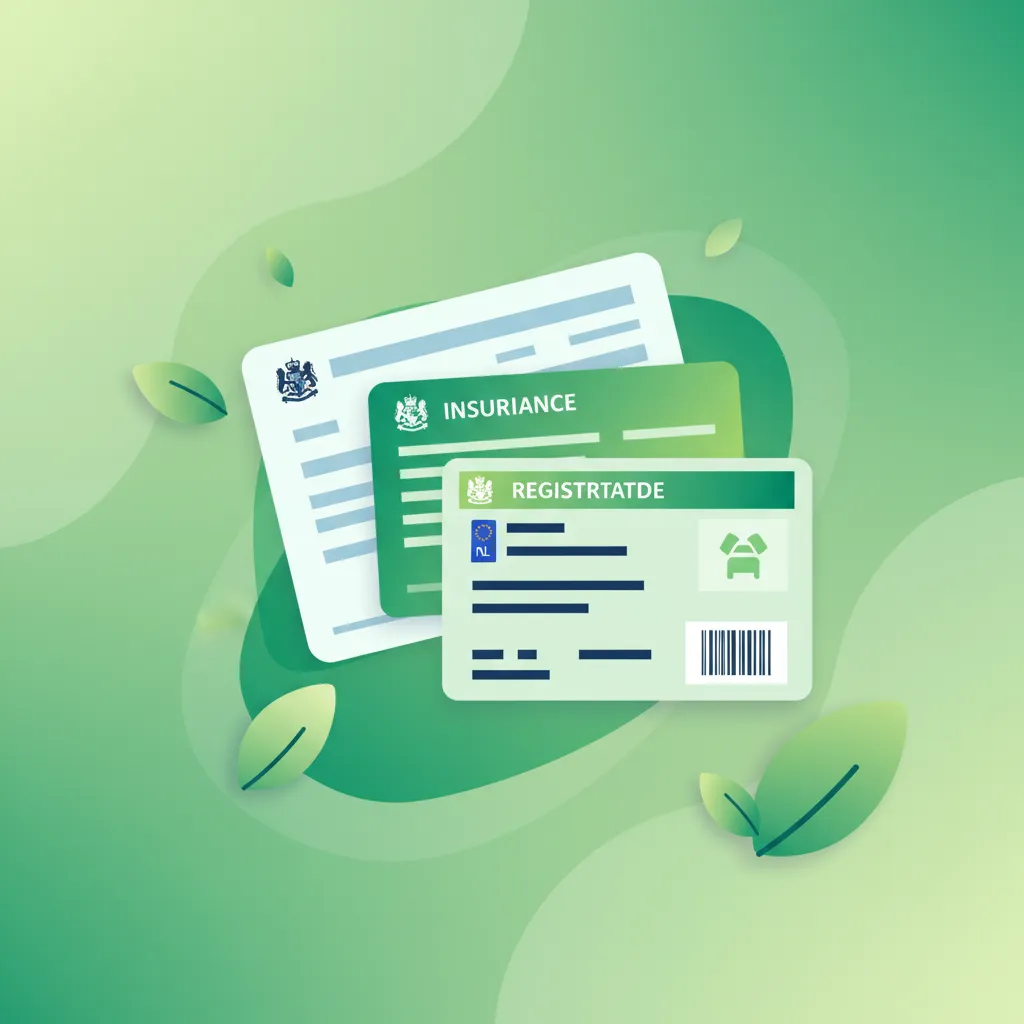
This lesson provides a definitive list of the documents a motorcyclist must carry at all times when riding in the Netherlands. It specifies the requirement for a valid driving license ('rijbewijs') for the correct category, the vehicle registration card ('kentekenbewijs'), and proof of valid third-party liability insurance ('verzekeringsbewijs'). The content clarifies that failure to produce these documents during a police check can result in significant fines and legal complications.
This lesson covers the mandatory lighting and signaling equipment for A2 motorcycles under Dutch law, ensuring you remain visible and communicate your intentions correctly. You will learn the rules for using headlights, taillights, turn signals, and brake lights in various conditions, including daytime and adverse weather. The content also addresses the importance of maintaining this equipment and using hand signals as a valid secondary method of communication in traffic.

This lesson details the Dutch regulations for carrying passengers on a motorcycle, including the minimum age for the passenger and the mandatory use of approved helmets. It explains the rider's legal responsibility for the passenger's safety and how to properly secure loads to avoid affecting the motorcycle's stability and balance. Understanding these rules is crucial for ensuring safety and legality when riding with a pillion or luggage.
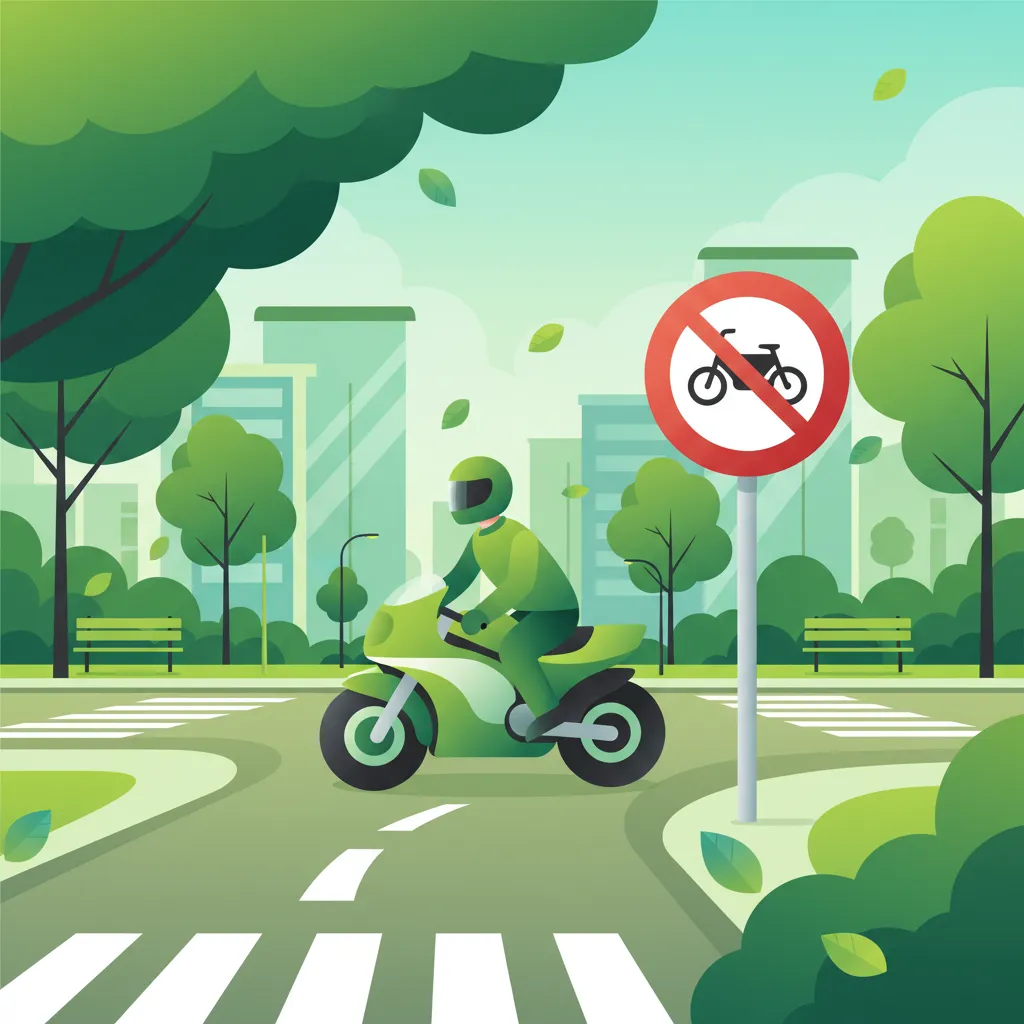
This lesson focuses on Dutch regulatory signs that enforce mandatory rules and restrictions, particularly those impacting A2 motorcyclists. You will learn to recognize and obey prohibition signs, such as those indicating a motorcycle ban (BORD 40), speed limits, and overtaking restrictions (BORD 21). The content explains the legal consequences of non-compliance and how to apply these rules in practical riding scenarios to ensure full adherence to Dutch traffic law.
This lesson provides essential information for riders planning to travel outside the Netherlands into other European countries. It highlights that while many rules are harmonized, significant local variations exist regarding speed limits, motorway tolls or vignettes, and mandatory equipment (e.g., carrying a first-aid kit or visibility vest). The curriculum advises riders to research the specific regulations for each country on their itinerary to ensure a safe and legally compliant international journey.

This lesson serves as a critical reinforcement of the legal requirement to carry specific documents ('verkeersdocumenten') while riding. It explicitly lists the mandatory items—driving license, vehicle registration, and proof of insurance—and explains the legal consequences of failing to produce them on demand during a police stop. The content stresses that having these documents readily accessible is a basic and non-negotiable aspect of legal motorcycling in the Netherlands.

This lesson covers the full range of lights and signals required on a vehicle for visibility and communication. You will learn about the mandatory requirements for headlights, taillights, brake lights, indicators, and reflectors. The curriculum emphasizes the driver's legal responsibility to ensure all lights are clean and functional before every journey. The correct use and function of the horn as an audible warning device in case of imminent danger are also explained.
This lesson covers the universal Dutch road rules with a specific focus on their application to light motorcycles. It details the various speed limits for different road types, from urban areas to motorways, and explains the correct procedures for overtaking and lane positioning. The legal aspects of lane filtering in congestion are also examined, alongside mandatory equipment use like daytime running lights, to ensure riders can integrate safely and legally into traffic flow.

This lesson explains the precise legal definition of a Category A1 motorcycle, including the maximum 125cc displacement and 11 kW power output. It outlines the entire CBR licensing pathway, from meeting the minimum age requirement to passing both the theory and practical exams. Key administrative obligations such as vehicle registration (kenteken), mandatory insurance, and roadworthiness inspections (APK) are also detailed, ensuring a full understanding of legal compliance.
This lesson covers the specific articles of the Dutch Road Traffic Act that apply to motorways, with a primary focus on the strict rule of keeping to the rightmost available lane unless overtaking. It explains the legal and safety reasons for only passing on the left and discusses the correct positioning within a lane for maximum visibility and safety. The content also addresses the nuances of lane usage during heavy congestion, ensuring riders comply with the law and contribute to smooth traffic flow.
Find clear answers to common questions learners have about Planning Long-Distance Journeys. Learn how the lesson is structured, which driving theory objectives it supports, and how it fits into the overall learning path of units and curriculum progression in the Netherlands. These explanations help you understand key concepts, lesson flow, and exam focused study goals.
A realistic daily mileage for an A2 motorcycle often ranges from 300-500 km, depending on your experience, the type of roads, and the number of breaks. It's crucial to factor in rest stops every 1.5-2 hours to combat fatigue and maintain focus, especially when riding in varying Dutch traffic conditions.
Before a long trip, thoroughly check your tires (pressure, tread depth), oil level, chain tension and lubrication, brake fluid levels, and all lights and indicators. Also, ensure your emergency kit is complete and your documents (registration, insurance, license) are accessible and valid for riding in the Netherlands.
Improper packing can significantly alter your motorcycle's balance and handling, especially for an A2. Pack heavier items low and close to the center of gravity. Distribute weight evenly between saddlebags or panniers. Avoid overloading the rear, which can lighten the front wheel and affect steering stability. Use waterproof bags to protect contents from Dutch weather.
Dutch weather can change rapidly. Always check forecasts before and during your journey. Pack waterproof gear (jacket, trousers, gloves), consider layers for temperature changes, and be prepared for strong crosswinds, which are common. Adjust your riding style, speed, and following distance in rain or high winds to maintain control.
While there are no specific 'A2' luggage laws beyond general safety, ensure your load does not obstruct lights, license plates, or your visibility. If carrying a passenger, ensure they have appropriate protective gear and that your motorcycle's registration indicates it's suitable for two persons. Adjust tire pressure and suspension as per your motorcycle's manual for the added weight.