
Welcome to the lesson on Cornering Techniques and Lean Angles, a crucial part of our Dutch Category AM theory course. Understanding how to safely navigate bends is essential for both your exam and everyday riding on Dutch roads. This lesson builds upon basic vehicle control principles and prepares you for more complex maneuvering scenarios.
Navigating bends and curves safely is a fundamental skill for all two-wheeler riders, especially those operating mopeds and scooters in the Netherlands (Category AM). Proper cornering technique is not just about speed; it's about maintaining stability, maximizing tire grip, and staying in control. This comprehensive lesson will explain the underlying physics and practical strategies that will enable you to ride through turns confidently and securely.
Cornering on a two-wheeled vehicle involves a delicate balance of forces. When a moped or scooter takes a turn, centrifugal force acts to push the vehicle outwards. To counteract this force and maintain balance, the rider and vehicle must lean into the turn. Understanding these physical principles is crucial for safe and effective cornering.
The lean angle is the angle between the vertical axis of your moped or scooter and the road surface while you are turning. This tilt is essential to create a force that pushes the vehicle towards the center of the turn, countering the outward pull of centrifugal force. Without leaning, a moped would simply go straight due to inertia, or slide out of the turn.
The required lean angle (often denoted as θ) is determined by several factors: your speed (v), the radius of the turn (r), and the acceleration due to gravity (g). The relationship is expressed by the formula:
tan θ = v² / (g · r)
This formula highlights a critical point: a small increase in speed demands a significantly larger lean angle. For example, a turn that requires a 12° lean at 20 km/h might demand a 22° lean at just 30 km/h. Exceeding the optimal lean angle can lead to loss of traction.
When you ride a moped in a straight line, your inertia keeps you moving forward. When you enter a turn, your body and the moped want to continue in that straight line. This resistance to change in direction is what you perceive as centrifugal force – an apparent outward force.
To maintain stability and follow the curve, your moped needs a centripetal force pushing it inwards. This centripetal force is generated by the friction between your tires and the road surface as you lean. By leaning, you shift the combined center of gravity (CoG) of the moped and rider towards the inside of the turn, allowing gravity to assist in creating the necessary inward force.
Every tire has a finite amount of grip, which can be thought of as a grip circle or friction circle. This represents the total traction available from the tire's contact patch with the road. This total grip can be used for acceleration (longitudinal grip), braking (longitudinal grip), or turning (lateral grip).
The key to safe cornering is to stay within this grip circle. If you are cornering and braking simultaneously, you are using a portion of the available grip for both actions. If the combined demand exceeds the tire's total grip, either longitudinally or laterally, the tire will slide, leading to a loss of control. Factors like road surface, weather, tire condition, and vehicle load all affect the size and limits of this grip circle.
Safe and efficient cornering is a coordinated maneuver that involves several techniques working in harmony. Mastering these will significantly enhance your control and safety on Dutch roads.
At speeds above approximately 15 km/h, your moped or scooter uses a technique called counter-steering to initiate a lean and begin a turn. It feels counter-intuitive at first, but it is the most effective way to change direction on a two-wheeler.
Here's how it works:
This momentary input causes the front wheel to steer slightly in the opposite direction of the desired turn. This action creates a slight imbalance, causing the moped to lean into the intended turn. Once the lean is initiated, you maintain it with subtle pressure on the handlebars and body position. This technique leverages the gyroscopic forces of the spinning wheels, providing a rapid and precise way to achieve the desired lean angle.
Practice counter-steering gently in a safe, open area to get a feel for how it initiates the lean. It's a fundamental skill for confident cornering.
The Speed-Fit-Turn principle is perhaps the most critical aspect of safe cornering. It refers to the practice of adjusting your speed before entering a bend so that the required lean angle remains within safe limits for the given road conditions and your moped's capabilities.
Your eyes are your most powerful steering tool. The principle of "Look Where You Want to Go" (sometimes called avoiding target fixation) means directing your visual focus towards the intended exit point or line through the corner, rather than fixating on obstacles or the road surface immediately in front of you.
Your body and the moped will naturally tend to follow your gaze. If you stare at a pothole or a curb, you are more likely to steer towards it. Instead, consciously look through the turn, towards where you want your moped to be upon exit. This helps you to smoothly guide your steering inputs and maintain your intended path.
Avoid target fixation on obstacles within a turn. Always look past the obstacle, towards your escape route or the clear path ahead.
Once you are leaned into a corner, smooth throttle control is paramount for maintaining stability and grip. Abrupt changes in engine power can disrupt the delicate balance of forces acting on your tires.
Sudden deceleration during a lean can cause the weight to shift forward, potentially reducing rear tire grip and leading to a slide. Similarly, sudden acceleration can cause the rear wheel to spin.
While the ideal is to do most braking before a turn, sometimes slight adjustments are necessary. If you must brake while leaned, apply the brakes very gently and progressively, especially the rear brake. Simultaneously, reduce your lean angle as much as possible to increase the available grip for braking.
Similarly, acceleration must be managed with care. Progressive acceleration after the apex helps stabilize the moped, but rapid or aggressive throttle application can exceed the rear tire's longitudinal grip, causing it to spin and potentially leading to a dangerous loss of control (a "high-side" or "low-side" fall).
The Dutch Road Traffic Regulations (Reglement Verkeersregels en Verkeerstekens 1990, or RVV 1990) do not contain specific articles detailing lean angles or counter-steering. However, several general principles directly relate to how you should safely negotiate turns on your moped or scooter.
A driver must adapt their speed to road conditions, visibility, and vehicle capabilities.
This fundamental rule is highly applicable to cornering. It mandates that you must always choose a speed that is safe for the specific bend, considering:
Failing to reduce speed sufficiently before a turn, leading to an unsafe lean or loss of control, can be interpreted as a violation of this article.
The driver must keep the vehicle under control at all times.
This article directly relates to your ability to handle your moped or scooter safely through all maneuvers, including cornering. Losing control due to excessive speed, inappropriate lean, or abrupt inputs would be a clear violation. Maintaining proper throttle control, smooth steering, and adequate grip management all fall under this duty.
When a lane is marked with a continuous line on the left side, riders must stay within that lane.
While cornering, it's crucial to stay within your designated lane. Drifting into an opposing lane, onto the shoulder, or over solid lines due to excessive lean or incorrect speed can endanger other road users and is a violation. Always ensure your entry speed and lean angle allow you to maintain your lane position throughout the entire curve.
All road users must act with due regard for the safety of others.
This overarching principle means you must anticipate potential hazards, such as pedestrians, cyclists, or other vehicles, especially near or within curves. Slowing down, maintaining extra space, and being ready to react are all part of your general duty of care when cornering.
The ideal cornering techniques discussed above assume dry, clean road surfaces and good visibility. However, real-world conditions often vary. Adapting your technique to different situations is crucial for safety.
At night or in low light, your visibility of the road surface and potential hazards is significantly reduced. This means:
Carrying a heavy backpack, cargo, or a passenger changes your moped's dynamics:
When carrying extra weight, reduce your entry speed by 10-15 km/h or more, depending on the load. Limit your lean angle and ensure your tires are correctly inflated for the increased load.
The condition of your moped's tires is paramount for grip:
Always ensure your tires are in good condition, have sufficient tread depth, and are inflated to the manufacturer's recommended pressure. Replace worn tires promptly.
Even experienced riders can make mistakes, but new riders are particularly susceptible to common errors that compromise safety during cornering.
Late Braking Before a Turn:
Excessive Lean on Low-Grip Surface (e.g., wet cobblestones):
Looking at Obstacles Inside the Curve (Target Fixation):
Abrupt Throttle Increase Mid-Turn:
Ignoring Speed Limits and Vehicle Capabilities:
Mastering cornering on your moped or scooter is a continuous learning process. By internalizing these key principles, you'll significantly enhance your safety and confidence on the road:
By applying these techniques consistently, you'll be well-prepared to navigate Dutch roads safely and skillfully, enjoying your moped or scooter rides through every curve.
Lesson content overview
Explore all units and lessons included in this driving theory course.
Explore search topics learners often look for when studying Cornering Techniques and Lean Angles. These topics reflect common questions about road rules, driving situations, safety guidance, and lesson level theory preparation for learners in the Netherlands.
Browse additional driving theory lessons that cover connected traffic rules, road signs, and common driving situations related to this topic. Improve your understanding of how different rules interact across everyday traffic scenarios.
Explore advanced techniques for navigating turns in adverse Dutch weather and road conditions. Learn to adapt speed, lean angle, and control for wet, icy, or uneven surfaces to maintain stability and safety.

Riding on two wheels requires special care on surfaces with reduced grip. This lesson teaches you how to handle challenging conditions like rain, ice, wet leaves, or tram tracks. Key principles include reducing speed significantly, making all control inputs (braking, accelerating, steering) much more smoothly and gradually, and increasing your following distance to allow for much longer stopping distances. Recognizing potentially slippery areas is a critical part of proactive hazard perception.

This lesson addresses the specific challenge of cornering when road grip is compromised. It teaches riders how to identify potential low-traction surfaces like wet manhole covers, painted lines, gravel, or oil patches. The content focuses on techniques to mitigate risk, such as reducing speed, minimizing lean angle, and applying all control inputs—braking, steering, and throttle—with exceptional smoothness to avoid overwhelming the available grip.

Rain significantly reduces tire grip and rider visibility. This lesson covers the essential adjustments needed for wet-weather riding, including reducing speed, increasing following distance, and applying all controls more smoothly. It explains the danger of hydroplaning (aquaplaning) when tires lose contact with the road over standing water and how to avoid it. You will also learn about the importance of good tire tread depth for channeling water away and maintaining traction.

This lesson explains the physics of why wet roads offer significantly less traction than dry ones, highlighting particular hazards like the first rain after a dry spell. It defines aquaplaning (when a tire rides on a layer of water instead of the road) and explains how speed and tire condition contribute to this dangerous phenomenon. The content provides clear strategies for riding in the rain, including reducing speed and applying all controls with extra smoothness.

This lesson explains the science behind reduced grip on wet surfaces and the dangerous phenomenon of hydroplaning, where a tire rides on a layer of water instead of the road. It details the critical roles of tire tread depth, tire pressure, and riding speed in maintaining contact with the asphalt. Riders will learn techniques for riding in the rain, including using exceptionally smooth control inputs and proactively reducing speed when approaching standing water.
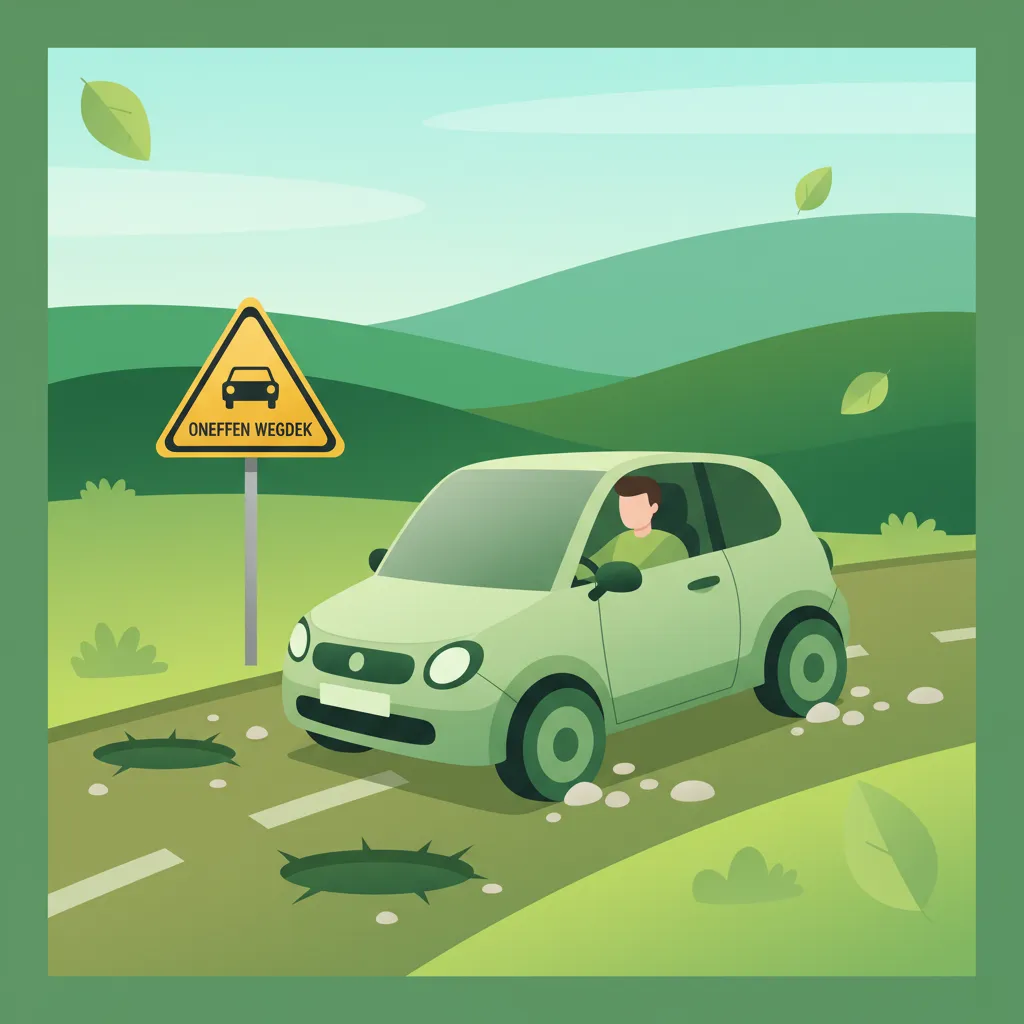
This lesson prepares you to deal with sudden changes in road surface that can cause a loss of traction. You will learn to scan for these hazards and, if they cannot be avoided, how to ride over them safely. The key technique is to keep the motorcycle upright and maintain smooth, steady control inputs—no abrupt braking, accelerating, or steering—to minimize the risk of a skid.

This lesson focuses on advanced low-speed control required for maneuvers like making a U-turn on a narrow road. It covers the correct procedure, which involves comprehensive observation (checking all around for traffic), signaling, and using a combination of steering input and controlled power to execute the turn smoothly. Mastering these skills is a requirement for the practical test and is useful in many real-world riding situations.
Defensive riding means riding to prevent collisions, despite the actions of others or the conditions around you. This lesson teaches the core principles of this proactive safety strategy. Key techniques include managing the space cushion around your vehicle, positioning yourself in your lane for maximum visibility, constantly planning an escape route, and communicating your intentions clearly to other road users. This mindset acknowledges your vulnerability and empowers you to take control of your own safety.
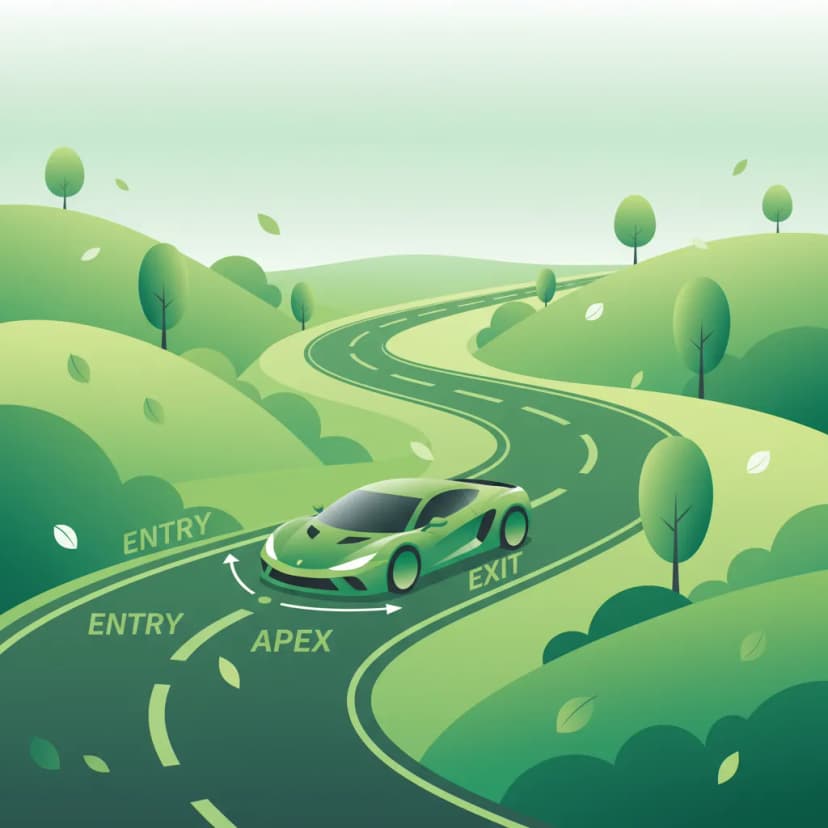
This lesson teaches a systematic approach to cornering by breaking it down into three distinct phases: entry, apex, and exit. It explains how to choose the correct road position and entry speed, identify the safest apex (not always the geometric one), and apply the throttle smoothly on exit to maximize stability and safety. This 'slow in, fast out' methodology provides a structured, repeatable process for navigating any corner with confidence and control.

This lesson details the correct, systematic procedure for safely navigating a corner. It teaches the 'slow in, fast out' principle, where all necessary braking and downshifting is completed before entering the turn. The content covers how to choose the correct line, identify the apex, and use smooth throttle application on the exit to maintain stability and traction, ensuring a safe and controlled passage through the bend.
Understand frequent errors new riders make when cornering, such as late braking or target fixation. Learn how to correct these mistakes to improve safety and confidence on Dutch roads.
Riding on two wheels requires special care on surfaces with reduced grip. This lesson teaches you how to handle challenging conditions like rain, ice, wet leaves, or tram tracks. Key principles include reducing speed significantly, making all control inputs (braking, accelerating, steering) much more smoothly and gradually, and increasing your following distance to allow for much longer stopping distances. Recognizing potentially slippery areas is a critical part of proactive hazard perception.
Defensive riding means riding to prevent collisions, despite the actions of others or the conditions around you. This lesson teaches the core principles of this proactive safety strategy. Key techniques include managing the space cushion around your vehicle, positioning yourself in your lane for maximum visibility, constantly planning an escape route, and communicating your intentions clearly to other road users. This mindset acknowledges your vulnerability and empowers you to take control of your own safety.
This lesson focuses on advanced low-speed control required for maneuvers like making a U-turn on a narrow road. It covers the correct procedure, which involves comprehensive observation (checking all around for traffic), signaling, and using a combination of steering input and controlled power to execute the turn smoothly. Mastering these skills is a requirement for the practical test and is useful in many real-world riding situations.
This lesson addresses the specific challenge of cornering when road grip is compromised. It teaches riders how to identify potential low-traction surfaces like wet manhole covers, painted lines, gravel, or oil patches. The content focuses on techniques to mitigate risk, such as reducing speed, minimizing lean angle, and applying all control inputs—braking, steering, and throttle—with exceptional smoothness to avoid overwhelming the available grip.
This lesson teaches a systematic approach to cornering by breaking it down into three distinct phases: entry, apex, and exit. It explains how to choose the correct road position and entry speed, identify the safest apex (not always the geometric one), and apply the throttle smoothly on exit to maximize stability and safety. This 'slow in, fast out' methodology provides a structured, repeatable process for navigating any corner with confidence and control.

Safely merging and changing lanes requires a systematic approach known as 'mirror-signal-blind spot'. This lesson explains the correct procedure for entering a carriageway from an acceleration lane, ensuring you match the speed of the traffic flow and find a safe gap. It also covers the technique for changing lanes, emphasizing the critical importance of checking your blind spot with a shoulder check (dode hoek) before making any lateral movement to prevent collisions.
This lesson details the correct, systematic procedure for safely navigating a corner. It teaches the 'slow in, fast out' principle, where all necessary braking and downshifting is completed before entering the turn. The content covers how to choose the correct line, identify the apex, and use smooth throttle application on the exit to maintain stability and traction, ensuring a safe and controlled passage through the bend.

Warning signs are designed to enhance your safety by alerting you to potential hazards. This lesson focuses on signs of particular relevance to moped and scooter riders, such as warnings for sharp bends, slippery road surfaces, crosswinds, and level crossings. You will learn to recognize the standard triangular shape of Dutch warning signs and understand how to adjust your speed and positioning in response to these alerts, a key skill in hazard perception.

Overtaking is a high-risk maneuver that must be executed correctly. This lesson provides a step-by-step guide: assess if it is safe and legal, check mirrors and blind spots, signal your intention, accelerate smoothly past the other vehicle, and return to your lane leaving adequate space. You will also learn to identify situations where overtaking is prohibited, such as before a pedestrian crossing or when approaching a blind corner.

This lesson explains how to apply the principle of counter-steering decisively in an emergency situation to perform a rapid swerve. It covers the importance of looking where you want to go, avoiding 'target fixation' on the obstacle, and executing a firm push on the appropriate handlebar to initiate a quick lean and change of direction. This skill is a critical component of collision avoidance for any motorcyclist.
Find clear answers to common questions learners have about Cornering Techniques and Lean Angles. Learn how the lesson is structured, which driving theory objectives it supports, and how it fits into the overall learning path of units and curriculum progression in the Netherlands. These explanations help you understand key concepts, lesson flow, and exam focused study goals.
Counter-steering is the technique of initially turning the handlebars in the opposite direction of the turn you intend to make. For example, to turn left, you briefly push the left handlebar forward. This action causes the front wheel to turn right, which then initiates a lean to the left. It's essential for initiating and controlling turns on two-wheeled vehicles, including mopeds and scooters.
Lean angle is the degree to which your moped tilts into a corner. While leaning is necessary to turn, excessive lean angles at inappropriate speeds or on slippery surfaces can reduce stability and increase the risk of skidding. Maintaining a controlled lean angle, appropriate for your speed and road conditions, is key to safe cornering.
The safest practice is to reduce your speed *before* entering the corner, ideally while riding in a straight line. During the corner, maintain a steady throttle or gentle acceleration to keep the bike stable and upright. Avoid braking heavily *in* the corner, as this can upset the bike's balance and reduce traction. Braking can be resumed once you are exiting the corner and straightening up.
Looking where you want to go is a fundamental aspect of cornering. Your body and vehicle naturally tend to follow your line of sight. By looking through the corner towards your intended exit path, you subconsciously help steer the vehicle in that direction, making your turn smoother and more controlled. It also helps you anticipate potential hazards along your path.
Slippery surfaces like wet roads, gravel, or oil significantly reduce tire grip. On such surfaces, you must reduce your speed and lean angle considerably to maintain stability. Even seemingly minor wet patches can be hazardous. Always be vigilant for changes in road surface and adjust your cornering technique accordingly.