
This lesson focuses on the legal consequences of driving under the influence (DUI) in the Netherlands. Following our discussion on alcohol and drugs, we now detail the serious penalties, including fines, driving bans, and mandatory educational programs. Understanding these repercussions is vital for ensuring safe driving practices and passing the Dutch theory exam.
Driving under the influence (DUI) of alcohol or drugs poses a severe threat to road safety, leading to countless accidents, injuries, and fatalities each year. In the Netherlands, the legal system takes a stringent approach to impaired driving, imposing significant penalties to deter offenders and protect public health. This lesson provides a comprehensive overview of the legal ramifications for DUI, the enforcement protocols, and the profound personal and professional consequences of a conviction. Understanding these penalties is crucial for every driver, fostering a culture of responsible decision-making behind the wheel.
Driving under the influence, often referred to as DUI or rijden onder invloed in Dutch, is defined as operating a motor vehicle while one's physical and mental capabilities are impaired by alcohol, drugs, or certain medications. The core issue is the reduced capacity to safely control a vehicle, react to hazards, and make sound judgments, which dramatically increases the risk of accidents.
Impairment can stem from various sources. Alcohol impairment occurs when the concentration of alcohol in a driver's blood (Blood Alcohol Concentration, or BAC) exceeds the legally permissible limit. Even small amounts of alcohol can begin to affect coordination, reaction time, and judgment.
Drug impairment refers to the influence of pharmacological substances, both illicit drugs (like cannabis, cocaine, or ecstasy) and certain prescription medications. Many prescription drugs, especially those with sedative effects or warnings about operating heavy machinery, can severely impair driving abilities. It is a common misunderstanding that if a medication is legally prescribed, it cannot lead to a DUI. However, if the medication impairs your ability to drive safely, you are still considered to be driving under the influence.
Drivers demonstrating behaviors indicative of intoxication, such as erratic driving, difficulty maintaining lane position, or failing psychomotor tests (e.g., breathalyzer tests, coordination exercises), are typically considered impaired by law enforcement. The focus is on the effect of the substance on driving ability, not just its legality.
Always read the labels of any medication you take, and consult your doctor or pharmacist about potential side effects that could affect your driving. Never assume that legal substances or small amounts of alcohol are risk-free.
The Blood Alcohol Concentration (BAC) is a critical metric in Dutch law, measuring the amount of alcohol in a driver's blood. It is expressed in permille (‰), where 0.5‰ means 0.05% of the blood volume is alcohol. Adhering to these limits is paramount for all road users.
For standard, experienced drivers, the legal BAC limit in the Netherlands is 0.5‰. This limit applies to most drivers operating motor vehicles, including cars, motorcycles, and mopeds.
However, stricter rules apply to specific categories of drivers, reflecting a zero tolerance approach:
It's important to remember that the body's ability to process alcohol varies from person to person. Factors like body weight, metabolism, gender, and even food intake can influence how quickly alcohol is absorbed and eliminated. There is no reliable way to "pre-fill" or anticipate BAC levels without a test.
Upon detection of driving under the influence, Dutch authorities can impose immediate and significant penalties. These range from substantial monetary fines to temporary prohibitions on driving.
Monetary fines are a common consequence of a DUI conviction. The exact amount depends on several factors, including the driver's BAC level, whether it's a first or repeat offense, and any aggravating circumstances (e.g., causing an accident, having minors in the vehicle).
Generally, fines can range from hundreds to thousands of euros. For instance, a first-time offense with a BAC just over the legal limit might result in a fine starting at around €300-€700. However, for higher BAC levels, repeat offenses, or situations where danger was caused, these fines escalate sharply. Professional drivers or novice drivers violating their stricter BAC limits also face elevated fines.
The financial burden of a DUI conviction extends beyond the initial fine. Drivers may also incur costs for towing, storage of their vehicle, and potentially increased insurance premiums for years to come.
One of the most immediate and impactful consequences of a DUI detection is the rijverbod (immediate driving ban). This is a temporary prohibition on driving, issued directly by law enforcement officers at the scene. It means the driver is legally forbidden to operate any motor vehicle for a specified period, effective immediately.
A rijverbod is typically issued for a period of 5 to 10 days, but it can be extended up to three months depending on the severity of the offense. For example, if a driver's BAC is exceptionally high, or if there are other severe aggravating factors, the ban will be longer. Refusing to comply with a rijverbod is a serious offense that will lead to further, harsher penalties, including potential arrest and criminal charges.
The purpose of the rijverbod is to remove an impaired driver from the road immediately, preventing them from causing further harm and acting as an instant deterrent. It serves as a rapid enforcement measure to safeguard public safety.
If you are issued a rijverbod, it is crucial to comply fully. Do not attempt to drive, even if you feel capable. Arrange for alternative transport and understand that this is a legal order.
Beyond immediate fines and bans, a DUI conviction can have profound and lasting effects on your driving privileges, ranging from temporary suspension to permanent revocation of your license.
It is important to understand the distinction between license suspension and license revocation:
The duration of a license suspension can vary significantly, from a few weeks to several months, depending on the severity of the DUI offense and whether it is a repeat infraction. For instance, a first offense might lead to a shorter suspension, while a second or subsequent offense will almost certainly result in a longer suspension or even revocation.
Regaining your driving license after a suspension or revocation is not automatic. The RDW (Rijksdienst voor het Wegverkeer), the central authority for vehicle registration and licensing in the Netherlands, plays a crucial role in this process.
If your license is suspended, the RDW will inform you of the conditions you must meet for reinstatement. This almost always includes the mandatory attendance and successful completion of educational courses specifically designed for DUI offenders. Failure to meet these conditions will result in your license remaining suspended or even escalated to revocation.
In cases of license revocation, the path to regaining driving privileges is more arduous. You will likely need to re-apply for a driving license, which means undergoing new medical assessments and potentially retaking both the theory and practical driving exams. This process can be lengthy, costly, and requires significant commitment to demonstrate that you are once again fit to drive safely.
The goal of these measures is not merely punitive but also rehabilitative, aiming to ensure that drivers who have demonstrated a disregard for road safety are adequately re-educated and assessed before being allowed back on the road.
A key component of the Dutch penalty system for DUI offenders is mandatory educational and behavioral courses. These courses are designed to address the underlying causes of impaired driving, reinforce safe behaviors, and prevent re-offending. Successful completion of these courses is often a prerequisite for regaining a suspended license.
The LEMA (License Education for Motor Vehicle Accident) course is a mandatory training program specifically for drivers convicted of DUI. It aims to educate offenders about the dangers of impaired driving, the effects of alcohol on the body, and strategies for making responsible choices.
For a second offense within a certain period, the course duration and intensity increase substantially, potentially involving 24 hours of instruction and additional practical driving assessments.
The LEMA course is not optional; it is a compulsory step for most DUI offenders to demonstrate their commitment to changing their behavior and understanding the risks associated with impaired driving.
For high-risk drivers, repeat offenders, or professional drivers involved in serious incidents, an even more intensive intervention may be mandated: the EMG (Emergency Management Group) course. This program is designed for individuals whose driving behavior poses a significant risk to themselves and others.
The EMG course is more comprehensive and often more psychologically intensive than LEMA. It delves deeper into behavioral patterns, addiction issues, and the development of strategies to manage risky behaviors behind the wheel. It may involve longer durations and more personalized assessments.
Similar to LEMA, successful completion of the EMG course is a strict condition for regaining driving privileges for those to whom it applies. The RDW mandates these courses to ensure that individuals with a history of severe or repeated impaired driving offenses receive the necessary intervention to prevent future incidents.
A DUI conviction in the Netherlands results in more than just fines and license restrictions; it also leads to the creation of a criminal record. This record is an official documentation of the offense, stored in national databases, and can have far-reaching implications that extend beyond driving.
The existence of a criminal record can significantly affect various aspects of an individual's life:
Under Dutch law, criminal records are maintained for specified periods, which vary depending on the severity and nature of the offense. While not all criminal records are publicly accessible, certain information can be disclosed to official bodies for specific purposes, such as employment screenings or legal proceedings.
For serious or repeated DUI offenses, the record can have a long-term, if not permanent, impact. This serves as a long-term deterrent, ensuring that individuals with a history of dangerous driving are subject to ongoing scrutiny and accountability. The implications underscore the gravity with which the Dutch legal system views impaired driving.
Effective enforcement is critical to maintaining road safety and ensuring compliance with DUI laws. In the Netherlands, several authorities work in tandem to detect impaired drivers, apply penalties, and manage the administrative processes.
This coordinated effort ensures a consistent and comprehensive application of the law, from initial detection to long-term management of offenders.
Drivers in the Netherlands are legally obligated to cooperate with law enforcement during roadside checks. This includes submitting to a preliminary breath test if requested by an officer who suspects impairment. Refusal to submit to a legally mandated test (including blood tests if a breath test is not feasible or conclusive) is itself a serious offense and can lead to immediate and harsher penalties than the DUI offense itself, as it is seen as obstructing justice.
These signs, while not directly related to DUI enforcement tests, are examples of regulatory signs that drivers must obey, and failure to do so while impaired can compound charges.
Always cooperate politely and calmly with police requests during a traffic stop. Refusal to cooperate with legally mandated tests can lead to severe additional penalties, including augmented fines and longer driving bans.
The severity of penalties for DUI is not static; it is significantly influenced by various contextual factors. Dutch law accounts for conditional logic and aggravating factors that can lead to harsher sanctions.
The presence of vulnerable road users (pedestrians, cyclists, motorcyclists) or minors significantly heightens the danger of impaired driving and will lead to more severe penalties.
These contextual variations highlight that Dutch law aims to apply penalties not just based on the offense itself, but also on the overall risk posed to public safety, especially to those most vulnerable.
The most effective way to avoid the severe legal penalties and life-altering consequences of driving under the influence is to commit to responsible driving practices. This means never driving after consuming alcohol or drugs, and carefully considering the effects of any medication.
Adhering to these laws and making responsible choices has numerous positive outcomes:
The Dutch legal system's stringent penalties for DUI are a reflection of the high value placed on human life and safety on the roads. By understanding and respecting these laws, every driver plays a vital role in creating a safer and more harmonious traffic environment.
Lesson content overview
Explore all units and lessons included in this driving theory course.
Explore search topics learners often look for when studying Legal Penalties and Enforcement Practices. These topics reflect common questions about road rules, driving situations, safety guidance, and lesson level theory preparation for learners in the Netherlands.
Browse additional driving theory lessons that cover connected traffic rules, road signs, and common driving situations related to this topic. Improve your understanding of how different rules interact across everyday traffic scenarios.
Understand the detailed legal penalties for DUI in the Netherlands, including fines, immediate driving bans (rijverbod), license suspension, and revocation. Learn about mandatory educational courses like LEMA and EMG, and the long-term impact of a criminal record.
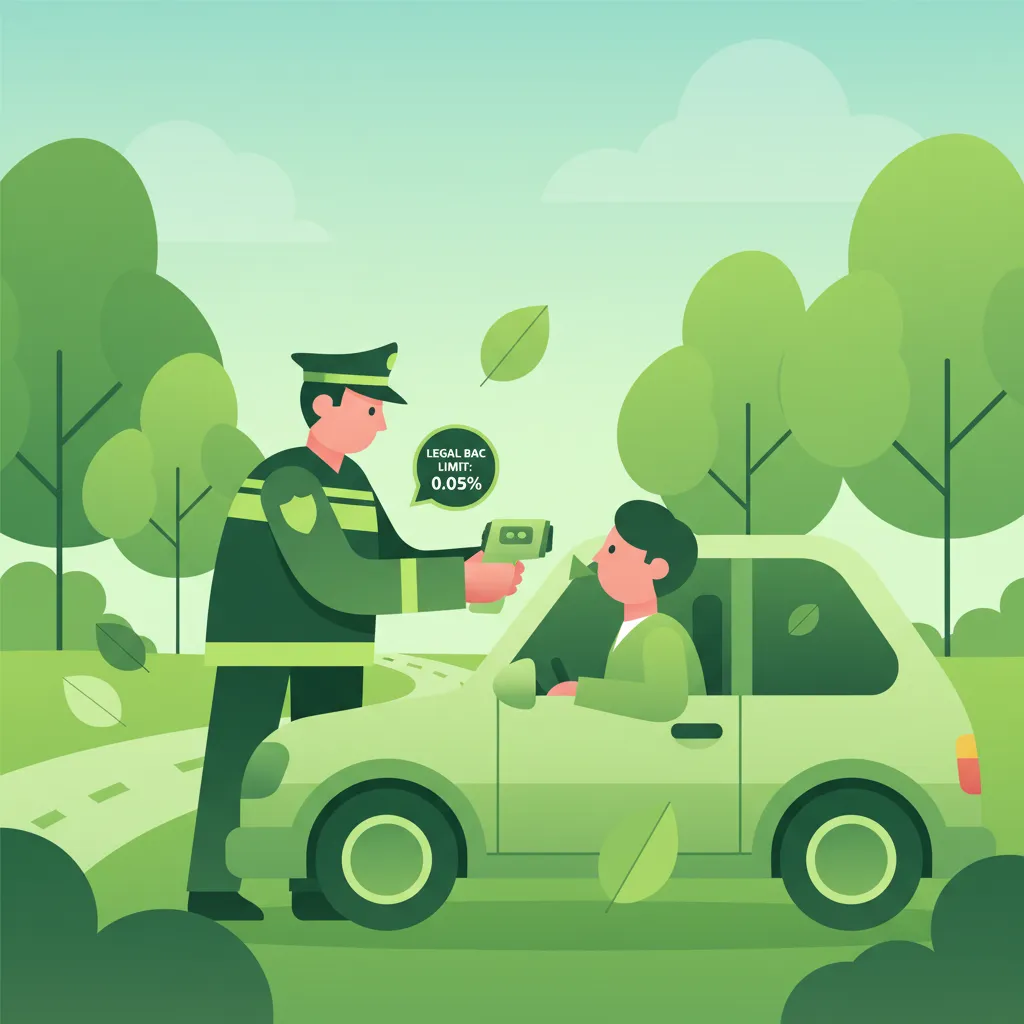
This lesson details the legal limits for alcohol consumption when driving. You will learn that for experienced drivers (who have held their license for more than five years), the BAC limit is 0.5 promille. For novice drivers, a stricter limit of 0.2 promille applies, which effectively means a zero-tolerance policy. The content explains how these levels are measured by police using breathalyzer tests and the factors that can influence a person's BAC, stressing that the only safe approach is not to drink and drive.
This lesson extends the topic of impaired driving to include illegal drugs and certain medications. You will learn that the Netherlands has a zero-tolerance policy for driving under the influence of many illegal substances, enforced with saliva tests. The curriculum also highlights the importance of checking for warnings on prescription and over-the-counter medicines, often indicated by a yellow sticker, as many can cause drowsiness or impair concentration. The driver is always responsible for ensuring they are fit to drive.

This lesson covers the critical topic of driving under the influence, explaining the legal blood alcohol concentration (BAC) limits for Category AM riders. It highlights the distinction between the lower limit for novice drivers and the standard limit for experienced drivers. The lesson also addresses the zero-tolerance policy for driving under the influence of drugs, the types of police tests conducted, and the severe legal penalties, including fines, license suspension, and mandatory courses, for any violations.

This lesson explores the physiological and cognitive effects of alcohol on a driver. You will learn how alcohol acts as a depressant on the central nervous system, leading to a measurable decrease in reaction speed, blurred vision, and a loss of coordination. The curriculum explains how alcohol impairs judgment, often leading to increased risk-taking and a failure to perceive hazards. Understanding these dangerous effects reinforces the critical importance of separating drinking from driving completely.
This lesson covers the critical topic of impaired riding, detailing the legal blood alcohol limits for drivers in the Netherlands. It explains how alcohol, illegal drugs, and even some legal medications drastically impair judgment, coordination, and reaction time, making riding a motorcycle extremely dangerous. The severe legal penalties, including fines, license suspension, and imprisonment, are also clearly outlined.
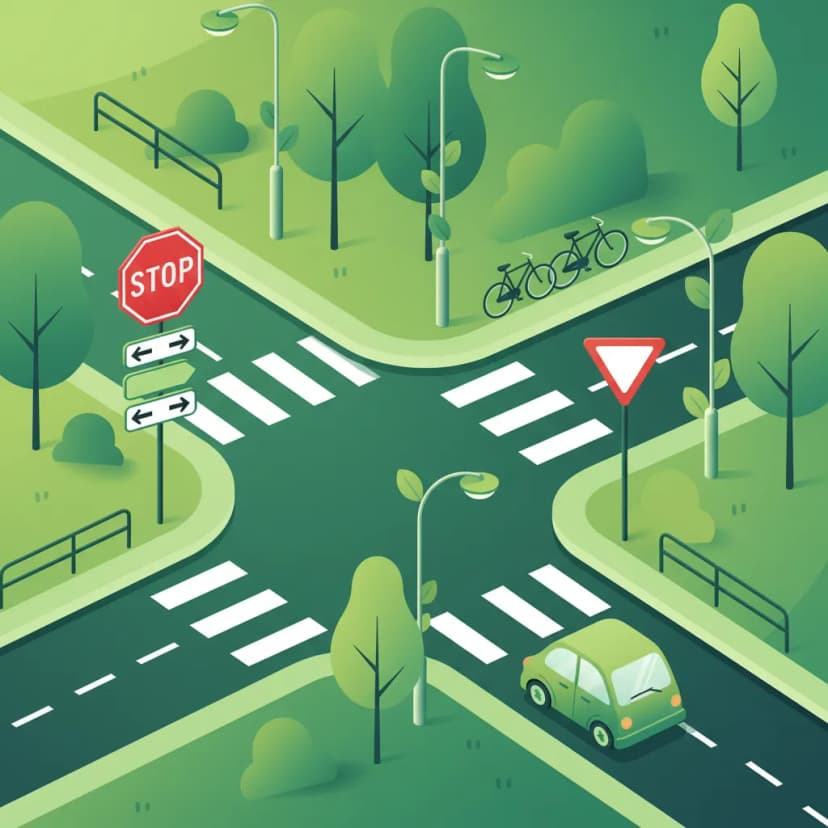
This lesson focuses on regulatory signs, which impose legal obligations on drivers and are essential for maintaining traffic order. You will learn to identify and act upon fundamental signs such as the octagonal B6 Stop sign, the diamond-shaped B1 Priority Road sign, and various compulsory direction arrows. The content explains the legal implications of these signs, detailing when a driver must stop completely, when they have priority, or the required path they must follow. Understanding these commands is crucial for safe and lawful driving at intersections and on designated routes.
This lesson covers the procedures and safety considerations for driving in reverse and turning around. You will learn that reversing should only be done over short distances and when it does not endanger or obstruct other road users. The curriculum details techniques for turning in the road and identifies situations and locations where U-turns are prohibited. The importance of all-around observation, checking blind spots, and yielding to all other traffic is a central theme.
This lesson provides practical advice for driving in challenging weather. You will learn about the risk of aquaplaning in heavy rain and how to react, as well as how to manage the effects of strong crosswinds. The curriculum covers winter driving, explaining the danger of black ice, the benefits of winter tires, and techniques for avoiding and correcting a skid. A key focus is on adjusting driving style: increasing following distances, reducing speed, and making gentle steering and braking inputs.
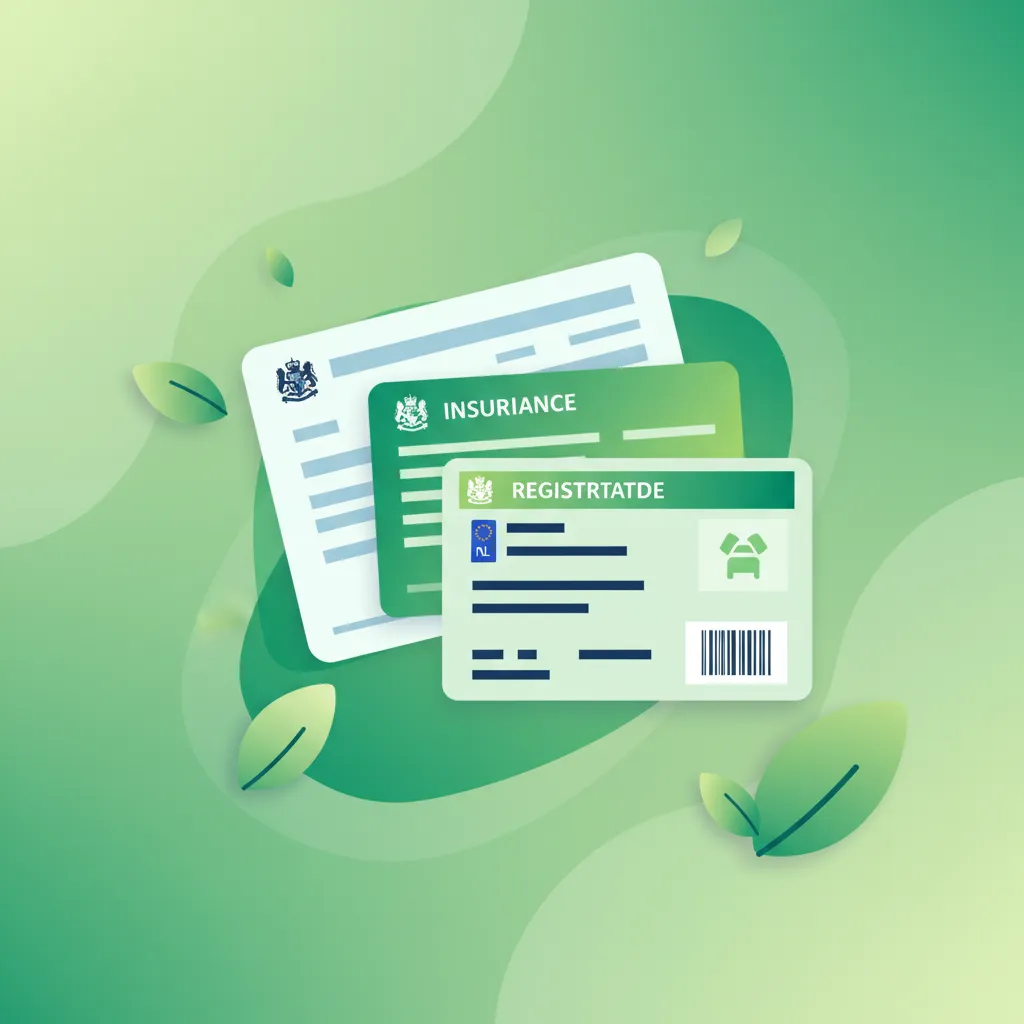
This lesson provides a definitive list of the documents a motorcyclist must carry at all times when riding in the Netherlands. It specifies the requirement for a valid driving license ('rijbewijs') for the correct category, the vehicle registration card ('kentekenbewijs'), and proof of valid third-party liability insurance ('verzekeringsbewijs'). The content clarifies that failure to produce these documents during a police check can result in significant fines and legal complications.
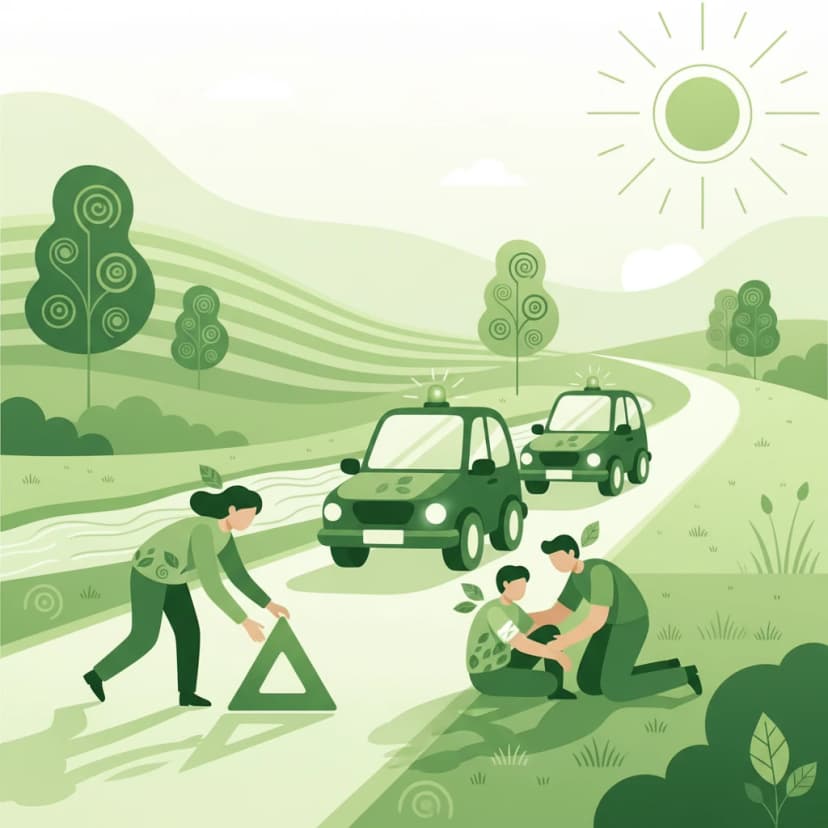
This lesson outlines the correct protocol to follow after a traffic accident. The first priority is to ensure the safety of everyone involved by securing the scene and checking for injuries. You will learn when it is mandatory to call the emergency services (112), such as when there are injuries or significant road blockage. The curriculum also explains the legal requirement to stop and exchange insurance and contact details with other parties involved. The use of the European Accident Statement form to record the details is also covered.
Explore how DUI cases are enforced in the Netherlands, focusing on the role of police and the RDW. Understand how factors like weather, road type, presence of minors, or vulnerable road users increase penalties.
This lesson extends the topic of impaired driving to include illegal drugs and certain medications. You will learn that the Netherlands has a zero-tolerance policy for driving under the influence of many illegal substances, enforced with saliva tests. The curriculum also highlights the importance of checking for warnings on prescription and over-the-counter medicines, often indicated by a yellow sticker, as many can cause drowsiness or impair concentration. The driver is always responsible for ensuring they are fit to drive.
This lesson covers the critical topic of driving under the influence, explaining the legal blood alcohol concentration (BAC) limits for Category AM riders. It highlights the distinction between the lower limit for novice drivers and the standard limit for experienced drivers. The lesson also addresses the zero-tolerance policy for driving under the influence of drugs, the types of police tests conducted, and the severe legal penalties, including fines, license suspension, and mandatory courses, for any violations.
This lesson details the legal limits for alcohol consumption when driving. You will learn that for experienced drivers (who have held their license for more than five years), the BAC limit is 0.5 promille. For novice drivers, a stricter limit of 0.2 promille applies, which effectively means a zero-tolerance policy. The content explains how these levels are measured by police using breathalyzer tests and the factors that can influence a person's BAC, stressing that the only safe approach is not to drink and drive.
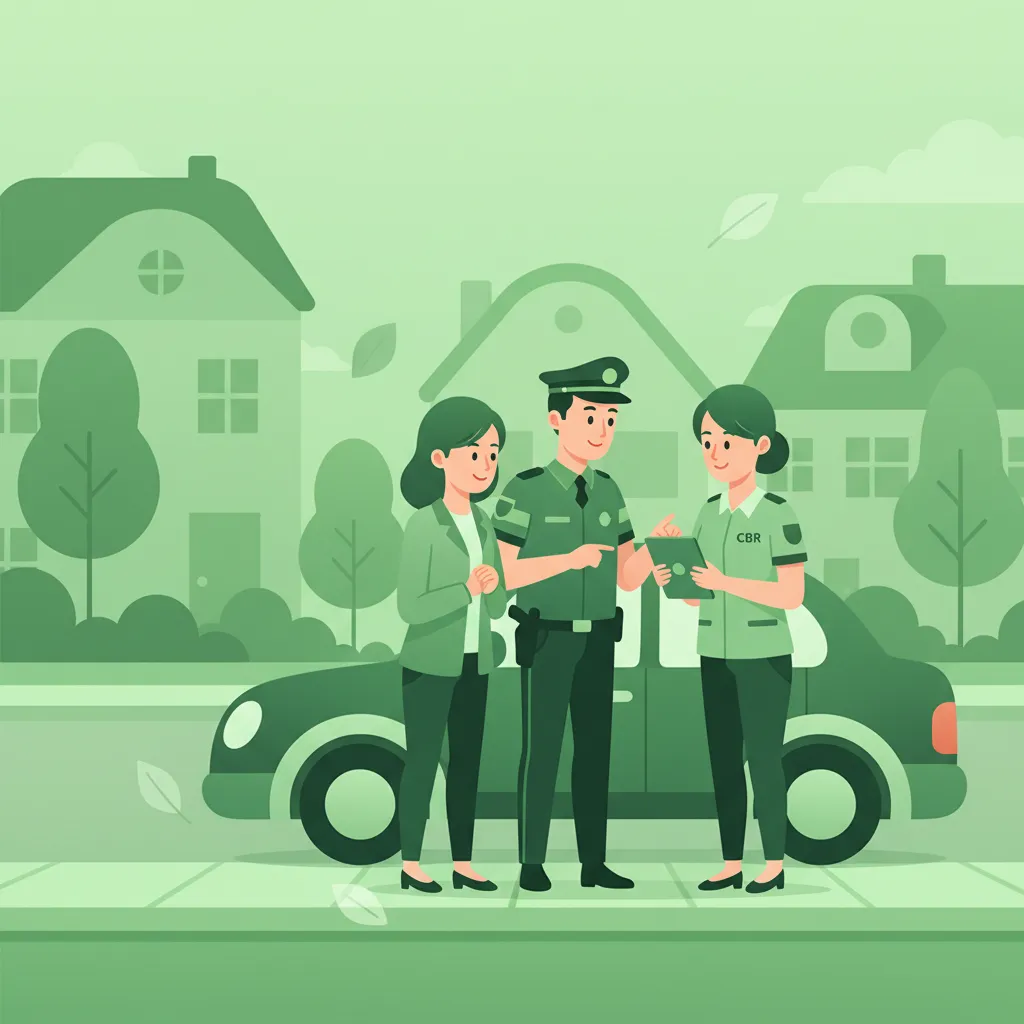
This lesson prepares you for a routine traffic stop by law enforcement. It outlines your legal obligation to stop when signaled to do so and to provide your driving license, vehicle registration certificate, and proof of insurance upon request. The lesson covers expected procedures, such as breathalyzer tests, and advises on maintaining a respectful and cooperative attitude. Understanding the process ensures any interaction with police is handled correctly and without unnecessary complications.
This lesson covers the critical topic of impaired riding, detailing the legal blood alcohol limits for drivers in the Netherlands. It explains how alcohol, illegal drugs, and even some legal medications drastically impair judgment, coordination, and reaction time, making riding a motorcycle extremely dangerous. The severe legal penalties, including fines, license suspension, and imprisonment, are also clearly outlined.
This lesson explores the physiological and cognitive effects of alcohol on a driver. You will learn how alcohol acts as a depressant on the central nervous system, leading to a measurable decrease in reaction speed, blurred vision, and a loss of coordination. The curriculum explains how alcohol impairs judgment, often leading to increased risk-taking and a failure to perceive hazards. Understanding these dangerous effects reinforces the critical importance of separating drinking from driving completely.
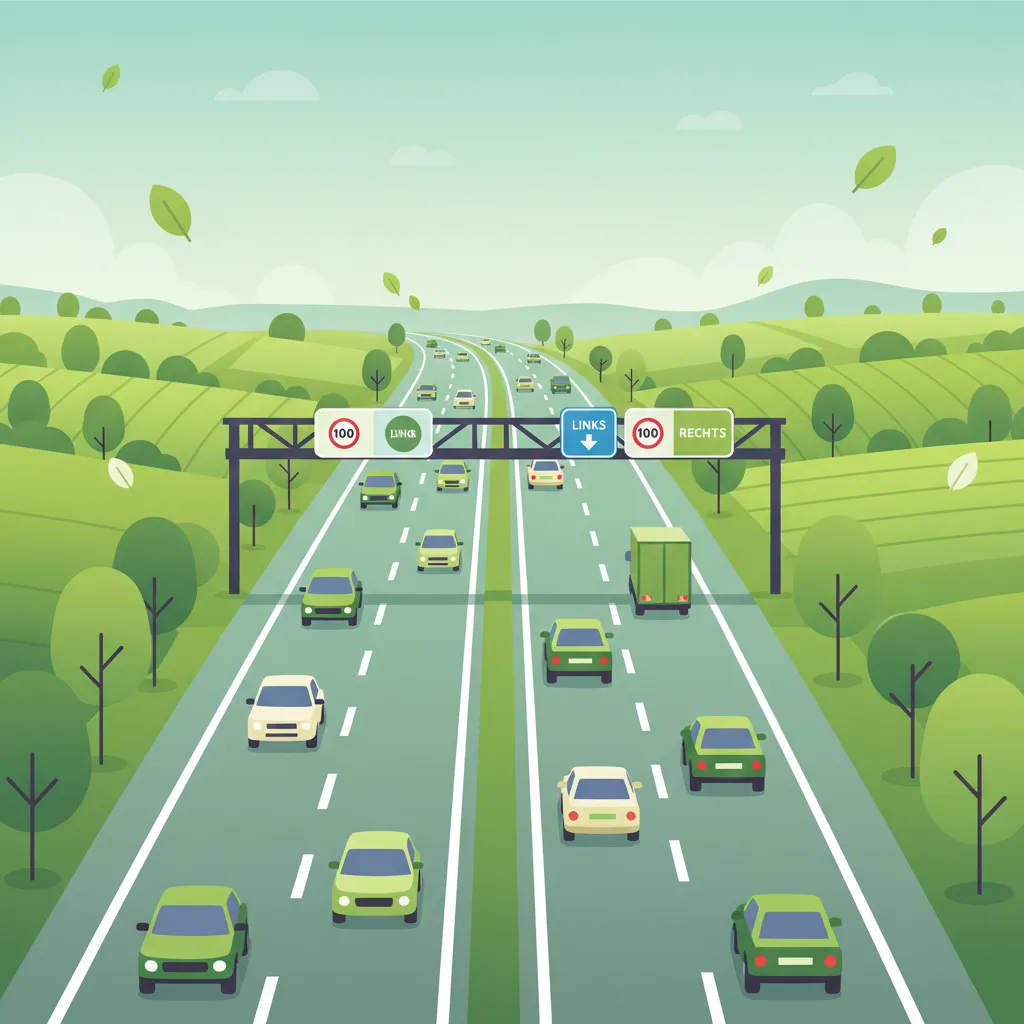
This lesson covers the specific articles of the Dutch Road Traffic Act that apply to motorways, with a primary focus on the strict rule of keeping to the rightmost available lane unless overtaking. It explains the legal and safety reasons for only passing on the left and discusses the correct positioning within a lane for maximum visibility and safety. The content also addresses the nuances of lane usage during heavy congestion, ensuring riders comply with the law and contribute to smooth traffic flow.
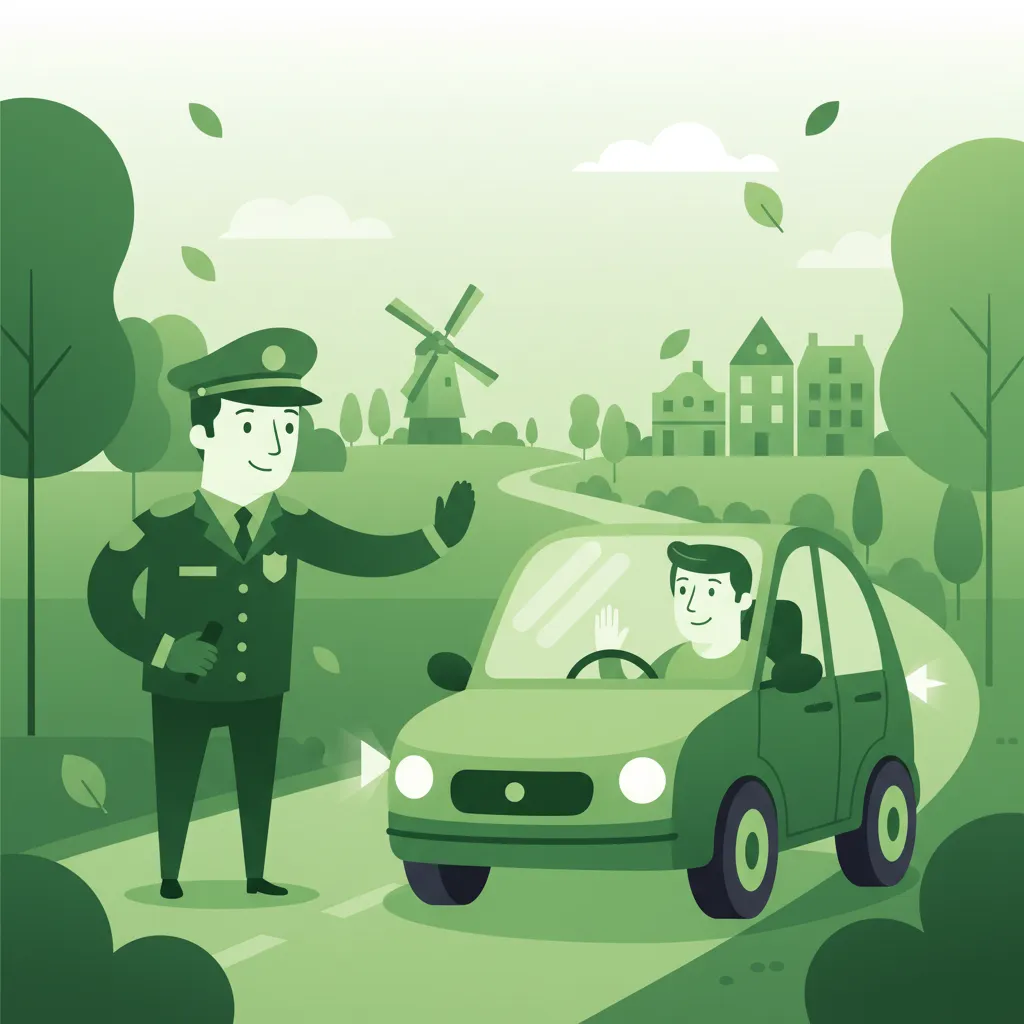
This lesson prepares riders for the possibility of a routine police check ('verkeerscontrole'). It explains what officers typically inspect, which includes the required documentation, the roadworthiness of the motorcycle (e.g., tire tread depth, exhaust legality), and the rider's sobriety. The curriculum provides guidance on how to interact calmly and cooperatively with law enforcement, ensuring the stop proceeds smoothly and efficiently while being aware of one's basic rights.
This lesson details the procedures of a typical traffic stop ('verkeerscontrole') from a rider's perspective. It outlines the authority of police officers to check documents, inspect the vehicle, and administer sobriety tests, while also explaining the basic rights of the rider during such an interaction. The goal is to demystify the process and encourage a calm, cooperative, and respectful demeanor, which facilitates a more positive and efficient roadside encounter for both parties.
Find clear answers to common questions learners have about Legal Penalties and Enforcement Practices. Learn how the lesson is structured, which driving theory objectives it supports, and how it fits into the overall learning path of units and curriculum progression in the Netherlands. These explanations help you understand key concepts, lesson flow, and exam focused study goals.
Fines for driving under the influence in the Netherlands can vary significantly based on the Blood Alcohol Concentration (BAC) level and whether it's a first offense. For lower BAC levels, fines can range from several hundred euros, but they can escalate to thousands of euros for higher levels or repeat offenses. Additionally, court costs and administrative fees will apply.
A driving ban can range from a few months to several years, depending on the severity of the offense, previous convictions, and the driver's BAC level. For serious offenses or repeat offenders, the ban can be permanent or accompanied by strict conditions for license reinstatement.
License suspension means your license is temporarily taken away for a specific period, after which you may be able to reapply or get it back. License revocation is more severe, meaning your license is cancelled entirely. You would typically need to start the entire process of obtaining a new license from scratch, which often includes additional training and exams.
Courses like LEMA (Landelijk Educatieprogramma voor de Mobiele Verkeersdeelnemer) or EMG (Educatieve Maatregel Gedrag) are mandated to educate drivers about the risks and consequences of their behavior, particularly concerning alcohol or drugs. They aim to improve understanding and promote behavioral change to prevent future offenses and ensure road safety.
A DUI conviction in the Netherlands is a criminal offense. This means it will appear on your criminal record. This can have significant long-term consequences, affecting job prospects, especially for positions requiring a driving license or a clean record, and potentially impacting international travel or visa applications.