
Welcome to the 'Special Maneuvers' unit! This section focuses on 'bijzondere verrichtingen,' vital skills for your Dutch driving theory exam. You'll learn the correct techniques for reversing, turning, and various parking situations, ensuring you can perform them safely and legally without obstructing traffic.
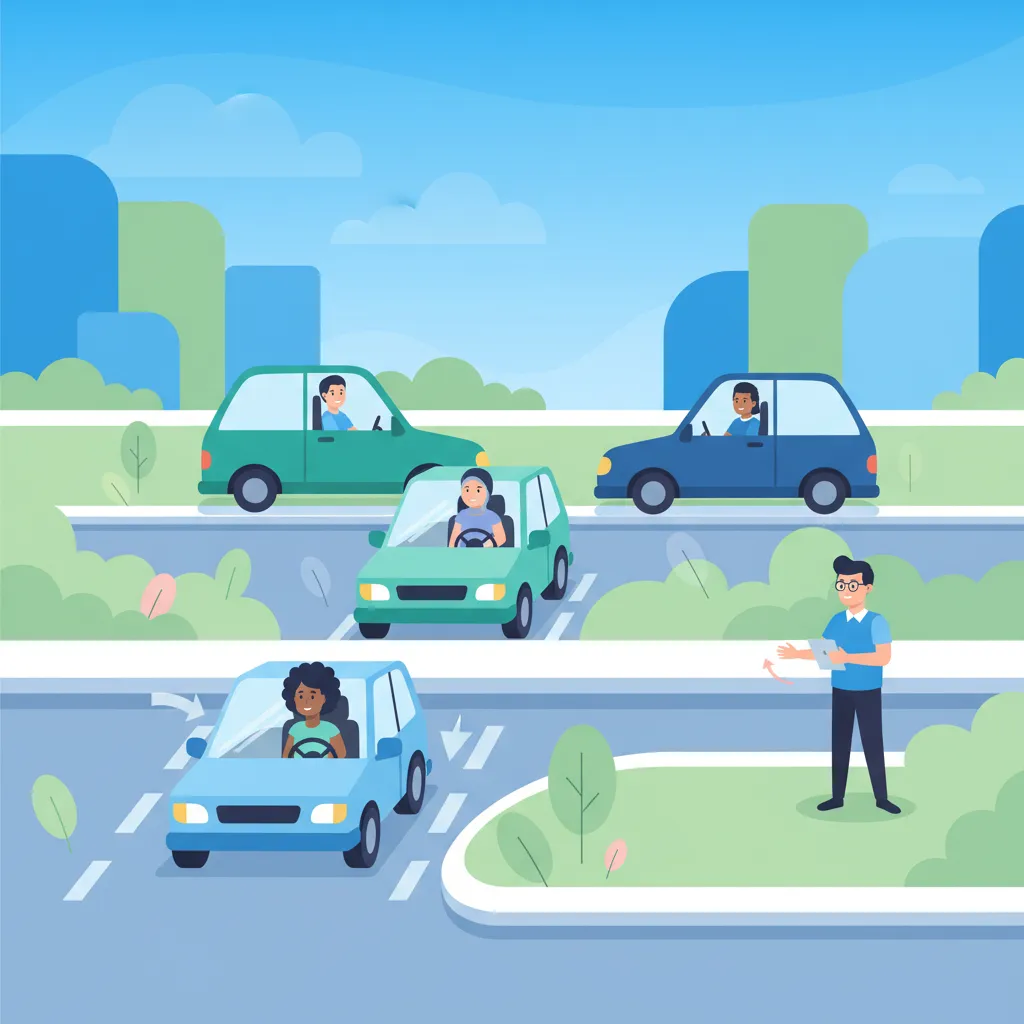
Browse all lessons that make up Special Maneuvers. Each lesson focuses on specific topics, learning objectives, and core concepts, helping you build essential knowledge and follow a clear, structured progression toward your study goals in the Netherlands.
This lesson covers the procedures and safety considerations for driving in reverse and turning around. You will learn that reversing should only be done over short distances and when it does not endanger or obstruct other road users. The curriculum details techniques for turning in the road and identifies situations and locations where U-turns are prohibited. The importance of all-around observation, checking blind spots, and yielding to all other traffic is a central theme.
This lesson provides step-by-step instructions for common parking maneuvers. You will learn the techniques for parallel parking along the roadside and for entering a parking bay, both forwards and backwards (reverse bay parking). The content emphasizes the importance of slow, controlled movements and continuous observation for pedestrians and other vehicles. Additionally, the lesson covers how to properly secure the vehicle after parking by using the handbrake and selecting the correct gear.
This lesson clarifies the legal distinction between stopping (briefly, while the driver remains with the vehicle) and parking (leaving the vehicle). You will learn to recognize signs and road markings, such as yellow lines, that indicate where stopping or parking is prohibited. The curriculum covers rules for parking in designated zones, such as blue zones requiring a parking disc, and provides a list of locations where parking is always forbidden, for example, on a cycle path or too close to an intersection.
This lesson teaches the procedure for executing an emergency stop in response to a sudden, extreme hazard. You will learn how to apply maximum braking pressure quickly and decisively while keeping the steering wheel straight to maintain control. The role of the Anti-lock Braking System (ABS) in preventing wheel lock-up and allowing the driver to continue steering is explained. The lesson also covers the importance of checking mirrors, if time permits, and securing the vehicle safely after the stop.
Explore high-intent keywords and long-tail search topics learners use when researching Special Maneuvers. These terms reflect how people search for reliable study materials, structured explanations, and unit-level theory preparation support in the Netherlands.
Find clear answers to the most common questions learners ask about Special Maneuvers. Understand how the unit is organized, what learning goals it supports, and how it contributes to your study progression with structured explanations and practical guidance tailored for learners in the Netherlands.
'Bijzondere verrichtingen' refers to specific driving actions that require a higher degree of vehicle control and situational awareness than regular driving. These typically include various types of parking, reversing, turning the vehicle around in the road (like a three-point turn), and sometimes specific junctions or maneuvers mandated by road signs. They are a significant part of the practical driving exam.
While the theory test covers the rules and principles behind these maneuvers, the practical assessment by the CBR is where you demonstrate your ability to perform them. You'll be asked to execute maneuvers like parking and reversing safely, efficiently, and without endangering or inconveniencing other traffic. The theory unit prepares you for understanding the 'why' and 'how' behind these actions.
The absolute most critical rule is to not hinder or endanger other traffic. This means constant observation of your surroundings – checking mirrors, looking over your shoulder, and being aware of pedestrians, cyclists, and other vehicles. Always signal your intentions clearly and execute the maneuver smoothly and predictably.
Common mistakes include poor observation (not seeing a pedestrian or cyclist), incorrect positioning (parking too far from the curb or other cars), inaccurate angle during the maneuver, hitting the curb, and taking too long due to indecision. Proper practice and understanding the steps for each type of parking are essential to avoid these errors.
Yes, the emergency stop is often considered a special maneuver due to the high level of control and quick reaction required. This unit will cover the principles and procedures for executing an emergency stop safely, which is a crucial skill for all drivers.
While 'Stopping and Parking Rules' (5.3) covers where you legally can and cannot stop or park, this unit focuses on the practical execution of the maneuvers themselves (like bay parking or parallel parking). They are complementary: you need to know *where* to park and *how* to perform the parking action correctly.
All included lessons
Lessons in Special Maneuvers
See who benefits most from studying Special Maneuvers. This overview explains how the unit supports different learning needs, what level of knowledge is helpful before starting, and how it fits into the overall study path in the Netherlands.
This unit is essential for all learners preparing for the Dutch Category B theory and practical exams. It's particularly beneficial for those who find vehicle control challenging or want to ensure they fully understand the nuances of maneuvers like parking and reversing as tested by the CBR.

See how Dutch Driving Theory B is structured, with key topics, learning objectives, and a step-by-step path for theory preparation in the Netherlands.
Explore all units and lessons included in this driving theory course.